Top 9 Gorges around Positano
Best canyons around Positano are characterized by dramatic cliffside landscapes and deep valleys. The region features impressive gorge-like formations and natural inlets carved into the rock. These areas offer striking natural beauty and unique geological experiences along the Amalfi Coast. The area provides 9 gorges to explore.
Best canyons around Positano
- The most popular canyons is Valle dei Mulini and Ruins of the Watermills, a historical site and gorge where the Canneto river flows. This location combines the ruins of ancient water mills with a unique natural setting.
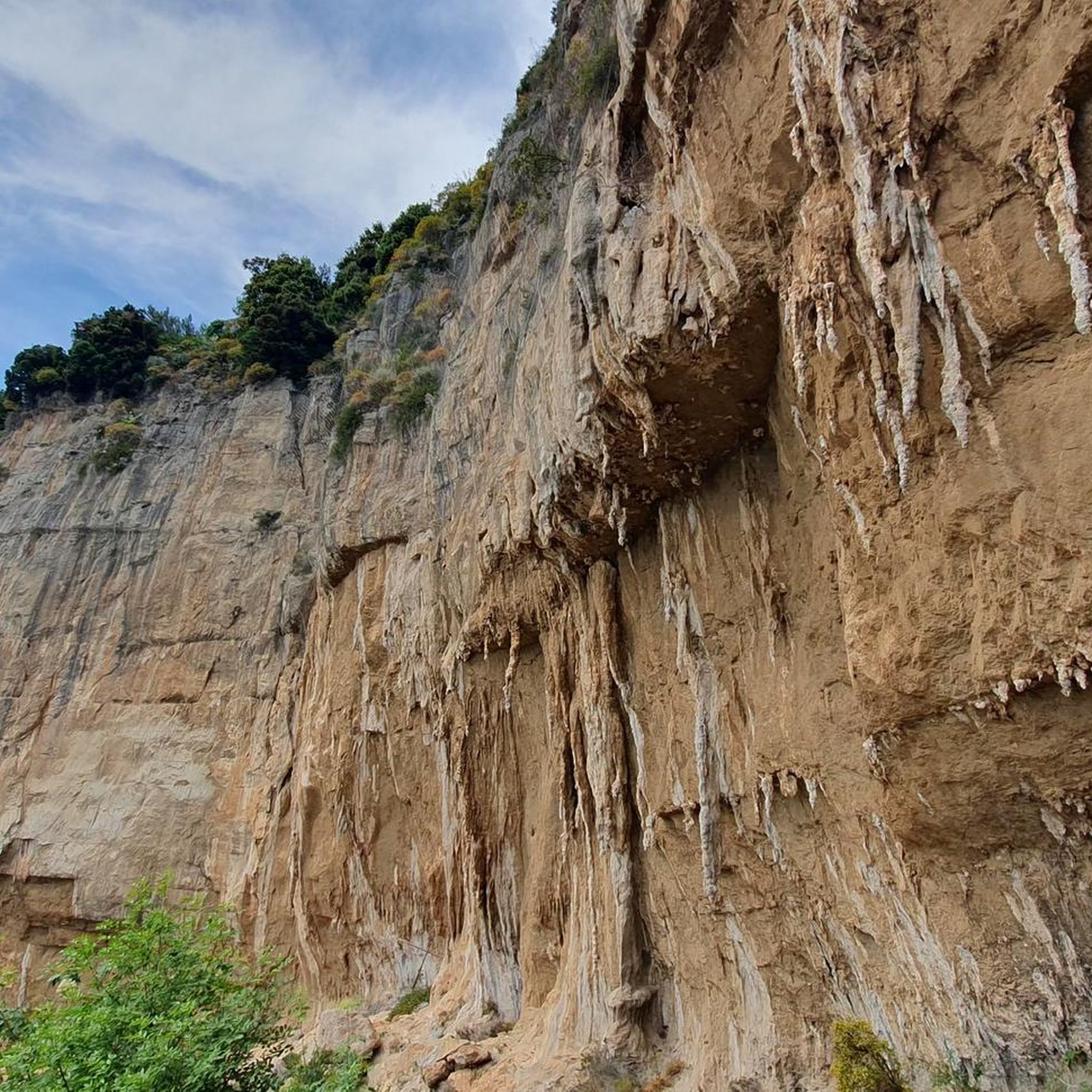
- Another must-see spot is Crapolla Fjord, a challenging gorge that is a deep fissure in the rock, extending about 150 meters into a high cliff. Visitors can reach a small beach and see remains of a Roman villa.
- Visitors also love Ancient fishing village of Furore, a settlement and gorge located in the middle of overhanging rocks. This village stands at 250 meters above a beach formed by the erosion of the Schiato stream.
- Positano is known for its deep gorges, historical sites, and natural monuments. The variety of canyons to see and explore includes fjords, valleys with ancient ruins, and dramatic coastal formations.
- The canyons around Positano are appreciated by the komoot community, with 36 upvotes and 20 photos shared by visitors.
Last updated: June 30, 2026
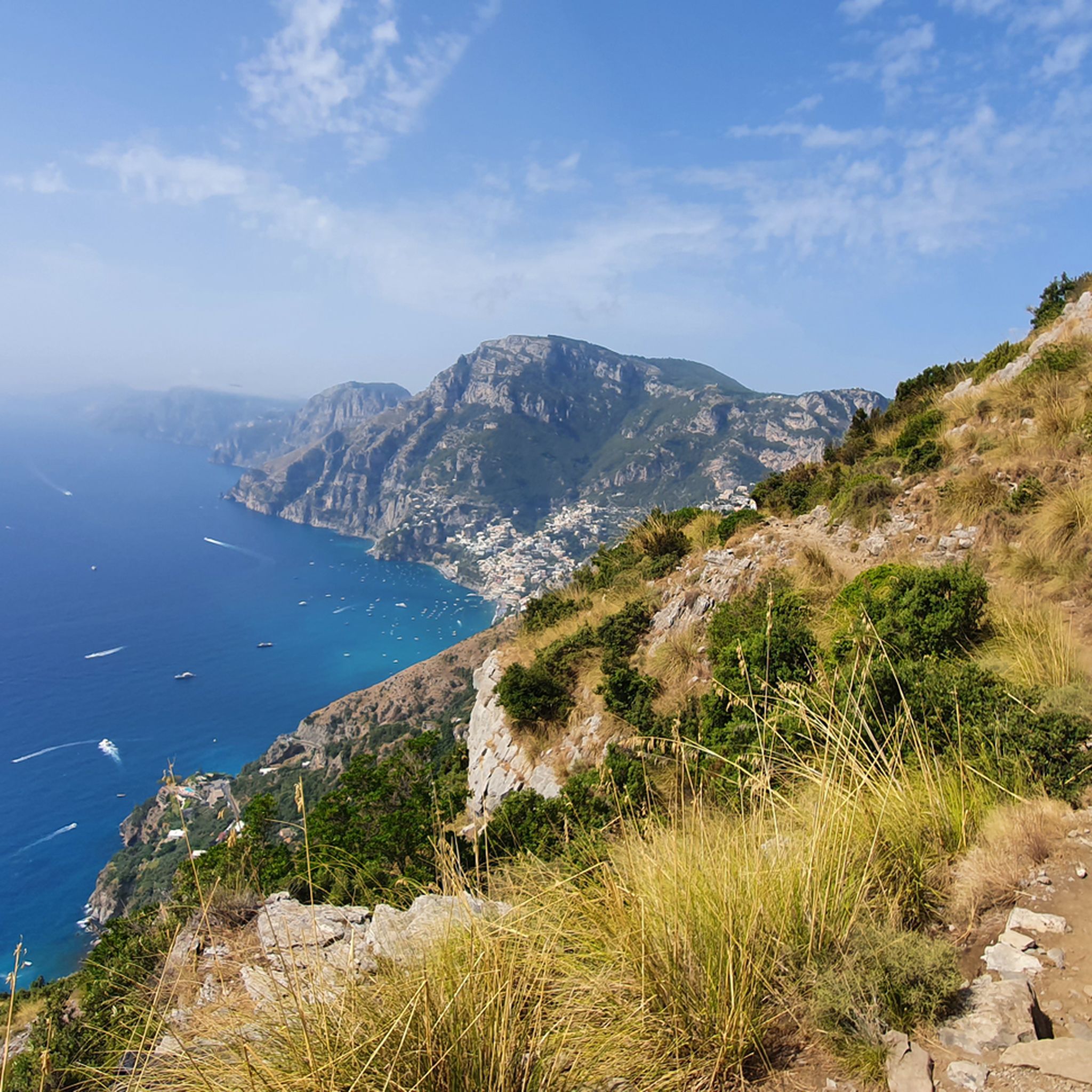
Best Section of the Path of the Gods
Highlight (Segment) • Trail
Here is a loop option to come back to the starting point without busses and tourists :
komoot.de/tour/t3860227?ref=atd
Sentiero degli Dei (Path of Gods) Italia, Amalfi: da Bomerano a Nocelle (Positano), é da volta il sentiero de Capo Muro é Tré Calli a Bomerano
komoot.de/highlight/137157
Here a quote from a somewhat enthusiastic chap who maintains a whole website just for this little hike: "the path, set in stunning natural beauty, is a must to see, at least for who wants to deeply dig into the marvels of the Amalfi Coast. From the Path of the Gods it is possible to admire one of the most striking panoramas on Earth: halfway up the hill the path crosses, from Bomerano to Nocelle (Nocella), through the most fascinating gorges, cliffs and precipices of the Amalfi Coast. An incomparable overview of the coast from Punta Licosa, in the Cilento (part of the province of Salerno that lies on the south of the Amalfi Coast) to the Island of Capri,an ancient natural extension of Punta Campanella (watershed between the gulfs of Naples and Salerno) where the Athena loop trail, another wonderful hike, lays. The name, a little exaggerated, is due to some aerial exposed part of the path, the magnificent wide views of the sea and splendid hamlets of Vettica Maggiore (Praiano) and Furore located just below the path. From above you can admire, impending over the sea, the extremely steep and wild noses of “Sant’Angelo a Tre Pizzi”, the highest summit of the Sorrento Peninsula. The Path of the Gods, despite of the name, is an extraordinary monument to the boundless obstinacy and exertion of the humankind that, throughout the ages, has been able to colonize even the most impracticable places on the Amalfi Coast. Today, shepherds, woodsmen and farmers still use the path as it lays through hundreds of dry stonewalls, vegetable gardens, woods, lemon groves and old vineyards stolen to the mountain. Beside the path, you find caves and terraces dropping from the cliffs to the sea and deep valleys. The caves host pens, folds, depots and other constructions. Of the vertical faces, with a dolomitic look overlooking the path, you’ll admire their elegant glides, gulls, crows, peregrine and kestrel falcons, coming out their aeries. "
pathofgods.com/into-the-path/inside-the-path-of-the-gods
Tip by

Fiordo di Furore
Highlight • Gorge
Translated by Google •
Tip by

Sign up now to discover places like this
Get recommendations on the best single tracks, peaks, & plenty of other exciting outdoor places.
Sign up for free
Crapolla Fjord
Highlight • Gorge
It is a path of high difficulty (and therefore not recommended for those who do not like long and tiring walks).
It is grafted onto an old mule track surrounded by Mediterranean flora which, at a certain point, includes a branch (this time traced with the white-red band), which includes a path made up of 700 steps leading to the fjord.
After passing the chapel of San Pietro you reach the longed-for place!
The Crapolla fjord in Massa Lubrense looks like a deep fissure in the rock that insinuates itself into a high cliff for a length of about 150 meters which gradually extends downwards, ending in the small beach. To the west of the inlet it is possible to see the remains of a Roman villa where portions of the walls in opus reticolatum can be recognized.
....
...
Here is the complete information:
aboutsorrento.com/cosa-fare/il-fiordo-di-crapolla-a-massa-lubrense
Translated by Google •
Tip by

Valle dei Mulini and Ruins of the Watermills
Highlight (Segment) • Historical Site
Translated by Google •
Tip by

Ancient fishing village of Furore
Highlight • Settlement
Translated by Google •
Tip by

Sign up for free to discover even more gorges around Positano.
Sign up for free
Already have an account?
Start today with a free account
Your next adventure awaits.
Login or Signup
Tips from the Community

You can swim
1
0

A crack in the rock, immersed in wild nature that frames a small beach of just 30 metres.
0
0
The village of Furore, part of the Amalfi Coast, is famous for the beautiful fjord on the sea.
1
1

The Crapolla Fjord can only be reached on foot starting from the small square of Torca, following a well-marked blue path. It is a path of high difficulty (and therefore not recommended for those who do not like long and tiring walks). It is grafted onto an old mule track surrounded by Mediterranean flora which, at a certain point, includes a branch (this time traced with the white-red band), which includes a path made up of 700 steps leading to the fjord. After passing the chapel of San Pietro you reach the longed-for place! The Crapolla fjord in Massa Lubrense looks like a deep fissure in the rock that insinuates itself into a high cliff for a length of about 150 meters which gradually extends downwards, ending in the small beach. To the west of the inlet it is possible to see the remains of a Roman villa where portions of the walls in opus reticolatum can be recognized. .... ... Here is the complete information: https://www.aboutsorrento.com/cosa-fare/il-fiordo-di-crapolla-a-massa-lubrense/
1
1

The fjord represents one of the natural jewels of the Amalfi coast. Inserted by UNESCO, together with other places on the Amalfi Coast, in the world heritage sites in 1997, the Furore fjord consists of a deep crack in the rock at the bottom of which there is a 25 meter beach. Furthermore, Furore, with its 800-odd inhabitants, has become part of the "Most beautiful villages in Italy".
0
0

The Fiordo di Furore is a narrow gorge with a bridge connecting the two banks and a rocky beach overlooking the sea.
2
0

This small seaside village, in fact, stands in the middle of the overhanging rocks at a height of 250 meters from the beach which, like the fjord, was formed following the erosion caused by the passage of the Schiato stream, although according to ancient legend the he cove was formed by the devil himself who had tried in vain to grab the souls of the inhabitants of Furore.
11
0
Wonderful and very small (just 25 meters!) Furore beach represents a real natural jewel to be seen at least once in a lifetime. It is not for nothing that this space set among the overhanging rocks is under the protection of UNESCO which has given the impetus to the redevelopment of the natural port and the fishing village, forming a small open-air museum. The buildings that frame the beach tell of the traditions and customs of times gone by, linked not only to fishing but also to the production of paper: a particularly profitable industry thanks to the proximity to the water of the Fiordo di Furore. One of the most appreciated characteristics of this place is the temperature: thanks to the shape of the cliff, in fact, the sun only peeps out after noon and for this reason the heat is never excessive. Spending an afternoon here, in short, represents a real relaxing experience.
10
0
Frequently Asked Questions
What are the most notable gorge-like formations near Positano?
While Positano doesn't have traditional canyons, it features dramatic gorge-like formations. The most notable is the Fiordo di Furore, a narrow inlet with towering limestone cliffs and a tiny pebble beach. Other significant areas include Crapolla Fjord, a deep fissure in the rock, and the Valle dei Mulini and Ruins of the Watermills, known for its historical mills and natural setting.
Are there any historical sites within these gorges?
Yes, several gorges offer historical insights. The Valle dei Mulini and Ruins of the Watermills is a historical site where the Canneto river flows past ancient water mills. The Fiordo di Furore also has a rich history, once powering paper and flour mills, and features a small fishing hamlet. Additionally, Crapolla Fjord contains remains of a Roman villa.
What kind of natural features can I expect to see in these areas?
You can expect to see dramatic natural beauty. The Fiordo di Furore is characterized by towering limestone cliffs, a small pebble beach, and an iconic arched stone bridge. Crapolla Fjord is a deep fissure in the rock leading to a small beach. The Valle dei Mulini and Ruins of the Watermills features a river and a waterfall. The wider region also includes areas like Vallone Porto with rich biodiversity and ancient plant species, and Valle delle Ferriere with its Grand Waterfall and ancient ferns.
Are there family-friendly options for exploring gorges near Positano?
While some areas involve challenging descents, the Fiordo di Furore can be a unique experience for families, offering a cool retreat on hot days with its small beach. Access involves descending 200 steps, which might be challenging for very young children or those with mobility issues. For easier walks with natural beauty, consider parts of the Valle delle Ferriere, which offers a less challenging hike than the Path of the Gods.
What is the best time to visit the gorges and fjords around Positano?
The best time to visit is generally from late morning until early afternoon, especially for places like the Fiordo di Furore, where the beach receives direct sunlight only during these hours, offering a cool escape from the heat. Spring and early autumn are ideal for hiking and exploring, as the weather is milder.
How can I access the Crapolla Fjord?
The Crapolla Fjord is only reachable on foot. You start from the small square of Torca and follow a well-marked blue path. This is considered a high-difficulty path, involving an old mule track and a branch with about 700 steps leading down to the fjord. It's not recommended for those who prefer easy walks.
Can I swim in any of the gorges or fjords?
Yes, you can swim in certain areas. The Valle dei Mulini and Ruins of the Watermills is known to have spots where swimming is possible. The small pebble beaches at Fiordo di Furore and Crapolla Fjord also offer opportunities for a refreshing dip in the sea.
What hiking opportunities are there near these gorges?
The region offers numerous hiking opportunities. The famous Path of the Gods (Sentiero degli Dei) provides dramatic vistas and elevation changes, offering a sense of awe similar to canyons. For more specific hiking trails, you can explore routes like 'The rock formations of Monte Gambera' or 'The staircase of Arienzo, Nocelle and Montepertuso'. You can find more hiking options in the Hiking around Positano guide.
Are there other outdoor activities available near the gorges around Positano?
Beyond hiking, the Positano area offers various cycling routes. You can find options for road cycling, such as the 'Amalfi Drive: Positano to Amalfi' route, or general cycling tours like 'View of Positano – View of Positano loop from Positano'. For more details, refer to the Road Cycling Routes around Positano guide and the Cycling around Positano guide.
What makes the Fiordo di Furore a unique place to visit?
The Fiordo di Furore is unique due to its dramatic appearance as a narrow inlet carved by the Schiato torrent, framed by towering limestone cliffs. It features a tiny pebble beach that receives direct sunlight only from late morning, making it a cool retreat. It's also known for its iconic arched stone bridge and a small fishing hamlet with colorful houses, making it one of the most picturesque and photographed spots on the Amalfi Coast.
Is the Biscuit Cave accessible, and what can I see there?
The Biscuit Cave is located right at the beginning of the Path of the Gods. It's named for its geological formation resembling a biscuit bread. Visitors can see this cool cave and rock buildings clinging to the cliff, offering a great start to the famous hiking trail.
What do visitors enjoy most about the gorges around Positano?
Visitors appreciate the dramatic cliffside landscapes and deep valleys that offer striking natural beauty and unique geological experiences. The combination of historical sites like ancient watermills, secluded beaches, and the challenging yet rewarding paths to places like Crapolla Fjord are highly valued. The region's natural monuments and the opportunity for a cool retreat in places like Fiordo di Furore are also popular.
Most popular attractions around Positano

Get inspired with the komoot mobile app


Explore more
Already discovered everything in this region? See additional gorges around Positano for your next adventure:
