Top 5 Caves around Pianezze
Best caves around Pianezze offer a diverse range of underground experiences, from natural karstic formations to historical military shelters. This region, likely in the Veneto area, features geological formations alongside significant World War I sites. Visitors can explore both natural cave systems and man-made tunnels that played a role in historical events. The area provides opportunities to discover unique geological features and delve into local history.
Best caves around Pianezze
- The most popular caves is Anguane's Cave, a cave…
Last updated: June 30, 2026
Anguane's Cave
Highlight • Cave
Translated by Google •
Tip by

Campolongo Trenches (WW1)
Highlight (Segment) • Historical Site
Translated by Google •
Tip by

Sign up now to discover places like this
Get recommendations on the best single tracks, peaks, & plenty of other exciting outdoor places.
Sign up for free
Small Tunnel in the Rock
Highlight • Cave
Translated by Google •
Tip by

Military Shelter 1 and 2 (Laverda) WW1
Highlight • Historical Site
Translated by Google •
Tip by
Military Gallery (Còvolo) WWI
Highlight • Cave
Translated by Google •
Tip by
Sign up for free to discover even more caves around Pianezze.
Sign up for free
Already have an account?
Start today with a free account
Your next adventure awaits.
Login or Signup

Tips from the Community


The Trenchers of Monte Campolongo - not to be confused with the mountain of the same name and its fort exactly on the opposite western side of the Asiago Plateau - are a long and deep Italian trench from the First World War, dug on a promontory which dominates the final stretch of the Val Brenta. It had no active role during the Great War, but served as an extreme bulwark to prevent a possible invasion of the Austro-Hungarian army from Valsugana. Cleaned and recovered, it features walkways, outposts, tunnels and shelters in a dense and silent forest: today the vegetation largely covers the view, especially in summer, but at the time the view of the valley was clean. You can follow the winding of the trench from inside or from above, along a path complete with little bridges... or a little and a little!
2
0
Cave with a considerable development of over 400 meters. At the entrance it immediately divides into two narrow and winding branches: the Ramo dei Ghiri, on the right, and the Ramo dee Strighe, on the left. The tunnels are twisted, very narrow (so much so that the backpack is an impediment to leave at the entrance!), in total darkness, with protruding concretions and narrow passages that at a certain point force you to advance on all fours or to crawl. Entering it is quite impressive: avoid if you are afraid of closed and narrow spaces, complete darkness, bats, cave crickets, spiders (present in the initial meters) and various creatures of the darkness! According to legend, the anguane live near a water source or a stream, inside caves or grottos: hence the toponym 'buso' = hole in Venetian dialect, to be understood as a home or refuge. https://www.ecovicentino.it/esplorare-il-vicentino/la-valle-delle-anguane-e-la-carega-del-diavolo-a-laverda/
1
0
Two small and close together Italian shelters from the Great War, dug into the rock: part of the rear defensive line of the mountain range, as an extreme barrier on the southern edge of the Asiago Plateau against a possible Austro-Hungarian invasion attempt in the Po Valley.
0
0
Italian gallery of the Great War: part of the rear defensive line of the mountain belt, as an extreme barrier of the southern edge of the Asiago plateau against a possible Austro-Hungarian invasion attempt in the Po Valley. Narrow, straight, 60 meters long, with 3 exits: total darkness / front light. In the middle of Sojo Park, with a scary art installation inside!
0
0

It's definitely worth having a small flashlight with you ;)
1
0

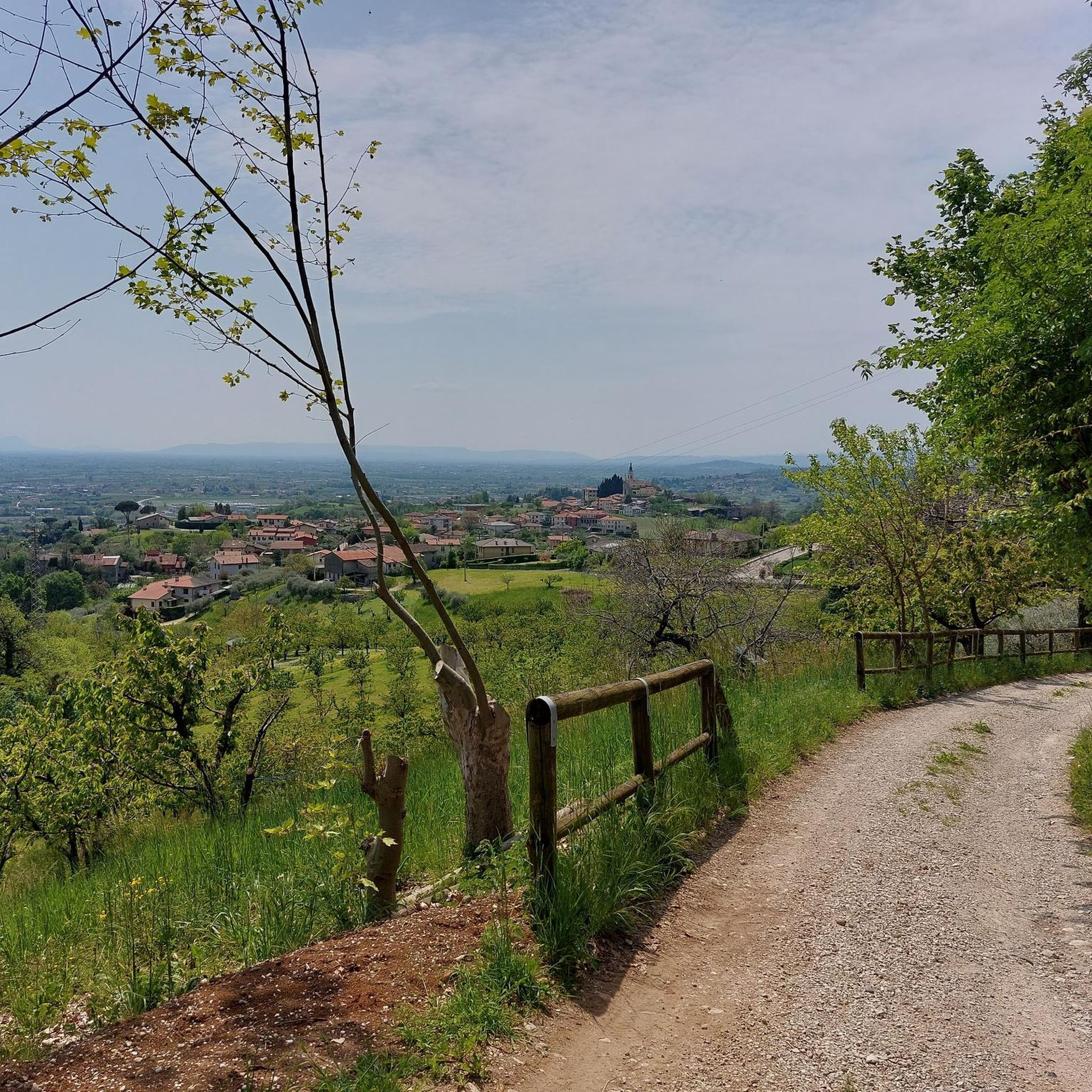
Here the path goes through a small tunnel in the mountain, from which a passage branches off. We didn't dare to explore it without a flashlight :)
2
0

Unique places in the midst of peace
1
0
Frequently Asked Questions
What types of underground sites can I explore around Pianezze?
The Pianezze area offers a diverse range of underground experiences. You can explore natural karstic formations like Anguane's Cave, known for its tranquil environment. Additionally, there are significant historical military tunnels and shelters from World War I, such as the Campolongo Trenches (WW1), Military Shelter 1 and 2 (Laverda) WW1, and the Military Gallery (Còvolo) WWI.
Are there any natural caves to visit in the Pianezze region?
Yes, Anguane's Cave is a notable natural cave in the area. It offers a beautiful and tranquil natural environment, sometimes featuring a stream at its lowest part. Another natural feature is the Small Tunnel in the Rock, where a path goes through a small mountain tunnel.
What historical sites related to caves can I find near Pianezze?
The region is rich in World War I historical sites that involve underground structures. You can visit the Campolongo Trenches (WW1), a long and deep Italian trench with walkways, outposts, and tunnels. Also, explore the Military Shelter 1 and 2 (Laverda) WW1, which are small Italian shelters dug into the rock, and the Military Gallery (Còvolo) WWI, a 60-meter long gallery that was part of the defensive line.
What do visitors enjoy most about the caves and underground sites around Pianezze?
Visitors appreciate the unique blend of natural beauty and historical significance. For natural sites like Anguane's Cave, the tranquility and unique setting are often highlighted. For historical sites like the Campolongo Trenches (WW1), visitors value the immersive experience of exploring preserved military structures and gaining insight into WWI history.
Are there any Etruscan sites or ancient man-made caves in the broader Pianezze area?
While the immediate Pianezze area (Vicenza) focuses on natural caves and WWI sites, there is a significant Etruscan necropolis known as the Archaeological Area of Pianezze near Grotte di Castro (Viterbo). This site features impressive chamber tombs carved into tuff rock, dating from the 7th to 5th centuries BCE, including the renowned 'Tomba Rossa'. You can find more information about this historical site at visittuscia.eu.
What should I wear when exploring the caves and tunnels?
For exploring tunnels and caves, it's advisable to wear sturdy footwear suitable for uneven terrain. For sites like the Small Tunnel in the Rock or the Military Gallery (Còvolo) WWI, a flashlight or headlamp is highly recommended due to total darkness in some sections.
Are there family-friendly options for exploring caves around Pianezze?
Many of the historical military tunnels and trenches, such as the Campolongo Trenches (WW1), can be explored by families, offering an educational and engaging experience. Natural caves like Anguane's Cave also provide a gentle introduction to underground exploration, though some sections might require careful footing.
What outdoor activities can I combine with a visit to the caves?
The area around Pianezze offers various outdoor activities. You can find numerous running trails, road cycling routes, and mountain biking trails. For example, there are several running loops around Pianezze, road cycling routes like the 'Strada Militare – Bocchetta Granezza Climb loop', and MTB trails including the 'Anguane's Cave – Strada Romana del Sejo loop'. You can explore these options further in the Running Trails around Pianezze, Road Cycling Routes around Pianezze, and MTB Trails around Pianezze guides.
Are there any easy-to-access caves or tunnels for beginners?
Sites like the Small Tunnel in the Rock offer a relatively easy and short underground experience. Many of the WWI historical sites, such as the Military Shelter 1 and 2 (Laverda) WW1, are also accessible for those new to exploring underground spaces, providing a glimpse into history without requiring advanced caving skills.
What is the best time of year to visit the caves and historical tunnels?
The historical military tunnels and shelters are generally accessible year-round, though conditions might vary with weather. Natural caves like Anguane's Cave might have seasonal variations, such as a stream being dry or flowing depending on rainfall. Spring and autumn often offer pleasant temperatures for exploring both above and below ground.
Is there parking available near the cave attractions?
Specific parking details vary by site. For popular historical sites and natural attractions, there are often designated parking areas nearby. It's recommended to check local signage or specific highlight information on Komoot for the most accurate parking guidance for each location.
Are dogs allowed in the caves and tunnels around Pianezze?
Policies regarding dogs can vary significantly between natural sites and historical monuments. While some outdoor areas and trails might be dog-friendly, access to enclosed caves or historical structures may be restricted. It's best to check specific regulations for each highlight before visiting with your dog.
Most popular routes around Pianezze
Most popular attractions around Pianezze

Get inspired with the komoot mobile app


Explore more
Extend your search for the best caves by checking out these guides of the top ones around Pianezze:
