Top 20 Caves around Ala
Best caves around Ala offer a diverse range of natural and historical underground formations. The region features geological monuments, historical sites, and natural caves, providing varied exploration opportunities. These sites are characterized by unique rock formations, tunnels, and natural features like waterfalls. Ala's landscape provides a setting for both accessible and more challenging cave experiences.
Best caves around Ala
- The most popular caves is Veja Bridge, a natural monument that is an important geological and archaeological site. Beneath its…
Last updated: October 3, 2026
Street of Heroes
Highlight (Segment) • Trail
Translated by Google •
Tip by

Veja Bridge
Highlight • Natural Monument
Translated by Google •
Tip by

Sign up now to discover places like this
Get recommendations on the best single tracks, peaks, & plenty of other exciting outdoor places.
Busoni Tunnels and Artillery Positions
Highlight • Historical Site
Translated by Google •
Tip by

Papalini Waterfall
Highlight • Waterfall
Translated by Google •
Tip by

Corno Battisti
Highlight • Summit
Showing Translation
Tip by

Sign up for free to discover even more caves around Ala.
Already have an account?
Start today with a free account
Your next adventure awaits.
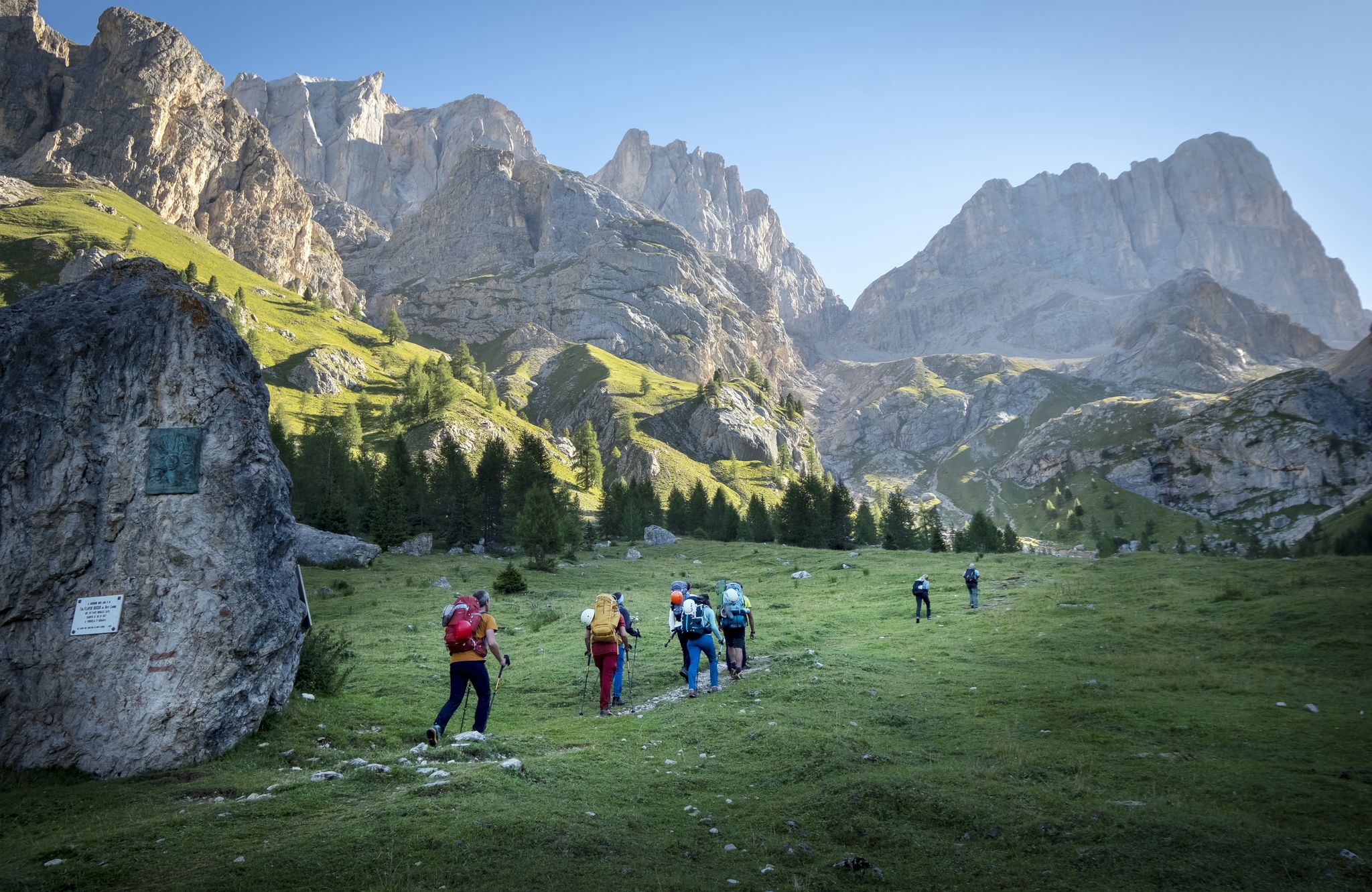

Other adventures around Ala

Tips from the Community

The strategic position of Corno Battisti was the source of bloody battles for its possession during the Great War. To this end, it was equipped with numerous tunnels dug into the rock, with three separate entrances and numerous firing positions. The tunnels can be accessed with great caution, with a torch and preferably a via ferrata kit. Currently (2025), the upper entrance is closed.
0
0

The Cascata dei Papalini suddenly appears in a small clearing in the heart of the forest, along the path: over time the falling water has formed a columnar deposit of gray limestone that descends like a drape and that partly acts as a springboard for the jet. But the peculiarity and spectacular nature of this waterfall is the possibility of seeing it even from behind the scenes: in fact, by climbing to the left on a short but steep path, you reach a natural roof of the rock from which you can observe the forest below through the curtain of water, without getting wet! The passage is not protected and is wet, so you need to pay particular attention. Like all torrential waterfalls, it is not always full and active: you need to look for the right period, perhaps after heavy rains, to visit it in all its thunderous splendor.
1
0
Il Corno Battisti, an isolated rocky spur of the Pasubio Group, sheer above Vallarsa, offers a spectacular panorama of the long valley and the surrounding mountains: Pasubio, Sengio Alto, Carega, Monte Zugna. Precisely because of its strategic position, it was fiercely contested during the First World War: the possibility of controlling all troop and supply movements in the valley from above made the Corno a crucial point to occupy and defend at all costs... it was indeed nicknamed 'the eye of the Pasubio' or 'the spy of Vallarsa'. At the beginning of the conflict, it was a garrison of the Italian army, but with the Strafexpedition in 1916, it was occupied by the Austro-Hungarians. The Italians, unable to recapture it, dug a mine gallery from below to pierce the Corno and blow up the summit; the imperialists in turn dug a counter-mine gallery from above. Everything was ready for detonation, but a daring raid by a few commandos allowed the summit to be recaptured by the Royal Army, which held it until the end of the war. In 1916, near the summit, the Austro-Hungarians captured the irredentists Cesare Battisti and Fabio Filzi, who were immediately taken to Trento and hanged at the Castello del Buonconsiglio as traitors: for this reason, the summit, known at the time as 'Corno della Vallarsa', was renamed 'Corno Battisti' after the war. The Austro-Hungarian observatory survives on the summit. The bowels of the Corno, on the other hand, are excavated by a surprising labyrinth of dark and damp tunnels with steep steps: they are passable, but to reach them from the summit, one must go around the spur following a narrow, steep path; furthermore, to complete the loop of the tunnels, one must face a short, equipped and exposed section, and descend a metal ladder of about fifteen meters which is by no means trivial (EE). https://it.wikipedia.org/wiki/Monte_Corno_Battisti https://www.esercito.difesa.it/storia/pagine/monte-corno.aspx
3
0


Beautiful waterfall, it looks like a face with one eye, a big nose and teeth😊
1
0

The Road of Heroes owes its name to the twelve plaques affixed along it in honor of the twelve gold medals for military valor who fought on Pasubio during the Great War. The twelve people remembered are: Lieutenant Cesare Battisti, Captain Aldo Beltricco, Bersagliere Torquato Cardelli, Lieutenant Umberto Cerboni, Major Felice Chiarle, Second Lieutenant Fabio Filzi, Colonel Antonio Gioppi, Second Lieutenant Giordano Ottolini, Major Mario Rossani , Colonel Eduardo Suarez, Second Lieutenant Ferdinando Urli, Lieutenant Carlo Sabatini.
1
0
A stretch of road on the Pasubio massif, in the Vicenza Pre-Alps, the Strada degli Eroi was built following the First World War to provide the summit area of the mountain with a safe access route. The actual Road of Heroes is the approximately two kilometer long stretch that connects the Giuseppe d'Havet Gallery to the Achille Papa refuge: this stretch is in a certain sense the appetizer.
1
0

The Papalini waterfall is a small waterfall in the middle of the woods, it deserves to be seen
0
0
Frequently Asked Questions
What are the most popular caves and underground sites around Ala?
The most popular cave is Veja Bridge, a significant geological and archaeological site with natural shelters and large caves used by prehistoric men. Other highly appreciated sites include the Busoni Tunnels and Artillery Positions, a historical WWI site, and the Papalini Waterfall, which features a cave you can walk behind.
Are there family-friendly cave experiences in Ala?
Yes, Veja Bridge is considered family-friendly, with an adventure park nearby for children. While access below the bridge was temporarily blocked in 2021, the area offers a fascinating natural monument for all ages.
What historical insights can I gain from visiting caves in Ala?
Ala's caves offer rich historical context. Veja Bridge is an archaeological site with evidence of prehistoric human habitation. The Busoni Tunnels and Artillery Positions are a 300-meter-long gallery used as gun emplacements during the First World War. Additionally, Corno Battisti, a summit with tunnels, also holds significant WWI history.
What natural features can I expect to see in Ala's caves?
You can explore diverse natural features. Veja Bridge is a massive natural arch with large caves. The Papalini Waterfall allows you to walk behind a veil of water into a small cave. The Buso delle Anguane Cave is a small cave open on both sides, offering impressive views of the surrounding valleys.
What kind of equipment do I need for exploring the tunnels and caves?
For sites like the Busoni Tunnels and Artillery Positions, a torch is essential as they are not lit. For more challenging cave experiences, such as some sections of Corno Battisti or the path to Buso delle Anguane Cave, appropriate footwear and caution are advised, especially after rain.
Are there hiking trails near the caves around Ala?
Yes, there are numerous hiking opportunities. You can find various trails, including the Sega di Ala Malghe Loop and the Val di Ronchi Historic Trail (SAT 109). For more options, explore the Hiking around Ala guide.
Can I go cycling near the cave attractions in Ala?
Absolutely. Ala offers several cycling routes, such as the Cycle path along the Adige and routes exploring the Adige Valley. You can find detailed information and routes in the Cycling around Ala guide and the Road Cycling Routes around Ala guide.
What do visitors enjoy most about the caves in Ala?
Visitors appreciate the unique blend of natural beauty and historical significance. The geological formations of Veja Bridge, the historical depth of the Busoni Tunnels, and the picturesque Papalini Waterfall are frequently highlighted. The community has shared over 200 photos and given more than 200 upvotes for these sites.
Are there any challenging cave experiences in Ala?
Yes, some sites offer more challenging exploration. The tunnels within Corno Battisti are described as endless, steep, humid, and completely dark, requiring a flashlight and offering an EE (Expert Excursionist) difficulty. The path to Buso delle Anguane Cave also involves quite challenging and impervious steps.
What kind of views can I expect from the cave areas?
Many cave-related sites offer stunning views. From the Busoni Tunnels, you can get a view of the Lagarina valley. The Corno Battisti summit provides a spectacular view of the Vallarsa Valley and surrounding mountains. From inside the Buso delle Anguane Cave, you can enjoy suggestive views of Contrà dei Langari and the Gingerino di Monte Falcone refuge.
Are there any specific safety considerations for visiting caves in Ala?
Always be prepared for the conditions. For unlit tunnels like the Busoni Tunnels, a torch is essential. Paths to some caves, such as Buso delle Anguane Cave, can be challenging and impervious, especially if it has rained recently, so caution is advised. Always check for current access restrictions, as seen with the Veja Bridge in 2021.
Most popular attractions around Ala

Get inspired with the komoot mobile app


Explore more
Extend your search for the best caves by checking out these guides of the top ones around Ala:
