Top 20 Waterfalls around Vallarsa
Best waterfalls around Vallarsa are found in Trentino, Italy, a valley characterized by its natural beauty and historical significance. The area features diverse landscapes, from dramatic rock formations to lush forests. Water resources in Vallarsa have historically been utilized for both agricultural and industrial purposes. Visitors can explore a range of natural attractions, including various waterfalls and associated trails.
Best waterfalls around Vallarsa
- The most popular waterfalls is Papalini Waterfall, a waterfall that allows visitors to walk behind its…
Last updated: October 3, 2026
Papalini Waterfall
Highlight • Waterfall
Translated by Google •
Tip by

Zambèl Waterfall
Highlight • Waterfall
Translated by Google •
Tip by

Sign up now to discover places like this
Get recommendations on the best single tracks, peaks, & plenty of other exciting outdoor places.
Braggion Trail
Highlight (Segment) • Trail
Translated by Google •
Tip by
Val del Boia
Highlight (Segment) • Gorge
Translated by Google •
Tip by
Sette Fontane Waterfall
Highlight • Waterfall
The Sette Fontane waterfall, rather than a vertical waterfall, is a sloping section of the stream …
Translated by Google •
Tip by
Sign up for free to discover even more waterfalls around Vallarsa.
Already have an account?
Start today with a free account
Your next adventure awaits.
Popular around Vallarsa
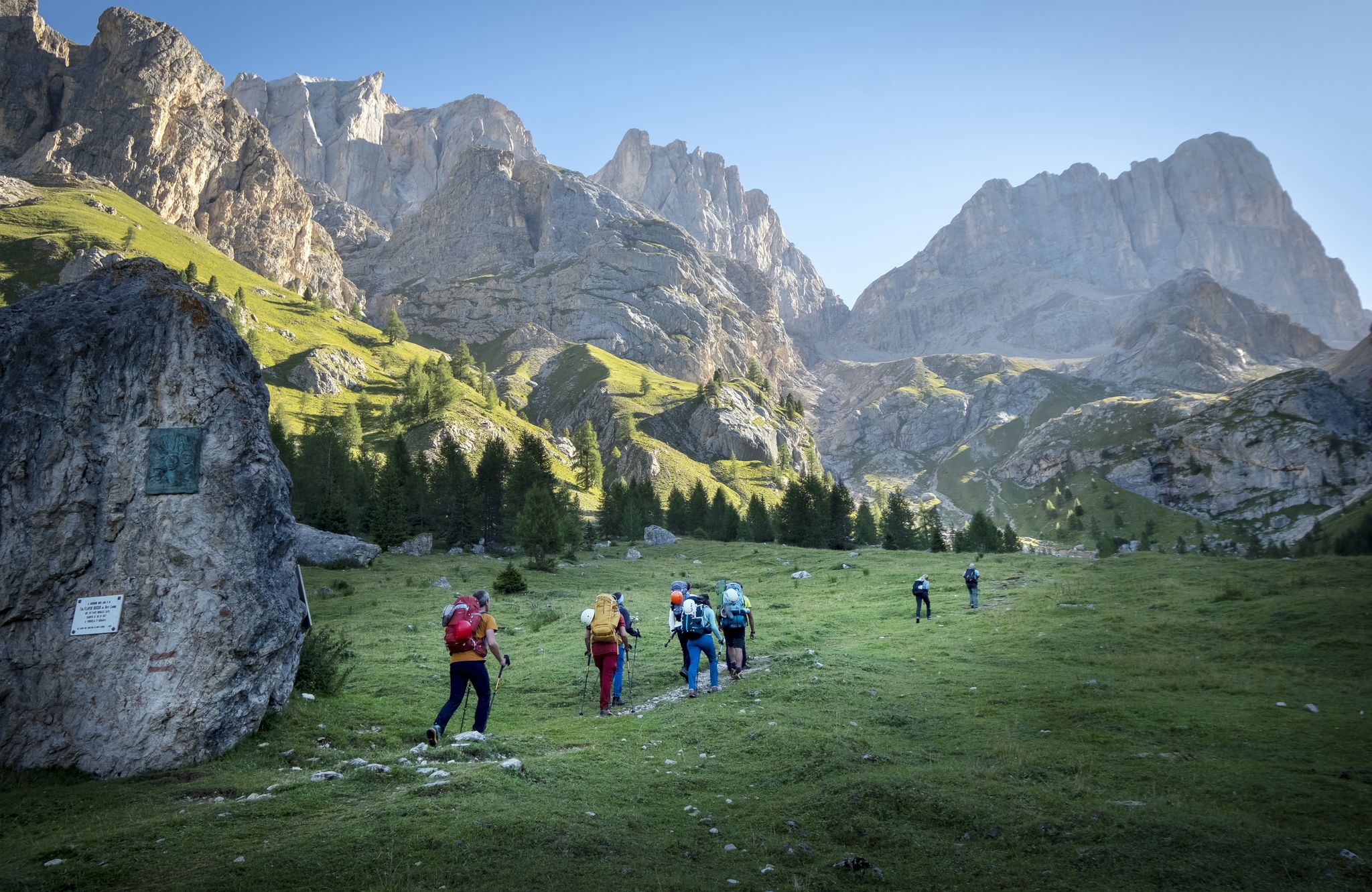
The Path of Peace – journey into Trentino's history
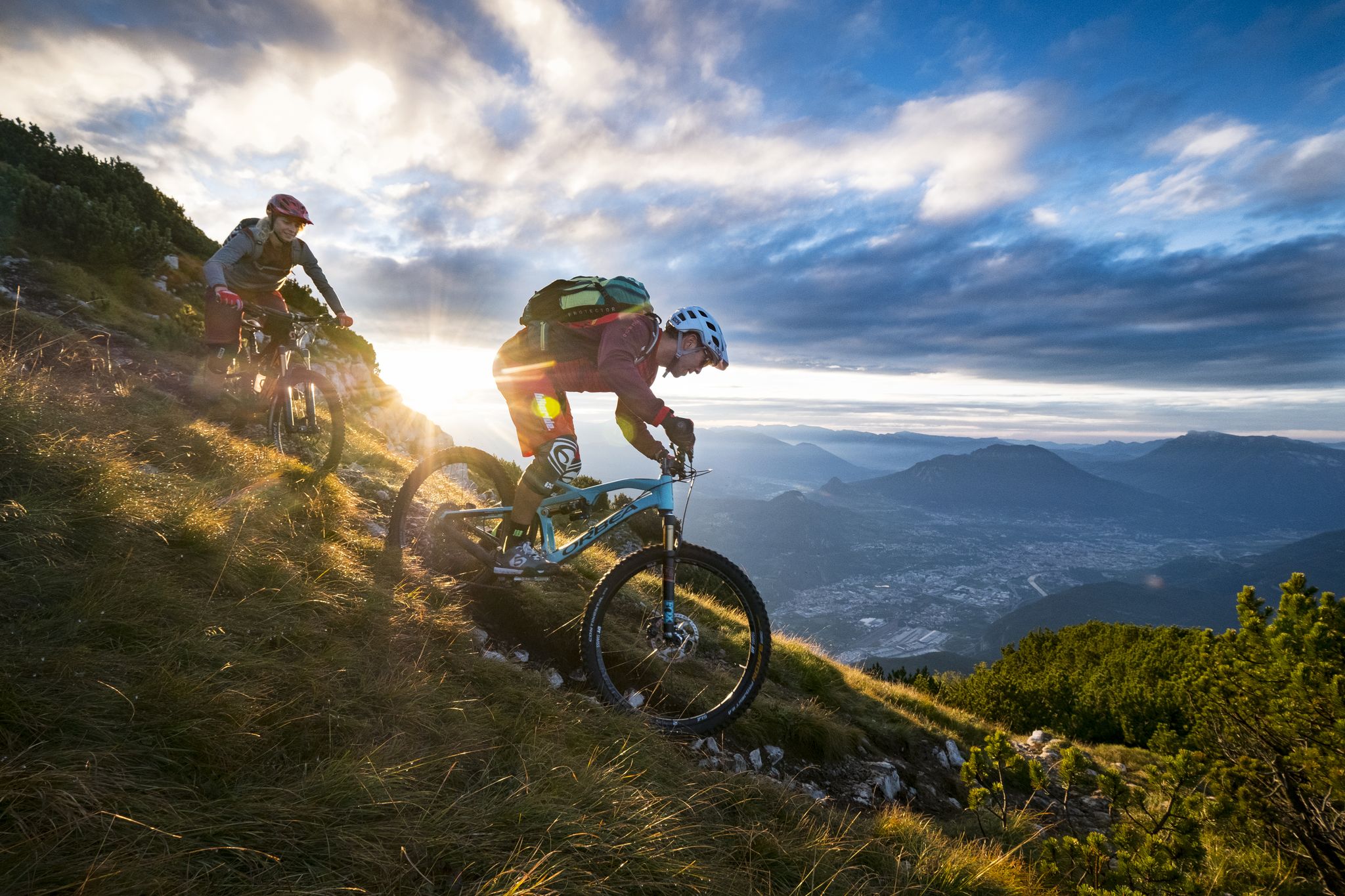
Mountain Biking in Trentino — from the Dolomites to Lake Garda
Hiking around Vallarsa
Road Cycling Routes around Vallarsa
Cycling around Vallarsa
Running Trails around Vallarsa
MTB Trails around Vallarsa
Gravel biking around Vallarsa
Mountain Hikes around Vallarsa

Tips from the Community

OK, it didn't look quite as magnificent in September, but it was definitely worth seeing.
0
0

The Cascata dei Papalini suddenly appears in a small clearing in the heart of the forest, along the path: over time the falling water has formed a columnar deposit of gray limestone that descends like a drape and that partly acts as a springboard for the jet. But the peculiarity and spectacular nature of this waterfall is the possibility of seeing it even from behind the scenes: in fact, by climbing to the left on a short but steep path, you reach a natural roof of the rock from which you can observe the forest below through the curtain of water, without getting wet! The passage is not protected and is wet, so you need to pay particular attention. Like all torrential waterfalls, it is not always full and active: you need to look for the right period, perhaps after heavy rains, to visit it in all its thunderous splendor.
1
0

Beautiful waterfall, it looks like a face with one eye, a big nose and teeth😊
1
0
Numerous streams descend from the Altopiano delle Montagnole, creating lively waterfalls in secluded valleys. The Sette Fontane waterfall, rather than a vertical waterfall, is a sloping section of the stream that descends between the rocks: to be visited in post-rain periods, to find it impetuous and swollen. Nearby, continuing along the path to the left, you come to another small intake structure that cuts the Lora stream. In the 1920s, all this wealth of water was exploited by the Lanificio Marzotto to produce electricity, with a system of waterworks that are still functioning: three small concrete dams, corresponding to as many springs (Lora, Sette Fontane and Lambre), convey the water into the Obante basin below (capacity 800 cubic meters), next to the road that goes up to the Rifugio Battisti; from there, via a forced conduit, it reaches the Gazza Power Plant, further downstream, to generate hydroelectric energy (175 l/s, 2,500 MWh). The waterfalls and the structures cross each other along the Sentiero delle Cascate, a simple family-sized ring, immersed in the woods, which starts from Malga Lora or Vasca Obante and goes up to Rifugio Battisti, and then descends again.
0
0

Valle del Boia, a very fresh valley near the town of Campotamaso
0
0
The Papalini waterfall is a small waterfall in the middle of the woods, it deserves to be seen
0
0
The Zambel Waterfall ('el Zambelòn' in the local dialect) is an enchanting natural setting: the stream plunges briskly between high rock walls into a natural pool; the cool, clear water flows into a clearing surrounded by greenery; the sun's rays often penetrate it, creating evocative beams of light and rainbows! It's naturally at its best after rainy days. It's also known as the Calliano Waterfall (name of the nearby town), the Rio Cavallo Waterfall (from the name of the stream and the valley of the same name), or the Rosspach/Rossbach Waterfall (the Cimbrian equivalent of the river): the watercourse was so named because it descended from Folgaria in a very winding and impetuous manner, like a restless colt. The waterfall is actually an ancient artificial dam, as evidenced by the stone blocks that compose it entirely, without the use of cement. In the 15th century, the left canal (above the greenhouse) was built for agricultural purposes and likely to fill the defensive moat of nearby Castel Pietra. In the 17th century, the right industrial canal ('roggia') was also built, descending to Calliano and flowing into the Adige River. Over the centuries, it has served to provide mechanical power to countless industrial and manufacturing activities (mills, sawmills, hammer mills, spinning mills). It can be reached from below, via an easy path from Calliano, or from above, via a short route equipped with ropes and steps. In summer, the site is quite popular for cooling off and sunbathing.
1
0

Fantastic path that constantly runs along the valley and the river, a path that leads to the Castiglieri cross, one of the most beautiful places to visit for those who live in the area. Campotamaso, Valdagno. Super recommended, to do at least once
0
0
Frequently Asked Questions
What makes the waterfalls around Vallarsa unique?
Vallarsa is home to diverse waterfalls, each with distinct characteristics. For example, the Papalini Waterfall allows you to walk behind its veil of water, while the Zambèl Waterfall is a natural monument where the stream plunges between high rock walls into a natural pool, also featuring an ancient artificial dam. The Sette Fontane Waterfall is characterized by numerous streams descending from the Altopiano delle Montagnole, with remnants of a 1920s hydropower system visible.
When is the best time to visit the waterfalls in Vallarsa?
The waterfalls are particularly impressive after periods of rain when the water flow is more abundant and impetuous. This enhances their natural beauty and power. Summer can also be a good time for cooling off and enjoying the natural pools, especially at Zambèl Waterfall.
Are there family-friendly waterfall trails in Vallarsa?
Yes, several waterfalls offer family-friendly access. The Zambèl Waterfall can be reached via an easy 'Fairytale Trail' from Calliano and features picnic spots and a children's play area. The 'Waterfall Trail' to the Sette Fontane Waterfall is also described as a simple, family-sized ring route through the woods.
What kind of historical significance do the waterfalls in Vallarsa hold?
Beyond their natural beauty, some waterfalls in Vallarsa have historical importance. The Zambèl Waterfall is an ancient artificial dam, showcasing human ingenuity from the 15th and 17th centuries when its waters were used for agriculture and to power mills and sawmills. The Sette Fontane Waterfall area also features remnants of a 1920s hydropower system, utilized by Lanificio Marzotto for electricity generation.
What are some popular hiking trails that lead to waterfalls in Vallarsa?
The 'Fairytale Trail' from Calliano leads to the Zambèl Waterfall, passing through vineyards and woods with artistic installations. The 'Waterfall Trail' is a family-friendly ring route through the woods that takes you to the Sette Fontane Waterfall. Additionally, the Braggion Trail offers a beautiful and evocative loop, ascending the Val del Boia alongside a lively stream and discovering a series of impetuous waterfalls.
Are there any viewpoints or natural features to look out for near the waterfalls?
Yes, the Zambèl Waterfall is known for sunlight creating evocative beams and rainbows in its natural pool. The Papalini Waterfall is noted for a rock formation that some say resembles a face with an eye, nose, and teeth. The Braggion Trail also offers panoramic views from Monte Turigi.
What outdoor activities can I do near the waterfalls in Vallarsa?
Besides hiking to the waterfalls, Vallarsa offers various outdoor activities. You can explore cycling routes like the 'Strada delle Sette Fontane – Rif. Campogrosso loop' or 'Generale D'Havet Tunnel – General Achille Papa Refuge loop' for touring bicycles. Gravel biking is also popular, with routes such as the 'Bridge over the Adige River – Adige Valley Cycle Path loop'. For runners, there are challenging trails like the 'Passo di Campogrosso – Rifugio Campogrosso loop'. You can find more details on these activities in the Cycling around Vallarsa, Gravel biking around Vallarsa, and Running Trails around Vallarsa guides.
What are the difficulty levels of the trails leading to the waterfalls?
Trail difficulties vary. The path to Zambèl Waterfall from Calliano is considered easy, while a panoramic hike from Castel Beseno is moderately difficult. The Papalini Waterfall is part of a moderate hiking loop. The Braggion Trail, which includes several waterfalls, is not difficult but has exposed sections and can be slippery, with steel cables and steps facilitating risky parts.
Can I swim in the natural pools at the waterfalls?
Yes, the cool, clear waters of the natural pool at Zambèl Waterfall are ideal for swimming, especially during summer months when the site is popular for cooling off and sunbathing.
What do visitors enjoy most about the waterfalls in Vallarsa?
Visitors frequently highlight the enchanting natural settings, the refreshing ambiance, and the unique features of each waterfall. The opportunity to walk behind the water at Papalini Waterfall is a favorite, as is the dramatic plunge and natural pool at Zambèl Waterfall. The rich and powerful water flow, especially after rains, leaves many speechless, particularly along trails like the Braggion Trail.
Are there any circular walks or loops that include waterfalls?
Yes, the 'Waterfall Trail' to the Sette Fontane Waterfall is a simple, family-sized ring route. Additionally, the Braggion Trail is a beautiful 7km loop with an elevation gain of 450m, usually followed clockwise from Campotamaso, which includes several impetuous waterfalls in the Val del Boia.
Most popular routes around Vallarsa
Most popular attractions around Vallarsa

Get inspired with the komoot mobile app


Explore more
Happy to travel a little further afield? Then browse these guides for the best waterfalls around Vallarsa:
