Top 6 Castles around Piobbico
Best castles around Piobbico are found in a remote valley situated between Monte Nerone and Montiego, at the confluence of the Biscubio and Candigliano rivers. The town developed at the base of a hill, which is home to the Brancaleoni Castle and a medieval village. This area features historical architecture set within a green landscape of the Umbria-Le Marche Apennines.
Best castles around Piobbico
- The most popular castles is Rocca Torrione of Cagli, a castle that lies like a…
Last updated: June 30, 2026
Rocca Torrione of Cagli
Highlight • Castle
Translated by Google •
Tip by

Mondelacasa Castle (the Muracci)
Highlight • Castle
Translated by Google •
Tip by

Sign up now to discover places like this
Get recommendations on the best single tracks, peaks, & plenty of other exciting outdoor places.
Sign up for free
Piobbico
Highlight • Settlement
Showing Translation
Tip by

Brancaleoni Castle of Piobbico
Highlight • Castle
Translated by Google •
Tip by

Castello dei Pecorari
Highlight • Castle
The ruins of the castle …
Translated by Google •
Tip by
Sign up for free to discover even more castles around Piobbico.
Sign up for free
Already have an account?
Start today with a free account
Your next adventure awaits.
Login or Signup

Tips from the Community

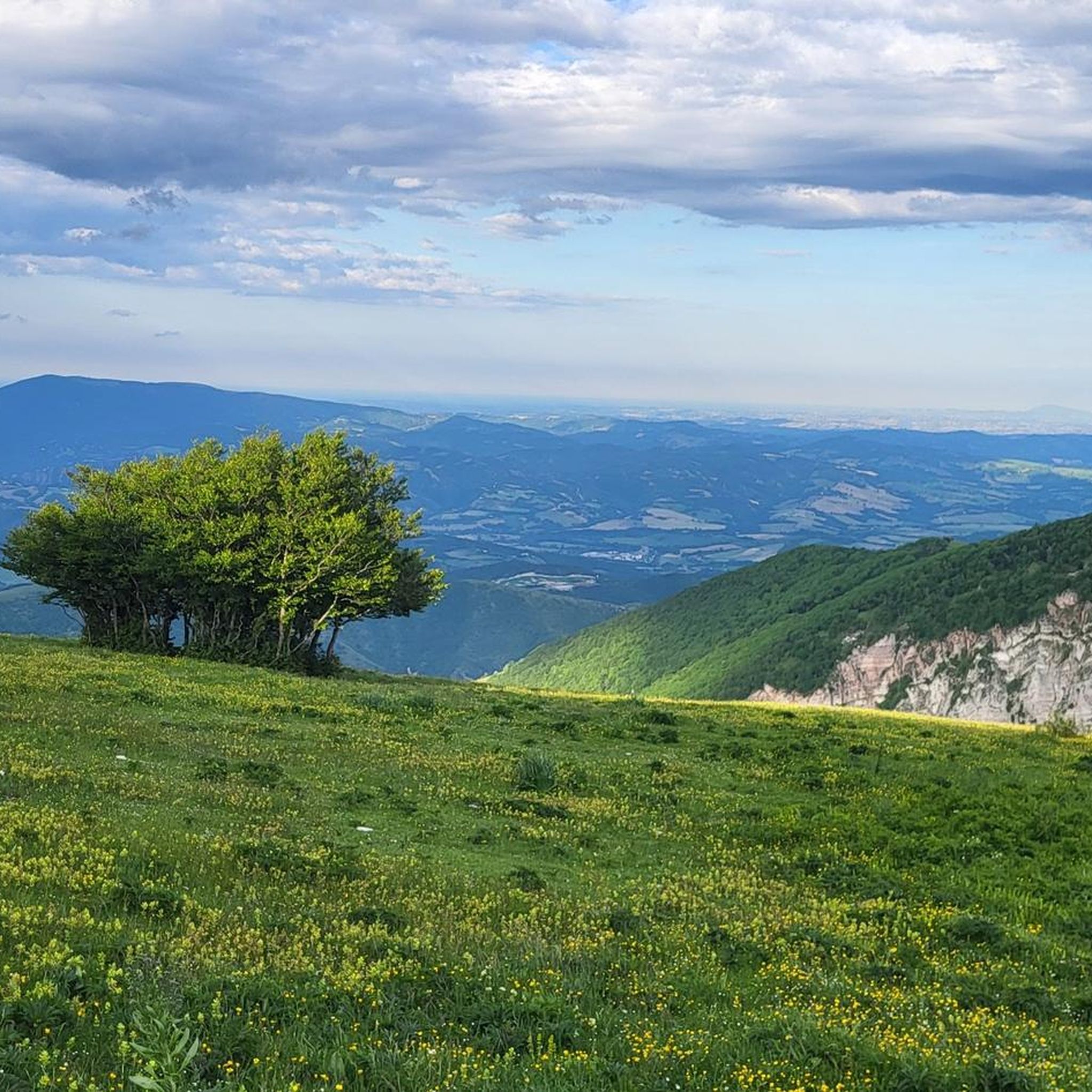
Piobbico is a beautiful town in the province of Pesaro Urbino with about 1800 inhabitants. It is located in a valley between Monte Nerone and Monte Montiego and stands right at the confluence of two rivers: the Biscubio and the Candigliano. Piobbico is also known as the Land of the Ugly, due to the National Association of the Ugly, founded at the end of the 19th century to allow young women from Piobbico to find a husband; it currently has about 30,000 members and every year, on the first Sunday of September, the World Festival of the Ugly takes place. The festival is famous throughout central Italy and attracts a very large number of people each year.
1
0

The ruins of the Mondelacasa Castle (or Monte della Casa), called the Muracci, are located on the northern slopes of Mount Nerone, on the left bank of Val d'Abisso, at 707 m above sea level, about 1 km south of the historic center of Piobbico. (from COMUNE PIOBBICO 1999): Close to Mount Nerone stands a massive buttress whose base widens between the Biscubio torrent and the Petrello stream (Fosso di S. Maria) and carries the ruins of an ancient artifact on the summit. It was a castle, a primitive dwelling that the Brancaleoni, who arrived around the year 1000 in the Biscubio District, built and lived in until the mid-1300s. This is how our Costanzo Felici (1) describes it in a document from 1582:... climbing up to Monte Nerone a mile away on a rough and terrible hill and rock, there are vestiges of a superb, large and beautiful palace or fortress now in ruins, of which those (Brancaleoni) of Piobico were the owners. Built by Gentile Brancaleoni in the first half of the 13th century, it took the name of Mons Casa or Mondelacasa, today Muracci because of the ruins visible on the summit. Towards the middle of the 14th century, both because of the harshness of the place, difficult to reach when ... winter almost buried the tower under the snow, locked it under the grip of the ice, tormented it with the blizzard, confining it for months in isolation, and because of the need for other and more comfortable comforts, the two brothers Pazzo and Federico Brancaleoni decided to settle in the house that they had begun to build "in castro Plobici", on the hill to the right of the confluence of the Biscubio with the Candigliano, where there were already small houses piled up, that is, equipped with a watchtower with a Gothic arch portal to the north and a castle to the south-east. It is the place where the Brancaleoni Castle-Palazzo will develop and take shape over time. NOTE: (1) Costanzo Felici was born in the second decade of the 16th century in Casteldurante (now Urbania). However, he preferred to define himself as a native of Piobbico, where his ancestors had moved around 1330. He practiced medicine in Piobbico, Sant'Angelo in Vado, Pesaro, Rimini and Urbania. At the same time, he cultivated naturalistic and historical studies with notable results. He died in Pesaro on February 5, 1585. taken from: https://www.lavalledelmetauro.it/contenuti/beni-storici-artistici/scheda/11123.html
0
0

Now few ruins of a beautiful castle, located in a beautiful position, much of it collapsed but worth a visit. Easy to reach.
0
0

The name derives from a local family, the Pecorari, but it passed under the dominion of the Brancaleoni family first and then the Ubaldini family. Inhabited until 1930, it was partially dismantled to build a farmhouse that then fell into disuse. A path in the woods, within the Monte Nerone hiking circuit
0
0

Beautiful town, worth taking a break
0
0

Castello dei Pecorari is located on the southwest slopes of Mount della Croce at an altitude of 551 m, about 2.5 km N.W. of Piobbico. The ruins of the castle stand out on a hilltop covered by woods, clearly visible for those traveling along the road along the Candigliano valley. An ancient local family, the Pecorari, gave the castle its name. The first mention of its existence dates back to 1216, when it belonged to the Brancaleoni della Rocca; later (1481) it passed to the Ubaldini. Around 1930 it was partially dismantled to build a farmhouse. Around the year one thousand the Castle belonged to the Abbots of the monastery of S. Vincenzo del Furlo. later Gentile Brancaleoni added it to his possessions (13th century). In 1446 it was confiscated from Count Antonio Brancaleoni dei Pecorari and donated by Duke Federico Malatesta to his faithful captain Francesco Ubaldini della Carda. It remained the property of the Ubaldinis until 1816, when, after the abolition of feudalism, the last descendants sold it together with the lands to the noble Bartolucci family from Piobbico, who in turn ceded it to a Basili from Urbania.
0
0
The history of Piobbico is connected to the history of the Brancaleoni count family, which dominated these districts for seven centuries, in fact the Brancaleoni Castle developed in successive periods, from 1200 to 1700. Its construction began as a fortress and then assumed, over the years, the appearance and grace of a Renaissance palace, full of frescoes, stuccos, fireplaces, writings in Latin, Greek and vernacular, dates and names, which allowed to reconstruct the architectural history of this large container (135 rooms). Going up the medieval village you arrive at the square where the clock tower stands. The tower rests on a pointed arch vault dating back to the 1200s, therefore prior to the construction of the first nucleus of the building, evidence of an old watchtower. Towards the end of the 16th century, a tower was erected above the vault on which two clocks were placed, one on the facade facing the town and one on the facade facing the San Carlo courtyard. On the entrance facade, next to the tower, you can admire an elegant loggia which, together with the balustrade, make the facade less massive, giving the whole complex a refinement that is more suited to a Palace than a Castle. In fact, this immense building (135 rooms) has developed over the centuries, through a series of interventions, expansions, until reaching the current structure in which the Renaissance features prevail, but also presents evident defensive and military security elements typical of the late Middle Ages.
1
0

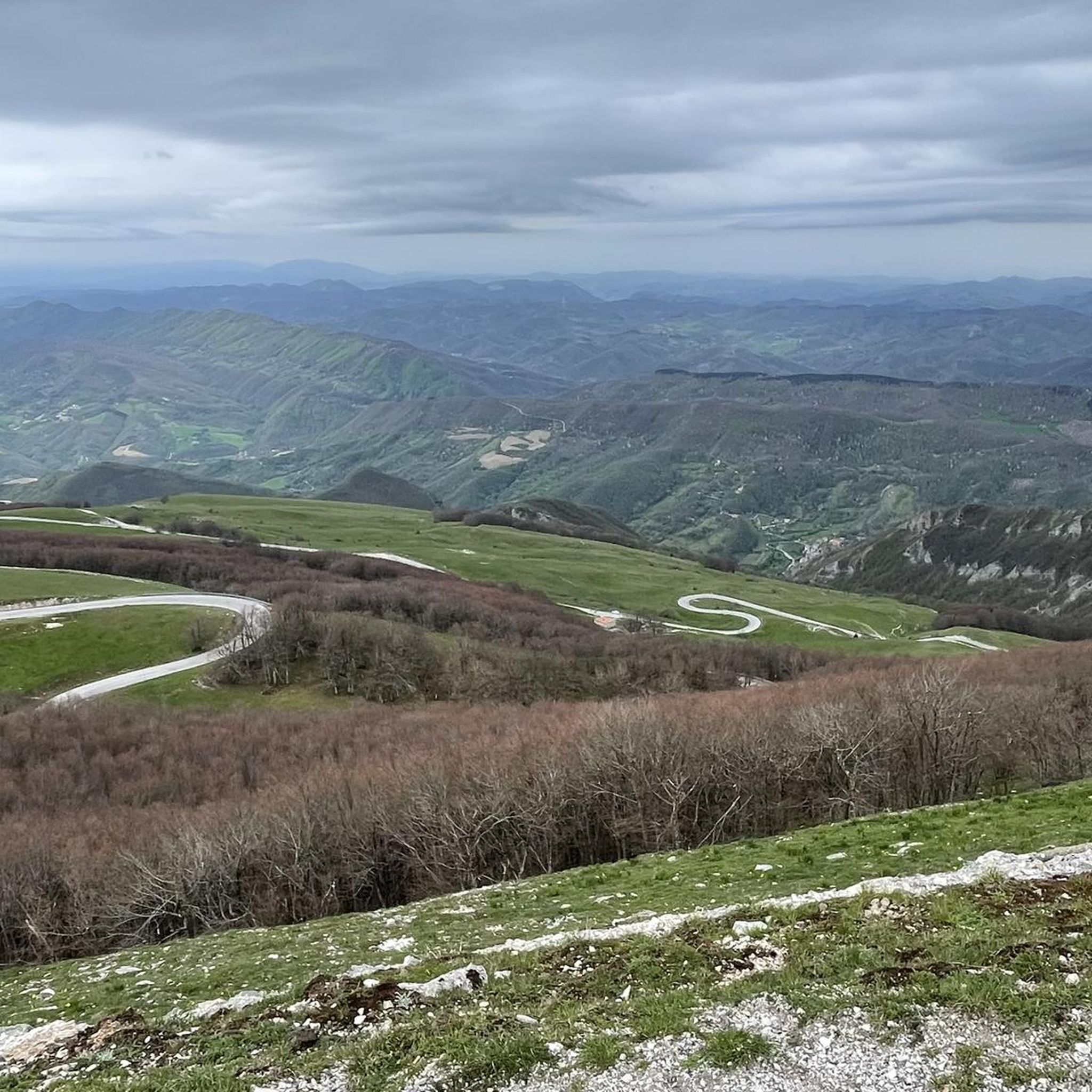
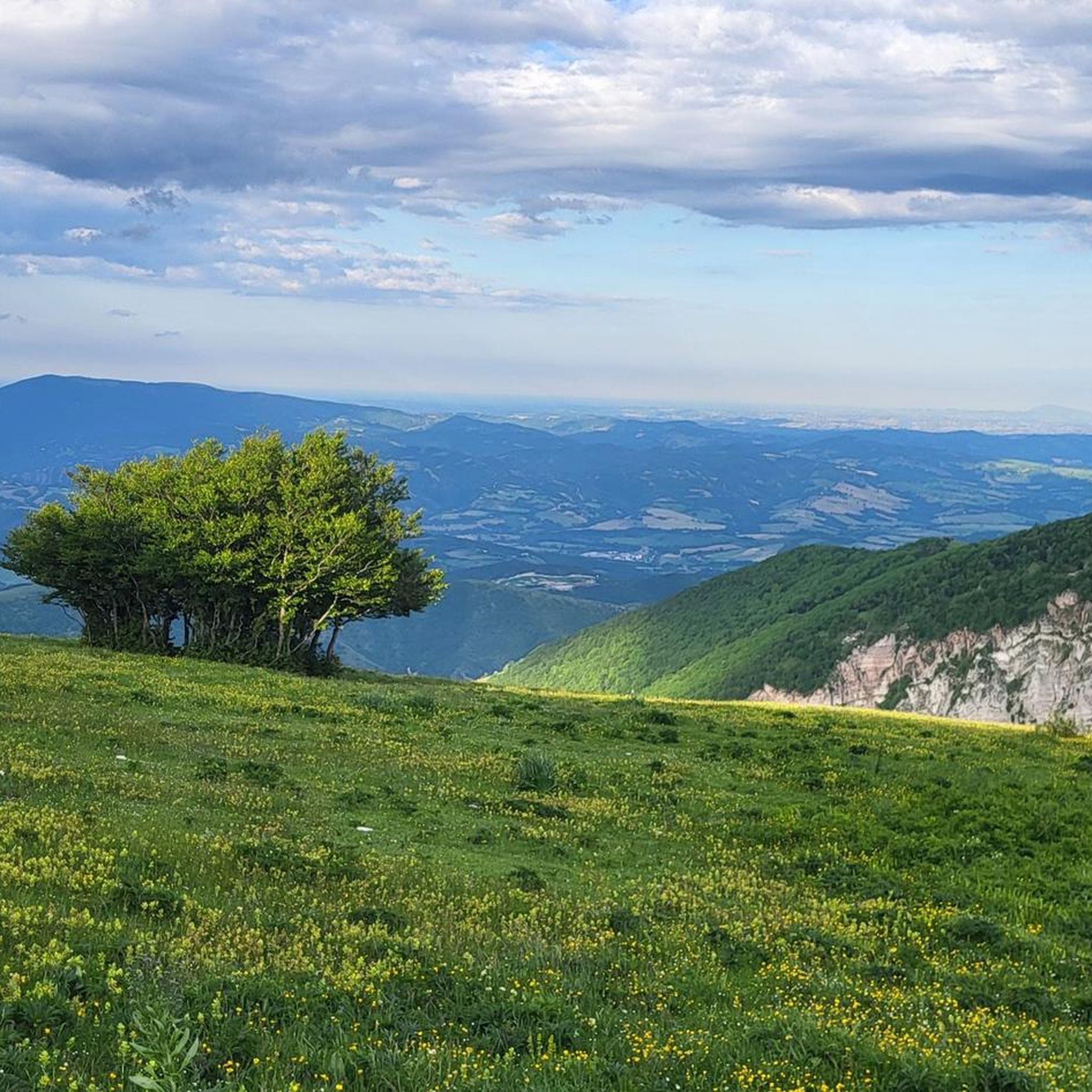
Ruin in a panoramic position on the northern side of Monte Nerone
0
0
Frequently Asked Questions
What are the most historically significant castles around Piobbico?
The most notable is the Brancaleoni Castle of Piobbico, which evolved from a 13th-century fortress into a splendid Renaissance palace. It showcases centuries of architectural transformation. Another significant site is the Mondelacasa Castle (the Muracci), a 13th-century ruin that was an early dwelling of the Brancaleoni family. The Rocca Torrione of Cagli also has Roman origins and was rebuilt, serving as a church fortress.
Are there any unique architectural features to look out for in Piobbico's castles?
Yes, the Brancaleoni Castle of Piobbico is particularly known for its clock tower with an anticlockwise rotation, an intentional design choice by the Brancaleoni family. Its Courtyard of Honor also strikingly resembles that of the Ducal Palace in Urbino, reflecting Renaissance influences.
Can I explore castle ruins near Piobbico?
Absolutely. The Mondelacasa Castle (the Muracci) offers the chance to explore the remains of a 13th-century primitive dwelling. Situated in a panoramic position on the northern side of Monte Nerone, it provides views of Val d'Abisso.
What kind of museums or collections can I find within the castles?
The Brancaleoni Castle of Piobbico houses the Civic Museum Brancaleoni and a permanent exhibition of historical dresses and jewels from the Alessandro Righi Luperti collection. Additionally, the Museum of Ancient Traditions on the ground floor preserves tools and natural essences related to local farming heritage.
What outdoor activities can I do near these castles?
The region around Piobbico offers various outdoor activities. You can find numerous cycling routes, including challenging ones like the 'Monte Nerone Summit Road Sign – Colombara Globe loop'. For mountain biking, there are trails such as the 'Monte Nerone - ring route'. Running enthusiasts can explore routes like the 'Rocca Torrione of Cagli loop'. You can find more details on these activities in the Cycling around Piobbico, MTB Trails around Piobbico, and Running Trails around Piobbico guides.
Are there family-friendly castles to visit around Piobbico?
Yes, the town of Piobbico itself, with its medieval village and the Brancaleoni Castle, is considered family-friendly. The Rocca Torrione of Cagli is also listed as a family-friendly historical site, offering a glimpse into the region's past.
What is the best time of year to visit the castles in Piobbico?
The castles around Piobbico, nestled in the green landscape of the Umbria-Le Marche Apennines, are generally pleasant to visit during spring and summer when the weather is mild and the surrounding nature is vibrant. However, the Brancaleoni Castle is an indoor attraction, making it suitable for visits year-round, including winter, though access to some ruins like Mondelacasa might be more challenging in snowy conditions.
Are there guided tours available for the castles?
The Brancaleoni Castle of Piobbico generally offers guided tours, providing deeper insight into its rich history, art, and unique features. Information panels are also available in multiple languages.
How can I get to the Brancaleoni Castle in Piobbico?
The Brancaleoni Castle is situated on a ridge overlooking the town of Piobbico. While specific public transport details to the castle itself are not readily available, Piobbico is accessible by road. Parking is typically available within the town, allowing visitors to walk up to the castle through the medieval village.
What kind of natural features can I see near the castles?
The castles are set within a beautiful natural landscape. Piobbico is located at the confluence of the Biscubio and Candigliano rivers, between Monte Nerone and Montiego. From the Brancaleoni Castle, you can enjoy picturesque views of the town and the surrounding green Apennine mountains. The Mondelacasa Castle (the Muracci) ruins offer panoramic views of Val d'Abisso.
Are there cafes or accommodation options near the castles?
Yes, as Piobbico is a town, you can find cafes, pubs, and accommodation options within or very close to the town center, which is at the base of the hill leading up to the Brancaleoni Castle. For other castles like Rocca Torrione of Cagli, amenities would be found in the nearby town of Cagli.
What makes the Brancaleoni Castle of Piobbico a must-visit?
The Brancaleoni Castle is a must-visit for its rich blend of history, art, and unique features. It offers a tangible journey from a medieval fortress to an elegant Renaissance palace, complete with around 130 rooms, frescoes, and the distinctive anticlockwise clock tower. Its museums and dominant position overlooking Piobbico also add to its appeal.
Most popular routes around Piobbico
Most popular attractions around Piobbico

Get inspired with the komoot mobile app


Explore more
Looking for the best castles somewhere else? Discover other guides around Piobbico:
