Top 16 Castles around Magione
Best castles around Magione offer a glimpse into Umbria's rich past, situated in a charming Italian town. The region features historical fortifications and a landscape that includes views of Lake Trasimeno. These sites provide insight into medieval history and defensive strategies. Magione's strategic location has resulted in a concentration of historical castles and fortified villages.
Best castles around Magione
- The most popular castles is Triangular Tower, Passignano sul Trasimeno, a castle that consists of ruins of medieval structures including…
Last updated: June 29, 2026
Triangular Tower, Passignano sul Trasimeno
Highlight • Castle
The Rocca di Passignano (Castle of Passignano) is located inside the village, in an elevated position above the town, which …
Translated by Google •
Tip by

Rocca del Leone, Castiglione del Lago
Highlight • Castle
This is the main monument of Castiglione del Lago and is definitely worth a visit.
Translated by Google •
Tip by

Sign up now to discover places like this
Get recommendations on the best single tracks, peaks, & plenty of other exciting outdoor places.
Sign up for free
Antognolla Castle
Highlight • Castle
Translated by Google •
Tip by

Castle of St. Apollinaris
Highlight • Castle
Translated by Google •
Tip by

Montegualandro Castle
Highlight • Castle
Translated by Google •
Tip by

Sign up for free to discover even more castles around Magione.
Sign up for free
Already have an account?
Start today with a free account
Your next adventure awaits.
Login or Signup

Other adventures around Magione

Tips from the Community

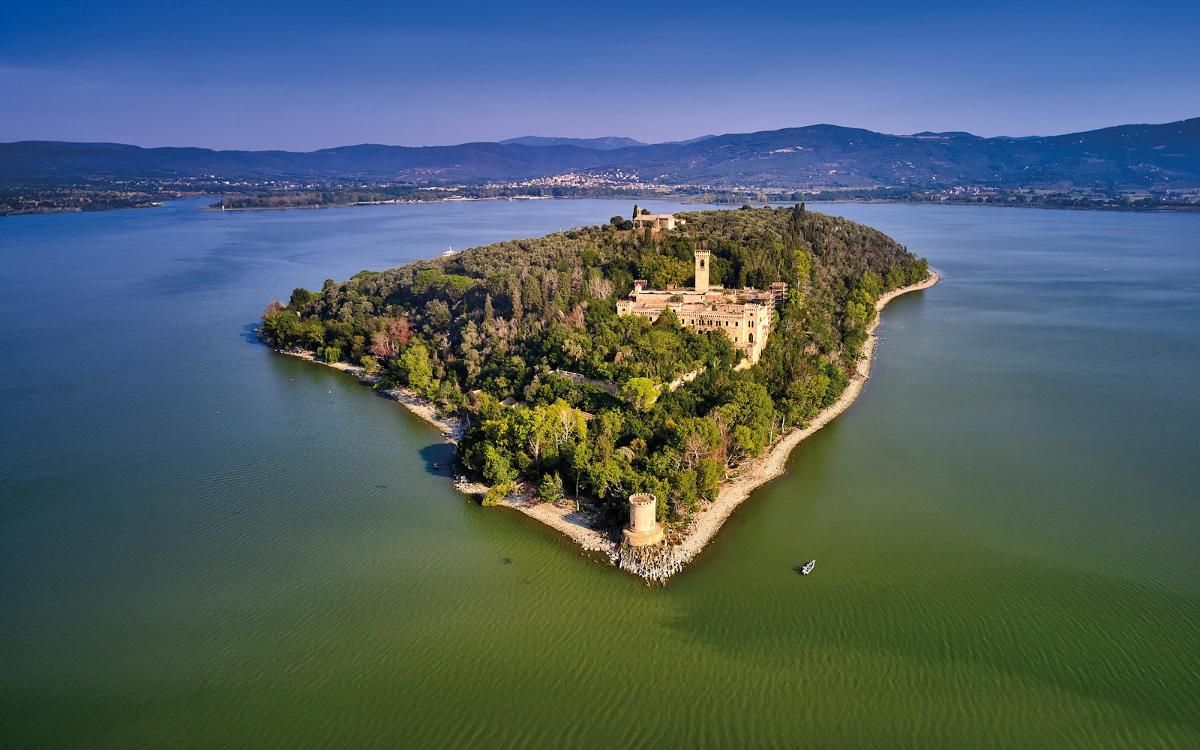
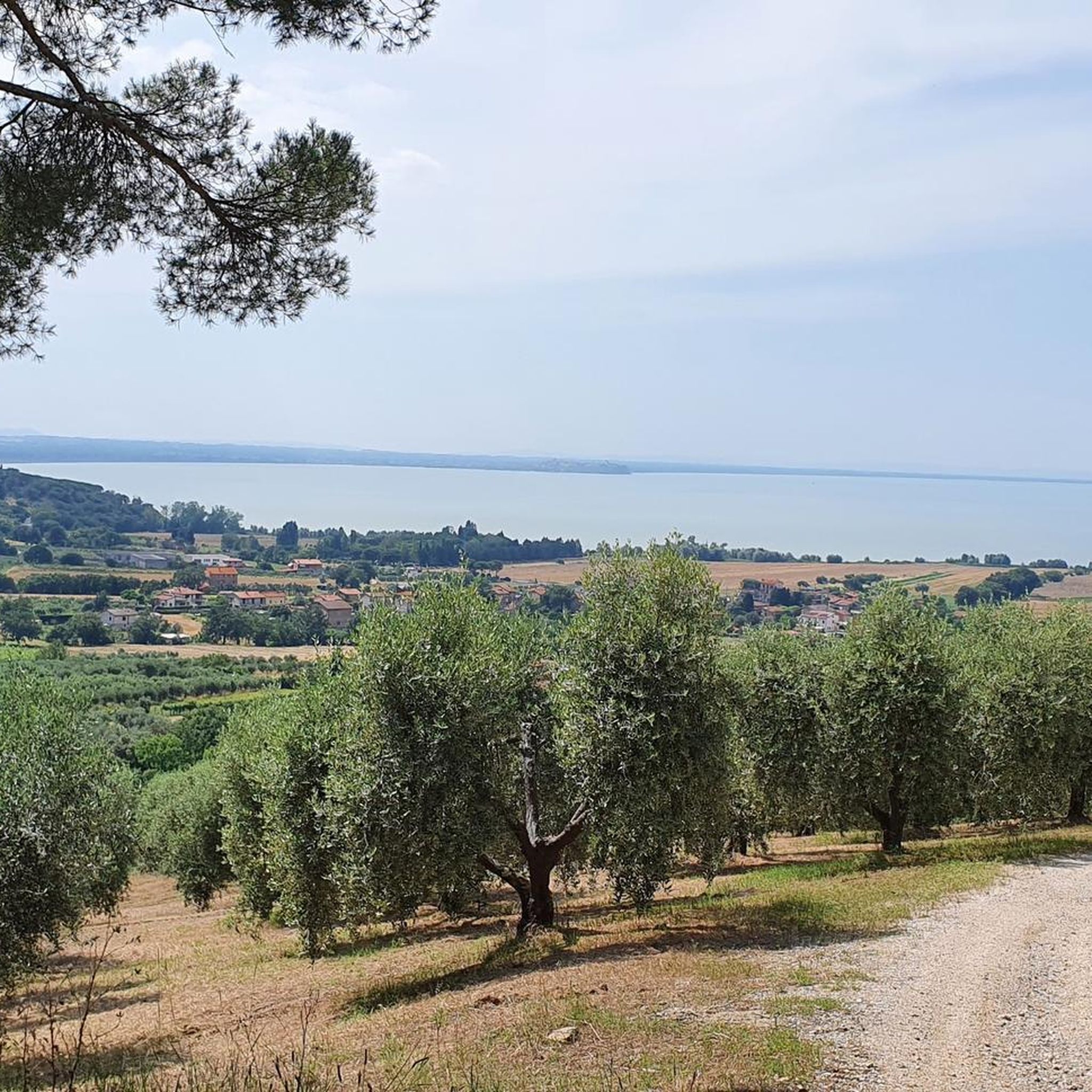
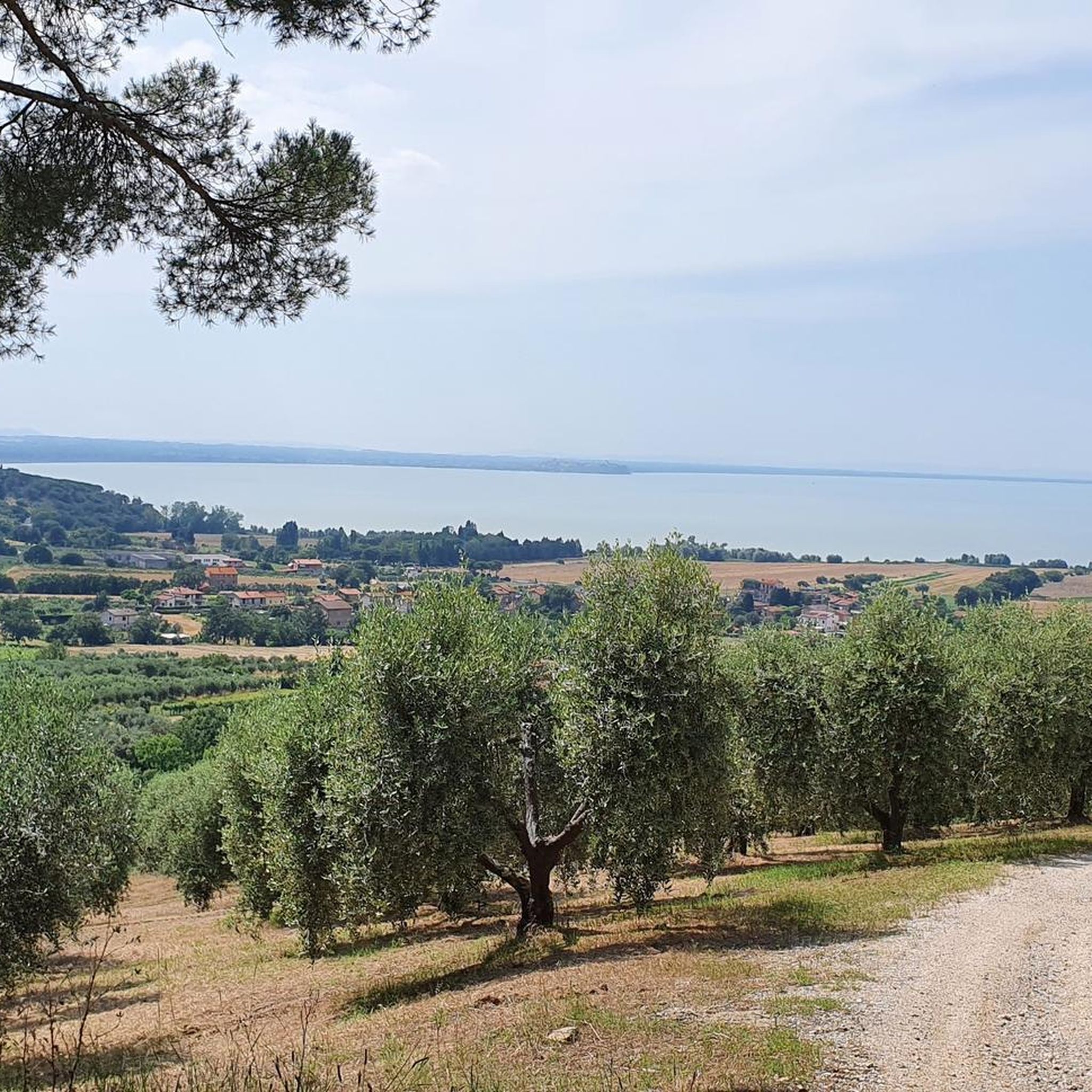
Located near the village of Spina, the Rocca di Sant'Apollinare is a place rich in history and timeless images. Once a defensive fortress, it became a place of worship and production, and today it is immersed in a centuries-old olive grove. Getting there requires a bit of effort, but the reward is guaranteed.
0
0

Antognolla Castle, located on the slopes of Monte Tezio and now part of an exclusive golf club, owes its name to the ancient Antognolla family of Perugia. First mentioned in 1174 for the presence of a Benedictine monastery, it became a fiefdom in 1399 at the behest of Pope Boniface IX. Over the following centuries, it was at the center of conflicts between noble families, until it passed to the Oddi family in 1628 and then to the Guglielmi family in 1836. After a period under the Agnelli family, it was recently restored to become a luxury resort.
0
0

Rocca di Passignano (Castle of Passignano) - Passignano sul Trasimeno The Rocca di Passignano (Castle of Passignano) is located inside the village, in an elevated position above the town, which later expanded to the lakeshore. According to some sources, Passignano could mean "place of the pass," referring to the existence of a Roman military structure that served to control a "pass" between the present-day regions of Umbria and Tuscany. Nothing remains of this possible structure today. Currently, the castle consists of ruins of medieval structures: square walls, a half-ruined tower, and the northern part of the castle with a triangular tower. Furthermore, a series of alleys wind through this part of the historic center, once surrounded by walls, giving an idea of what the street layout within the castle might have looked like. The oldest core probably dates back to the 5th or 6th century; The square walls, however, were built between 820 and 850, when the castle belonged to the Marquises of Tuscany. In 1187, the property became the property of the canons of the Cathedral of San Lorenzo in Perugia. In the 13th century, the castle underwent significant renovations, transforming it into a true fortress, an outpost, and defensive bastion of the Perugian territory. Text / Source: Umbria Tourism.it https://www.umbriatourism.it/de/-/la-rocca-passignano-de
14
0

The Rocca del Leone is the medieval fortress with an irregular pentagonal structure built starting from the thirteenth century. This is the main monument of Castiglione del Lago and is definitely worth a visit.
1
0

Not only the beach promenade is a must-see in Passignano sul Trasimeno, but also the old town with its many small, romantic alleys is a must-see. Here you will find many small restaurants and shops, some of which are hidden, where you can buy beautiful souvenirs or delicacies.
1
0

Very nicely prepared narrow streets
0
0

Sant'Apollinare belongs to the municipality of Marsciano and is a beautiful panoramic point over the Fersenone Valley. Designed as a military building, the castle, along with many others in Umbria, was part of a circle of castles built to defend the city of Perugia from the south side on the Byzantine walls. The origins of the Castle of San Apollinare probably date back to the 10th century.
1
0

This fortified place, and site of the discovery of an Etruscan stele still preserved in the Archaeological Museum of Umbria in Perugia, occupies an excellent strategic position and marks a further border of the Perugia area. The fort stands at about 450 meters above sea level and its privileged lookout post (in fact, it is located at the extreme border of the Perugia area dominating the road that connected Perugia to Arezzo and Florence and over the entire Arezzo plain) it hides, in its presence, the historical events that characterized it with continuous clashes between Perugia and the Tuscan cities for control of it. Source: https://livingtuoro.it/luoghi-di- interesse/il-castello-di-montegualandro/
1
0
Frequently Asked Questions
What are the most historically significant castles in Magione?
The most historically significant castle directly in Magione is the Castello dei Cavalieri di Malta (Castle of the Knights of Malta). Originally a 12th-century hospital, it was transformed into a fortified abbey and then a castle by the Knights Hospitaller. It's famously known as the site of the "Congiura di Magione" (Conspiracy of Magione) against Cesare Borgia in 1502, an event mentioned by Machiavelli. Other notable historical sites include the medieval Triangular Tower, Passignano sul Trasimeno, with its origins dating back to the 5th or 6th century.
Are there any fortified villages or unique defensive structures to explore near Magione?
Yes, beyond individual castles, you can explore the ancient medieval village of Montecolognola near Magione. This fortified village, built in 1293, essentially functions as a castle in its own right, featuring elliptical walls with five bastions. It offers magnificent views of Lake Trasimeno and provides insight into medieval Umbrian defensive strategies.
What kind of architecture can I expect to see in the castles around Magione?
The castles around Magione showcase various medieval architectural styles. For instance, the Castello dei Cavalieri di Malta has a distinctive square plan with circular towers and a central courtyard. The Rocca del Leone in Castiglione del Lago is an irregular pentagonal medieval fortress. Many, like the Castello di Antria, exhibit typical quadrangular designs with corner towers, characteristic of medieval defensive structures.
Are there any castles near Magione that offer panoramic views?
Absolutely. The fortified village of Montecolognola offers magnificent views of Lake Trasimeno. Additionally, the Castle of St. Apollinaris, located near Marsciano, provides a beautiful panoramic point over the Fersenone Valley. The Rocca del Leone in Castiglione del Lago also offers impressive views from its walls.
What outdoor activities can I do near the castles around Magione?
The area around Magione, including its castles, is excellent for outdoor activities. You can find numerous routes for cycling, gravel biking, and hiking. For example, there are moderate to difficult cycling tours like "The tour of Lake Trasimeno from Magione" and "View from Monte del Lago – Passignano loop from Magione." Hiking options include "View of Lake Trasimeno – Monte del Lago loop from San Feliciano." You can find more details on these activities in the Cycling around Magione, Gravel biking around Magione, and Hiking around Magione guides.
Are there any castles near Magione that have been converted or repurposed?
Yes, Antognolla Castle, first mentioned in 1174 for a Benedictine monastery, has been recently restored and transformed into a luxury resort and is part of an exclusive golf club. The Castello di Antria is also currently used for various cultural events and tourism, allowing visitors to experience its historic ambiance.
What is the best time of year to visit the castles in Magione?
The best time to visit the castles around Magione is generally during the spring (April-June) and autumn (September-October) months. During these periods, the weather is pleasant for exploring, and the natural beauty of the Umbrian landscape, including views of Lake Trasimeno, is at its peak. Summer can be quite hot, while winter might be cooler with some sites having reduced hours.
What do visitors appreciate most about the castles around Magione?
Visitors particularly appreciate the rich history and architectural beauty of the castles. The community has shared 59 photos and given 56 upvotes for these sites, highlighting their visual appeal and historical significance. Many enjoy the opportunity to step back in time, explore well-preserved medieval structures, and take in the scenic views, especially those overlooking Lake Trasimeno.
Are there any castles near Magione with connections to famous historical figures?
The Castello dei Cavalieri di Malta in Magione has a direct connection to a famous historical figure: Cesare Borgia. It was the location where the "Congiura di Magione" (Conspiracy of Magione) against him was plotted in 1502, an event famously documented by Machiavelli in "The Prince."
Can I find any castles near Magione that are part of a larger historical context, like a defensive network?
Yes, several castles around Magione were part of broader defensive networks. The Triangular Tower, Passignano sul Trasimeno, for example, was transformed into a true fortress in the 13th century, serving as an outpost and defensive bastion of the Perugian territory. Similarly, the Castle of St. Apollinaris was part of a circle of castles built to defend the city of Perugia from the south side.
Are there any castles near Magione that are known for cultural events or local traditions?
The Castello dei Cavalieri di Malta in Magione is known for hosting cultural events and tourism activities, including wine tastings that connect visitors to its ancient winemaking traditions. A historical reenactment of the "Conspiracy at the Castle" also takes place every July, offering a unique cultural experience.
Are there any castles near Magione that are less known but still worth visiting?
While less information is available, the **Torre dei Lambardi** (Lambardi Tower) is an emblem of Magione's past defenses, and the ruins of the mysterious **Zocco Castle** near Monte del Lago also underscore Magione's historical significance as a strategic location. These offer a glimpse into the region's lesser-explored historical sites.
Most popular routes around Magione
Most popular attractions around Magione

Get inspired with the komoot mobile app


Explore more
Looking for the best castles somewhere else? Discover other guides around Magione:
