Top 12 Caves around Rapino
Best caves around Rapino are situated in a region characterized by its natural landscapes and historical significance. The area offers a variety of subterranean experiences, including natural formations and sites with archaeological importance. Many locations feature historical continuity, having served as sacred places over millennia. This landscape provides diverse opportunities for exploration.
Best caves around Rapino
- The most popular caves include Hermitage of Saint Bartholomew in Legio, a religious building and cave that was frequented by Pope Celestine V.…
Last updated: June 29, 2026
Hermitage of Saint Bartholomew in Legio
Highlight • Religious Site
Translated by Google •
Tip by

Bocca di Valle Memorial
Highlight • Monument
Translated by Google •
Tip by

Sign up now to discover places like this
Get recommendations on the best single tracks, peaks, & plenty of other exciting outdoor places.
Sign up for free
Sant'Angelo Cave
Highlight • Cave
Translated by Google •
Tip by

Hermitage of St. John at the Orfento
Highlight • Religious Site
Translated by Google •
Tip by
Hermitage of Sant'Onofrio of Serramonacesca
Highlight • Religious Site
Translated by Google •
Tip by
Sign up for free to discover even more caves around Rapino.
Sign up for free
Already have an account?
Start today with a free account
Your next adventure awaits.
Login or Signup
Tips from the Community

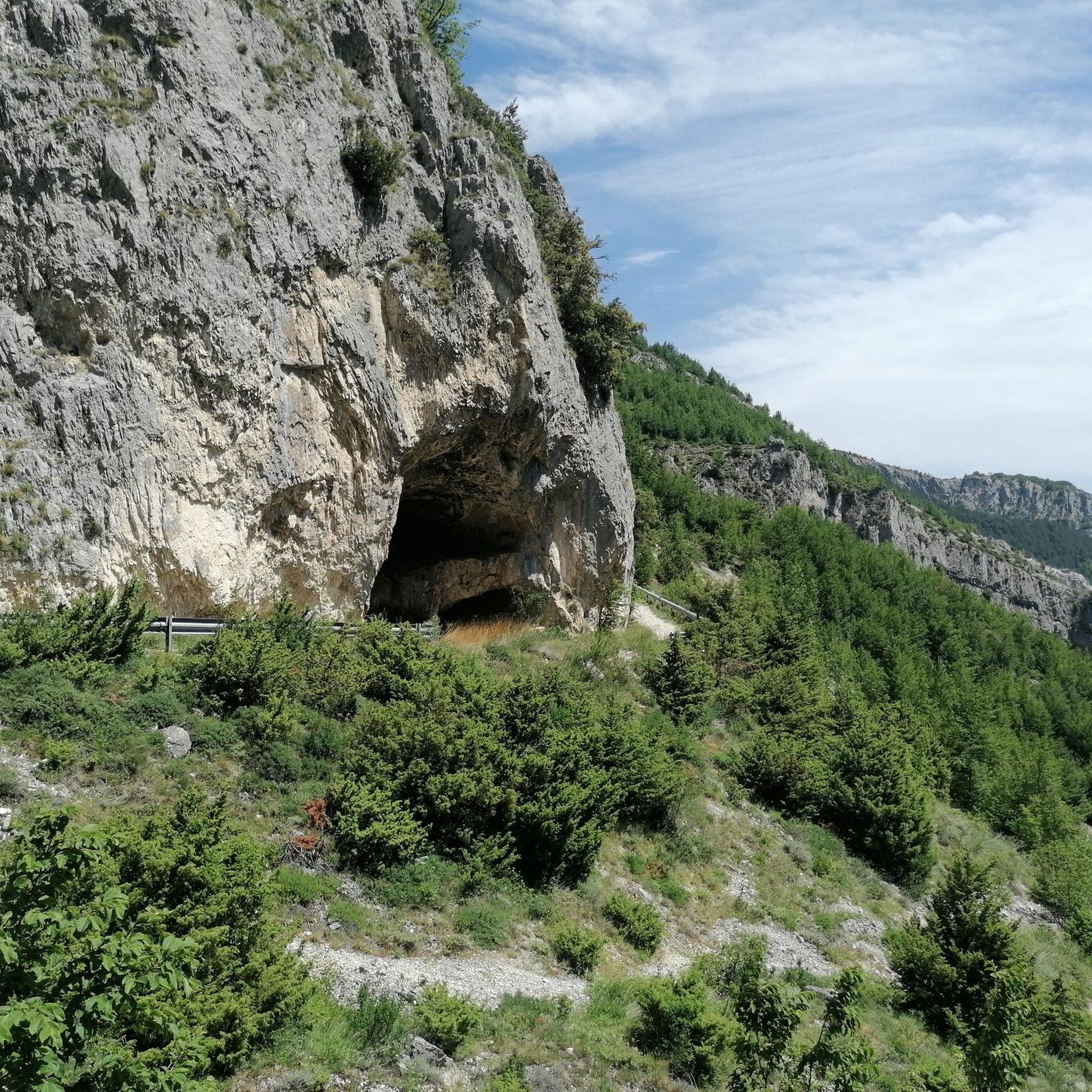
The Hermitage of San Bartolomeo in Legio is located in the Majella National Park, between the villages of Abbateggio and Roccamorice. It is a very evocative hermitage, set on the rocky wall of the Vallone dello Spirito, where the Capo La Vena stream flows. The hermitage's oratory is almost entirely embedded in the rock. There is also a 16th-century altar with a niche containing an 19th-century wooden statue depicting the saint. On August 25th, San Bartolomeo is celebrated in Roccamorice, and on this occasion, the villagers carry the wooden statue of the saint in procession from the hermitage to the village church.
1
0

Nature. Spirituality. Effort. Journey. Joy
0
0


Amazing place!!!
0
0

It was said of Him that he died smiling. Andrea Bafile, born in Monticchio, a hamlet of L'Aquila, on 7 October 1878 and died on the Piave front in the night between 11 and 12 March 1918. Below is why he was buried in Guardiagrele (CH). He had to be buried in the monumental cemetery of Venice, Gabriele D'Annunzio pushed hard for this to happen, but two Abruzzo people prevailed over him who managed to bring the body back and buried it, in 1923, with an impressive ceremony at in which around 10 thousand people took part, in the shrine dug in Guardiagrele (Chieti), in the bowels of the Majella. It was Raffarle Paolucci of Orsogna and the Honorable Cristini of Guardiagrele who ensured that instead of any unknown soldier it was Andrea Bafile himself who was buried in the shrine, considering him the example of courage and heroism belonging to three military corps: the Navy, Aviation and Infantry. And it is not clear why no intercession was received from L'Aquila, his hometown. Guardiagrele thus had the honor of hosting Bafile's body, in Bocca di Valle, in a cave which is a place full of suggestions, decorated with the delicate enamelled colors of the majolica by the Ortonese artist Basilio Cascella, three gigantic ceramic panels made up of 1400 tiles, a masterpiece of the art of the founder of the Cascella family. The Guardiagrele cave was dug with the economic participation of all of Abruzzo and Molise, a sort of subscription by both regions, every single citizen paid their own donation to pay homage to the soldier Andrea Bafile. When as a child I asked why a sailor was buried in the mountains, popular wisdom replied that he likes to admire the sea from the mother mountain, the Majella. On 29 and 30 September 2023, at the Bocca di Valle shrine in Guardiagrele, the celebrations for the centenary of the transfer of the remains of Lieutenant Andrea Bafile, hero and gold medal for military valour, with the presence of the Undersecretary of State for Defense with delegation to the Navy, Matteo Perego of Cremnago, together with the commander of the Southern Maritime Command, Admiral. of Division Flavio Biaggi, representing the Navy General Staff, who will join the other civil and military authorities present for the commemoration of the Hero.
1
0


The Cave-shrine of Bocca di Valle is located in the eastern Maiella and is a military shrine in memory of the soldiers who died during the Great War. It is an important historic and memorial site, where their sacrifice can be reflected and honored.
2
0

The Cave of Sant'Angelo di Lettomanoppello in the Vallone di Sant'Angelo is a place of uncertain origin, mentioned in the Decrees of the First Holy Visit of the bishop of Chieti in 1844. It is believed that the hermitage is dated thanks to the presence of a statue of San Michele Arcangelo similar to that of San Tommaso in Caramanico, dating back to the XIII century. According to legend, the hermitage was inhabited by a man of holiness, but he mysteriously disappeared leaving behind the statue of the angel. In front of the rocky outcrop where a church once stood, today only a rectangular enclosure remains called the Bed of Sant'Angelo. Furthermore, in front of the church is the Fonte del Garzillo.
2
0
Frequently Asked Questions
What is the historical significance of the caves around Rapino?
The caves in the Rapino area are rich in history. The Grotta del Colle di Rapino, for instance, is an evocative archaeological site with evidence of human presence from the Upper Paleolithic to the Roman age, and was a sacred place for millennia. The Bocca di Valle Memorial is a man-made cave serving as a military shrine for soldiers from the First World War. Other sites like the Hermitage of Saint Bartholomew in Legio and the Hermitage of St. John at the Orfento are religious buildings integrated into caves, highlighting a long spiritual tradition.
Are there any archaeological discoveries associated with the caves in the Rapino area?
Yes, the Grotta del Colle di Rapino gained significant archaeological interest after the discovery of the "Goddess of Rapino," a bronze statuette from the third century BC. In the broader Abruzzo region, the Pietrasecca Caves (Grotta del Cervo) have yielded archaeological treasures including Roman coins and Pleistocene-era animal bones.
Can I visit sites with religious history among the caves?
Absolutely. The region is known for its hermitage caves. The Hermitage of Saint Bartholomew in Legio was frequented by Pope Celestine V, and the Hermitage of St. John at the Orfento offers a unique spiritual experience. The Grotta del Colle di Rapino also has remains of a small church built on an ancient Italic temple, demonstrating continuous religious attendance.
What natural features can I expect to see in the caves near Rapino?
You can expect to see a variety of natural formations. The Grotta dei Pulcini is known for its splendid stalactites and stalagmites. In the broader Abruzzo region, the Grotta del Cavallone features extensive galleries, underground pools, and magnificent stalactites and stalagmites. The Stiffe Caves are notable for their underground stream and a magnificent 20-meter waterfall.
Are there family-friendly caves to visit near Rapino?
Yes, some caves are suitable for families. The Bocca di Valle Memorial is categorized as family-friendly. The Grotta dei Pulcini is also considered family-friendly, offering a breathtaking panorama that can be observed from the outside. For a broader experience, the Grotta del Cavallone and Stiffe Caves in the Abruzzo region are popular tourist caves with guided tours.
How challenging is it to access the caves in the Rapino area?
Access difficulty varies. While some sites like the Grotta del Colle di Rapino are described as challenging but rewarding, with wooden stairs and ropes aiding navigation, others like the Hermitage of St. John at the Orfento require a more challenging trail. The Hermitage of Saint Bartholomew in Legio has well-maintained paths, though one route from the Giumentina valley is more demanding. It's advisable to check specific access details for each cave.
What is the best time of year to visit the caves around Rapino?
The best time to visit can depend on the specific cave and your preferences. For sites like the Hermitage of St. John at the Orfento, summer is ideal due to cooler mountain temperatures, as snow can persist from October to April. Generally, spring and autumn offer pleasant weather for exploring the natural surroundings and cave entrances.
What outdoor activities can I do near these caves?
The area around Rapino offers various outdoor activities. You can find numerous hiking trails, such as those leading to the Hermitage of St. John at the Orfento. For more options, explore the hiking routes around Rapino. There are also extensive options for road cycling and general cycling routes, including challenging climbs like Blockhaus.
Are there guided tours available for the caves in the Rapino area?
While the Grotta del Colle di Rapino is often explored independently, some of the larger tourist caves in the broader Abruzzo region, such as the Grotta del Cavallone and Pietrasecca Caves, offer guided tours. It is recommended to check with local tourist information for specific guided tour availability for individual sites.
What should I wear when visiting caves near Rapino?
Given the varying conditions, it's best to wear comfortable, layered clothing. Inside caves, temperatures can be cooler, even in summer. Sturdy hiking shoes with good grip are essential, especially for sites with challenging access or uneven terrain. For the Hermitage of St. John at the Orfento, specific mention is made of snow persisting into spring, so appropriate footwear is crucial.
Are there any unique or 'hidden gem' caves to explore?
The Grotta del Colle di Rapino is often considered a hidden gem, offering a blend of natural beauty and profound archaeological importance in an almost untouched natural setting. Its journey is described as rewarding despite being challenging. The Sant'Angelo Cave in Lettomanoppello also offers a glimpse into uncertain origins and local legends.
What do visitors enjoy most about the caves around Rapino?
Visitors appreciate the unique blend of natural beauty and historical significance. The sense of connecting with ancient history and the raw beauty of nature, particularly at sites like the Grotta del Colle di Rapino, is highly valued. The spiritual atmosphere of the hermitages and the rewarding feeling after navigating challenging trails are also frequently mentioned highlights.
Most popular attractions around Rapino

Get inspired with the komoot mobile app


Explore more
Extend your search for the best caves by checking out these guides of the top ones around Rapino:
