Top 7 Lakes around Volkspark Jungfernheide
Best lakes around Volkspark Jungfernheide include the central Jungfernheideteich, an artificial lake up to 4 meters deep, created as part of the park's early 20th-century development. This area offers various natural features and recreational opportunities, making it a key attraction within the park. Visitors can find amenities such as beach areas, cafes, and green spaces, providing diverse options for enjoying the Volkspark Jungfernheide lakes.
Best lakes around Volkspark Jungfernheide
- The most popular lakes is Jungfernheide Pond, a lake that features bathing areas with a beach and a large sunbathing area. It is also suitable for strolling.
- Another must-see spot is Station 8: Island, an island feature within the Jungfernheide Pond. This island, created from excavated earth during the pond's construction, is accessible via two bridges and offers diverse tree populations.
- Visitors also love Nonnengraben Pond, a lake offering views and a drive through the forest. It is part of the larger Volkspark Jungfernheide area.
- Volkspark Jungfernheide is known for its artificial lakes and natural ponds. Visitors can explore various water bodies and their surrounding landscapes.
- The lakes around Volkspark Jungfernheide are appreciated by the komoot community, with over 290 upvotes and 11 photos shared across 8 highlights.
Last updated: June 29, 2026
Jungfernheide Public Park (1926)
Highlight • Forest
Showing Translation
Tip by

Jungfernheide Pond
Highlight • Lake
Translated by Google •
Tip by

Sign up now to discover places like this
Get recommendations on the best single tracks, peaks, & plenty of other exciting outdoor places.
Sign up for free
Station 9: Water Lily Square
Highlight • Viewpoint
Let your gaze wander into the distance to the shelter and enjoy the peace and nature around you. This is exactly what landscape architect Erwin Barth envisioned more than 100 years ago. And because everything has been so wonderfully designed, the entire Jungfernheide Public Park is a garden monument, which is particularly cherished and cared for by the Parks Department.
May we introduce: Nymphaea alba
Its beauty has inspired famous painters throughout history. The white water lily (Nymphaea alba) is native to Central Europe and can also be found in the Jungfernheide Pond. From May to September, it produces fragrant white flowers that can grow up to 12 cm in size. The yellow stamens release abundant pollen, which attracts flies, reed beetles, and bumblebees.
According to legend, water lilies are guarded by mermaids who drag anyone who tries to pick them into the depths. While this is (probably) not true, the lesson of the story is still very relevant: Water lilies are protected and may not be picked!
You can find more information about Station 9 on our website: berlin.de/ba-charlottenburg-wilmersdorf/verwaltung/aemter/strassen-und-gruenflaechen/gruenflaechen/erlebnispfade/artikel.1578417.php
Copyright: Studio Eden, BACW
Translated by Google •
Tip by

Station 8: Island
Highlight • Natural
When the Jungfernheide Public Park was built, an artificial lake was also created: the Jungfernheide Pond. Countless tons of earth had to be excavated until the hole was finally large enough for the pond. The earth was used to create an island in the middle of the lake.
The original idea was to build a library and a restaurant on the island. But these plans were never realized. From today's perspective, it's beautiful because it allows you to enjoy peace and nature undisturbed in this special place.
Admirable Tree Population
You can reach the island via one of two bridges. From there, you can either follow the main path, which leads from one side of the island to the other, or you can take a small—and worthwhile—detour and take the island trail.
The diversity of trees is particularly striking here. In addition to beech, oak, maple, birch, hornbeam, and black locust, you will also find the water-loving elm and alder trees.
You can find more information about Station 8 on our website: berlin.de/ba-charlottenburg-wilmersdorf/verwaltung/aemter/strassen-und-gruenflaechen/gruenflaechen/erlebnispfade/artikel.1578412.php
Copyright: Studio Eden, BACW
Translated by Google •
Tip by
Station 7: Lake Terrace
Highlight • Viewpoint
The many listed benches on the lake terrace invite you to take a short break. From here, you can also enjoy observing the numerous birds that the lake provides a home for: for example, grey herons, mute swans, great crested grebes, cormorants, and many more.
A talented builder
After being almost completely extinct in Europe, the beaver has re-established itself in many places – including here in Berlin. Its natural habitat is the transition zone between land and water, where it is active primarily at dusk and at night.
Beavers are vegetarians. They prefer the tender twigs and buds in the crowns of young willows and poplars. And because they cannot climb, they simply fell the trees. With their very hard incisors, they can fell trunks with a diameter of over 20 cm. They do this especially in autumn and winter, when the herbaceous plant population slowly dwindles. Beavers don't hibernate, and until new plants sprout again in spring, the twigs and tree bark stored in water provide a tasty winter staple.
You can find more information about Station 7 on our website: berlin.de/ba-charlottenburg-wilmersdorf/verwaltung/aemter/strassen-und-gruenflaechen/gruenflaechen/erlebnispfade/artikel.1578397.php
Copyright: Studio Eden, BACW
Translated by Google •
Tip by
Sign up for free to discover even more lakes around Volkspark Jungfernheide.
Sign up for free
Already have an account?
Start today with a free account
Your next adventure awaits.
Login or Signup

Tips from the Community

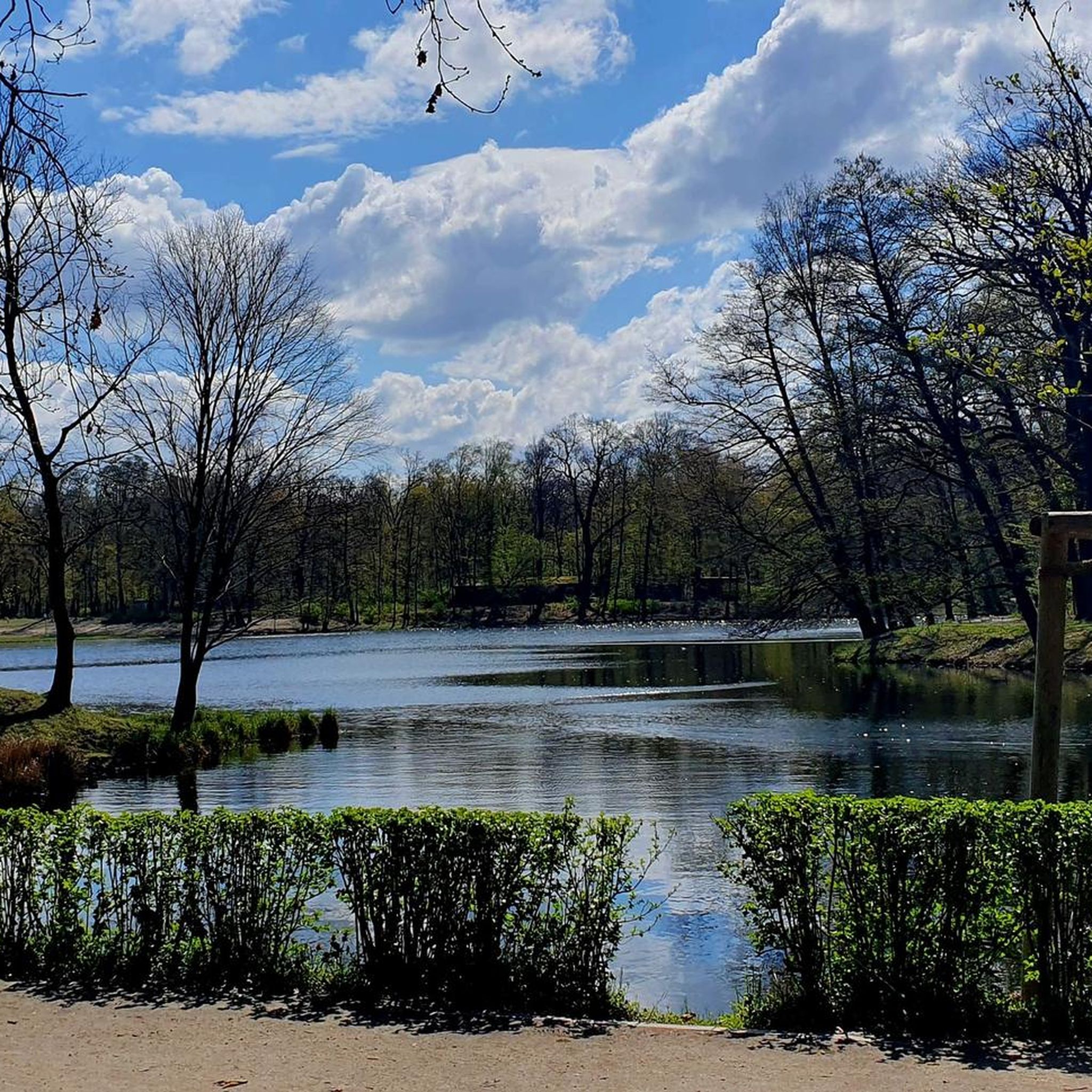
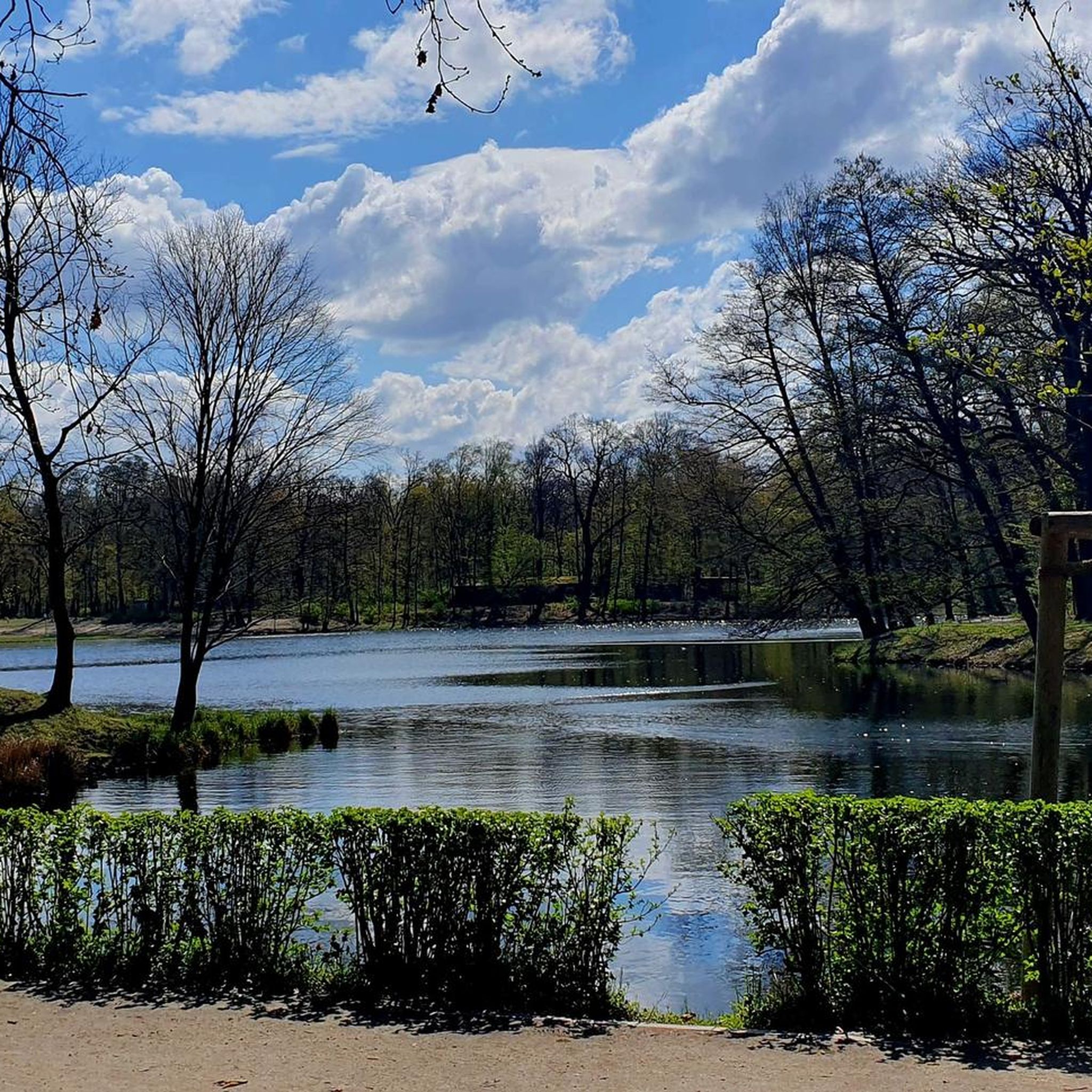
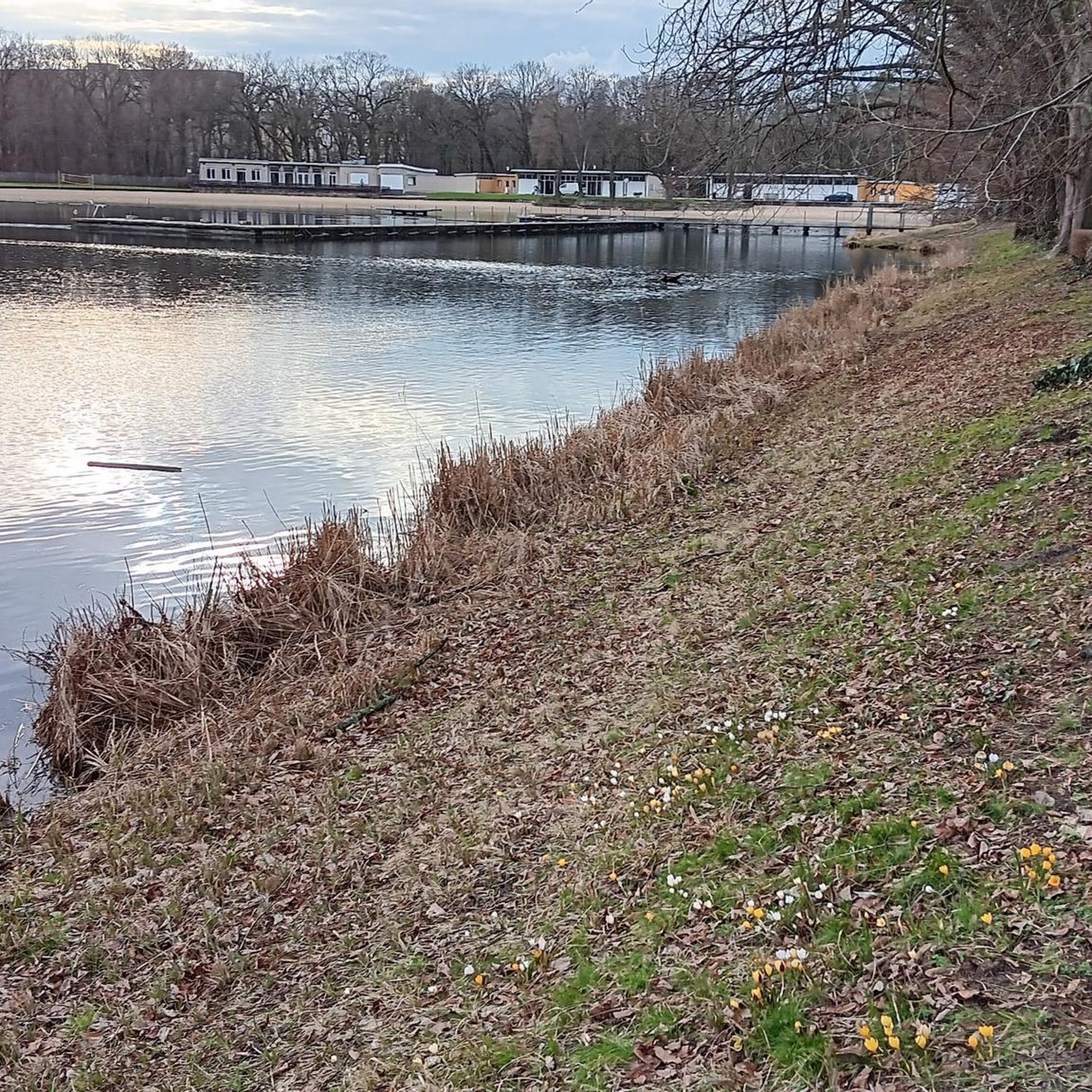
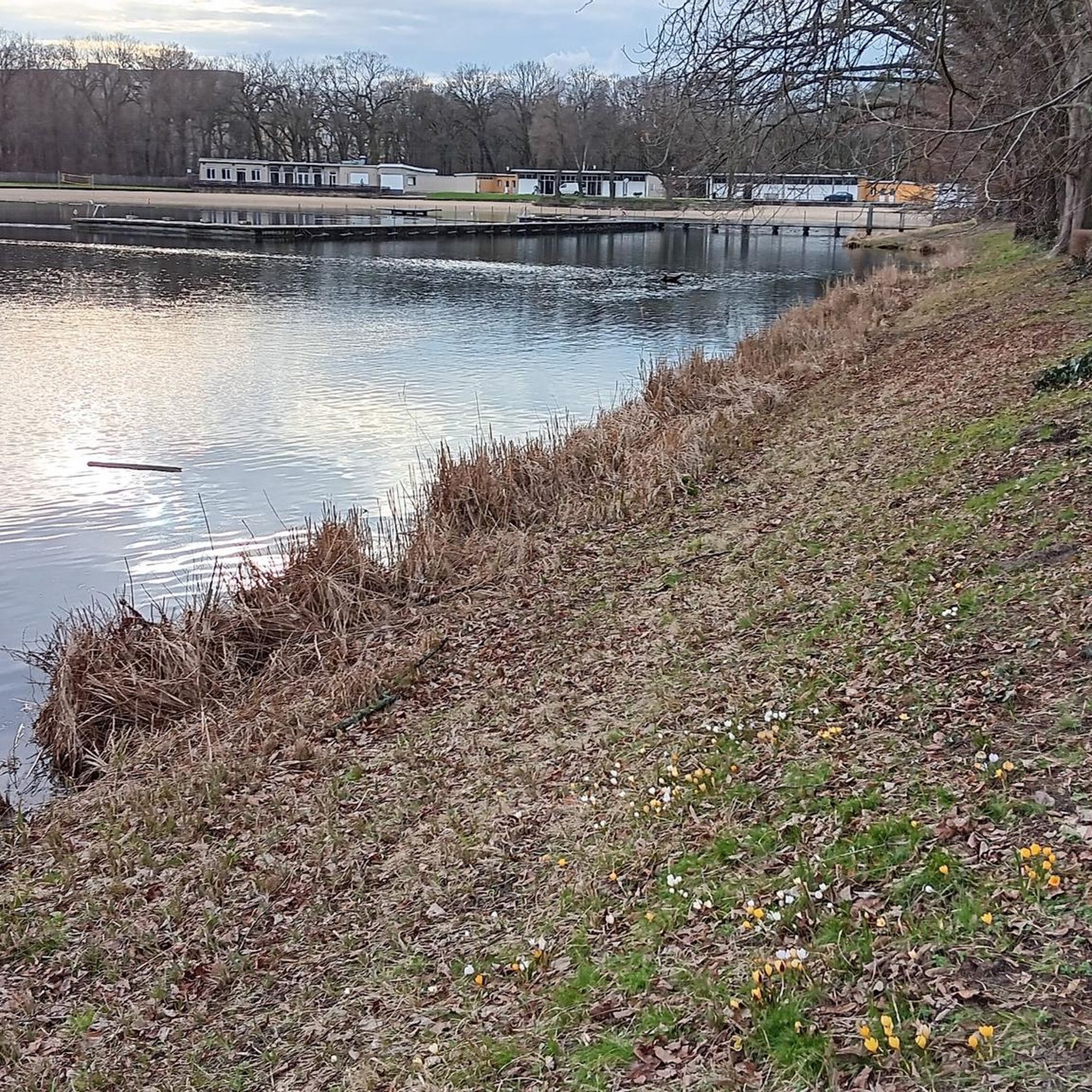
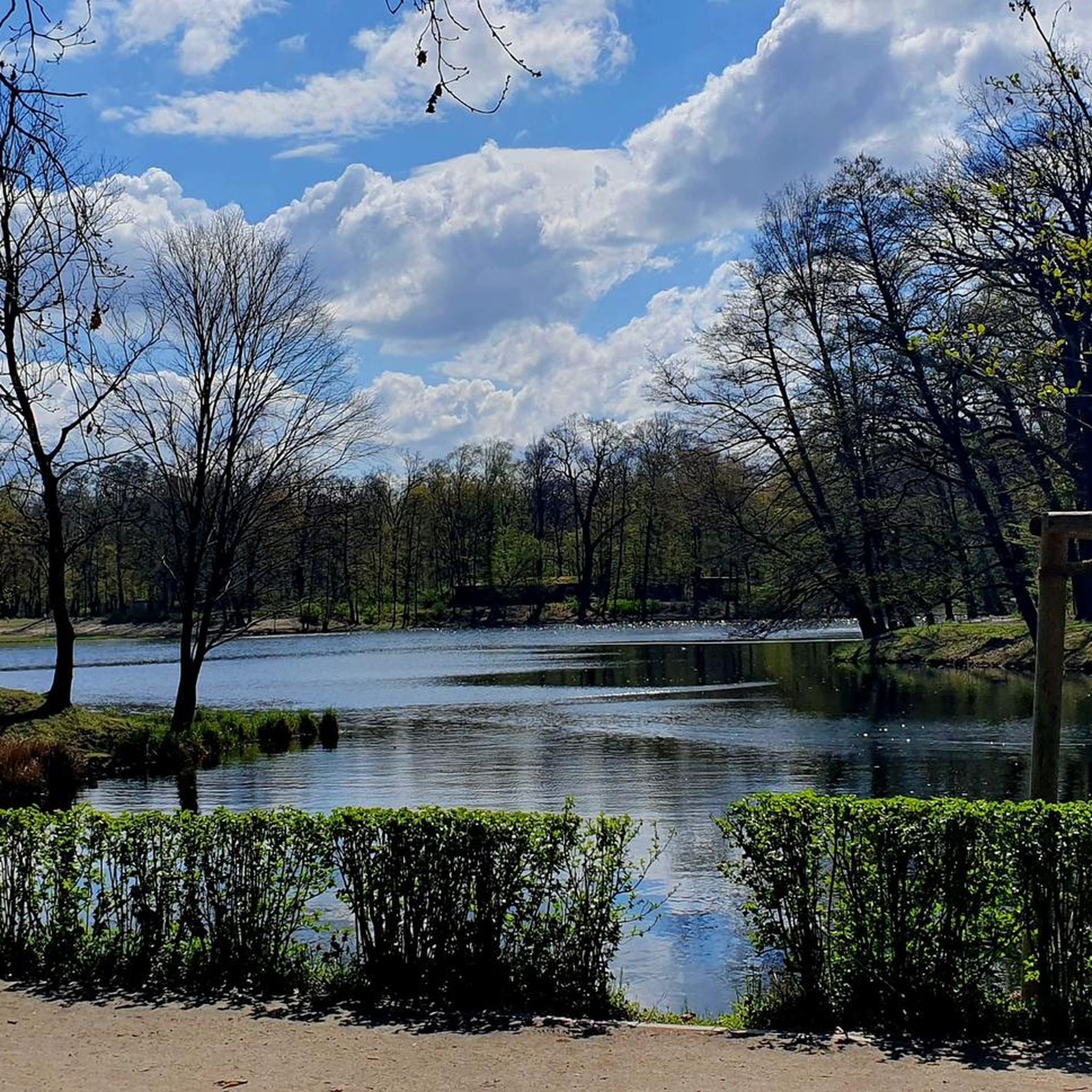
Species-rich bank region. The lake is a paradise for walkers, but also for waterfowl.
0
0

Romantic View Let your gaze wander into the distance to the shelter and enjoy the peace and nature around you. This is exactly what landscape architect Erwin Barth envisioned more than 100 years ago. And because everything has been so wonderfully designed, the entire Jungfernheide Public Park is a garden monument, which is particularly cherished and cared for by the Parks Department. May we introduce: Nymphaea alba Its beauty has always inspired famous painters. The white water lily (Nymphaea alba) is native to Central Europe and can also be found in the Jungfernheide Pond. From May to September, it produces fragrant white flowers that can grow up to 12 cm in size. The yellow stamens release abundant pollen, which attracts flies, reed beetles, and bumblebees. According to legend, water lilies are guarded by mermaids who drag anyone who tries to pick them into the depths. While this is (probably) not true, the lesson of the story is still very relevant: Water lilies are protected and may not be picked! You can find more information about Station 9 on our website: berlin.de/ba-charlottenburg-wilmersdorf/verwaltung/aemter/strassen-und-gruenflaechen/gruenflaechen/erlebnispfade/artikel.1578417.php Copyright: Studio Eden, BACW
0
0
Big Plans When the Jungfernheide Public Park was built, an artificial lake was also created: the Jungfernheide Pond. Countless tons of earth had to be excavated until the hole was finally large enough for the pond. The earth was used to create an island in the middle of the lake. The original idea was to build a library and a restaurant on the island. But these plans were never realized. From today's perspective, it's beautiful because it allows you to enjoy peace and nature undisturbed in this special place. Admirable Tree Population You can reach the island via one of two bridges. From there, you can either follow the main path, which leads from one side of the island to the other, or you can take a small—and worthwhile—detour and take the island trail. The diversity of trees is particularly striking here. In addition to beech, oak, maple, birch, hornbeam, and black locust, you will also find the water-loving elm and alder trees. You can find more information about Station 8 on our website: www.berlin.de/ba-charlottenburg-wilmersdorf/verwaltung/aemter/strassen-und-gruenflaechen/gruenflaechen/erlebnispfade/artikel.1578412.php Copyright: Studio Eden, BACW
0
0
Many birds are already here The many listed benches on the lake terrace invite you to take a short break. From here, you can also enjoy observing the numerous birds that the lake provides a home for: for example, grey herons, mute swans, great crested grebes, cormorants, and many more. Talented Builder After being almost completely extinct in Europe, the beaver has re-established itself in many places – including here in Berlin. Its natural habitat is the transition zone between land and water, where it is active primarily at dusk and at night. Beavers are vegetarians. They prefer the tender twigs and buds in the crowns of young willows and poplars. And because they cannot climb, they simply fell the trees. With their very hard incisors, they can fell trunks with a diameter of over 20 cm. They do this especially in autumn and winter, when the herbaceous plant population slowly dwindles. Beavers don't hibernate, and until new plants sprout again in spring, the twigs and tree bark stored in water provide a tasty winter meal. You can find more information about Station 7 on our website: berlin.de/ba-charlottenburg-wilmersdorf/verwaltung/aemter/strassen-und-gruenflaechen/gruenflaechen/erlebnispfade/artikel.1578397.php Copyright: Studio Eden, BACW
0
0
Romantic View Let your gaze wander into the distance to the shelter and enjoy the peace and nature around you. This is exactly what landscape architect Erwin Barth envisioned more than 100 years ago. And because everything has been so wonderfully designed, the entire Jungfernheide Public Park is a garden monument, which is particularly cherished and cared for by the Parks Department. May we introduce: Nymphaea alba Its beauty has inspired famous painters throughout history. The white water lily (Nymphaea alba) is native to Central Europe and can also be found in the Jungfernheide Pond. From May to September, it produces fragrant white flowers that can grow up to 12 cm in size. The yellow stamens release abundant pollen, which attracts flies, reed beetles, and bumblebees. According to legend, water lilies are guarded by mermaids who drag anyone who tries to pick them into the depths. While this is (probably) not true, the lesson of the story is still very relevant: Water lilies are protected and may not be picked! You can find more information about Station 9 on our website: www.berlin.de/ba-charlottenburg-wilmersdorf/verwaltung/aemter/strassen-und-gruenflaechen/gruenflaechen/erlebnispfade/artikel.1578417.php Copyright: Studio Eden, BACW
0
0
Big Plans When the Jungfernheide Public Park was built, an artificial lake was also created: the Jungfernheide Pond. Countless tons of earth had to be excavated until the hole was finally large enough for the pond. The earth was used to create an island in the middle of the lake. The original idea was to build a library and a restaurant on the island. But these plans were never realized. From today's perspective, it's beautiful because it allows you to enjoy peace and nature undisturbed in this special place. Admirable Tree Population You can reach the island via one of two bridges. From there, you can either follow the main path, which leads from one side of the island to the other, or you can take a small—and worthwhile—detour and take the island trail. The diversity of trees is particularly striking here. In addition to beech, oak, maple, birch, hornbeam, and black locust, you will also find the water-loving elm and alder trees. You can find more information about Station 8 on our website: www.berlin.de/ba-charlottenburg-wilmersdorf/verwaltung/aemter/strassen-und-gruenflaechen/gruenflaechen/erlebnispfade/artikel.1578412.php Copyright: Studio Eden, BACW
0
0
Many birds are already here The many listed benches on the lake terrace invite you to take a short break. From here, you can also enjoy observing the numerous birds that the lake provides a home for: for example, grey herons, mute swans, great crested grebes, cormorants, and many more. A talented builder After being almost completely extinct in Europe, the beaver has re-established itself in many places – including here in Berlin. Its natural habitat is the transition zone between land and water, where it is active primarily at dusk and at night. Beavers are vegetarians. They prefer the tender twigs and buds in the crowns of young willows and poplars. And because they cannot climb, they simply fell the trees. With their very hard incisors, they can fell trunks with a diameter of over 20 cm. They do this especially in autumn and winter, when the herbaceous plant population slowly dwindles. Beavers don't hibernate, and until new plants sprout again in spring, the twigs and tree bark stored in water provide a tasty winter staple. You can find more information about Station 7 on our website: www.berlin.de/ba-charlottenburg-wilmersdorf/verwaltung/aemter/strassen-und-gruenflaechen/gruenflaechen/erlebnispfade/artikel.1578397.php Copyright: Studio Eden, BACW
0
0

Beautiful shady cycle path at the Volkspark Jungfernheide (1926).
0
0
Frequently Asked Questions
What natural features can I explore around the lakes in Volkspark Jungfernheide?
The central feature is the artificial Jungfernheideteich, which includes a geometrically shaped island accessible by bridges. This island boasts a diverse tree population, including beech, oak, maple, birch, hornbeam, black locust, elm, and alder trees. You can also find the tranquil Nonnengraben Pond, offering scenic views and a peaceful drive through the forest.
Are there any historical landmarks near the lakes in Volkspark Jungfernheide?
Yes, the park itself, Jungfernheide Public Park (1926), has historical significance. It was developed on a former parade ground and shooting range, and its name is derived from the nuns of the old Spandau convent. The park's construction was part of an emergency employment program after WWI, creating public recreation areas for Berlin's growing population.
What makes the Jungfernheideteich a popular spot?
The Jungfernheideteich is popular for its recreational opportunities. It features the Strandbad Jungfernheide, a beach area perfect for sunbathing and swimming. Visitors can also enjoy paddling (SUP), beach volleyball, and relax at the cafes and beer garden nearby. The area offers a lively social hub with views of the historic water tower.
Can I swim in the lakes around Volkspark Jungfernheide?
Yes, swimming is allowed in designated areas of the Jungfernheideteich. The Strandbad Jungfernheide on the southern shore offers a beach area for swimming and sunbathing. There are also other bathing areas with a beach and large sunbathing spots outside the lido.
Are there family-friendly activities around the lakes?
Absolutely. The areas around the lakes, especially the Jungfernheideteich, are very family-friendly. The beach areas are great for kids, and the park offers large green spaces for relaxation and play. The island in the Jungfernheideteich, accessible by bridges, provides a peaceful natural setting for families to explore.
Are there walking or hiking trails around the lakes in Volkspark Jungfernheide?
Yes, the park offers many paths ideal for walking and strolling. You can enjoy a pleasant walk around the Jungfernheideteich, or take a detour on the island trail. The entire Volkspark Jungfernheide is known for its extensive network of trails, making it a great place for runners and walkers alike. For more detailed routes, you can explore guides like Cycling around Volkspark Jungfernheide, which also feature walking sections.
Can I bring my dog to the lakes in Volkspark Jungfernheide?
The Volkspark Jungfernheide generally welcomes dogs, but it's important to keep them on a leash in most areas, especially near bathing spots and playgrounds. Always check local signage for specific rules regarding dogs around the lakes and beach areas.
What cycling routes are available near the lakes in Volkspark Jungfernheide?
There are several cycling routes that pass through or near the lakes in Volkspark Jungfernheide. For example, the 'Charlottenburg Palace – Jungfernheide Public Park (1926) loop from Siemensdamm' is an easy 21 km route. You can find more cycling options in the Cycling around Volkspark Jungfernheide guide.
Are there options for mountain biking or gravel biking near the lakes?
Yes, for those interested in mountain biking or gravel biking, there are dedicated guides. The MTB Trails around Volkspark Jungfernheide guide offers routes like the 'Grunewald Scenic Trails – Teufelsberg loop'. For gravel biking, check out the Gravel biking around Volkspark Jungfernheide guide, which includes routes such as the 'View of Peacock Island – Highlights of Pfaueninsel loop'.
What is the best time of year to visit the lakes in Volkspark Jungfernheide?
The lakes are enjoyable year-round, but the best time depends on your preferred activities. Summer is ideal for swimming and sunbathing at the Jungfernheideteich beach. Spring and autumn offer pleasant temperatures for walking and cycling, with beautiful foliage. Even in winter, the park provides a serene landscape for a quiet stroll.
How can I get to Volkspark Jungfernheide and its lakes?
Volkspark Jungfernheide is well-connected by public transport in Berlin. You can reach it via various bus lines and S-Bahn/U-Bahn stations nearby. For specific directions and current schedules, it's best to consult local public transport information. Parking facilities are also available around the park for those arriving by car.
Are there cafes or amenities near the lakes?
Yes, the area around the Jungfernheideteich is well-equipped with amenities. You'll find cafes and a beer garden, especially near the Strandbad Jungfernheide, making it a convenient spot for refreshments and relaxation after enjoying the lake.
Is there an island I can visit in the Jungfernheideteich?
Yes, the Jungfernheideteich features an artificial island, known as Station 8: Island, which was created from excavated earth during the pond's construction. It is accessible via two bridges and offers a peaceful natural environment with a diverse tree population.
Most popular routes around Volkspark Jungfernheide
Most popular attractions around Volkspark Jungfernheide

Get inspired with the komoot mobile app


Explore more
Still not found your perfect lake around Volkspark Jungfernheide? Check out the guides of these regions to see even more beautiful places.
