Top 4 Caves around Erbenhausen
Caves around Erbenhausen offer a diverse range of natural and man-made underground formations within the surrounding regions of Thuringia and the Rhön Mountains. The area is characterized by its geological features, including fissure caves and grottoes, often nestled within nature reserves and forests. Visitors can explore unique geological formations and historical sites, providing insights into both natural processes and local heritage. The landscape around Erbenhausen features varied terrain, from gorges to viewpoints, making it suitable for outdoor exploration.
Best caves around Erbenhausen
- The most popular caves is Eisgraben Nature Reserve, a forest that includes a small gorge lined with basalt rock. Acoustically, the sound of splashing water adds to the experience.
- Another must-see spot is Marian Grotto at the Gangolf Chapel, a religious building with a cave feature. This special place offers a nice view over Fladungen, with a large Marian grotto located below the chapel.
- Visitors also love Mariengrotte Seiferts, a beautiful old grotto with a stream flowing along it. It provides a shady, quiet atmosphere, described as a haunted and holy place.
- Erbenhausen is known for natural caves, grottoes, and cave-like formations often associated with religious sites. These include natural caves under conservation and grottoes with streams and quiet atmospheres.
- The caves around Erbenhausen are appreciated by the komoot community, with users contributing 99 photos and 285 upvotes for highlights in the area.
Last updated: June 27, 2026
Eisgraben Nature Reserve
Highlight • Forest
Translated by Google •
Tip by

Women's Cave (Klefallsloch)
Highlight • Cave
Translated by Google •
Tip by
Sign up now to discover places like this
Get recommendations on the best single tracks, peaks, & plenty of other exciting outdoor places.
Sign up for free
Mariengrotte Seiferts
Highlight • Religious Site
Translated by Google •
Tip by

Marian Grotto at the Gangolf Chapel
Highlight • Religious Site
Translated by Google •
Tip by

Mariengrotte Hausen (Rhön)
Highlight • Religious Site
Translated by Google •
Tip by

Start today with a free account
Your next adventure awaits.
Login or Signup
Tips from the Community

Unfortunately, it's still closed. I came from the other side. There was no sign there. A small bridge has unfortunately collapsed, and the grotto is empty. The main access path (asphalt) is already covered in moss. It's a shame. Hopefully, the place will be restored soon. Otherwise, it's actually a very beautiful place.
0
0

A beautiful piece of nature. Highly recommended.
1
0

Mary's Grotto, with altar niche and standing stone figure of Mary, 20th century, in front of the Gangolf Chapel
0
0

Transcript of the information board. The Women's Cave When the old Hildenburg Castle was devastated and set on fire, the Lord of Hildenburg and all his servants and men perished in a cruel manner. The young lady and her maids, however, fled with great treasures into a walled underground passage. The end of the passage is the women's cave in the ice ditch, which was also called Klefalls or Klefallsloch. However, the lady from Hillenberg and her ladies did not reach this exit. They all died in the underground passage. To this day they guard their treasures. Every seven years they are allowed to emerge from their underground kingdom and show themselves to people. They sit on a pile of wood or on a heap of brushwood and sing such beautiful tunes that the hearts of those who hear them tremble. Many people have already tried to get through the Klefallsloch into the underground passage and to the great treasures. But no one has managed it so far. After just a few steps you come to an iron door or plate. It is also said to be very dangerous to look for the treasure down there. The women's cave, one of the rare natural caves in the basalt. It is also protected by law as a natural monument. Its name is partly explained by the fact that women used this cave to hide from the cruelty of the Mercenaries were hiding there. Others said that the Women's Cave was the end of the underground passage that leads from Hildenburg. The legend, which has often been laughed at by "enlightened" contemporaries and dismissed with a pitying shrug, was confirmed when Hermann Happel from Mühlbach discovered a new entrance in 1965 next to the previously known eight-meter-deep cave that ended in a six-cubic-meter-large room. The cave, also called "Klefallsloch", was examined and measured by speleologists from Düsseldorf in 1972. They discovered a cave system 50 cm long and 20 m deep. The cave consists of narrow crevices, collapsed passages and two small rooms. In the lower part there is a canyon about 5 m long and 1.5 m deep. No traces of human hands were discovered. The entrance to the Women's Cave is walled up. It is strongly advised to exercise caution in the area, as deep crevices in the rocks are dangerous and there is a risk of collapse in some places. Bavarian Rhön Nature Park Association
1
0
www.biosphaere-rhoen.de Information from panel no. 2 Eisgraben - cold wind, natural forests The water of the Aschelbach, which flows over and between the basalt blocks of the Eisgraben, comes from the Black Moor on top of the Hohe Rhön - one of the last intact raised bogs in Germany. Cold air also flows from there down the valley channel. The Eisgraben owes its name to this, because it ensures that the frost lasts here well into spring. Large areas of the Eisgraben are designated as a natural forest reserve and enjoy special protection as a core zone of the UNESCO Rhön Biosphere Reserve. Leaving the moor, the Aschelbach initially meanders quietly through the landscape and finally plunges down a 4-meter-high waterfall. When it enters the forest, the stream is then called Eisgraben. It meanders between the trees and in places drops steeply by up to 10 meters on the side. Every spring, the floods of melting snow transform the narrow summer stream into a raging torrent that cuts ever deeper into the ground. An extreme storm on July 26, 1834 gave the Eisgraben its current appearance. Torrential rain caused a massive landslide that buried the town of Hausen. The catastrophe washed out brown coal in some places, which was then mined. A considerable system of tunnels was created. However, the brown coal was still quite young and therefore of poor quality, so mining was soon stopped. The women's cave is located in the lower part of the Eisgraben. At this point, the water has dug a 50-meter-long and 20-meter-deep cave into the rock. According to legend, this cave was a refuge for the women from the hamlet of Hillenberg in times of trouble. Today, the cave is no longer accessible. Also nearby are a hunter's hut and the ruins of Hildenburg.
1
0

One of the few known caves in the Rhön
1
0

The women's cave or the entrance, which is closed by a grille, is quite inconspicuous. But caves are rare in basalt rock and in this respect it is something special. It was probably created by shifting earth and was scientifically examined and measured in detail in 1972.
4
0
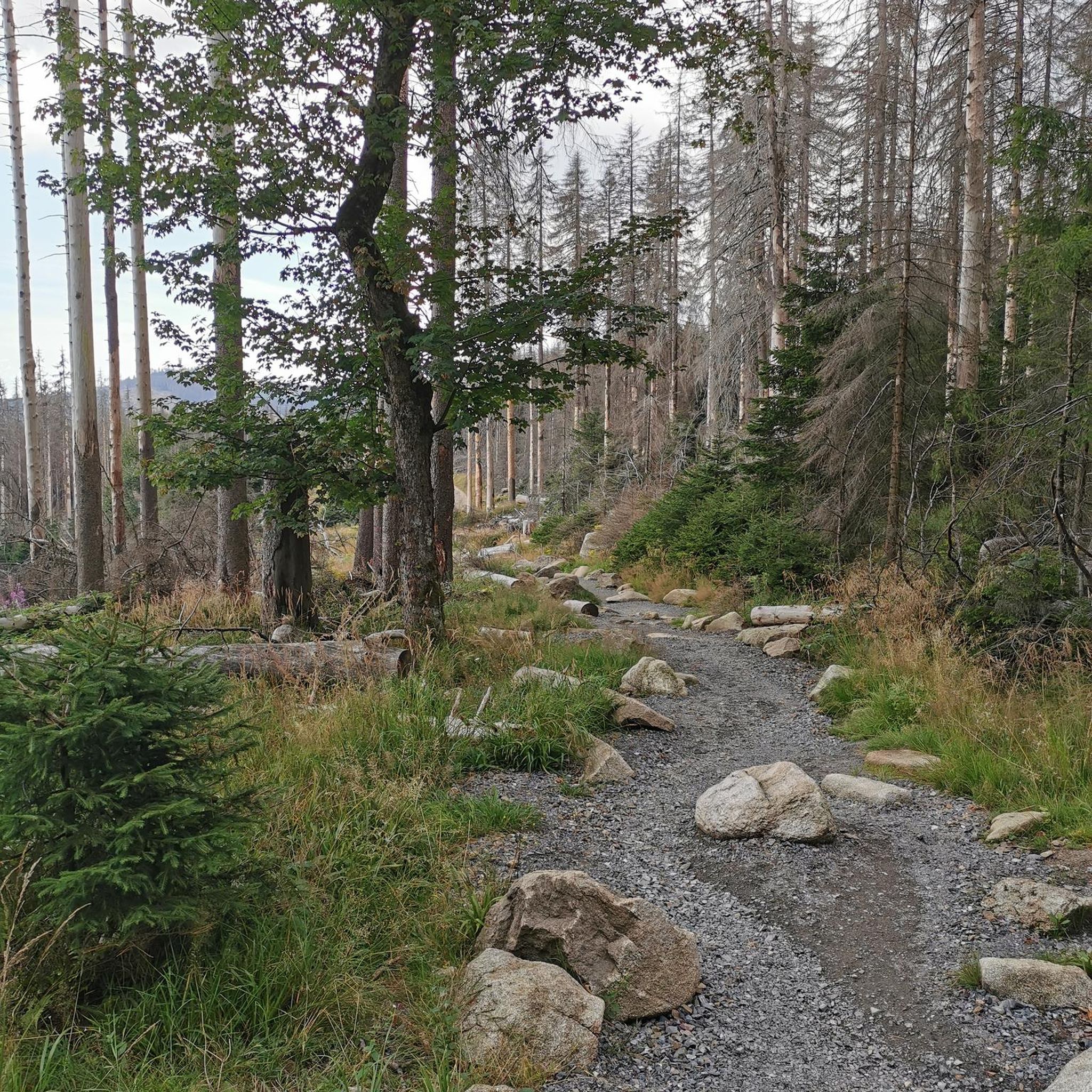
The Aschelbach, which comes from the Rhön high plateau, has created the deep valley of the Eisgraben here. There is a reason for the name Eisgraben: the cool stream water and the accompanying cold air currents ensure that the temperature along the stream is a few degrees lower than in the surrounding area.
4
0
Frequently Asked Questions
What types of caves and underground formations can I explore near Erbenhausen?
Near Erbenhausen, you can find a variety of underground formations, including natural caves, grottoes, and unique geological structures. These range from fissure and crevice caves, like the Goetz Cave, to karst caves such as the Altensteiner Höhle, and grottoes often associated with religious sites like the Marian Grotto at the Gangolf Chapel and Mariengrotte Seiferts.
Are there any unique geological features in the caves around Erbenhausen?
Yes, the region boasts unique geological features. The Goetz Cave near Meiningen is recognized as the largest fissure and crevice cave of its type in Germany and the only accessible joint and fissure cave in Europe, formed by a landslide approximately 25,000 years ago. The Barbarossahöhle is one of only two anhydrite show caves in the world, featuring rare 'gypsum flaps' and crystal-clear blue-green lakes.
Which caves near Erbenhausen are suitable for families?
Several grottoes and easily accessible sites are family-friendly. The Marian Grotto at the Gangolf Chapel offers a nice view and a large grotto below the chapel. Mariengrotte Hausen (Rhön) is another very nice grotto that is easily accessible, often found along cycling paths.
What should I wear when visiting caves in the Erbenhausen area?
When exploring caves, it's advisable to wear sturdy shoes for potentially uneven or slippery surfaces. Caves like the Goetz Cave maintain a constant cool temperature of about 8 degrees Celsius, so warm clothing is recommended even in summer.
Are there guided tours available for any of the caves?
Yes, the Goetz Cave offers guided tours that typically last around 40 minutes, providing insights into its unique geological formation and history. For other show caves like Barbarossahöhle and Altensteiner Höhle, guided tours are also standard.
What historical or cultural significance do the caves near Erbenhausen hold?
Some caves have historical and cultural ties. The Altensteiner Höhle, discovered in 1799, is the oldest show cave in Thuringia and was historically used for concerts by the dukes of Meiningen. The Barbarossahöhle is steeped in legend, said to be the sleeping place of Emperor Frederick I Barbarossa. Additionally, grottoes like the Marian Grotto at the Gangolf Chapel and Mariengrotte Seiferts are religious sites, offering a blend of natural beauty and spiritual heritage.
Can I find any unique wildlife or biodiversity in these caves?
The Goetz Cave is home to unique troglobionts, such as small, white, eyeless springtails, and the rare millipede *Brachychaeteuma bagnalli*. Troglophilic species like the cellar glass-snail and common woodlouse, along with six species of arachnids, can also be found there. The Altensteiner Höhle is also a habitat for several protected bat species.
Are there any natural reserves or scenic viewpoints associated with the caves?
Yes, the Eisgraben Nature Reserve includes a small gorge with basalt rock formations and the sound of splashing water, offering a scenic experience. The short climb to the Goetz Cave entrance also provides rewarding views over the city of Meiningen and the surrounding landscape. The Marian Grotto at the Gangolf Chapel offers a nice view over Fladungen.
What outdoor activities can I combine with a visit to the caves around Erbenhausen?
The region around Erbenhausen is excellent for various outdoor activities. You can find numerous road cycling routes, such as those detailed in the Road Cycling Routes around Erbenhausen guide. There are also many running trails, including those in the Running Trails around Erbenhausen guide, and general cycling routes in the Cycling around Erbenhausen guide, allowing you to explore the diverse terrain and natural beauty.
Is there a cave near Erbenhausen that is particularly known for its natural beauty?
The Altensteiner Höhle is often described as an 'underground garden' due to its impressive formations, including a 'Music Gallery,' 'Cave Dome,' a cave lake, and a natural stream. Mariengrotte Seiferts is also noted for its beautiful old grotto with a stream and a shady, quiet atmosphere.
Are there any lesser-known or 'hidden' caves worth exploring?
The Women's Cave (Klefallsloch) is a natural cave under conservation, though it can be easy to miss. It's a small, inconspicuous site with historical significance, as women reportedly hid there during wartime.
What is the best time of year to visit the caves near Erbenhausen?
Caves generally maintain a consistent temperature year-round, making them suitable for visits in any season. However, accessing some cave entrances or combining a visit with outdoor activities might be more pleasant during spring, summer, or early autumn when the weather above ground is milder. Always check specific cave opening times, as some may have seasonal closures.
Most popular routes around Erbenhausen
Most popular attractions around Erbenhausen

Get inspired with the komoot mobile app


Explore more
Extend your search for the best caves by checking out these guides of the top ones around Erbenhausen:
