Attractions and Places To See in the T'aeback-Sanmaek - Top 20
Best attractions and places to see in the T'aeback-Sanmaek include a diverse array of natural landscapes and significant cultural sites. This mountain range, stretching across the Korean Peninsula, is characterized by majestic peaks, pristine hiking trails, and ancient forests. Visitors can explore national parks, historical fortresses, and temples, offering insights into the region's geology and heritage. The area provides opportunities to experience both natural beauty and cultural depth.
Best attractions and places to see in the T'aeback-Sanmaek
- The most popular…
Last updated: July 6, 2026
Seoraksan National Park
Highlight • Natural Monument
For those …
Translated by Google •
Tip by

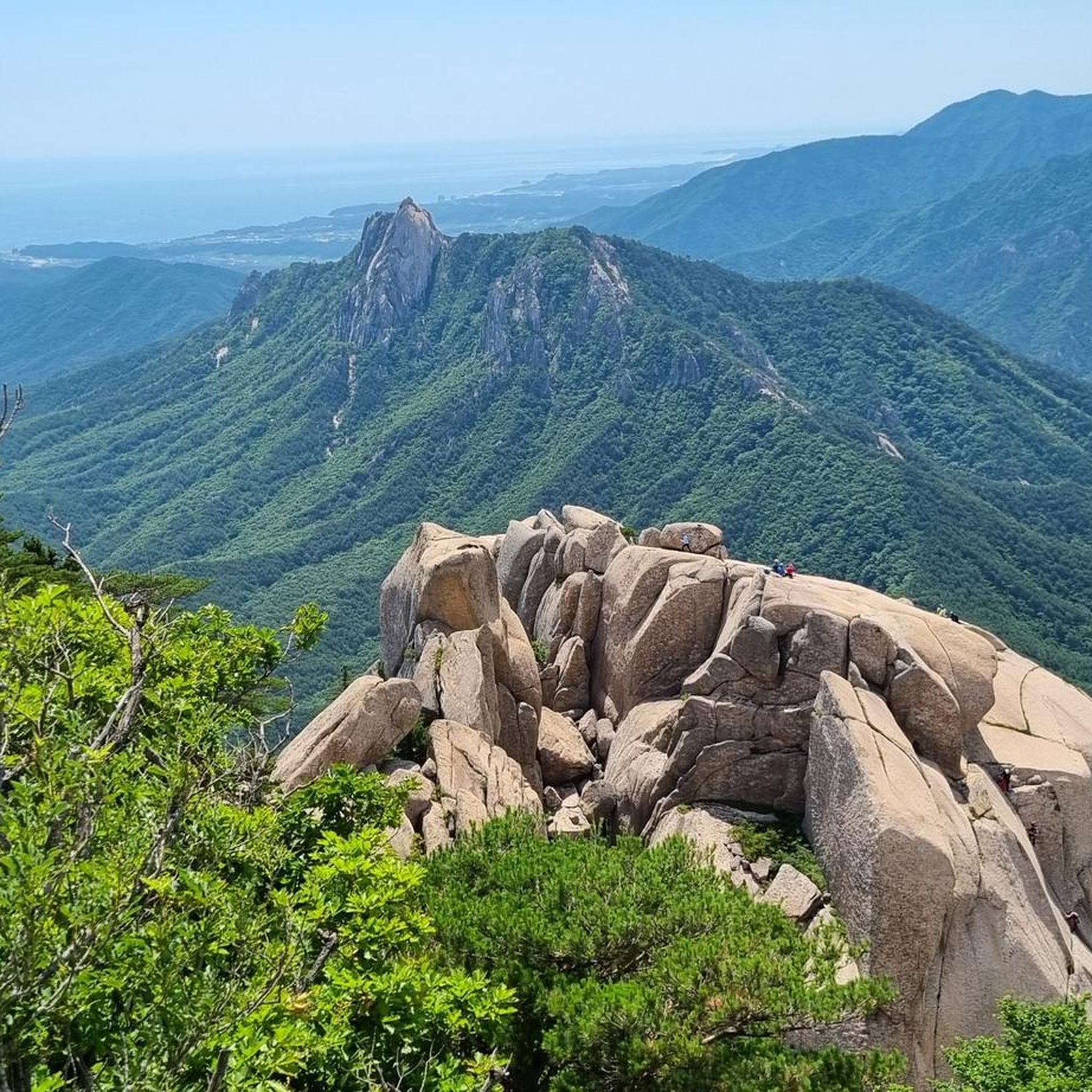
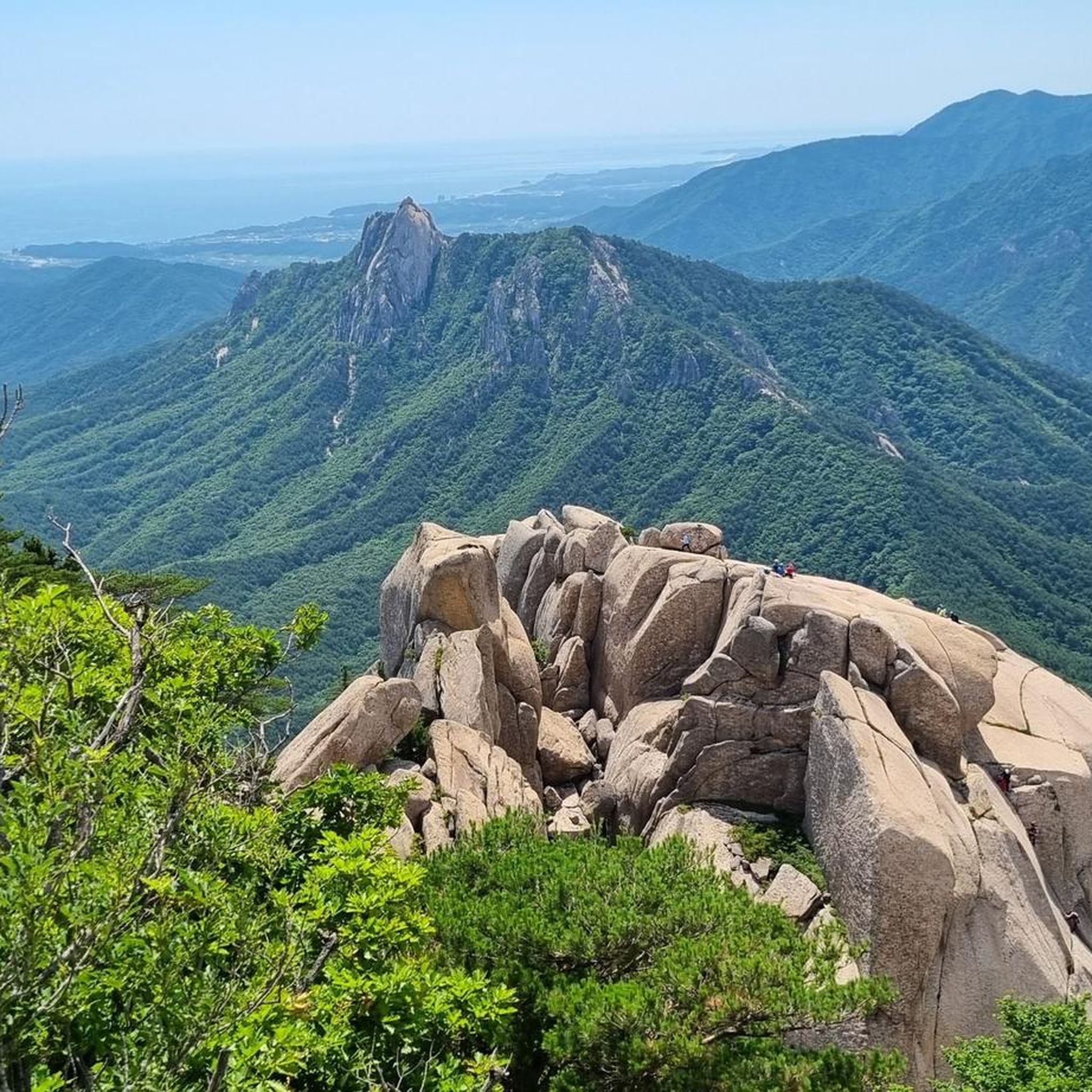
Ulsanbawi Peak, Seoraksan National Park
Highlight • Summit
Translated by Google •
Tip by

Sign up now to discover places like this
Get recommendations on the best single tracks, peaks, & plenty of other exciting outdoor places.
Sign up for free
Geumjeongsanseong North Gate
Highlight • Historical Site
Tip by

Namhansanseong Palace
Highlight • Historical Site
Tip by

Beomeosa Temple
Highlight • Religious Site
Tip by
Wonhyobong Peak
Highlight • Summit
Tip by
Third Watchtower of Geumjeongsanseong Fortress
Highlight • Historical Site
Tip by
Jangsan Summit
Highlight • Summit
Tip by

Cheomseongdae Observatory
Highlight • Historical Site
Tip by
Seohu Gogae Pass
Highlight (Segment) • Mountain Pass
Tip by

Sign up for free to discover even more attractions in the T'aeback-Sanmaek.
Sign up for free
Already have an account?
Start today with a free account
Your next adventure awaits.
Login or Signup

Tips from the Community

This watchtower, located on the slope between two boulders about 1 km to the north of the eastern gate of Geumjeongsanseong Fortress, consists of a stone platform and a wooden building with a gable roof. The current structure was rebuilt in 1979 after the original, established in 1707, had fallen into disrepair in the early 20th century. A rock-carved inscription, located about 10 m to the west of the watchtower, identifies this place as an outpost named Beonwidon, meaning "Outpost of Abundant Prestige." Together with the surrounding rocks of Ge-umjeongsan Mountain, including the renowned Nabibawi ("Butterfly Rock") and Buchaebawi ("Fan Rock"), the watchtower stands in harmony with the outstanding natural landscape.
1
0
Wonhyobong Peak (687m) is the highest peak in the east of Geumjeongsan Mountain. Like blooming apricot bathed in the light of the rising sun in the East Sea, it has a glamorous appearance as if embroidered with multiple hues. It is therefore called Wonhyobong Peak, meaning "the first of dawn". Located above the fourth lookout tower of Geumjeongsanseong Fortress, it also serves as a lookout with panoramic views of the boundless East Sea. A story handed down from Wonhyobong Peak tells of General Kim Yushin training the Hwarang (Silla's elite young military). The soldiers urinated on the rocks after standing at attention for a long time, then a Hwarang member planted a small pine tree on that spot. This pine tree boasted its freshness, overcoming rainstorms for many years, so people called the rock on which General Kim Yushin was standing "Kim Yushin Pine Rock". However, its exact location cannot be known.
1
0
The North Gate of Geumjeongsanseong Fortress is located 1.6 km west of Beomeosa Temple, at the spot where the main ridge, descending southward from Godangbong Peak, rises again toward Wonhyobong Peak. The North Gate exhibits the crudest appearance of the four gates of Geumjeongsanseong Fortress, has no arch-shaped decoration and is smaller than the other gates. The upper part of the foundational facility, measuring one kan (a unit of measurement referring to the distance between two columns) at the front and one kan at the sides, is a one-story watch tower with a half-hipped roof with a double-wing bracketing system. The gate measures 2.5 meters at the front, and 3.5 meters at the sides. The area around Sesimjeong Pavilion, situated in front of the gate, used to be known as 'Hwaeombeol' because the venerable Korean Buddhist priest Wonhyo (617-686) preached the Hwaeomgyeong, or Avatamsaka Sutra, there. It was also a training camp for monk-soldiers, including Buddhist monks from Beomeosa Temple, Gukcheongsa Temple, and Haewolsa Temple. The North Gate is known to be the passageway used by independence activists when they carried the Korean Declaration of Independence and the documents related to the independence movement and the March 1st Movement in 1919 at Beomeosa Temple, got off at Mulgeum Station on the Gyeongbu Line, by crossing Godangbong Peak of Geumjeongsan Mountain, and went to the Cheongnyeonam Hermitage.
1
0
Geumjeong "Chongrim" (lit. Comprehensive Training Monastery), Beomeosa Temple was named from the legend which a "fish from the Brahma heaven" (Kor. Beomeo) swam in a "golden well" (Kor. Geumjeong). Beomeosa Temple was built by Great Master Uisang, a leading monk at that time, in the 18th year of King Munmu of the Silla Dynasty (678 C.E.). It is one of 25 major temples in Korea and has 11 hermitages on the mountain and more than 200 branch temples around the nation. It is also Korea's major temple of Seon practice as well as a Comprehensive Training Monastery.
1
0
This stone structure is presumed to have been built during the reign of Queen Seondeok (r. 632-647), the 27th ruler of the Silla kingdom (57 BCE-935 CE). Its name Cheomseongdae means "Platform of Gazing at the Stars," and it is widely acknowledged to be the oldest surviving astronomical observatory in Asia. In ancient societies, tracking the movement of celestial bodies was of great political importance because astronomical observations served as a guideline for farming as well as a means to foresee the country's fortune.
1
0

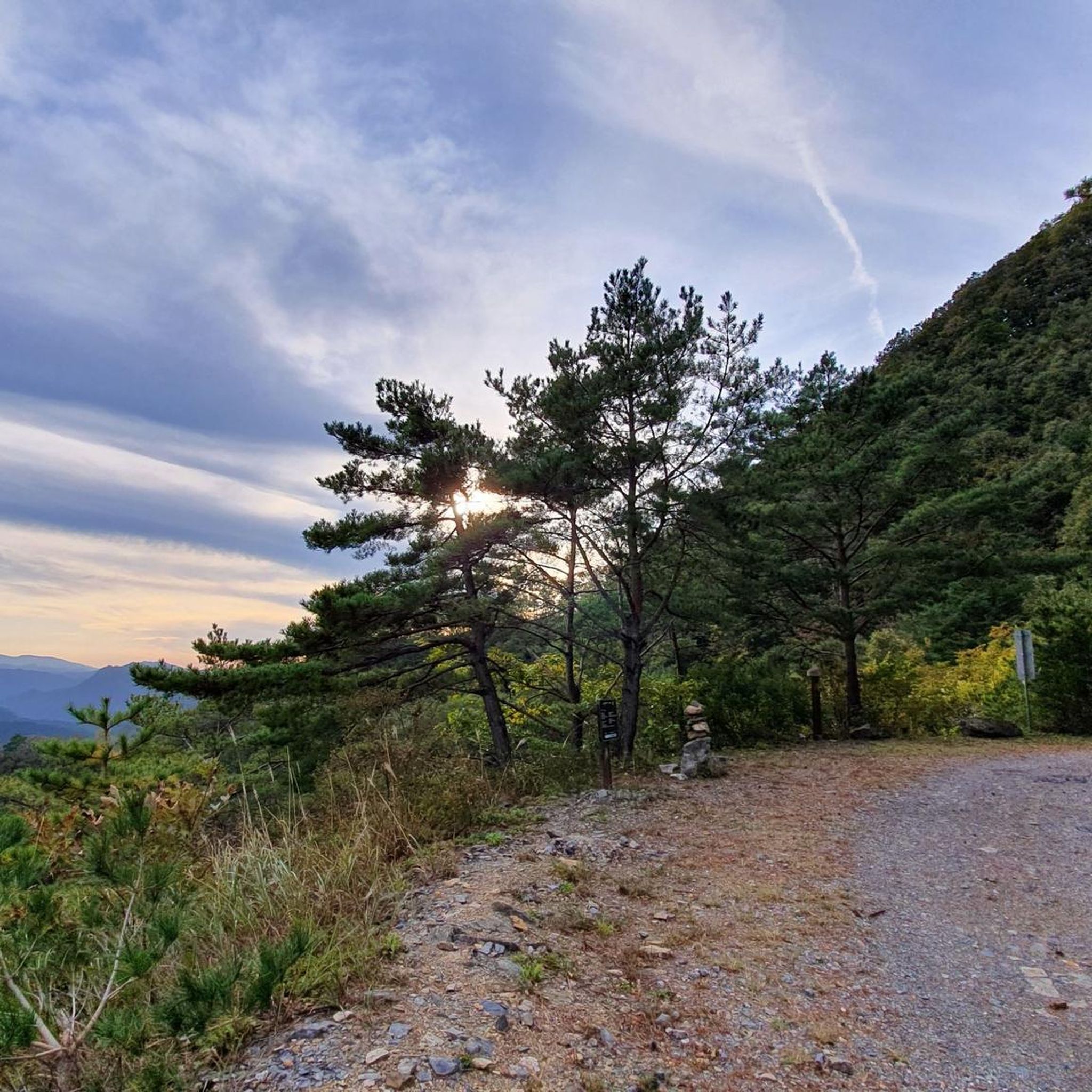
Beautiful views up there. Easy to reach, just take bus 7 or 7-1 from Sokcho and disembark on the very last stop. The route does not require any special equipment as it's mostly gravel and stairs (with handrail). Leave your poles at home, even sturdy mountain shoes are not particularly necessary. The last part is quite steep, so bring decent fitness. I did this trail in summer which can be very warm. We came early (the first bus from Sokcho runs at ~6.30) and the ascent was in the shadow mostly. Would not recommend to come later in the day as the sun will roast you. As everywhere in Korea, there's an abundance of toilets, the last one before the ascent is clearly marked as such.
0
0

Namhansanseong is a historic fortress located about 25 kilometers southeast of Seoul. The fortress was built in the 17th century and served as the temporary capital of Korea during the Joseon Dynasty. The history of Namhansanseong began in 1636, when the Korean King Injo decided to build a fortress to protect himself from attacks by the Qing Dynasty from China. The fortress was built on a mountain and surrounded by a wall over 7 kilometers long. The fortress was strategically important and served as a refuge for the king and his government during wars with the Qing. Over time, however, the fortress also became an important cultural and religious center. Today, Namhansanseong is a UNESCO World Heritage Site and a popular tourist destination. The fortress is well-preserved and offers visitors a variety of historic buildings and structures, including temples, palaces, and fortifications. The fortress is also known for its impressive architecture and breathtaking views of the surrounding landscape. Visitors can explore the fortress and experience Korean history and culture. Overall, Namhansanseong is an important part of Korean history and culture and a must-see for any visitor to Seoul. The fortress offers a unique opportunity to experience Korea's past and admire the beauty of Korean architecture. <This message has been edited. The descent towards Seoul is truly beautiful, but you have to be careful because of the long curves.
0
0

There are restrooms along the way. As is typical in Korea: clean, tidy, and free to use.
0
0
Frequently Asked Questions
What are the best natural features to explore in the T'aebaek-Sanmaek?
The T'aebaek-Sanmaek is rich in natural beauty. You can explore Seoraksan National Park, known for its diverse hiking trails, vibrant wildflower meadows, and mystical peaks. Another significant natural site is Taebaeksan National Park, famous for its ancient yew trees and panoramic views from Cheonjedan. Don't miss the unique geological formations in Yongyeon Cave and Woldungul Cave, or the legendary sources of major rivers at Hwangji Pond and Geomnyongso.
Are there historical or cultural sites worth visiting in the T'aebaek-Sanmaek?
Absolutely. The region offers several significant historical and cultural sites. Visit Geumjeongsanseong North Gate, a historical part of the Geumjeongsanseong Fortress, or the ancient Beomeosa Temple, a major center for Seon practice. The Cheonjedan Altar on Taebaeksan is a sacred Shamanist site, and Manggyeongsa Temple offers a high-altitude spiritual experience. For a glimpse into the region's industrial past, explore 365 Coal Town Park or the Cheoram Coal Mine History Village.
What kind of hiking experiences can I find in the T'aebaek-Sanmaek?
The T'aebaek-Sanmaek offers a wide range of hiking experiences. Seoraksan National Park provides trails of varying difficulty, including strenuous ascents like to Ulsanbawi Peak, which offers magnificent views. Taebaeksan National Park also features pristine trails, particularly beautiful during azalea season or in winter. For more hiking options, check out the Hiking in the T'aeback-Sanmaek guide.
What is the best time of year to visit the T'aebaek-Sanmaek?
The T'aebaek-Sanmaek offers distinct beauty throughout the year. Spring (for azalea blossoms in Taebaeksan and Juwangsan National Parks) and autumn (for the vibrant foliage at Cheoram Maple Colony) are particularly popular for their scenic beauty. Winter transforms the landscape into a snowy wonderland, ideal for the Taebaeksan Mountain Snow Festival in January and February. Summer provides lush greenery and pleasant temperatures for outdoor activities.
Are there family-friendly attractions in the T'aebaek-Sanmaek?
Yes, several attractions are suitable for families. Seoraksan National Park offers easier trails and a cable car for scenic views without strenuous hiking. The 365 Coal Town Park provides educational exhibits about mining history that can be engaging for children. The Taebaek Paleozoic Museum also offers an interesting look into the region's ancient geological past, and the Taebaeksan Sangjang-dong Mural Village is a colorful, accessible area to explore.
What unique geological formations can be found in the region?
The T'aebaek-Sanmaek is home to fascinating geological features. Yongyeon Cave, one of Korea's highest caves, showcases illuminated stalactites and stalagmites. Woldungul Cave is notable for its cylindrical shape, cave corals, and cascades, with limestone rock dating back approximately 500 million years. The Taebaek Paleozoic Museum further explores the region's ancient geological history.
Can I find cycling routes near the attractions?
Yes, the T'aebaek-Sanmaek region provides various cycling opportunities. You can find both road cycling and touring bicycle routes that explore the scenic landscapes. For detailed information and route suggestions, refer to the Road Cycling Routes in the T'aeback-Sanmaek and Cycling in the T'aeback-Sanmaek guides.
What do visitors enjoy most about the T'aebaek-Sanmaek?
Visitors frequently praise the T'aebaek-Sanmaek for its stunning natural beauty, especially the panoramic views from peaks like Ulsanbawi Peak. The diverse hiking trails in national parks like Seoraksan are highly appreciated for offering options for all fitness levels. Many also enjoy the rich cultural and historical insights provided by sites such as Beomeosa Temple and the unique experience of exploring the region's coal mining heritage.
Are there any specific events or festivals in the T'aebaek-Sanmaek?
The T'aebaek-Sanmaek hosts notable annual events. The Taebaeksan Mountain Snow Festival is a popular winter celebration, known for its impressive snow sculptures and festive atmosphere, typically held in January and February. Juwangsan National Park also hosts the annual Juwangsan Royal Azalea Festival, celebrating the vibrant spring blooms.
Where can I learn about the region's mining history?
To delve into the T'aebaek-Sanmaek's rich mining history, visit the 365 Coal Town Park, which offers insights through restored equipment and exhibits. The Cheoram Coal Mine History Village preserves the atmosphere of the mining boom era with its unique 'stilt houses'. Additionally, the Taebaek Coal Museum is one of the largest of its kind, detailing the history of Korea's coal industry and the lives of its miners.
What are some notable viewpoints in the T'aebaek-Sanmaek?
The region offers several breathtaking viewpoints. The summit of Ulsanbawi Peak in Seoraksan National Park provides extensive panoramic vistas. Cheonjedan on Taebaeksan also offers sweeping views of the surrounding mountains and valleys. For a historical perspective with a view, consider the Third Watchtower of Geumjeongsanseong Fortress.
Most popular routes in the T'aeback-Sanmaek
Most popular attractions in the T'aeback-Sanmaek

Get inspired with the komoot mobile app


Explore more
Still not found the Highlight you’re looking for? See guides of the top attractions in other regions:
