Top 13 Caves around Liebenburg
Caves around Liebenburg are located in a region of Germany that offers diverse subterranean exploration opportunities. Situated near the Harz Mountains, the area features geological formations suitable for caving activities. These natural landmarks near Liebenburg provide insights into historical uses and unique rock formations. The region offers a variety of experiences for those interested in exploring underground environments.
Best caves around Liebenburg
- The most popular caves is Jägerhaus, St. Hubert’s Chapel and St. Hubert’s Grotto, a historical site that…
Last updated: August 21, 2026
Bärenhöhle (Beckers Grube) near Goslar
Highlight • Cave
Translated by Google •
Tip by

Herb‑August Cave
Highlight • Cave
Translated by Google •
Tip by

Sign up now to discover places like this
Get recommendations on the best single tracks, peaks, & plenty of other exciting outdoor places.
Sign up for free
Jägerhaus, St. Hubert’s Chapel and St. Hubert’s Grotto
Highlight • Historical Site
jaegerhaus-sehlde.de
Translated by Google •
Tip by

Bärenhöhle (Bear Cave) – Bat Winter Quarters
Highlight • Cave
Translated by Google •
Tip by

Kluskapelle on the Klusfelsen
Highlight • Natural Monument
Translated by Google •
Tip by

Sign up for free to discover even more caves around Liebenburg.
Sign up for free
Already have an account?
Start today with a free account
Your next adventure awaits.
Login or Signup
Tips from the Community

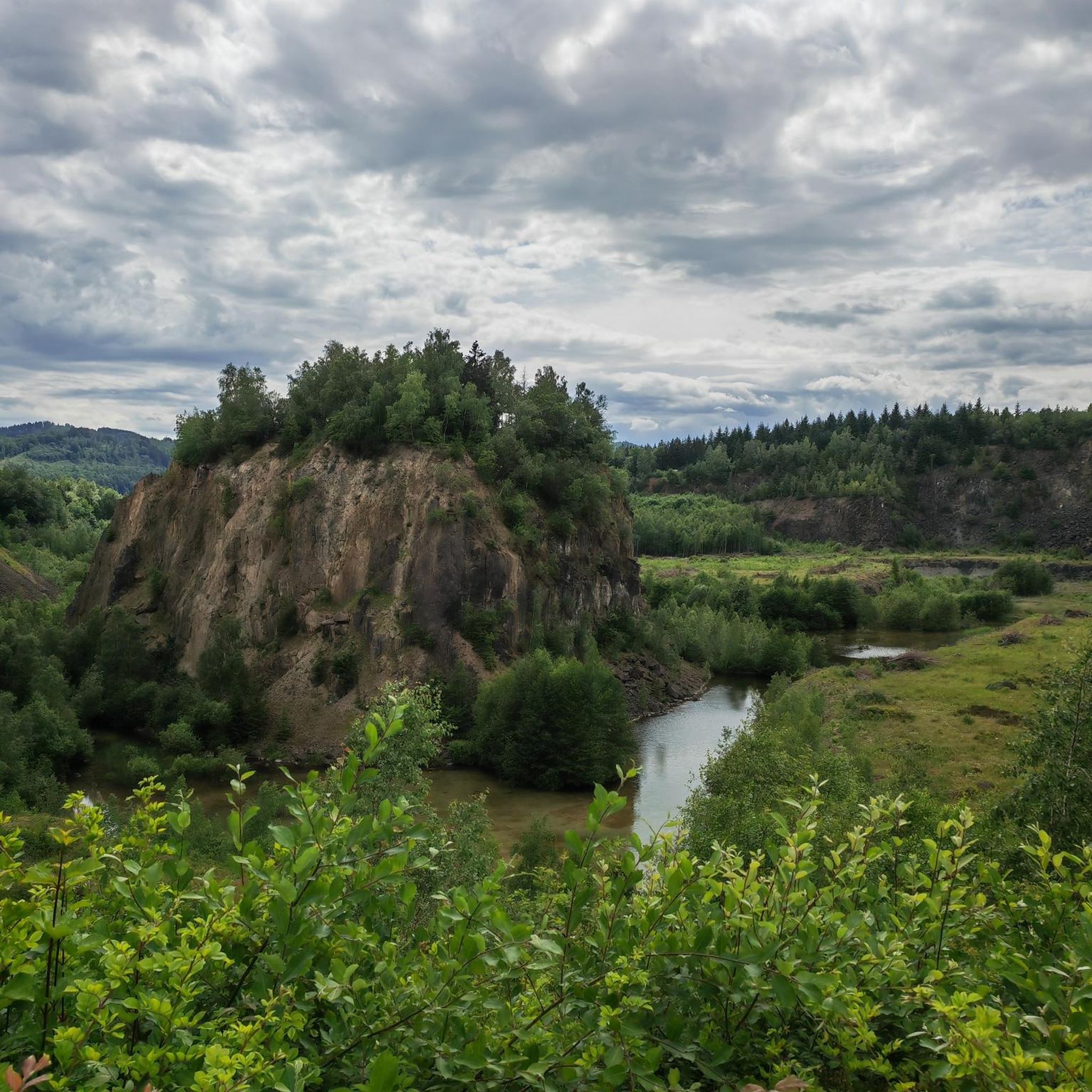
The porous and coarse-grained yellow sandstones of the Klusfelsen form a 20 m high and 50 m long cliff and date from the Lower Cretaceous period.
5
1

A worthwhile sight
4
0

Great place that actually deserves more attention.
1
0
A small but very beautiful and unique chapel.
1
0
The hunter's house is currently only available for rent.
12
1

Beautiful path and really fantastic, especially in autumn 😍🍂
1
0

You will be surprised by a large cave. A small path leads there!
1
0
Bears have never lived in the Bear Cave and it is not a natural cave, but a man-made cavity that was created to mine slate. You can only enter the beginning of the cave, then a protective grille is attached.
1
0
Frequently Asked Questions
What are some of the most notable caves to visit around Liebenburg?
The region around Liebenburg offers a variety of interesting subterranean sites. Among the most popular are Jägerhaus, St. Hubert’s Chapel and St. Hubert’s Grotto, known for its historical grotto with carved figures. Another significant spot is Bärenhöhle (Beckers Grube) near Goslar, which is a geological highlight and serves as a bat house. You can also explore Herb‑August Cave, a former sandstone quarry with a rich history.
Are there any caves around Liebenburg with historical significance?
Yes, several caves in the area have historical importance. Jägerhaus, St. Hubert’s Chapel and St. Hubert’s Grotto is a historical site featuring a grotto that is part of a larger complex including a hunting lodge. The Kluskapelle on the Klusfelsen, for instance, is a natural monument with cave dwellings that were settled in the Stone Age and later housed a Christian chapel in the Middle Ages. Herb‑August Cave is also a former sandstone quarry with a storied past.
Are there family-friendly caves to explore near Liebenburg?
Absolutely! Herb‑August Cave is listed as family-friendly and is a former sandstone quarry that invites visitors to linger and learn about its history. Another option is Bärenhöhle (Bear Cave) – Bat Winter Quarters, which is also suitable for families and offers a worthwhile sight, especially for those interested in wildlife.
What kind of natural features can I expect to see in the caves around Liebenburg?
The caves around Liebenburg showcase diverse natural features. You can find geological highlights like Bärenhöhle (Beckers Grube) near Goslar, which is a small, hidden cave serving as a bat house. The Kluskapelle on the Klusfelsen features a striking rock formation of sandstone, uplifted by geological fault zones, with ancient cave dwellings. Many of these sites are recognized as natural monuments.
Are there any caves near Liebenburg that are important for wildlife?
Yes, the region is home to caves that provide crucial habitats for wildlife. Bärenhöhle (Beckers Grube) near Goslar is specifically noted as a bat house, offering information about its bat inhabitants. Similarly, Bärenhöhle (Bear Cave) – Bat Winter Quarters is an old slate quarry that now serves as a home for bats, making it a significant site for wildlife observation.
Are there hiking trails near the caves around Liebenburg?
Yes, the caves around Liebenburg are often integrated into beautiful hiking routes. For easy hikes, you can explore trails like the 'Former Grube Fortuna Mine – Liebenburger Ponds loop' or the 'Waldhaus Götzinger loop'. You can find more details and routes on the Easy hikes around Liebenburg guide page.
What other outdoor activities can I do near the caves in Liebenburg?
Beyond exploring caves and hiking, the Liebenburg area offers various outdoor activities. You can find numerous running trails, such as the 'Liebenburg School Forest – Waldcafé Liebenburg loop'. For cyclists, there are road cycling routes like the 'Innerstetalsperre – Harzhochstraße loop'. For more options, check out the Running Trails around Liebenburg and Road Cycling Routes around Liebenburg guide pages.
Is it possible to bring dogs to the cave areas around Liebenburg?
Some areas around the caves are dog-friendly. For example, the natural monument Kluskapelle on the Klusfelsen is listed as dog-friendly, allowing you to enjoy the historical and natural surroundings with your canine companion. Always check specific site regulations before visiting.
What should I bring when visiting caves in the Liebenburg region?
For more rugged or less developed caves, like the remote Barnberg Cave mentioned in regional research, a good headlamp is essential as mobile phone lights are often insufficient. Generally, comfortable walking shoes are recommended, and if you plan to explore deeper, proper lighting and perhaps a helmet for safety are advisable. Always be prepared for cooler temperatures inside caves, even on warm days.
Are there any caves around Liebenburg that require special permits or have restricted access?
Some caves, particularly those serving as bat habitats, may have restricted access to protect the wildlife. For instance, Bärenhöhle (Beckers Grube) near Goslar is noted as being closed for speleologists to protect its bat inhabitants, though information about the bats is available. Always respect signage and local regulations regarding access to preserve these natural sites.
What is the best season to visit the caves around Liebenburg?
The best season to visit can depend on the type of cave and your activity. For caves that serve as bat winter quarters, like the Bärenhöhle (Bear Cave), access might be restricted during winter to avoid disturbing the bats. Generally, spring, summer, and autumn offer pleasant conditions for exploring the surrounding hiking trails and the outdoor aspects of these sites. Always check specific opening times or access restrictions for individual caves.
Are there any guided tours available for the caves near Liebenburg?
While the Komoot highlights focus on self-guided exploration of natural and historical sites, some larger show caves further afield in Germany do offer guided tours. For the specific caves around Liebenburg, such as Jägerhaus, St. Hubert’s Chapel and St. Hubert’s Grotto or Herb‑August Cave, the experience is typically self-guided, allowing visitors to explore at their own pace. Information boards are often available at these sites to provide context.
Most popular routes around Liebenburg
Most popular attractions around Liebenburg

Get inspired with the komoot mobile app


Explore more
Extend your search for the best caves by checking out these guides of the top ones around Liebenburg:
