Top 9 Caves around Großfischlingen
Best caves around Großfischlingen are primarily found in the surrounding region, as Großfischlingen itself is a residential area known for agriculture and viticulture. The town integrates into the Palatinate cycle path network and offers proximity to the Palatinate Forest. This area provides access to various geological formations and historical rock chambers, making it a destination for those interested in natural features and local history. Visitors can explore interesting sites within a short distance, offering a blend of natural beauty and…
Last updated: June 27, 2026
Felsenmeer rock formations
Highlight (Segment) • Natural Monument
Showing Translation
Tip by

Bürgermeisterstein Cave (Ritterstein No. 240)
Highlight • Cave
Translated by Google •
Tip by

Sign up now to discover places like this
Get recommendations on the best single tracks, peaks, & plenty of other exciting outdoor places.
Sign up for free
Heidenloch Cave
Highlight • Cave
⚠️ Sturdy shoes and ☠️ Don't underestimate the risk of falling!!!
Brother's Cottage is a hermitage, 19 meter long rubble cave
Heidenloch is a fissure cave
Translated by Google •
Tip by

Bruderhäuschen Cave
Highlight • Cave
Translated by Google •
Tip by

Entrance to the Underground Mining Gallery in the Contrescarpe
Highlight • Historical Site
Translated by Google •
Tip by

Sign up for free to discover even more caves around Großfischlingen.
Sign up for free
Already have an account?
Start today with a free account
Your next adventure awaits.
Login or Signup
Tips from the Community

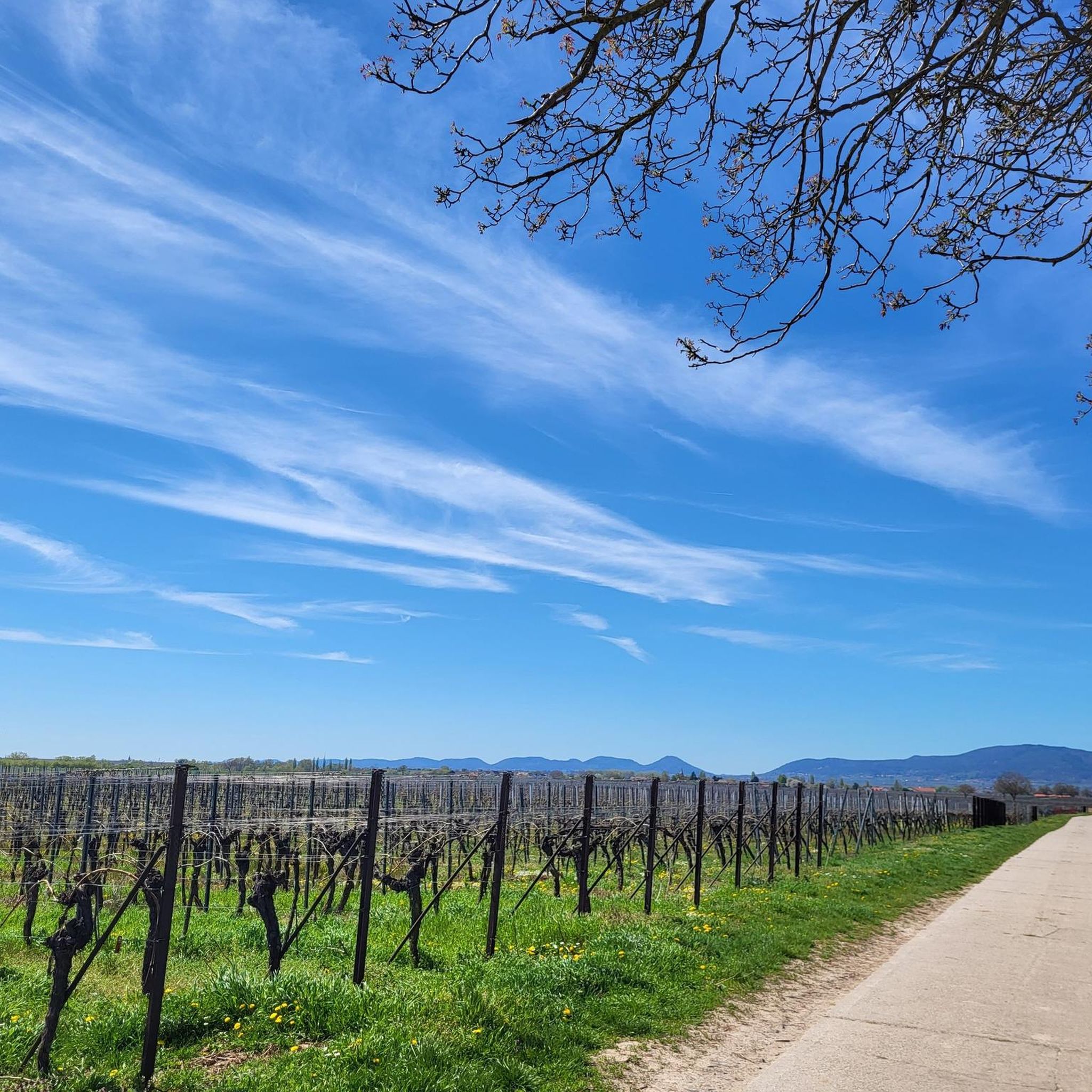
A highlight of the hike from Sankt Martin to Kalmit is the Felsenmeer. Many spectacular rock formations please the eye.
6
0

Landau Fortress was a polygonal fortification located in Landau in the Palatinate. Construction took place between 1688 and 1691. The completely outdated fortress was demolished in 1871, having been downgraded to a depot in 1867. Almost all of the structures below street level have been preserved. Today, several military buildings and many residential buildings are still visible in the city, along with the locks and walls along the rivers, and fortifications in parks. Among these, the largest remaining structure is the wall of the fort built in 1702 (with a length of 3.3 km). Following the Thirty Years' War, the Imperial City of Landau was placed under the protection of France by the Peace of Westphalia in 1648. Following the end of the War of the Palatine Succession in 1697, the city, along with ten other Alsatian imperial cities, was also legally ceded to France in the Peace of Rijswijk of 1697. As early as 1673/74, France had destroyed Landau's medieval city fortifications. With the Peace of Nijmegen, Landau came under French control and, with the simultaneous loss of the right-bank fortress of Philippsburg (1679), became its easternmost outpost, receiving a permanent French garrison in 1680. In September 1687, the military engineer Vauban arrived in Landau to develop a fortification plan. He submitted this plan to King Louis XIV on October 9, who gave his approval in November. Construction began later that same year on the 7-kilometer-long Albersweiler Canal, designed to facilitate the rapid transport of building materials such as timber, lime, and stone by barge. The foundation stone was laid at the end of April 1688 in the presence of the Minister of War, the Marquis de Louvois. Vauban initially oversaw the construction, but relinquished this responsibility to Jacques de Tarade in 1689. With the help of sixteen royal battalions under the command of General Montclar and approximately 14,000 construction workers (more recent studies cite a significantly lower number) from the surrounding area, the fortification was built in the second Vauban style. On the night of June 23-24, 1689, a devastating fire destroyed most of the town and provided an opportunity to modernize the garrison town's layout. This resulted in the creation of straight, wide streets and squares for troop deployments. ... Source: https://de.wikipedia.org/wiki/Festung_Landau#Weblinks
0
0

Really very informative with the information boards
0
0

It's great how and what they built around 1700
0
0

The Bruderhäuschen is difficult to reach, but still worth seeing. However, if you want to explore it, you have to make yourself small and maybe take a flashlight with you.
0
0

You can find a list of knight stones here: https://de.m.wikipedia.org/wiki/Liste_der_Rittersteine
0
0
The shaft is not so good. It is dark and quite mystical.
0
0

This knight's stone no. 240 PWV describes a small cave below the Hohe Loog.
3
0
Frequently Asked Questions
What types of caves and rock formations can I explore near Großfischlingen?
The region around Großfischlingen, particularly within the Palatinate Forest, offers a variety of geological formations. You can find natural rock formations like the Felsenmeer rock formations with its caves and niches, as well as historical rock chambers. Examples include the mysterious Heidenkammern near Fischbach bei Dahn, and accessible chambers like those at Buchkammerfels, which offer views of Drachenfels Castle. There are also natural weather protection facilities like the Hohler Felsen near Eppenbrunn.
Are there any historical or cultural cave sites in the area?
Yes, the region features several sites with historical significance. The Heidenkammern near Fischbach bei Dahn are three artificially created rock chambers whose origin and function remain a mystery, possibly serving as outposts for Drachenfels Castle. The Bürgermeisterstein Cave (Ritterstein No. 240) is a historical site where house marks were carved in the 17th century. Additionally, the Lourdes Grotto Weyher is a well-kept religious building and natural monument offering a place for quiet reflection.
What are some challenging cave explorations near Großfischlingen?
For those seeking a challenge, the Heidenloch Cave is a fissure cave on the Königsberg, described as challenging and requiring sturdy shoes. The Bruderhäuschen Cave, a spacious rubble cave also on the Königsberg, is another challenging option, with tips suggesting a flashlight for adventurous explorers. The Buchkammerfels Rock Chambers, while accessible, require some practice and caution, especially during descent, as the entrance is eight meters above ground.
Are there family-friendly options for visiting caves or rock formations?
While some caves are challenging, the Felsenmeer rock formations offer a narrow, easy-to-walk path below the rocks, making it suitable for families to explore the caves and niches. The Lourdes Grotto Weyher is also a peaceful and accessible site for all ages.
What outdoor activities can I combine with a visit to the caves?
The region around Großfischlingen is well-suited for various outdoor activities. You can find numerous running trails, such as those detailed in the Running Trails around Großfischlingen guide. For cyclists, there are options for Gravel biking around Großfischlingen and Road Cycling Routes around Großfischlingen, allowing you to explore the scenic Palatinate Forest and vineyards.
What is the best time to visit the caves and rock formations?
The Palatinate Forest region is generally pleasant for outdoor activities from spring through autumn. Visiting during these seasons allows for comfortable exploration of the rock formations and surrounding hiking trails. Always check local weather conditions, especially if planning to explore more challenging or exposed sites like the Buchkammerfels.
What should I wear or bring for cave exploration in this area?
For most rock formations and accessible grottoes, comfortable walking shoes are sufficient. However, for more challenging fissure or rubble caves like Heidenloch Cave or Bruderhäuschen Cave, sturdy shoes are essential. A flashlight is also recommended for adventurous explorations into deeper sections.
Are there any viewpoints near the caves?
Yes, several cave and rock formation sites offer excellent views. The Buchkammerfels Rock Chambers provide beautiful views, including of Drachenfels Castle, after crossing a crevice. The Gebrochener Felsen, a natural monument in Pirmasens, also offers very nice views of Eppenbrunn. The Felsenmeer rock formations and Lourdes Grotto Weyher are also noted for their scenic surroundings and viewpoints.
Can I bring my dog to the cave areas?
Many outdoor areas in the Palatinate Forest are dog-friendly, especially hiking trails leading to rock formations. However, specific access rules for individual cave interiors or sensitive natural monuments may vary. It's generally advisable to keep dogs on a leash and ensure they are well-behaved, especially in areas with other visitors or wildlife. For challenging caves, it might not be suitable for dogs.
Are there cafes or accommodation options near the caves?
Großfischlingen itself is known for agriculture and viticulture, and the surrounding towns like Kleinfischlingen and those in the Palatinate Forest region offer various amenities. You can find cafes, pubs, and accommodation options in these nearby communities, which cater to visitors exploring the natural and historical sites of the area.
What makes the caves around Großfischlingen unique?
The caves and rock formations near Großfischlingen are unique for their blend of natural beauty, geological interest, and historical mystery. From the enigmatic, artificially created Heidenkammern to the 17th-century carvings in the Bürgermeisterstein Cave, and the natural weather shelters like Hohler Felsen, they offer a diverse experience that combines outdoor adventure with a sense of history and wonder.
Most popular routes around Großfischlingen
Most popular attractions around Großfischlingen

Get inspired with the komoot mobile app


Explore more
Extend your search for the best caves by checking out these guides of the top ones around Großfischlingen:
