Top 20 Huts and Cabins around Siesbach
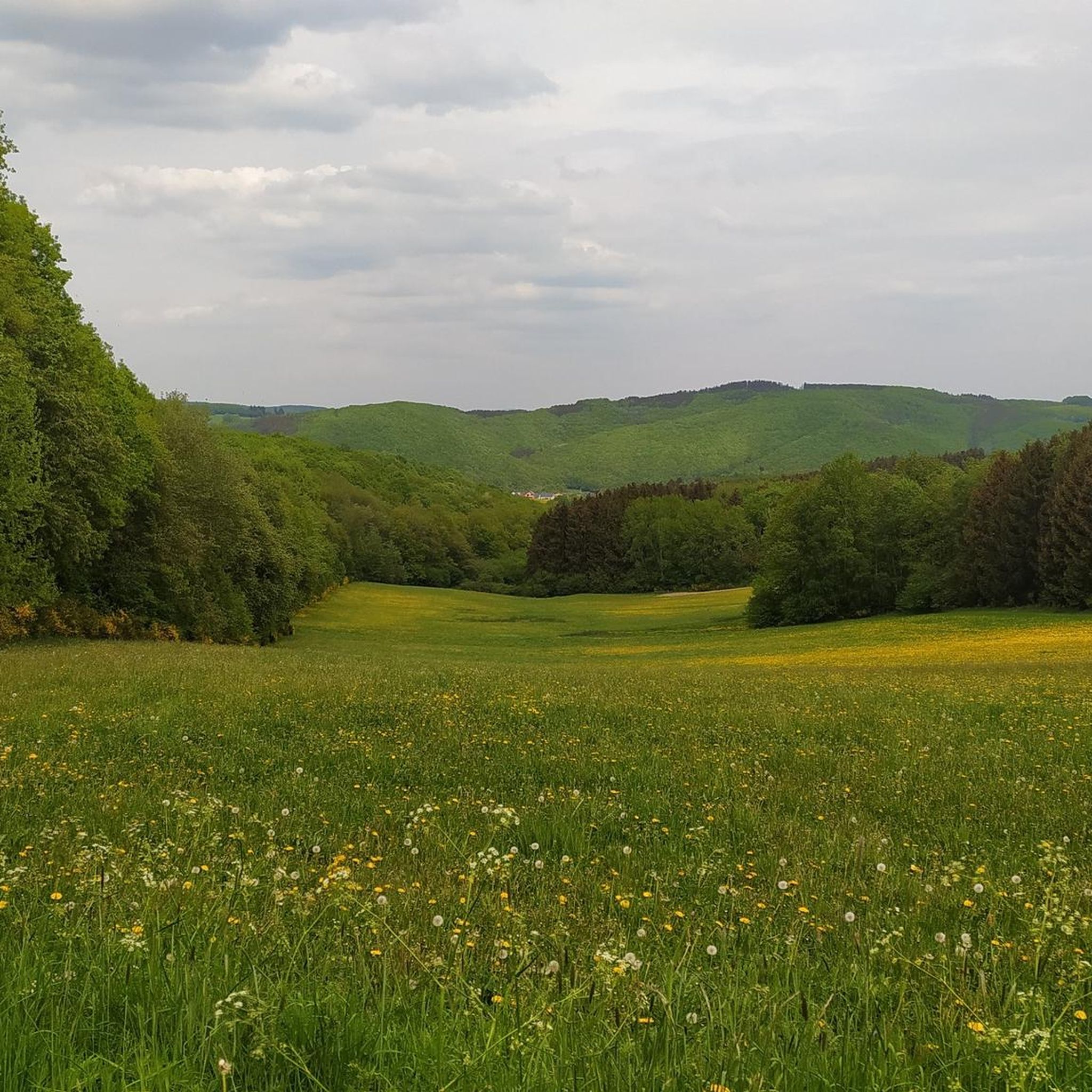
Huts around Siesbach, a village in the Hunsrück region of Germany, provide access to a peaceful natural setting. The area is characterized by its proximity to the Hunsrück-Hochwald National Park, the highest peak Erbeskopf, and the leisure lake Bostalsee. While traditional alpine-style huts are not common, the region offers various holiday homes and shelters that serve as bases for exploring the natural landscape. These accommodations and facilities support outdoor activities in the surrounding nature parks.
Best huts around Siesbach
- The most popular huts is Kaiserallee on the Nahekopf, a man_made_monument that features steles presenting Roman emperors. This site provides historical insights into the region's past, including early settlements and Roman influence.
- Another must-see spot is Kreuzbuche Shelter (National Park Cycle Route, Hunsrück-Hochwald), a hut. Visitors can expect a shelter that serves as an important junction in the Königswald, offering a place to rest during cycling or hiking routes.
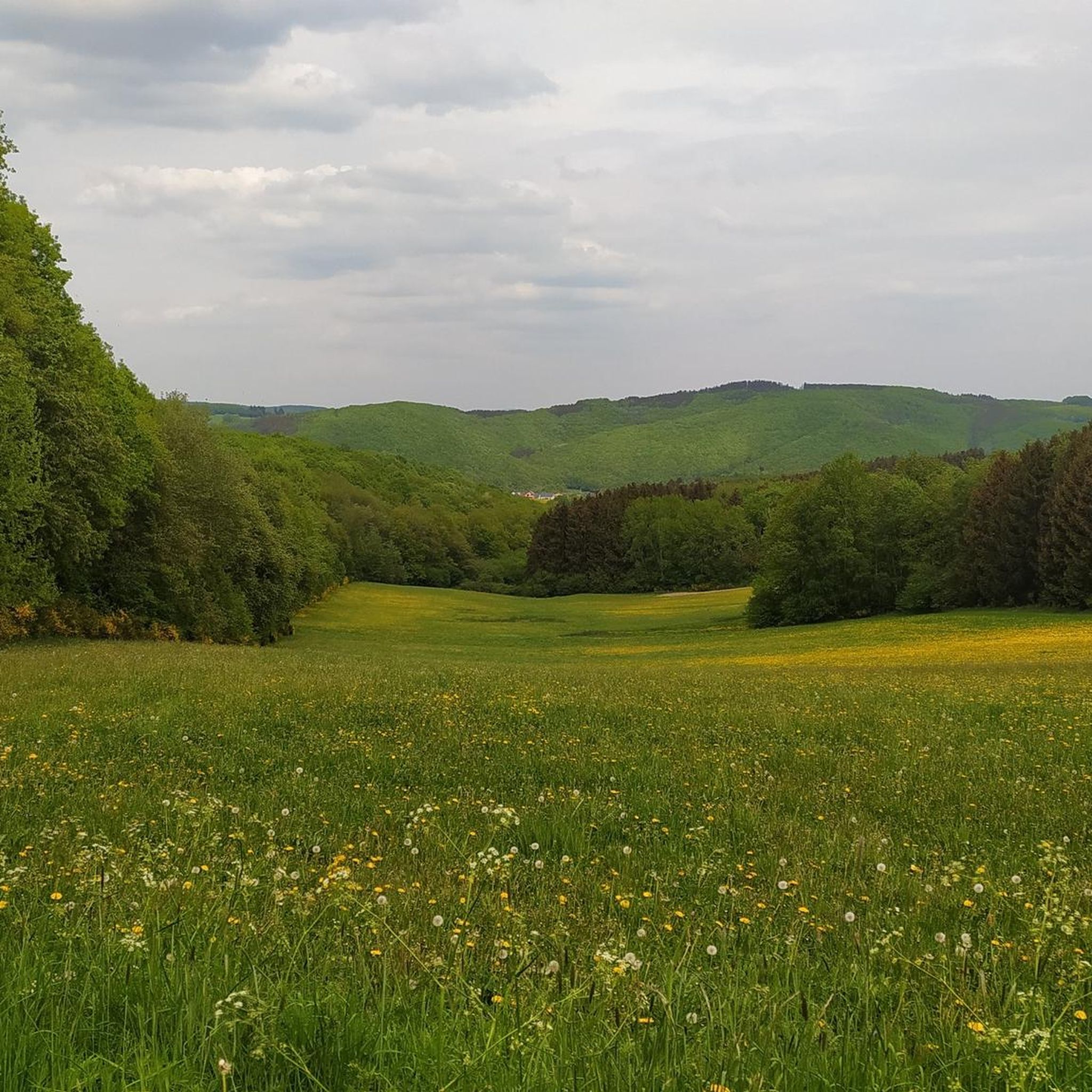
- Visitors also love Selbach Shelter and Picnic Area, a hut with facilities. This spot provides a shaded rest area with benches and seating in a wooded valley, ideal for breaks.
- Siesbach is known for shelters, picnic areas, and holiday homes. These facilities offer a variety of options for rest and accommodation, supporting exploration of the natural environment.
- The huts around Siesbach are appreciated by the komoot community, with more than 260 upvotes and over 220 photos shared.
Last updated: June 27, 2026
Kaiserallee on the Nahekopf
Highlight (Segment) • Monument
The Kaiserallee has been funded as part of the cultural and regional heritage concept, a program of structural development in Rhineland-Palatinate since 2007. The Kaiserallee that has now emerged presents the most famous emperors who ruled at the time the Nahekopf was settled. The theme of the "Roman Emperor" is presented in a station-like manner using steles. Between the individual imperial steles are the original sandstones that were found on the Nahekopf. The first excavations on the Nahekopf took place as early as 1995/96. During renewed field work in 2007/08, interesting insights were gained, some of which contradicted older knowledge. For example, it was found out that the Nahekopf only existed from the Late Late Period, i.e. from the middle of the 2nd century to around 50 BC. was settled. It became apparent that the Nahekopf must have been a hilltop settlement that was regularly used by the village community. Unfortunately, the allotted time frame only allowed excavations in certain sub-areas. It is important to mention that the Kaiserallee is a modern replica and not tied to historical models. Source: text information board
Translated by Google •
Tip by

National Park Hunsrück-Hochwald Monument
Highlight • Monument
Translated by Google •
Tip by

Sign up now to discover places like this
Get recommendations on the best single tracks, peaks, & plenty of other exciting outdoor places.
Sign up for free
Kreuzbuche Shelter (National Park Cycle Route, Hunsrück-Hochwald)
Highlight • Mountain Hut
Translated by Google •
Tip by

At the Wahlenbach Shelter
Highlight • Mountain Hut
Translated by Google •
Tip by

Selbach Shelter and Picnic Area
Highlight • Mountain Hut
Translated by Google •
Tip by
Sign up for free to discover even more huts and cabins around Siesbach.
Sign up for free
Already have an account?
Start today with a free account
Your next adventure awaits.
Login or Signup
Tips from the Community

Always good for a little rest.
0
0

Suitable shelter with a flat concrete floor for overnight stays. Barbecue area, fountain and stream in front of the hut...what more could you ask for? I tested the water... it tastes good...
1
0

Nice place for a break. Many tables and benches available.😊
1
0

From here or from the hiking car park in Herborn you can start the national park cycle route.
0
0

Large shelter and outside a small rest area
2
0
Here she stood until the 🌩 hit
0
0

Flavius Valerius Constantinus (* on February 27 between 272 and 285 in Naissus, t May 22 337 in Anchyrona) Constantine the Great, or Constantine I for short, was Roman Emperor from 306 - 337. However, he did not become sole ruler until 324. Constantine's reign was historically significant mainly because of the Constantinian turn he initiated, which began the rise of Christianity to the most important religion in the empire. In 312 he invaded Italy and defeated Maximian's son Maxentius at the Milvian Bridge, becoming Augustus. Constantine the Great also became known as the emperor of the turn of the century and the reorganizer of the Roman Empire. 324/26 Constantine moved his seat of government to Constantinople ("City of Constantine"). Shortly after Easter 337, however, Constantine fell seriously ill. Anticipating his death, he summoned the Bishop of Nicomedia. It was only at this point, when he assumed he would no longer commit any sins, that Constantine was baptized. The preparations for war were halted and the emperor died on May 22, 337 in the imperial villa of Ankyrona. With the burial in the Apostle Church, Constantine the Great was honored as the 13th Apostle. After his death, the sons of Constantine II, Constantius Il. and Constans his successors. Source: text information board
8
0
Flavius Julius Constantius (born August 07, 317, d. November 03, 361 Cilicia) Shortly Constantius II, was the third son of Constantine the Great and was Roman Emperor from 337 - 361. From 337 he ruled only in the east and from 350/53 to 360 also in the entire empire. At the age of seven he became a caeser and administrator of the eastern half of the empire. His reign was marked by a constant defensive struggle at the borders. Serious problems also arose in the area of religious policy, but Constantius was unable to solve them permanently. After Constantine's death in 337, a series of murders ensued and the brothers, Constantine II, Constans and Constantius II. took the title of Augustus and shared rulership. Constantius received the eastern part of the empire. His brother Konstantin II. died already in 340 after a fight against Constans, who now controlled the whole empire. He died in Cilicia on November 3rd, 361, weakened by the fever and the hardships of the past years. Source: text information board Gaius Pius Esuvius Tetricus (b. 269) Tetricus for short, was the last emperor of the Gallic Empire (Imperium Galliarum) from 271 - 274. 271 he was proclaimed emperor by the lord and moved his residence from Cologne to Trier. Several victories against the Germans. Tetricus set up fortified bases on the left bank of the Rhine, which were supplemented by fortresses belonging to private landlords (possibly also on the Nahekopf). Lost in March 274 to Aurelian, but continued under him in high office. It remains unclear whether Tetricus and his son had to capitulate or defected to Aurelian. But their army was crushed and the end of the Gallic empire was finally sealed. Source: text information board
8
0
Frequently Asked Questions
What kind of accommodations or shelters can I expect around Siesbach?
Siesbach and the surrounding Hunsrück region are known for various holiday homes, apartments, and shelters rather than traditional alpine-style huts. These range from renovated houses in natural settings to rustic-style apartments, often featuring amenities like equipped kitchens, gardens, and scenic views. You'll also find dedicated shelters and picnic areas for day use.
Are there any historical sites or landmarks near the huts in Siesbach?
Yes, you can explore historical sites. For instance, the Kaiserallee on the Nahekopf is a man-made monument featuring steles that present Roman emperors, offering insights into the region's past, including early settlements and Roman influence. It's a modern replica designed to highlight historical context.
What natural features can I discover near the shelters in Siesbach?
The area is rich in natural beauty. You can visit the National Park Hunsrück-Hochwald Monument, which is located at a former extinguishing pond and features a 70-ton Taunus quartzite monument. The region is also close to the Hunsrück-Hochwald National Park, the highest peak Erbeskopf, and the leisure lake Bostalsee, offering diverse landscapes.
Are there family-friendly shelters or picnic areas available?
Absolutely. Many shelters and picnic areas are designed for families. The Kreuzbuche Shelter (National Park Cycle Route, Hunsrück-Hochwald) is a family-friendly hut that serves as an important junction for cyclists and hikers. Additionally, the Selbach Shelter and Picnic Area provides a shaded rest area with benches and seating in a wooded valley, ideal for family breaks.
What outdoor activities can I do near the huts and shelters?
The region is perfect for outdoor enthusiasts. You can find numerous hiking, road cycling, and mountain biking routes. For hiking, explore trails like the 'Harry Potter Trail' or the 'Forest Poetry Trail'. Road cyclists can enjoy routes such as the 'Nahe Bridge – Community Center Hahnenbach loop', while mountain bikers have options like the 'Schwäserhütte – Wildenburg Observation Tower loop'. You can find more details on these activities in the respective guides for hiking, road cycling, and MTB trails around Siesbach.
Are there any shelters with good viewpoints?
Yes, several spots offer scenic views. The Kreuzbuche Shelter is noted for its viewpoint, and the National Park Hunsrück-Hochwald Monument also provides a great vantage point. Many holiday rentals in the area also boast scenic views of valleys and mountains.
What is the best time of year to visit Siesbach for outdoor activities and to enjoy the shelters?
The Hunsrück region is generally pleasant for outdoor activities from spring through autumn. Spring brings blooming nature, while summer offers warm weather for hiking and water activities at Bostalsee. Autumn is ideal for enjoying the colorful foliage. While some shelters are accessible year-round, winter hiking is also possible, especially in the Hunsrück-Hochwald National Park, though specific winter-equipped huts are less common.
Can I find shelters with facilities like picnic areas or benches?
Yes, many shelters around Siesbach are equipped with facilities for visitors. The Selbach Shelter and Picnic Area, for example, offers benches, wooden block-seating, a shelter, and a fountain in a shady wooded valley. The At the Wahlenbach Shelter also provides a large refuge with an outdoor table by a pond.
Are there any multi-day hiking opportunities with hut stays in the Siesbach area?
While traditional multi-day hut-to-hut hiking like in alpine regions is not typical, the extensive network of trails in the Hunsrück-Hochwald National Park and Naturpark Saar-Hunsrück allows for multi-day excursions. You can utilize the various holiday homes and apartments in and around Siesbach as comfortable bases for overnight stays, exploring different sections of the trails each day.
What do visitors appreciate most about the huts and shelters in Siesbach?
Visitors highly appreciate the peaceful natural setting and the opportunities for relaxation and outdoor activities. The shelters and picnic areas are valued for providing convenient rest spots during hikes and bike rides. The komoot community has shown strong engagement, with over 260 upvotes and more than 220 photos shared, highlighting the area's appeal for nature lovers and active explorers.
Are there options for dog-friendly trails or accommodations near Siesbach?
The Hunsrück region, with its vast natural parks and numerous trails, is generally very welcoming to dogs. Many hiking routes are suitable for dogs, and holiday homes often accommodate pets. It's always recommended to check specific accommodation policies beforehand, but the natural environment provides ample opportunities for walks with your dog.
How accessible are the shelters and natural attractions by public transport?
While Siesbach itself is a smaller village, the broader Hunsrück region has some public transport connections. However, accessing specific shelters or trailheads often requires a car for convenience. Some key points within the Hunsrück-Hochwald National Park might have bus stops, but planning your route in advance and checking local transport schedules is advisable for optimal accessibility.
Most popular routes around Siesbach
Most popular attractions around Siesbach

Get inspired with the komoot mobile app


Explore more
Find more beautiful huts and cabins around Siesbach by checking out the top ones in these nearby places:
