The 12 Most Amazing Peaks around Langweiler Wald
Best mountain peaks around Langweiler Wald, a state forest in the district of Bayreuth, Germany, offers various hiking opportunities across its entirely wooded landscape. The area features elevated terrain and forested uplands, providing inclines and scenic views rather than distinct mountain peaks. With an average elevation of 452 meters, the region is suitable for walks and moderate hikes. Visitors can explore a network of trails, enjoying the natural scenery and opportunities for outdoor recreation.
Best mountain peaks around Langweiler Wald
…Last updated: June 27, 2026
Neubürg Plateau and Sculpture Park
Highlight • Viewpoint
Translated by Google •
Tip by

Sophienberg
Highlight • Summit
Translated by Google •
Tip by

Sign up now to discover places like this
Get recommendations on the best single tracks, peaks, & plenty of other exciting outdoor places.
Sign up for free
Hohe Leite
Highlight • Viewpoint
Translated by Google •
Tip by

Fahnenstein Rock Arch
Highlight • Natural Monument
Translated by Google •
Tip by

Sophienberg (Culmberg)
Highlight • Summit
Translated by Google •
Tip by
Sign up for free to discover even more peaks around Langweiler Wald.
Sign up for free
Already have an account?
Start today with a free account
Your next adventure awaits.
Login or Signup
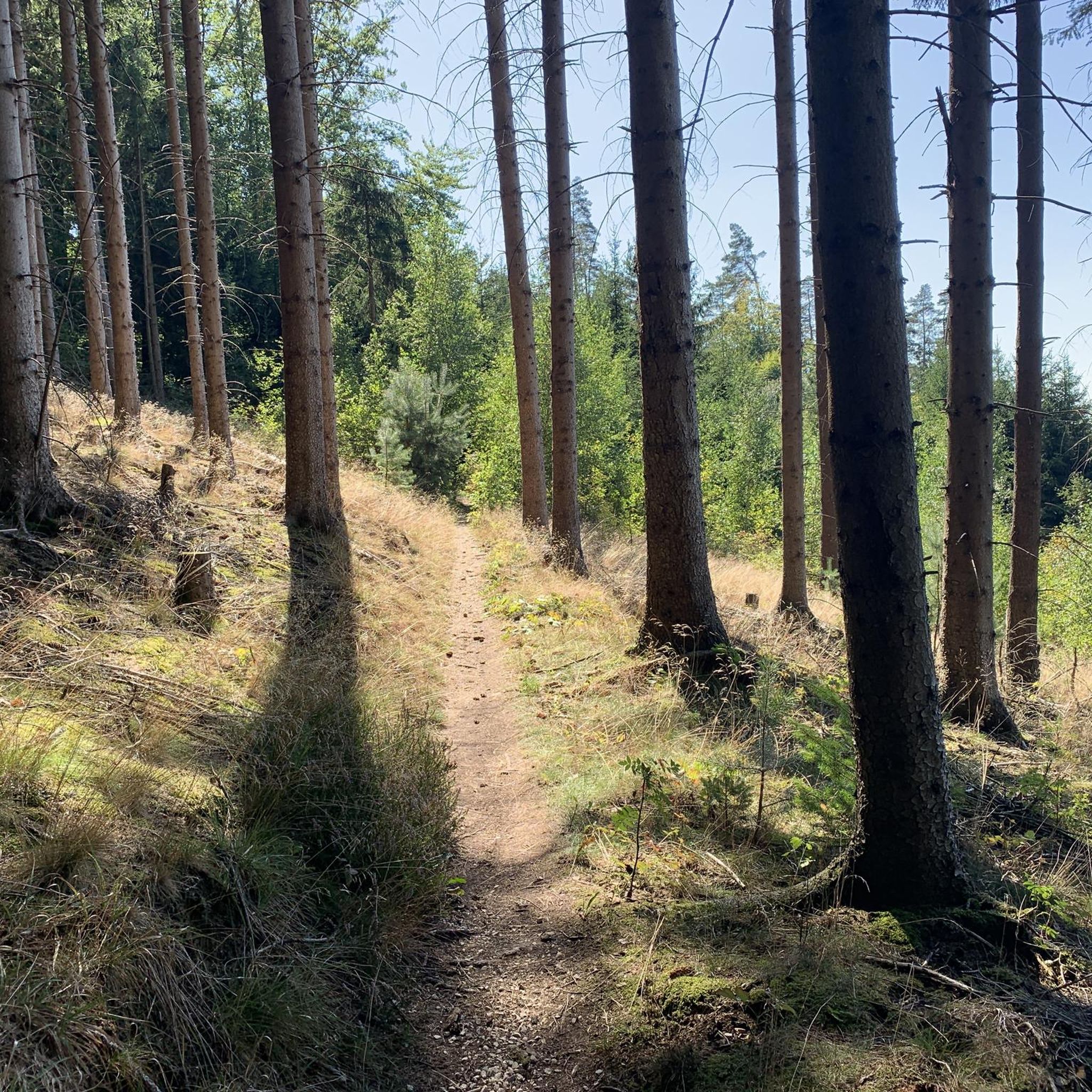
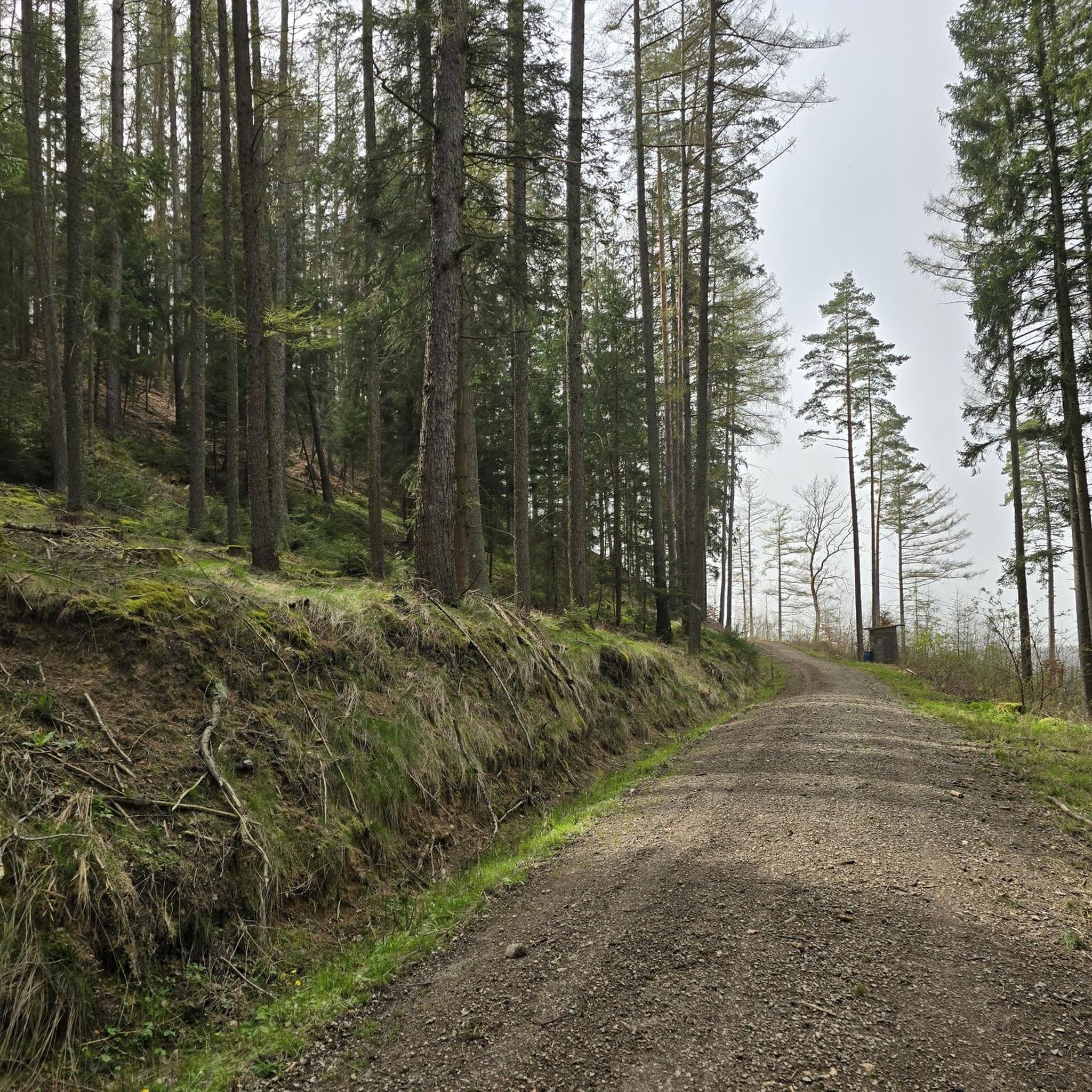
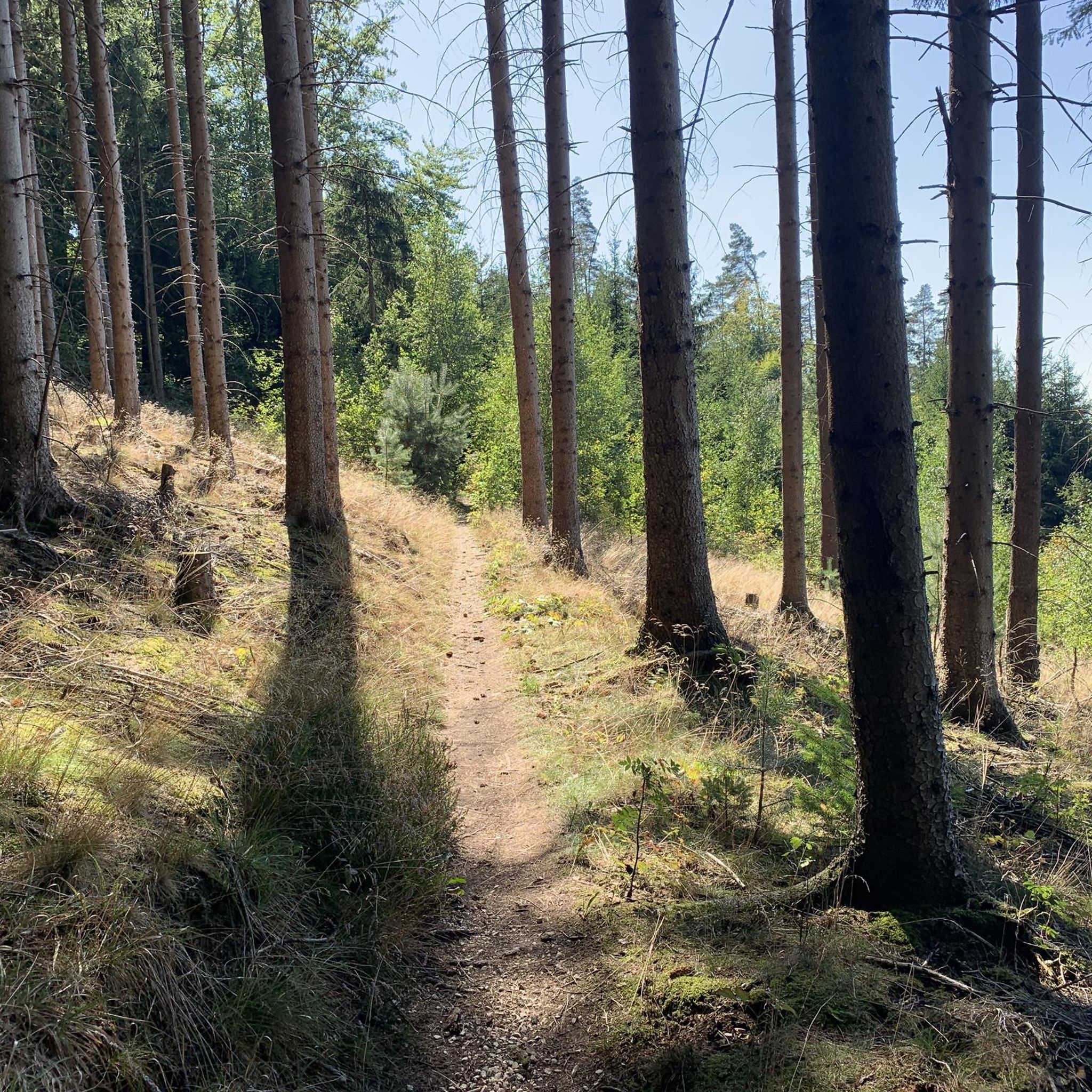
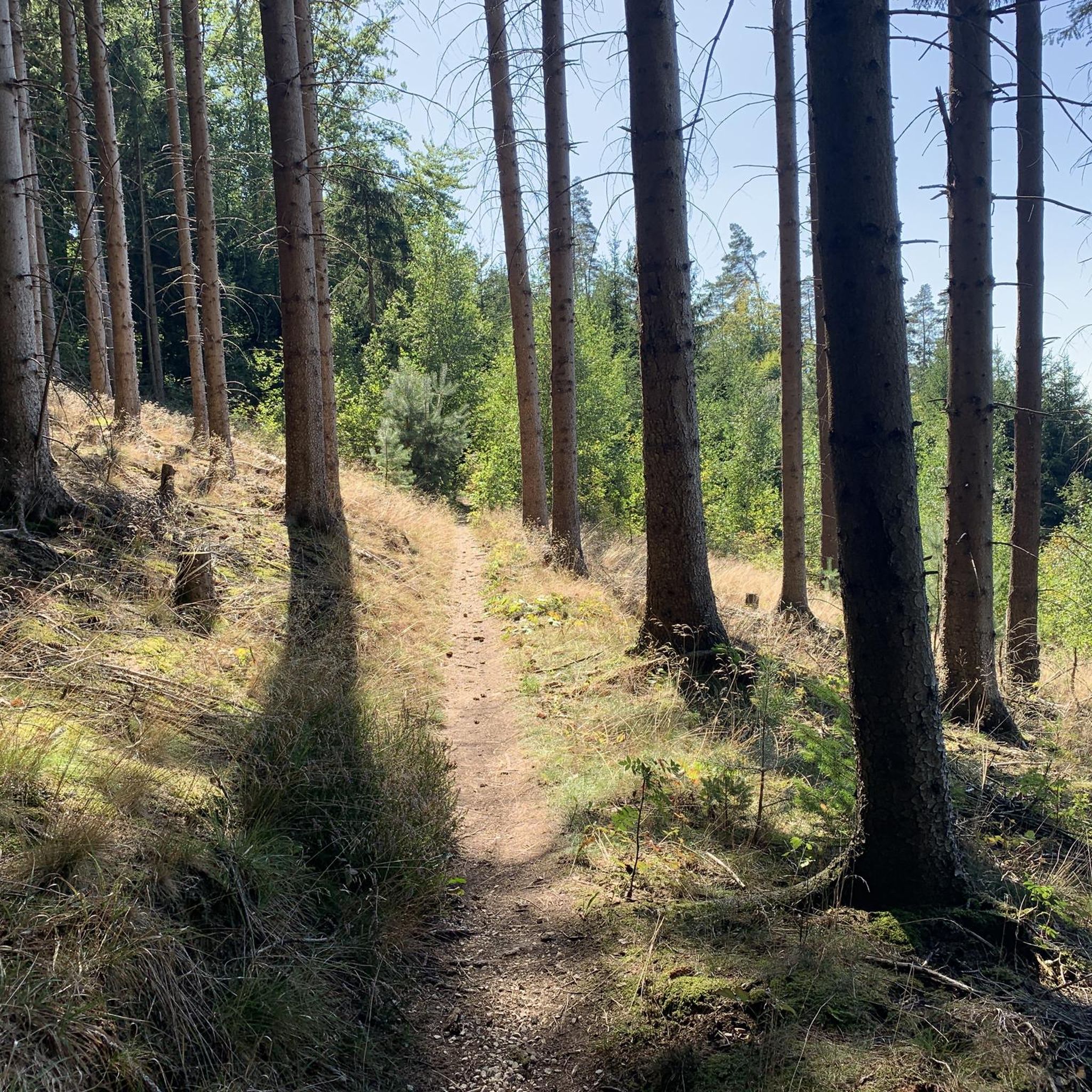
Tips from the Community

At the summit, you'll enjoy a schnapps. Unfortunately, there's no view from the summit.
0
0

Since the community of Obernschreez suffered no casualties in the First World War, it planted an oak tree on the mountain in commemoration. The community of Schreez (formed in 1939 from the merger of Obernschreez and Unternschreez) erected a memorial on the mountain in 1952 for the fallen and missing soldiers of the Second World War.
11
2
A fortified Celtic hilltop settlement can be traced back to around 550 BC on Sophienberg. In the 12th century, Counts Ulrich and Poppo von Blassenberg built Culmberg Castle. In 1494, Frederick II, Margrave of Brandenburg-Kulmbach, had a watchtower erected there. Nikol von Heerdegen built a knight's castle on the hill in 1513. In 1614, Heerdegen sold the manor to Margrave Christian's first wife, Marie of Prussia, who had the castle restored. In 1662, Margrave Christian Ernst gave the estates on the hill to his young wife, Erdmuthe Sophie. Between 1663 and 1668, she had the already dilapidated castle converted into a new palace, Sophienburg. Tradition has it that the White Lady haunts this building. It was no longer inhabited by 1687, and from 1724 onward, it was no longer administered. It was left to decay, and only remnants of the foundations remain. The Sophienberg exerted a great attraction on Richard Wagner, who first visited it with his wife Cosima and Malwida von Meysenbug in 1872 during his time in Donndorf.
11
2

Very worth seeing, you have to see it
0
0

Relatively steep climb with some stairs. The stairs just before the plateau are a bit tricky.
0
0
The Neubürg table mountain is the second highest elevation in the region at 587 meters, after the Sophienberg (593 meters). It is located in the Mistelgau municipality. The Neubürg was formed in the Jurassic period. The top layer consists of limestone, followed by Ornatenton and iron sandstone. The Neubürg is called a table mountain because it has a flat table surface instead of a dome. Due to the erosion-related formation, the Neubürg is also called an island or witness mountain. It stands like an island in the further eroded environment and "witnesses" the rock layers that previously covered the entire area.
13
3


Frequently Asked Questions
What are the most notable elevated areas or 'peaks' around Langweiler Wald?
While Langweiler Wald is characterized by wooded uplands rather than distinct high mountain peaks, several elevated points offer significant views and experiences. Among the most popular are the Neubürg Plateau and Sculpture Park, known for its panoramic views of northeastern Franconian Switzerland, and Sophienberg, the highest point around Bayreuth with historical significance. Another excellent spot for views is Hohe Leite, a natural monument offering optimal vision and a quiet resting place.
Are there family-friendly elevated walks or viewpoints in the Langweiler Wald region?
Yes, the region offers several family-friendly options. Hohe Leite is noted as family-friendly, providing a quiet place with benches and a table for resting while enjoying great views. The overall terrain of Langweiler Wald, with its moderate inclines, is generally suitable for walks with varying fitness levels, making many trails accessible for families.
What historical or cultural sites can be found on the elevated points around Langweiler Wald?
The Sophienberg is rich in history. It was once the site of a fortified Celtic hilltop settlement dating back to around 550 BC. Later, it hosted Culmberg Castle and a palace, Sophienburg, though only remnants of the foundations remain today. The mountain also features a memorial for soldiers of the Second World War.
What kind of natural features can I explore on the elevated terrain of Langweiler Wald?
Beyond the extensive wooded landscape, you can discover unique natural features. The Neubürg Plateau is a geological marvel, known as a table mountain due to its flat summit plateau, formed during the Jurassic period. You can also find the Fahnenstein Rock Arch, an interesting rock formation with stairs, offering a unique geological experience.
What outdoor activities can I do near the elevated areas of Langweiler Wald?
The region around Langweiler Wald is excellent for various outdoor activities. You can find numerous routes for gravel biking, mountain biking, and mountain hiking. For example, there are mountain hiking routes like the 'Kuchenmühle in the Aufseß Valley – Hohes Kreuz Observation Tower loop' or the 'Devil’s Hole Waterfalls – Roter Hügel rock formation loop'. You can explore more options on the Mountain Hikes around Langweiler Wald guide, the Gravel biking around Langweiler Wald guide, or the MTB Trails around Langweiler Wald guide.
Are there easy hiking trails suitable for beginners around Langweiler Wald's elevated areas?
Yes, many trails in Langweiler Wald are suitable for beginners and those seeking easier walks. The region is known for its moderate inclines and forested uplands, rather than challenging mountain climbs. An example of an easy mountain hike is the 'Devil’s Hole Waterfalls – Roter Hügel rock formation loop from Heinersreuther Forst', which is 5.3 km long. The 'Hollerberg loop from Mistelgau' is also described as an easy hike with accessible elevation gain.
What is the best time of year to visit the elevated areas and trails in Langweiler Wald?
The Langweiler Wald region is beautiful throughout the year, but the best time for hiking and enjoying the elevated views is typically from spring to autumn. During these seasons, the weather is generally milder, and the forest is lush or vibrant with autumn colors. Winter hiking is also possible, but trails might be covered in snow or ice, requiring appropriate gear.
What do visitors particularly enjoy about the elevated points and trails in Langweiler Wald?
Visitors appreciate the serene forested environment and the opportunities for outdoor recreation. The elevated points like Hohe Leite are loved for their 'optimal vision' and 'great views' in a quiet setting. The Neubürg Plateau is popular for its panoramic vistas and the unique 'NaturKunstRaum' with ten works of art.
Can I find circular walking routes that include some of the elevated areas?
Yes, the region offers various circular walking routes. While specific named circular routes for every highlight aren't detailed, the nature of the trail network in Langweiler Wald and surrounding areas allows for many loop options. For instance, the 'Hollerberg loop from Mistelgau' is a known circular route that includes an elevated section, providing scenic views.
Are there any unique geological features to observe on the elevated terrain?
Absolutely. The Neubürg Plateau is a prime example, being a 'table mountain' with a flat summit plateau. Its formation during the Jurassic period, with layers of limestone, Ornatenton, and iron sandstone, makes it a significant geological 'witness mountain'. Additionally, the Fahnenstein Rock Arch presents an interesting rock gate formation with natural stairs.
What is the average elevation of the Langweiler Wald region?
The average elevation of Langweiler Wald is 452 meters. While it features elevated terrain and forested uplands, the area is more characterized by hills and moderate inclines rather than distinct high mountain peaks.
Are there any viewpoints that offer panoramic views of the surrounding landscape?
Yes, several elevated points provide excellent panoramic views. The Neubürg Plateau and Sculpture Park offers a great view of the Franconian Switzerland area. Hohe Leite is also specifically highlighted for its 'optimal vision' and 'great view'.
Most popular routes around Langweiler Wald
Most popular attractions around Langweiler Wald

Get inspired with the komoot mobile app


Explore more
See even more amazing summits around Langweiler Wald with these guides:
