Top 3 Caves around Witzmannsberg
Best caves around Witzmannsberg are located in the Passau district of Lower Bavaria, Germany, a region characterized by its diverse natural landscape including the Bavarian Forest. The area features various geological formations, from rock tunnels to natural monuments with cave-like structures. These sites offer insights into the region's natural history and some also hold historical significance. The landscape around Witzmannsberg provides opportunities for exploring unique rock formations and hidden natural spaces.
Best caves around Witzmannsberg
- The most popular caves is…
Last updated: June 27, 2026
Buchberger Leite Rock Tunnel
Highlight • Cave
Translated by Google •
Tip by

Little stone chapel
Highlight • Natural Monument
Translated by Google •
Tip by

Sign up now to discover places like this
Get recommendations on the best single tracks, peaks, & plenty of other exciting outdoor places.
Sign up for free
Diebstein
Highlight • Natural Monument
Translated by Google •
Tip by

Wolfsteiner Ohe Trail
Highlight (Segment) • Trail
Especially in summer, a hike along this natural Ohe is recommended.
Just take a break in between, cool …
Translated by Google •
Tip by

Quartz Cave
Highlight • Cave
Translated by Google •
Tip by

Sign up for free to discover even more caves around Witzmannsberg.
Sign up for free
Already have an account?
Start today with a free account
Your next adventure awaits.
Login or Signup
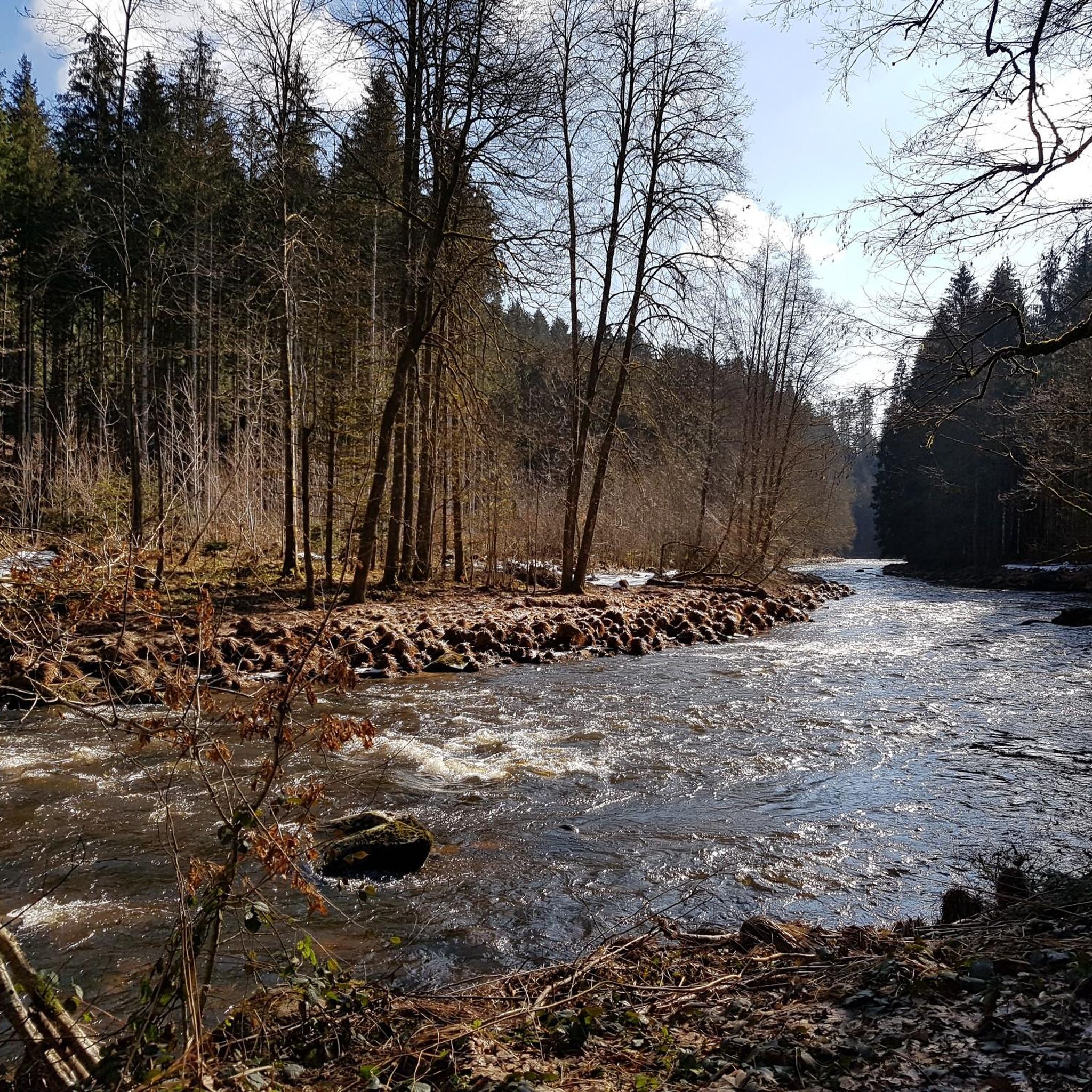
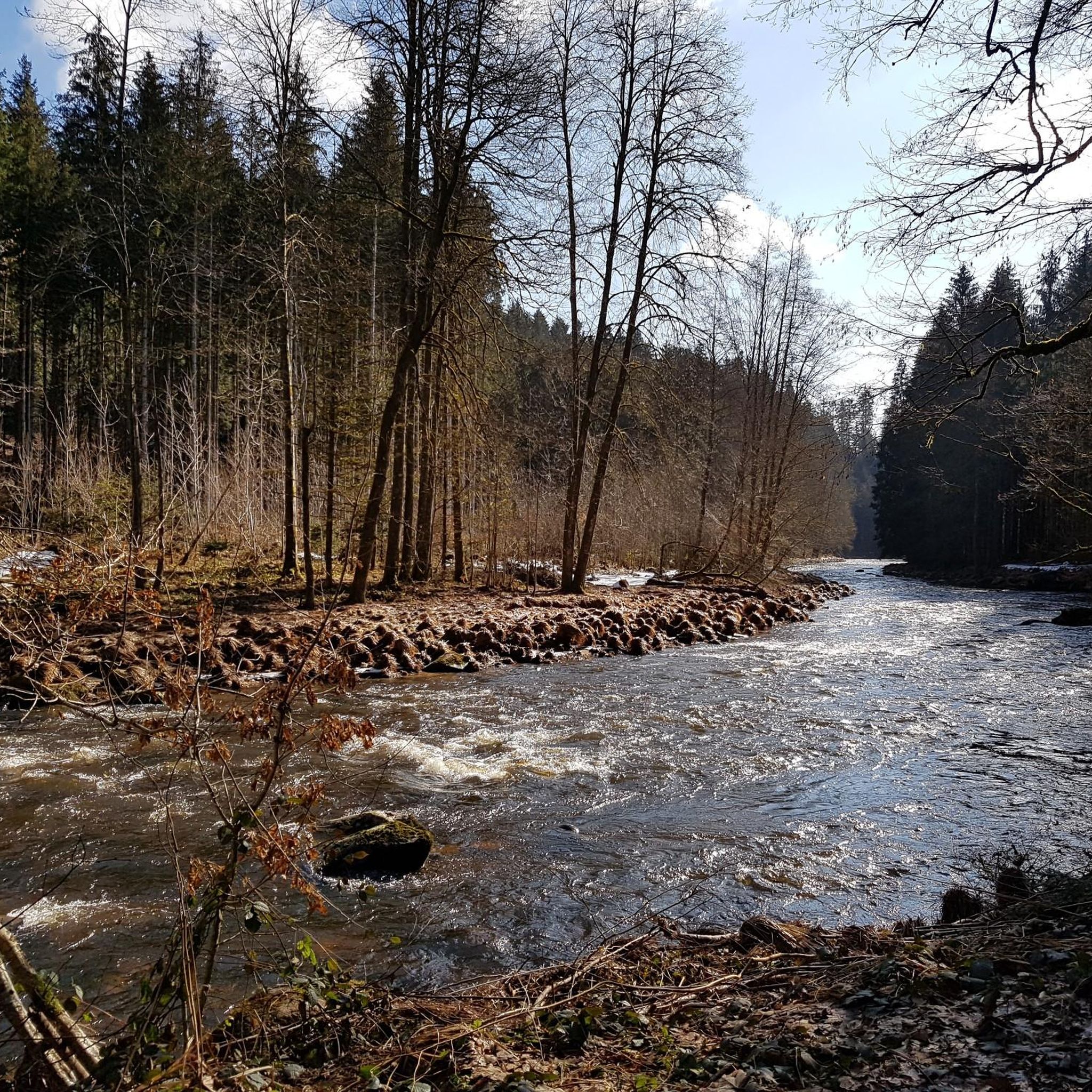
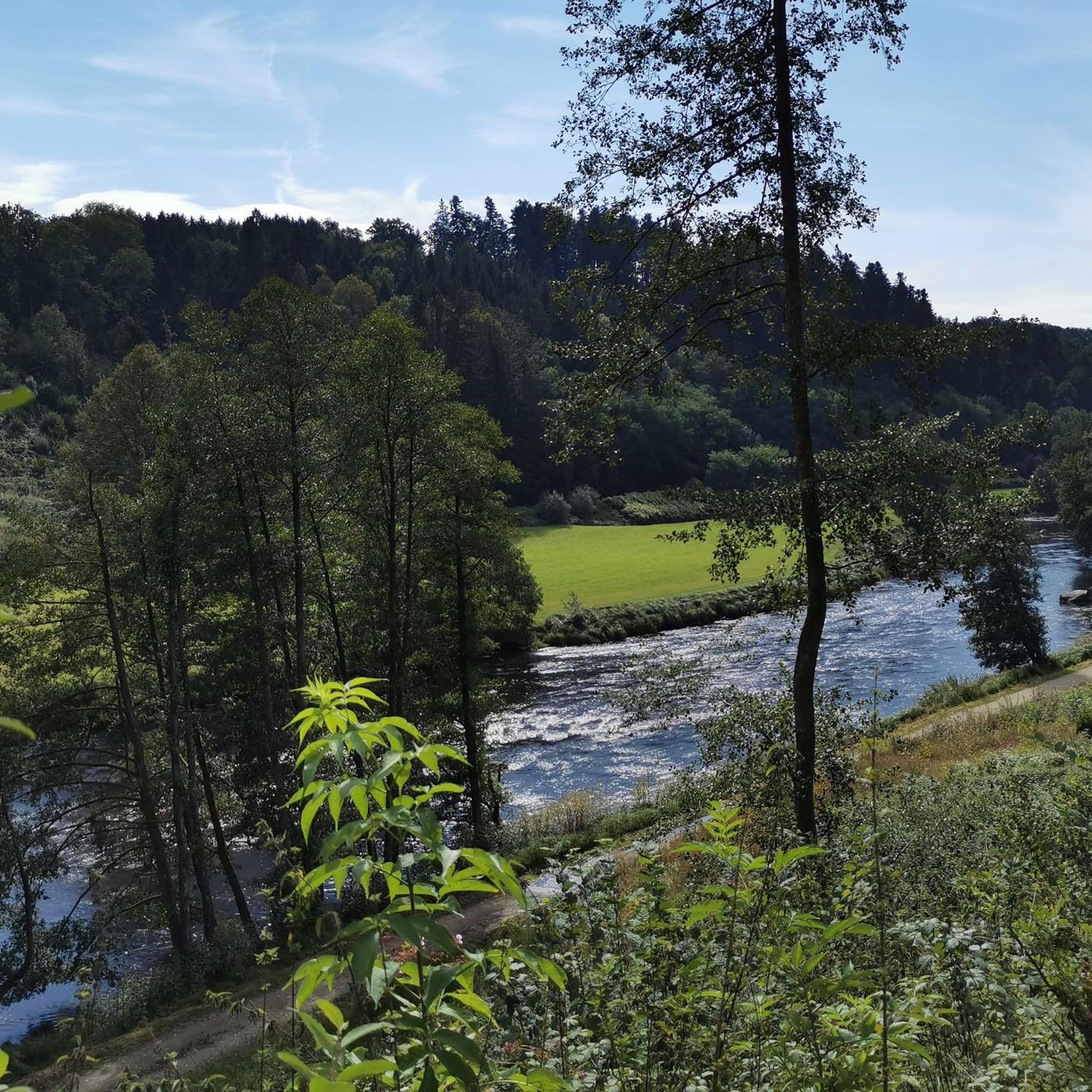
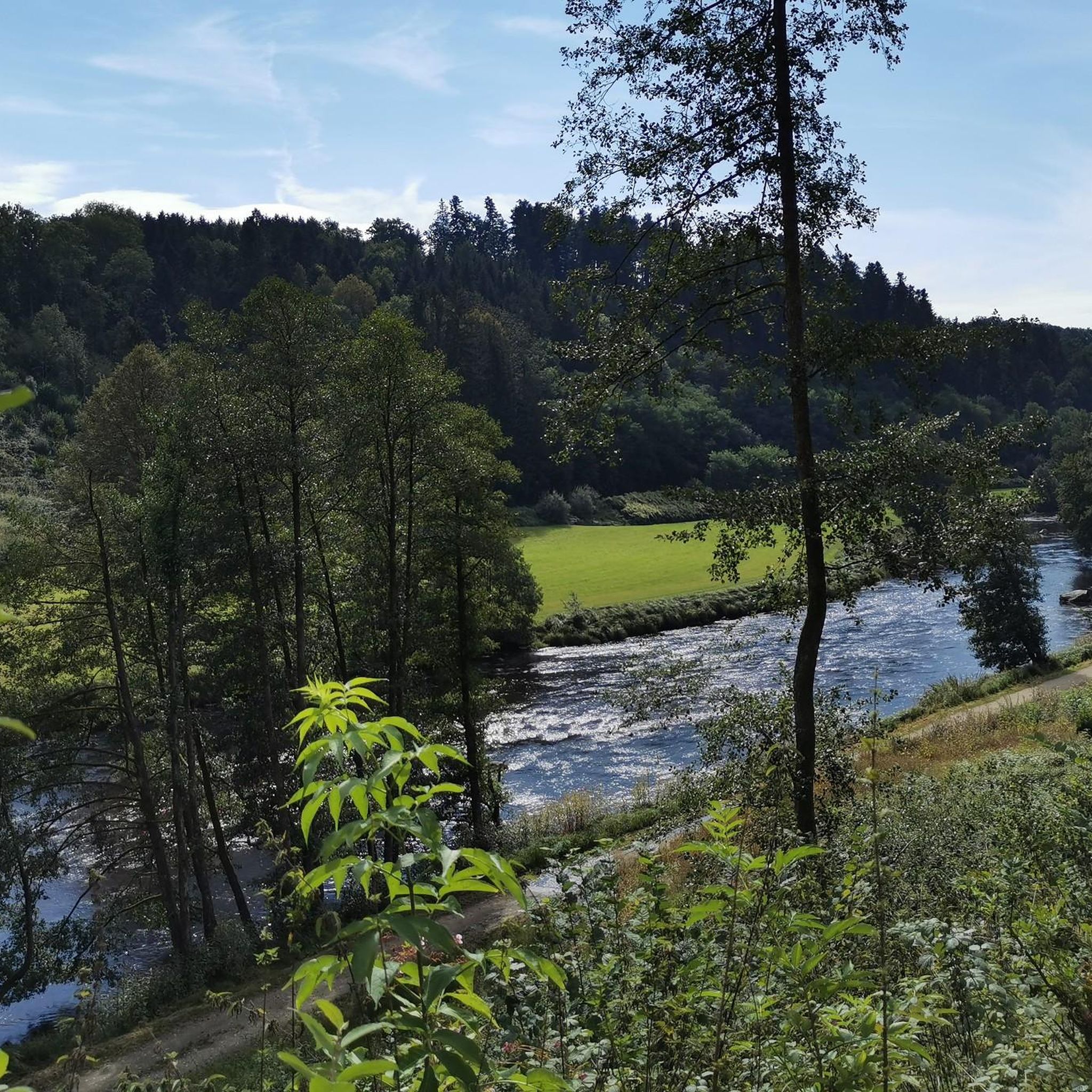
Tips from the Community

Geological observation Numerous rock outcrops with strong "Wollsack" weathering can be found in the entire area. During the Tertiary period, the rock was deeply weathered. Only in the area of more compact granite domes could the weathering not progress so quickly. During the Quaternary period, the weathered layers were eroded. Only the intact rock areas remained. The rock ensemble of rounded granite blocks near the "Steinernes Kirchlein" forms small hollows, niches, and rock passages. Bavarian State Office for the Environment (LfU). https://www.umweltatlas.bayern.de/standortauskunft/rest/reporting/sb_geotope/generate?additionallayerfieldvalue=272R028
0
0
The quartz cave is located on the northern edge of the Pfahl ridge at Thomasleite. It is part of the geotope. The outcrop is accessible via the field path from Kapfham, at the end of which is a hiking parking area. The rock ridge runs approximately east-west. In the east, the rocks consist almost entirely of gray to beige-gray quartz vein breccia of the Bavarian Pfahl, which, despite its closely spaced jointing, is quite compact due to secondary silicification. In the west, the rock ridge consists predominantly of ultramylonite, which is strongly silicified and interspersed with sharply defined quartz veins. The outcrop is bordered to the north by Pfahl schists, and on the southeast edge, there is evidence of old mining in the ultramylonite (whetstone?). A small quarry ("quartz quarry") is located on the signposted historical hiking trail of the municipality of Ringelai. Bavarian State Office for the Environment (LfU). https://www.umweltatlas.bayern.de/standortauskunft/rest/reporting/sb_geotope/generate?additionallayerfieldvalue=272R022
0
0

Hidden in the dense greenery of the Bavarian Forest lies the Diebstein Cave, a fascinating natural phenomenon and a place that has captured the imagination for centuries. Formed by so-called "semi-finished weathering," the cave offers a striking insight into the geological dynamics of the region: The rock is less resistant in deeper layers and weathers more quickly – this is how the cave-like cavities, which can now be explored with a flashlight, were formed. The name "Diebstein Cave" is not accidental. In the past, it was considered sinister by the local population, a refuge for poachers and cattle rustlers, who hid their loot here and allegedly even slaughtered it. Legend has it that they hung the meat on nails inside the cave. Traces of this were reportedly visible until the 1930s. The cave is part of a popular hiking trail around Saldenburg and Thurmansbang. The route leads through tranquil forests, past rock formations and small chapels, an experience for nature lovers, history buffs, and anyone seeking the unassuming and unspoiled. The Diebstein Cave is not a tourist hotspot with a signage system and souvenir shop, but a powerful place whose silence and isolation touch the soul. https://www.ostbayern-tourismus.de/attraktionen/diebsteinhoehle-462b9fbdc5
2
0

A beautiful, shady hiking trail. Don't forget sturdy shoes, though—not suitable for sneakers.
0
0

Easy to walk, sometimes you have to look for the signposts, not much going on
0
0


The Stone Church is a rock formation. The weathered rocks form towers, crevices and caves. An iron cross is attached to one such cave. Hence the name Stone Church.
1
0

Frequently Asked Questions
What types of cave experiences can I find around Witzmannsberg?
The Witzmannsberg area offers a mix of natural rock formations, historical sites with cave-like structures, and unique geological features. You can explore rock tunnels, natural monuments with hidden altars, and formations that once served as historical refuges.
Are there any family-friendly cave locations near Witzmannsberg?
Yes, the Stone Forest Shrine is considered family-friendly. It features a beautifully landscaped grotto dedicated to Saint Mary, offering an accessible and interesting natural and religious site for visitors of all ages.
What historical significance do the caves in the Witzmannsberg region hold?
Several sites have historical importance. The Buchberger Leite Rock Tunnel is a rock breakthrough and tunnel from WWII. The Diebstein, a natural monument, was historically a refuge for poachers. The Quartz Cave was once a mining site providing raw material for glass making.
What unique geological features can I observe in the caves around Witzmannsberg?
The region showcases diverse geology. The Diebstein is known for its "semi-finished weathering" rock formations, where less resistant rock layers have weathered faster to create cave-like cavities. The Buchberger Leite Rock Tunnel is part of a gorge carved out by the Wolfsteiner Ohe River, influenced by the 150 km long Bavarian Pfahl quartz vein.
What should I bring for exploring the caves and rock formations?
For sites like the unlit Buchberger Leite Rock Tunnel or the Diebstein cave, a flashlight is useful for exploring the darker sections. Comfortable hiking shoes are recommended as many of these sites are part of hiking trails.
Are there hiking trails near these cave locations?
Yes, many of the cave sites are integrated into hiking routes. The Buchberger Leite Rock Tunnel is part of a hiking trail along the Wolfsteiner Ohe River and the Via Nova pilgrimage route. The Diebstein is also part of a popular hiking trail around Saldenburg and Thurmansbang. You can find more hiking options in the area by exploring the Hiking around Witzmannsberg guide.
What other outdoor activities can I do near the caves around Witzmannsberg?
Beyond hiking, the region offers various cycling opportunities. You can explore routes for touring bicycles or road cycling, with many trails passing through the scenic Bavarian Forest landscape near these natural attractions.
Are the caves around Witzmannsberg generally accessible for all visitors?
While some sites like the Stone Forest Shrine are more easily accessible, others like the Buchberger Leite Rock Tunnel are part of trails that can be intermediate to challenging. The Little stone chapel requires slipping through rocks to find the altar, which might be difficult for some. Always check specific trail conditions if accessibility is a concern.
What do visitors particularly enjoy about the cave sites in this region?
Visitors appreciate the natural beauty and the sense of discovery. Many enjoy the unique stone formations, the historical context of sites like the Diebstein, and the adventurous feel of exploring places like the Buchberger Leite Rock Tunnel. The hidden altar within the Little stone chapel is also a popular highlight.
Are there any well-known show caves in the wider Bavarian region?
While Witzmannsberg itself features natural rock formations, the broader Bavarian region offers impressive show caves. Examples include the Teufelshöhle (Devil's Cave) in Pottenstein, known for its stalactites, and the König-Otto-Tropfsteinhöhle (King Otto Dripstone Cave) in Neumarkt, considered one of Germany's most beautiful dripstone caves. The Sophienhöhle (Sophia's Cave) near Rabenstein also boasts fantastic stalactite formations.
Is there a replica cave with ancient art in the area?
Yes, within the Bavarian Forest National Park Center Falkenstein, you can find a faithful replica of the southern French "Grotte Chauvet." This Stone Age Cave features impressive cave paintings and offers insights into the Paleolithic era, making it a unique educational experience.
What is the 'Hohler Stein' cave near Bad Griesbach im Rottal?
The 'Hohler Stein' (Hollow Stone) near Bad Griesbach im Rottal is a prehistoric dwelling cave and a geotop. It's a large quartz conglomerate slab that has shifted, creating a significant hollow space beneath. It's a site of both cultural and geological interest in the Passau district.
Most popular routes around Witzmannsberg
Most popular attractions around Witzmannsberg

Get inspired with the komoot mobile app


Explore more
Extend your search for the best caves by checking out these guides of the top ones around Witzmannsberg:
