Top 10 Caves around Wehretal
Best caves around Wehretal are situated within the Geo-Naturpark Frau-Holle-Land in Hesse, Germany, offering a unique natural landscape. The region features notable geological formations, including rock niches and fissure caves, formed from ancient geological processes. These sites provide opportunities for exploration, particularly for hikers interested in geology and local folklore. Wehretal's caves are primarily natural rock formations integrated into hiking trails, showcasing the area's geological heritage.
Best caves around Wehretal
- The most popular caves is Kitzkammer Basalt Cave, a…
Last updated: June 26, 2026
Kitzkammer Basalt Cave
Highlight • Cave
Translated by Google •
Tip by

Wichtellöcher Caves (Abterode)
Highlight • Cave
Translated by Google •
Tip by

Sign up now to discover places like this
Get recommendations on the best single tracks, peaks, & plenty of other exciting outdoor places.
Sign up for free
Haus Halde and the Mining History of the Hoher Meißner
Highlight • Historical Site
Translated by Google •
Tip by

Knots-Keller Cave
Highlight • Cave
Here there is a Zechstein formation measuring approx. 4.50 m wide and an integrated hollow measuring approx. …
Translated by Google •
Tip by

Carlsstollen
Highlight • Historical Site
Translated by Google •
Tip by

Sign up for free to discover even more caves around Wehretal.
Sign up for free
Already have an account?
Start today with a free account
Your next adventure awaits.
Login or Signup
Tips from the Community

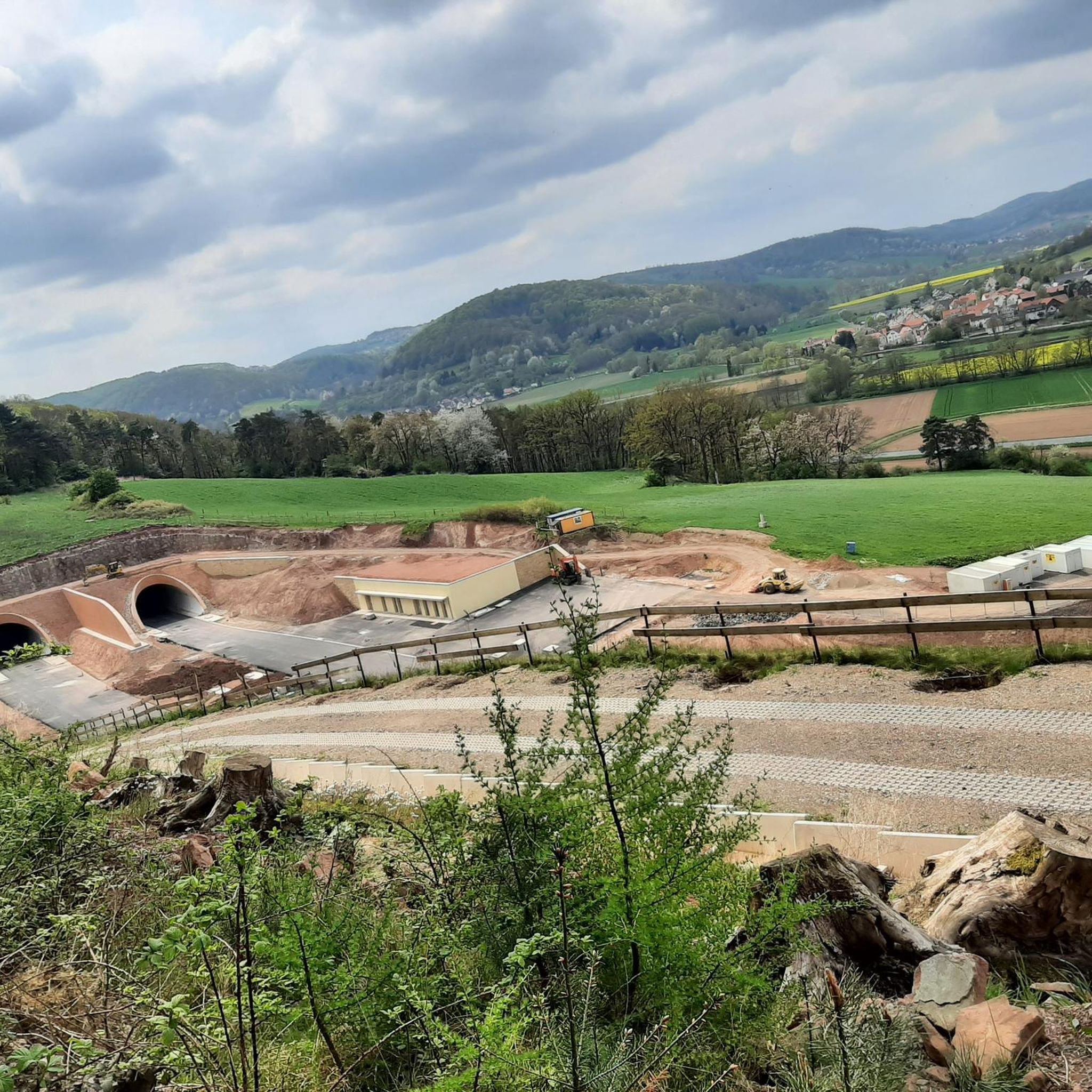
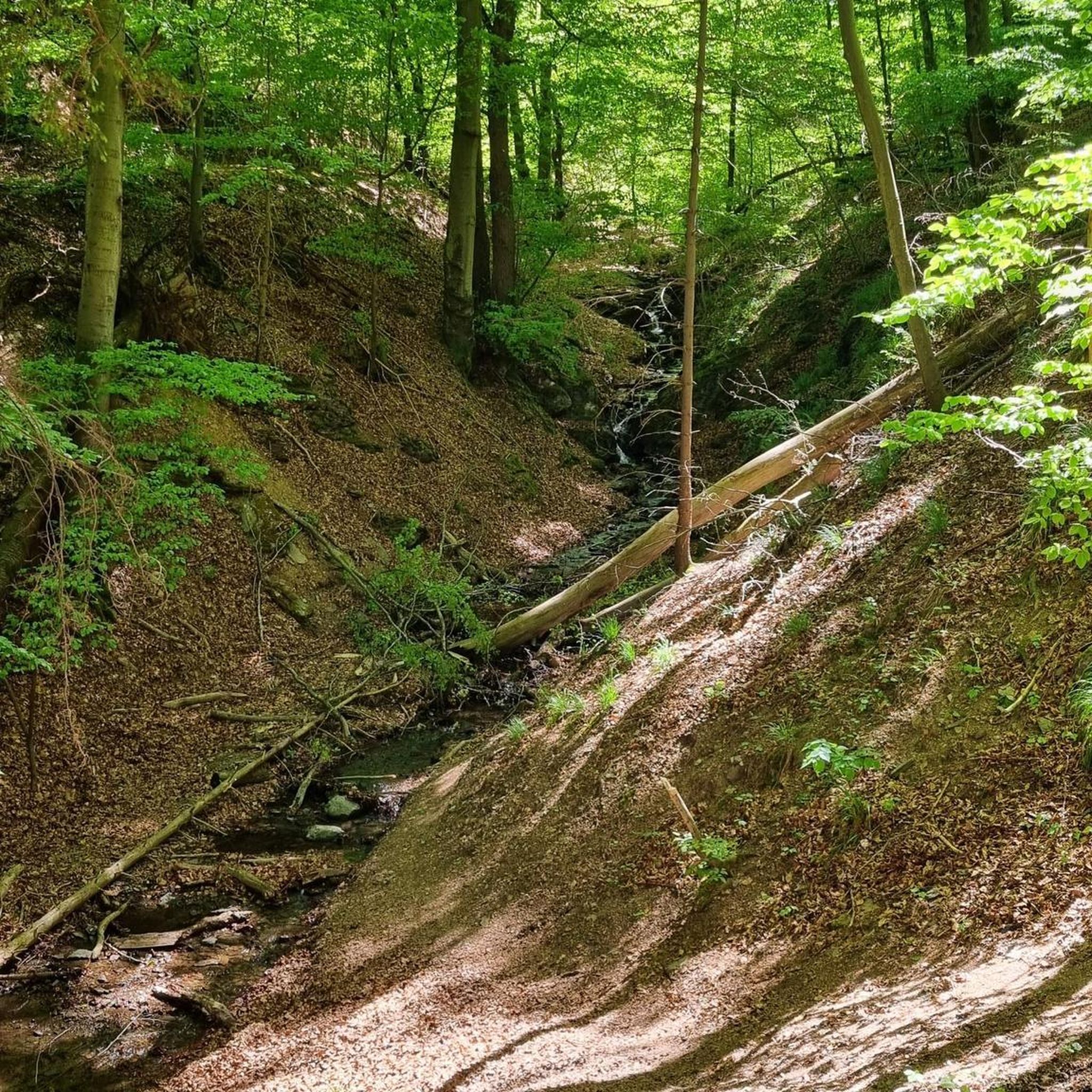
Not much to see, but you can hear the rushing water...
0
0

The slag heap originally consisted of three houses: the still-existing, vacant "Haus Halde" from 1755 (base renewed in 1905, timber framing renewed in 1978, roof insulated in 2012), a second house that was demolished in the 1960s, and a horse stable, of which relatively little is known. The foremen lived in these houses, who oversaw mining in the Schwalbenthaler Erbstollen and the Carlsstollen and accounted for the extracted coal. The foundations of the wooden log cabin of the Eschwege Scouts (Silver Foxes) and the horse stable are still in place; the tunnels were secured in 2002. Source: https://wiki.genealogy.net/Hoher_Mei%C3%9Fner
3
0
The so-called Halde, a depression, lies 1,000 meters from the Schwalbenthal valley. The house is still preserved here. The entrance to the New Erbstollen (New Heritage Tunnel) is also located there. This drainage tunnel was excavated in 1628.
1
1

On the eastern slope of the Hohen Meißner, above the Halde house and the New Erbstollen, lies the mouth of the Carlsstollen, which was opened in 1630. A channel was used to drain the mine water, which led from the mouth of the tunnel to a cascade-shaped structure, the former "Schwalbenthal waterfall". Lignite was mined in both tunnels until 1888.
0
0

According to legend, Mother Holle imprisoned young girls here and turned them into kittens.
11
1

A little off the P23 hiking trail, but the short detour is worth it. An information board explains the formation and legends surrounding the limestone caves.
0
1
The Halde house is the last remaining property of the Schwalbenthal mining settlement. In front of the house there is an information board that provides information about the mining settlement and mining on the Hohen Meißner. Next to the building there is an entrance to a mining tunnel that is illuminated as a show tunnel. In front of the building there are several types of rock that were mined on the Hohen Meißner and are explained on information boards.
1
1
The Carlsstollen is located right next to the former Schwalbenthal mining settlement. An information board explains the history of mining on the Meißner. Directly in front of it there is an old lorry (Hunt) and, a little further away, a larger stone collection with a name on it.
1
2
Frequently Asked Questions
What types of caves can I explore around Wehretal?
The Wehretal region, situated within the Geo-Naturpark Frau-Holle-Land, features a variety of geological formations. You can explore natural rock niches like the Kitzkammer Basalt Cave, fissure caves such as Knots-Keller Cave, and smaller rock shelters or crevices like the Wichtellöcher Caves (Abterode). These sites are primarily natural rock formations integrated into hiking trails, rather than commercial show caves.
What are the geological highlights of the caves in Wehretal?
The region offers fascinating geological insights. The Kitzkammer Basalt Cave showcases impressive pentagonal and polygonal basalt columns formed from ancient lava flows. The Knots-Keller Cave is a fissure cave within a dolomite ridge, providing a tangible link to the ancient Zechstein Sea that covered Europe over 250 million years ago.
Are there any caves around Wehretal associated with local legends or folklore?
Yes, several sites are rich in local folklore. The Kitzkammer Basalt Cave is steeped in legends connected to Frau Holle, with tales of girls being transformed into cats or a white woman disappearing into the cave. The Wichtellöcher Caves (Abterode), meaning 'gnome holes,' are associated with local myths about small, helpful, and sometimes mischievous gnomes.
Can I learn about the mining history near the caves?
Yes, the area around Hoher Meißner has a history of lignite mining. You can visit sites like Carlsstollen, an old mining tunnel, and Haus Halde, which was once a settlement for mined coal and mining officials. Information boards at these locations explain more about the region's mining past.
Are the caves around Wehretal suitable for families?
Many of the natural rock formations are integrated into hiking trails, making them suitable for active families. The Wichtellöcher Caves (Abterode), with their folklore connection to gnomes, can be particularly charming for children. The Haus Halde and the Mining History of the Hoher Meißner is also considered family-friendly.
What outdoor activities can I combine with a visit to the caves?
The caves are primarily accessed via hiking trails, offering excellent opportunities for walking and exploring nature. The Kitzkammer Basalt Cave is directly accessible via the Premiumweg P1 Hoher Meißner, and Knots-Keller Cave is part of the Premiumweg P17 Waldkappeler Berge. You can also find various MTB trails, cycling routes, and running trails around Wehretal.
What is the best time to visit the caves around Wehretal?
Since these are natural rock formations integrated into hiking trails, the best time to visit is generally during the warmer months from spring to autumn when hiking conditions are most favorable. However, the Kitzkammer can be visited in winter, though caution is advised due to potentially slippery conditions.
Are there any caves in the Wehretal region that are closed to visitors?
Yes, the Hohlstein Cave (Kammerbach Cave), while historically significant, is unfortunately closed to visitors due to acute rockfall danger. It is not recommended for direct visitation.
Are the caves around Wehretal easily accessible, or do they require hiking?
These formations are primarily natural geological sites integrated into hiking trails. Visitors should be prepared for hiking and outdoor conditions to reach and explore them. They are not typically accessible by car directly to the entrance like commercial show caves.
What do visitors enjoy most about the caves and geological sites in Wehretal?
Visitors appreciate the unique geological formations, such as the basalt columns at Kitzkammer and the ancient marine deposits at Knots-Keller. The integration of these sites into scenic hiking trails, combined with the rich local folklore and historical mining insights, offers a diverse and engaging outdoor experience.
Are there dog-friendly options for visiting caves in Wehretal?
As the caves are natural outdoor formations accessed via hiking trails, dogs are generally welcome on the trails leading to these sites, provided they are kept on a leash and owners follow local regulations. This makes exploring the geological features and folklore-rich areas a great activity to share with your canine companion.
Most popular routes around Wehretal
Most popular attractions around Wehretal

Get inspired with the komoot mobile app


Explore more
Extend your search for the best caves by checking out these guides of the top ones around Wehretal:
