Top 12 Gorges around Kasbach-Ohlenberg
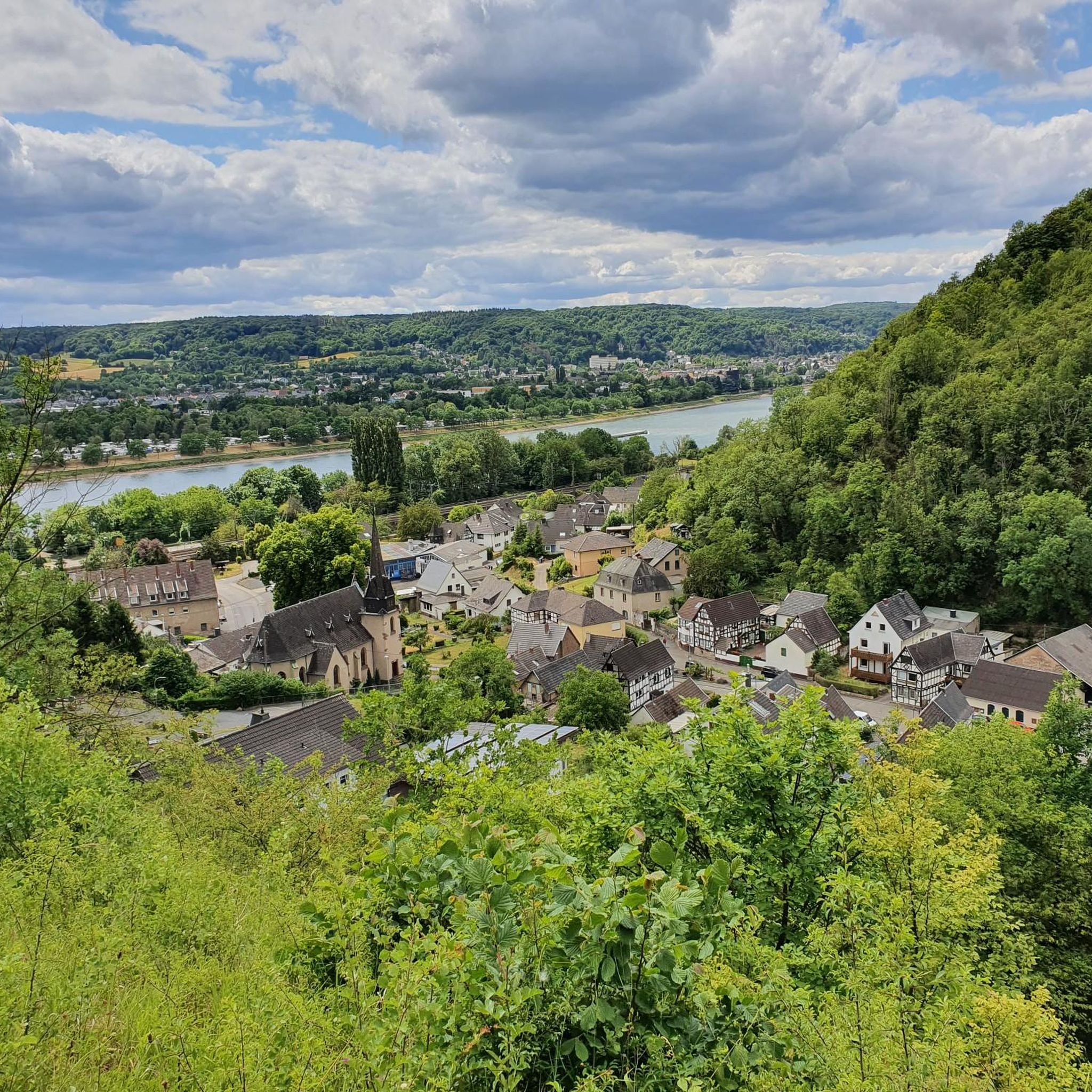
Canyons around Kasbach-Ohlenberg primarily refer to the region's notable gorges and valleys, offering diverse natural landscapes. The area is characterized by its river-carved valleys, such as the Kasbachtal, which features a historic railway and forested slopes. These natural formations provide opportunities for hiking and experiencing the local geology. The terrain includes both gentle paths and more challenging sections, making it suitable for various outdoor activities.
Best canyons around Kasbach-Ohlenberg
- The most popular canyons is Nachtigallental Trail, a trail and…
Last updated: June 26, 2026
Nachtigallental Trail
Highlight (Segment) • Trail
geography
The Nachtigallental is a Siefen (Kerbtal) valley, starting from the eastern edge of the old town of Königswinter in a largely south-southeast direction along the Drachenfels (321 m …
Translated by Google •
Tip by

Tretschbach Valley
Highlight (Segment) • Gorge
Translated by Google •
Tip by

Sign up now to discover places like this
Get recommendations on the best single tracks, peaks, & plenty of other exciting outdoor places.
Sign up for free
Kasbach Valley Stream Trail
Highlight (Segment) • Trail
Translated by Google •
Tip by

Laubach Valley (Bergischer Weg)
Highlight (Segment) • Trail
Translated by Google •
Tip by

Masbachtal Valley
Highlight • Gorge
Translated by Google •
Tip by

Sign up for free to discover even more gorges around Kasbach-Ohlenberg.
Sign up for free
Already have an account?
Start today with a free account
Your next adventure awaits.
Login or Signup

Tips from the Community

Many people combine a hike in the Kasbach Valley with a ride on the historic Kasbach Valley Railway. The railway line runs just over 20 kilometers from Linz am Rhein up the valley that gives the valley its name to Kalenborn (Westerwald). From there, you can enjoy a relaxing hike down through the beautiful, sometimes wild and romantic, countryside.
8
0

The train ride with the historic rail bus from Linz to Kalenborn and the hike from there through the Kasbachtal back to Linz are highly recommended.
7
0

"... The Nachtigallental in Königswinter, at the entrance to the Siebengebirge Nature Park, is simply wonderful, at any time of the year. If you walk up Bahnhofsstrasse there, you'll come straight there. You immediately feel like you are in another, serene world. The hiking trail goes around many curves up towards Drachenfels. The Mennesbach babbles next to the hiking trail and the birds sing. When you have arrived at the upper end of the Nachtigallental, you will already see the Drachenburg and then the Drachenfels castle ruins. Saint Bernard and the Nightingales: A legend from the Middle Ages tells how the Nightingale Valley got its name. Once, Saint Bernard of Clairvaux, the great Cistercian monk, was very upset by the singing of nightingales during a visit to Himmerod Monastery. He was so angry that the birds migrated to a valley in the Siebengebirge, which was later called “Nachtigallental”. Saint Bernard moved back to Clairvaux, but from then on music was at home here. The Nightingale Valley is a bird paradise. But not all monks felt like Bernhard von Clairveau, just think of the famous monk von Heisterbach, Cistercians like Bernhard, he liked the singing of birds. ..." FURTHER INFORMATION: https://www.rheindrache.de/nachtigallental/
6
0
<< Cable car from the cap over the Masbachtal past Rahms to Wiedmühle >> "In 1883, basalt quarrying began in Roßbach/Wied am Häubchen. The basalt quarry achieved a significant boost when a cable car was built between 1926 and 1928 for faster transport and for more efficient processing of the stone material. A cable car was built over 4.5 kilometers from the cap over the MASBACHTAL past Rahms to Wiedmühle, to the next possible siding of the Westerwaldbahn. The largest span (distance between two supports) was over the Masbachtal and was 1,040 meters. An unusual building for the time. The construction of the cable car made the braking track to Roßbach superfluous. The cable car was actually only intended to transport goods. But there was also passenger transport. This quarry gave work and bread to many people in the surrounding communities of Breitscheid and Roßbach. The job was dangerous and exhausting. As early as 1941/1942, basalt mining at the cap was stopped again. The crushing plant and the cable car were consequently dismantled again in 1941/1942." (Alexander Lo Iacono, University of Koblenz-Landau, 2014) https://www.kuladig.de/Object-View/O-98136-20140805-6
0
0

A few bridges were no longer intact and very shaky. But a nice change from normal paths.
8
0

Path through the creek valley, but actually a little too well developed due to the fish ponds.
2
0
Very nice valley, everyone can decide for themselves whether they really like the fish ponds.
2
0

Along the small Tretschbach you first go downhill over three wooden bridges. At the top you have the familiar beech forest, Haimsen, woodruff and many other plants and animals. Further down it gets wetter due to the many seepage springs, here you walk on the boardwalk. Here you will find alluvial forest with alders, ash trees, ferns and many other plants and animals in the air, on the ground and in the Tretschbach. A beautiful valley in the Siebengebirge!
11
0
Frequently Asked Questions
What are the most popular gorge-like trails around Kasbach-Ohlenberg?
Visitors frequently enjoy the Nachtigallental Trail, known for its shady and romantic ascent to the Drachenfels. Another favorite is the Tretschbach Valley, a natural monument offering a scenic climb towards Löwenburg. The Kasbach Valley Stream Trail is also highly appreciated for its beautiful, varied terrain and views of the historic Kasbach Valley Railway.
What unique natural features can I expect in the valleys and gorges around Kasbach-Ohlenberg?
The region is characterized by river-carved valleys and forested gorges. You'll find babbling brooks, diverse plant life in primeval forest settings, and scenic viewpoints. The Tretschbach Valley, for instance, features a narrow stream and wooden bridges, while the Kasbachtal combines natural beauty with the impressive viaduct of the historic Kasbachtalbahn.
Are there family-friendly options for exploring the gorges?
Yes, the Kasbach Valley Stream Trail is categorized as family-friendly, offering beautiful, shady, and varied terrain suitable for a pleasant outing. Many of the paths through these valleys provide accessible experiences for families.
What is the best time to visit the gorges around Kasbach-Ohlenberg?
The valleys and gorges are beautiful year-round, but spring and autumn offer particularly pleasant hiking conditions with mild temperatures and vibrant foliage. Summer provides shady relief along the forested paths, while winter can transform the landscape into a serene, picturesque scene, though some paths might be slippery.
Are there any historical or cultural points of interest within these valleys?
The Kasbachtal is notable for the historic Kasbachtalbahn, one of Germany's steepest railway lines, which includes an impressive viaduct. The Nachtigallental Trail also has historical significance, originally expanded in the 19th century to promote tourism and featuring an altar table from 1925 and an old wine cellar.
What kind of terrain can I expect on the trails through these gorges?
The terrain varies from gentle paths along streams to more challenging, intermediate sections with ascents. Many trails are forested, offering natural surfaces, and some, like in the Tretschbach Valley, feature wooden bridges and boardwalks, especially in wetter areas. Expect a mix of natural beauty and varied walking conditions.
What other outdoor activities are available near the gorges of Kasbach-Ohlenberg?
Beyond exploring the gorges, the region offers diverse outdoor activities. You can find numerous hiking trails, including routes like the 'View from the Erpeler Ley – Hähnerbach Valley loop'. Cycling is also popular, with options such as the 'Leutesdorf Vineyards – Wied Bridge in Datzeroth loop'. For more details, explore the hiking guide or the cycling guide for Kasbach-Ohlenberg.
Are there specific hiking trails recommended for exploring these valleys?
Yes, several hiking routes incorporate these scenic valleys. For instance, you can take the 'View from the Erpeler Ley – Hähnerbach Valley loop from Kasbach-Ohlenberg' or the 'View from the Erpeler Ley – Kasbachtal Railway loop from Kasbach-Ohlenberg'. These routes offer excellent opportunities to experience the natural beauty of the area. You can find more options in the hiking guide for Kasbach-Ohlenberg.
What do visitors particularly enjoy about the gorges in this area?
Visitors frequently praise the beautiful, shady, and varied terrain, often describing the experience as romantic and peaceful. The combination of natural beauty, such as babbling brooks and primeval forests, with unique elements like the historic Kasbach Valley Railway, creates a distinctive and engaging environment. The komoot community has shown strong appreciation, with over 1900 upvotes and more than 900 photos shared across the highlights.
Are there any other notable valleys or gorges in the wider region worth exploring?
While the Kasbachtal and Hähnerbach Valley are prominent locally, the broader Rhine region offers other gorge-like experiences. The Rheinsteig Trail, for example, traverses many narrow valleys with dramatic river views. Further afield, the Kreuzbachklamm near Bingen am Rhein is known for its 'alpine character' with waterfalls and rustic paths, offering a more challenging experience.
Are the trails in these valleys dog-friendly?
Generally, many natural trails in the Kasbach-Ohlenberg region are suitable for dogs, especially if kept on a leash. The forested paths and stream-side routes offer pleasant environments for walks with your canine companion. Always ensure to check local regulations and be mindful of other hikers and wildlife.
Where can I find parking when visiting the gorges?
Specific parking information for each gorge varies, but generally, you can find designated parking areas in or near the starting points of popular trails, such as in Kasbach-Ohlenberg itself or nearby towns like Linz am Rhein. Look for signs indicating 'Wanderparkplatz' (hiking parking) or public parking facilities in the vicinity of trailheads.
Most popular routes around Kasbach-Ohlenberg
Most popular attractions around Kasbach-Ohlenberg

Get inspired with the komoot mobile app


Explore more
Already discovered everything in this region? See additional gorges around Kasbach-Ohlenberg for your next adventure:
