Top 20 Caves around Freiberg
Caves around Freiberg, a city in Saxony, Germany, are primarily linked to its extensive mining history rather than natural formations. The region is renowned for its 800-year silver mining tradition, offering unique underground experiences. Visitors can explore historic silver mines and man-made tunnels that showcase the area's geological and industrial heritage. These sites provide a factual glimpse into Freiberg's past as a significant "Silberstadt®".
Best caves around Freiberg
- The most popular caves is Jungfernloch Cave, an artificial cave located…
Last updated: October 12, 2026
Jungfernloch Cave
Highlight • Cave
Translated by Google •
Tip by

Upper portal of the Porzellanfelsenrösche
Highlight • Cave
Translated by Google •
Tip by

Sign up now to discover places like this
Get recommendations on the best single tracks, peaks, & plenty of other exciting outdoor places.
Entrance to the Old/Deep Fürstenstolln
Highlight • Historical Site
In the valley of the Freiberger Mulde, the mouth of the most important and longest Freiberger adit was attached to the main adit Stehenden. …
Translated by Google •
Tip by

Andreas Alnpeckscher (Weißstaubner) Stolln
Highlight • Structure
Translated by Google •
Tip by

Neuer Segen Gottes Stolln Portal
Highlight • Historical Site
Translated by Google •
Tip by

Sign up for free to discover even more caves around Freiberg.
Already have an account?



Tips from the Community

According to legend, the shallow cave in the rock (quartz-armed porphyry or rhyolite) was once much larger, and three fairies lived there. On a full moon night, a minstrel who had previously played at the fair in Hintergersdorf (spa town of Hartha) passed by. The three fairies had laid out laundry on the meadow to bleach. The musician picked up a lace cloth and took it with him. However, when he got home, instead of the cloth, he held a gray cobweb in his hand. Before sunrise, he returned the cobweb to its place, where it became a lace cloth again, just as the other laundry disappeared with the first rays of sunlight. Since then, the fairies have not been seen again, and the cave has become a shallow hole.
0
1

quartzite was extracted here, an additive for porcelain production
1
1

On the right side of the Röschenmundloch there is a small cave that was created by quartzite mining. Apparently, opportunity not only makes thieves but also miners, because this cave was created almost incidentally during the construction of the Rösche to extract quartzite for porcelain production.
4
1
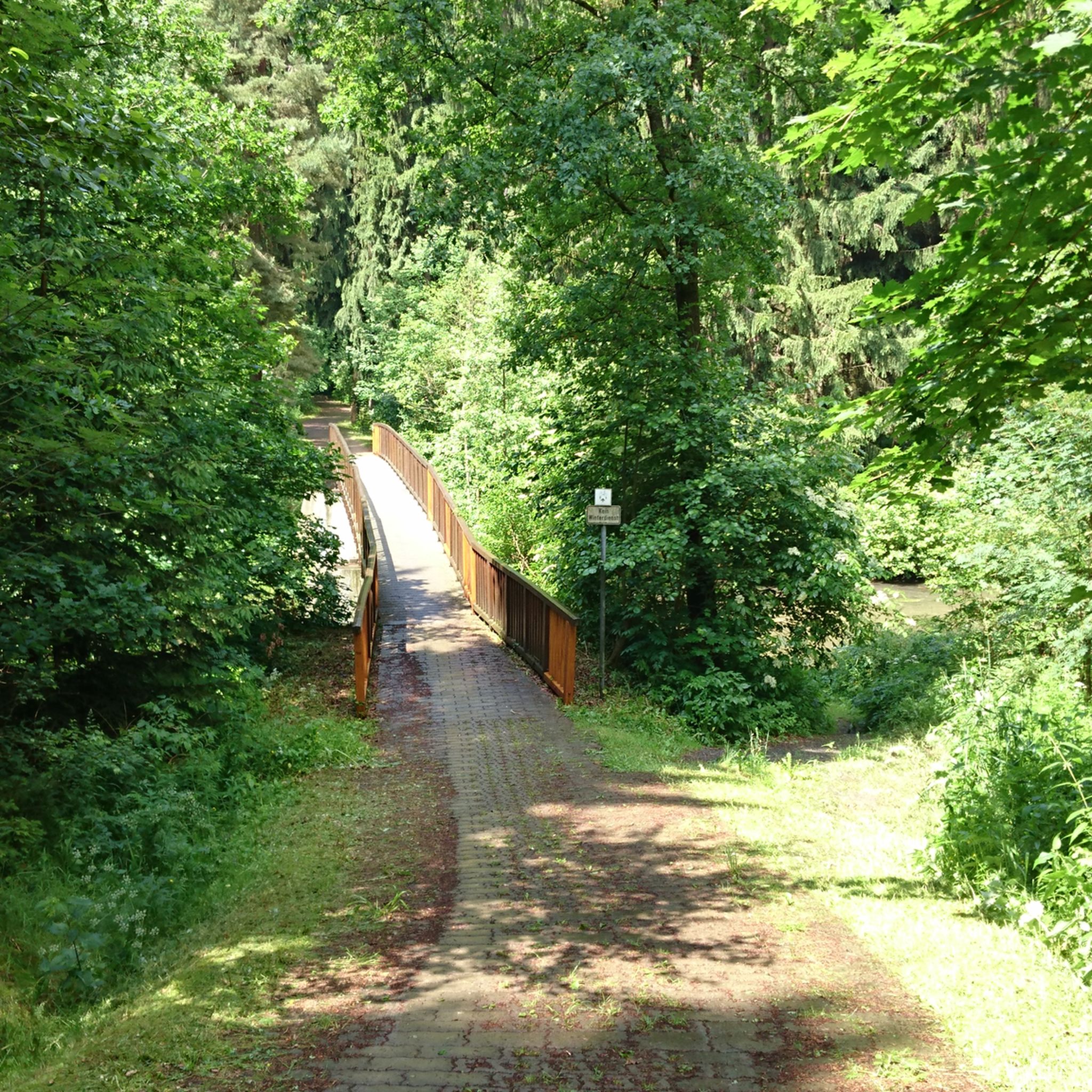
After a few hundred meters through the forest, a little off the Bobritzsch, the hiking trail and the artificial ditch, which is very well preserved here, reach the upper mouth of the 150-meter-long porcelain rock rose. On the right side of the Röschenmundloch there is a small cave that was created by quartzite mining. Apparently opportunity makes not only thieves but also miners, because this cave was created almost incidentally during the construction of the Rösche to win quartzite for porcelain production.
4
1

Beautiful walk-in cave from quartzite mining
2
1
The arched mouth hole of the Neuer Segen Gottes Stolln with lining wall and quarrying made of quarry stone has the inscription "Mouth hole ... Neuer Segen Gottes Stolln 1817" on the keystone. A small drainage rose branches off underground from the tunnel and emerges not far from the mouth hole in a narrow, brick drainage ditch that flows into the Striegis. The New Blessing of God tunnel, also referred to as Seven Planets Erbstolln as an addition to the Seven Planets Fundgrube, was probably started as early as the 16th century, but only gained greater importance as a water-dissolving tunnel after it was taken over by the Himmelsfürst Fundgrube. From 1817, the treasure trove extended the tunnel further into its pit, so that it not only solved the pit of the Seven Planets Treasure Trove, but also other important shafts in Linda and Himmelsfürst, such as the Siegismund shaft (preserved heap part of the "Brander Revier”, cf. 09208116), the Albert Schacht (cf. 09208666), the Franken Schacht in 1840 (cf. 09208602) and the Glück auf Schacht (cf. 08991313). Previously, the Himmelsfürster pit was drained from the Thelersberger Stolln (cf. 09208657), which is about 21 meters higher, but the pit water was then able to drain away at a greater depth and over a much shorter distance via the Neuer Segen Gottes Stolln. Including its tunnel wing, the tunnel has a comparatively short length of approx. 6.6 kilometers. From 1854 onwards, Himmelsfürst was able to drain into the Moritz tunnels, which were even lower, so that the Neuer Segen Gottes tunnels became less important in the years that followed. From 1947 to 1950 it was made usable again by SAG Wismut and again discharged pit water from the western part of the Himmelsfürst pit and from the Glück auf shaft emergency drainage system. The adit also served as flood protection and relieved the Rothschönberger adit. As an important water release tunnel for the pits in Linda and Himmelsfürst, the Neuer Segen Gottes tunnel is of local and, above all, mining-historical significance. Its mouth, together with the water drainage ditch, are surface testimonies of this drainage system, which is so important for mining at greater depths and are therefore of great documentary value – also seen in connection with the Thelersberger Stolln.
4
1

Orifice Alter/Tiefer Fürstenstollen Kunstgraben Roter Graben In the valley of the Freiberger Mulde, the mouth of the most important and longest Freiberger adit was attached to the main adit Stehenden. In the valley of the Freiberger Mulde, the mouth of the most important and longest Freiberger adit was attached to the main adit Stehenden. This tunnel, which was bought free by the Saxon sovereign in the late Middle Ages, was later called the Fürstenstolln. The mouth of the old/deep prince's adit has walls that can be dated to the 18th century. The mouth hole itself is part of a dry set wing wall. Above the vertical joints is a basket arch, including a coat of arms stone with the Saxon coat of arms. In the mouth hole there is a large sandstone tablet on the left joint, which marks the area zero for the area profile plan of the Freiberg area that was made in 1850-1852 and added later.
4
0
Geological exploration and legend station If you hike along the Triebisch through the Tharandter Forest, you will come across not only the small ponds but also a cave on a slope above the Jungfernteich. This was probably created by human hands. The cave consists of low-quartz porphyry. It is located above the biotope ponds on the Triebisch (Triebisch Lakes). https://www.erzgebirge-tourismus.de/
4
0
Frequently Asked Questions
What kind of underground experiences can I expect around Freiberg?
Freiberg is renowned for its extensive mining history rather than natural caves. Visitors can explore historic silver mines and man-made tunnels that offer a unique glimpse into the region's 800-year silver mining tradition. These sites provide an authentic and immersive experience, showcasing the area's geological and industrial heritage.
Are there any natural caves or show caves near Freiberg?
Freiberg is not known for natural cave formations. The primary underground attractions are its meticulously preserved and accessible silver mines, such as the historic Reiche Zeche and Alte Elisabeth, which offer an unparalleled historical and educational experience.
What are some of the most interesting historical mining sites to visit?
You can explore several significant historical sites. The Entrance to the Old/Deep Fürstenstolln is a historical adit mouth with 18th-century walls and a Saxon coat of arms. Another notable site is the Upper portal of the Porzellanfelsenrösche, where quartzite was mined for Meissen porcelain production.
What is the Jungfernloch Cave and what makes it special?
The Jungfernloch Cave is an artificial cave located above the Triebisch Lakes. It serves as a geological exploration and legend station, offering a peaceful resting place amidst nature. It's appreciated for its tranquility and idyllic setting.
How long does a typical mine tour in Freiberg last?
For tours like those at the Freiberg Traditional Silver Mine (Reiche Zeche or Alte Elisabeth), visitors typically descend approximately 150 meters (492 feet) below ground and walk about 500 meters (1,640 feet) through historic mining tunnels. The duration of these tours can vary, but they generally provide a comprehensive experience of the underground workings.
Are there family-friendly underground attractions around Freiberg?
Yes, some sites are suitable for families. The Upper portal of the Porzellanfelsenrösche is listed as family-friendly and offers an interesting historical context about quartzite mining. The educational value of the mining experiences makes them engaging for older children as well.
What should I wear when visiting the underground mines?
Underground mines maintain a cool and often damp temperature year-round, typically around 10°C (50°F). It's advisable to wear warm clothing, such as a jacket or sweater, and comfortable, sturdy shoes with good grip, as surfaces can be uneven.
What is the best time of year to visit the mines and underground sites in Freiberg?
The underground mines and historical adits generally maintain a consistent temperature, making them suitable for visits throughout the year, including winter. It's always a good idea to check specific opening hours and tour availability, especially during off-peak seasons.
What outdoor activities can I combine with a visit to Freiberg's underground sites?
Freiberg offers various outdoor activities. You can find numerous hiking trails, such as those around the Weißenborn Historic Mining Area or the Mulde River. For cycling enthusiasts, there are road cycling routes like the 'Richterteich – Church of Hermsdorf loop'. Explore more options on the Hiking around Freiberg and Road Cycling Routes around Freiberg guide pages.
What do visitors enjoy most about the underground attractions in Freiberg?
Visitors appreciate the authentic and immersive experience of delving into Freiberg's rich mining history. The educational value, the tangible connection to past labor, and the unique atmosphere of exploring historic tunnels are frequently highlighted. The region's mining heritage is also part of the UNESCO World Heritage since 2019, adding to its appeal.
Are there any other notable mining-related sites or museums in Freiberg?
Beyond the mines themselves, Freiberg is home to the Terra Mineralia, a world-renowned mineralogical museum housing over 3,500 gemstones, minerals, and meteorites, many from the local mining region. This complements the underground tours by showcasing the geological treasures extracted from the earth.
What is the significance of the 'Silberstadt®' designation for Freiberg?
Freiberg earned the designation 'Silberstadt®' (silver town) due to a silver discovery 850 years ago. Its mining industry was central to its development, wealth, and identity, making it a historically significant center for silver extraction in Saxony.
Most popular routes around Freiberg
Most popular attractions around Freiberg

Get inspired with the komoot mobile app


Explore more
Extend your search for the best caves by checking out these guides of the top ones around Freiberg:
