Top 6 Castles around Cieszyn
Best castles around Cieszyn are found in a region rich in history, particularly centered around Cieszyn's Castle Hill. This area, once the capital of the independent Duchy of Cieszyn, features significant historical structures that were part of a larger castle complex. It offers a journey through different architectural styles and historical periods, showcasing Cieszyn's enduring significance as a border post and administrative center. The landscape provides a compelling backdrop for exploring these historical sites.
Best castles around Cieszyn
- The most…
Last updated: June 30, 2026
Fryštát Castle
Highlight • Castle
More info: zamek-frystat.cz
Translated by Google •
Tip by

Ultimate Defense Tower
Highlight • Historical Site
Translated by Google •
Tip by

Sign up now to discover places like this
Get recommendations on the best single tracks, peaks, & plenty of other exciting outdoor places.
Sign up for free
Piast Tower
Highlight • Historical Site
Translated by Google •
Tip by
Kończyce Małe Castle and Park
Highlight • Castle
Tip by

Chotěbuz Castle
Highlight • Castle
Translated by Google •
Tip by

Sign up for free to discover even more castles around Cieszyn.
Sign up for free
Already have an account?
Start today with a free account
Your next adventure awaits.
Login or Signup


Tips from the Community

Fryštát Castle in Karviná is a beautiful classicist chateau located in the Czech region of Moravia-Silesia. It once belonged to the aristocratic Larisch-Mönni family and is one of the few well-preserved residences in this mining region. The interior of the chateau features richly decorated halls with original furniture and art collections, and visitors can feel the atmosphere of the old aristocracy. The chateau is surrounded by a picturesque English park, which is a great place to walk or relax. Cyclists can take advantage of the well-developed network of cycle routes in the area, connecting Karviná with other attractions in the region.
1
0

I recommend stopping here, at least for a moment.
0
0

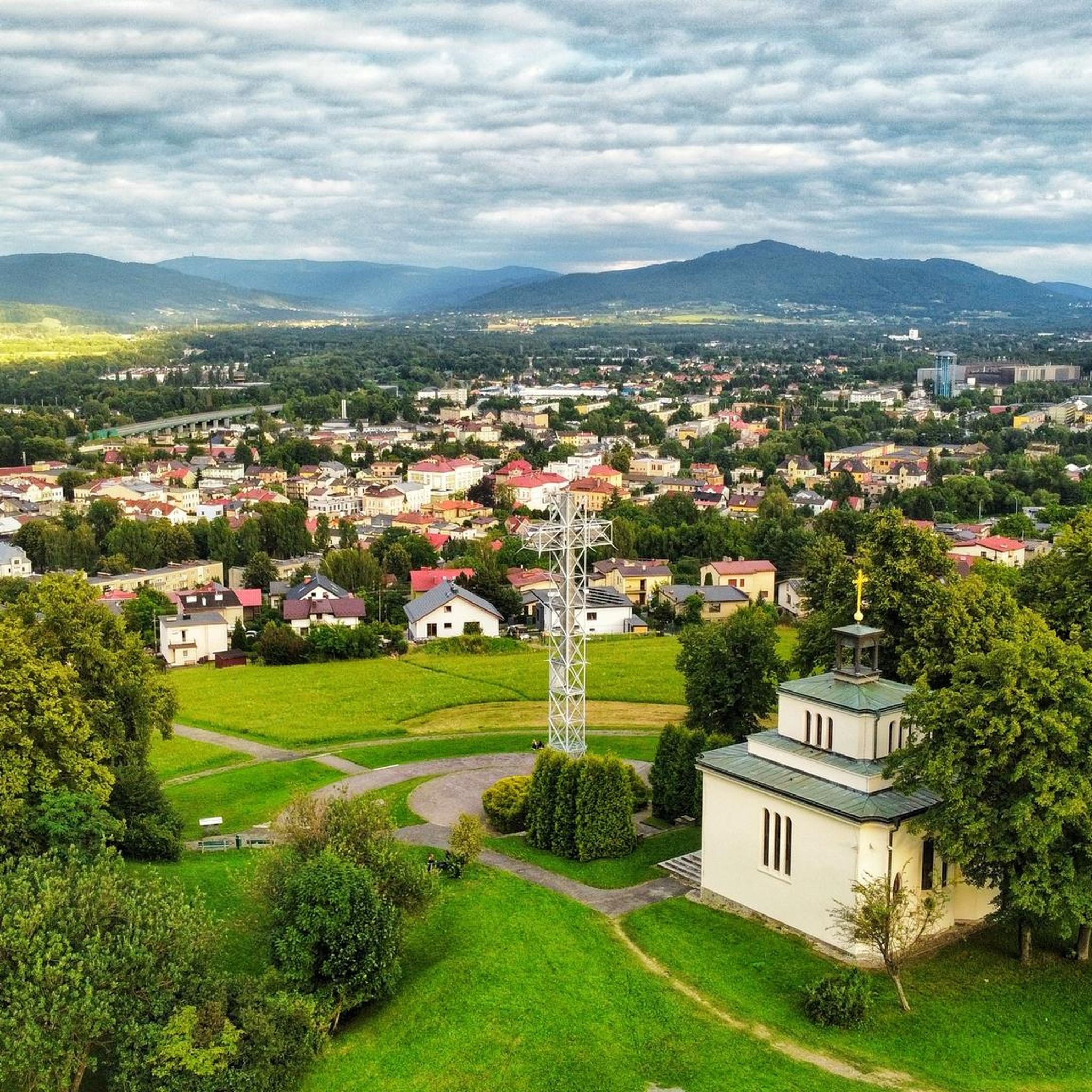
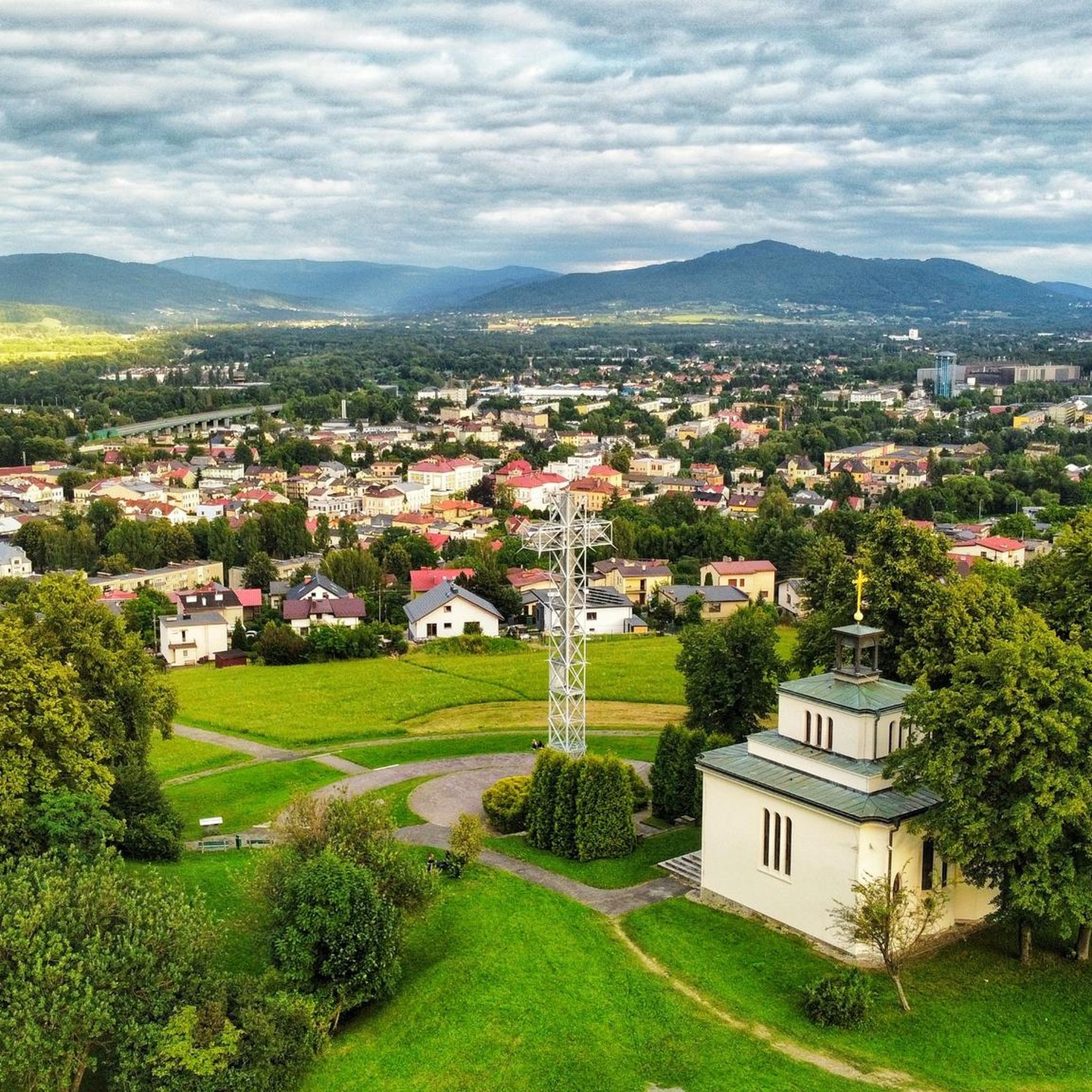
In the 13th century, a fortified courtyard stood on the site of the castle building. Part of it was the former signal tower, which is still preserved today - part of the Gothic fortifications.
1
0

The Piast Tower was built in the first half of the 14th century, it was part of the upper castle and as one of the four towers it was an important element of the defense system of the Cieszyn castle during the Piast times. The tower was raised in the second half of the 14th century and decorated with corner coats of arms with the Piast eagle. At the end of the 15th century, it was added another storey with hoarding and battlements made of brick, and the whole thing was covered with a high tented roof. The tower is almost 30 meters high and 120 steps lead to its top. The tower is composed of four main parts. The underground part, about 6 meters deep, used to be a dungeon. The lower part is 9 meters wide and 10 meters high. This part of the tower housed utility rooms. The central part had residential functions and was 15 meters high and 8.5 meters wide. The highest storey, 4 meters high, had a defense function. In the Middle Ages, the top of the tower was covered with a roof, under which there was an omnidirectional defensive porch. The corners of the upper part were equipped with bay windows in the form of round turrets. https://pl.wikipedia.org/wiki/Wie%C5%BCa_Piastowska_w_Cieszynie https://www.youtube.com/watch?v=eaKalYVHhhs
2
0
The tower was erected in the second half of the 13th century and was one of the important defenses of the upper castle. It was built of stone in the form of a cylinder, the diameter of which was 12 meters, the walls were 4.2 meters thick and about 24 meters high. The highest part of the tower was topped with a girdle and a wooden conical roof. The usable area of the interior was only about 3.6 m. There was a prison in the lower floor of the tower, and above there were living quarters and guard rooms. In the 14th century, during the expansion of the castle, the tower was incorporated into the walls, becoming one of the corner towers. Later it fell into disrepair and was covered with a stone and earth embankment. In 1914, artificial ruins were erected on the embankment, thus creating a romantic spot in the park. In the years 2001-2002, during the archaeological works carried out in the park, the remains of the tower were uncovered, and then its original appearance was restored. The ruins of the castle kitchen from the 16th century are visible next to the tower. http://www.polskaniezwykla.pl/web/place/46977,cieszyn-wieza-ostatecznej-obrony.html https://www.archiwum.cieszyn.pl/?p=categoriesShow&iCategory=354
2
0
The origins of the facility date back to the Middle Ages and the beginnings of Frysztat as an independent city. From the fourteenth century, there was a wooden, gothic castle here, built by the Cieszyn Piasts, for whom it was the second, after Cieszyn, family seat. The castle served primarily as a stronghold on the border of Silesia and Moravia, guarding trade routes to Poland. When it burned down in a fire in 1511, Duke Kazimierz II rebuilt it in the early Renaissance style from stone and brick. At that time, it was the second residence of the Piast princes of Cieszyn, who granted the city numerous privileges. Despite this, they quickly left Frysztat, because in 1570 they moved to a new residence - the Raj Palace. In 1572, the so-called The Frisian state was bought from the Piasts by the Gypsies (Czech Cikán) from Słupsk. From that moment on, the events related to subsequent noble families began. The Gypsies owned the castle until 1637 - after the Thirty Years' War, as followers of Lutheranism, they had to flee Silesia. Earlier, in 1617, the castle was damaged by a fire, and later by the troops moving through Frysztat. It was bought by a Catholic nobleman Zdeněk Žampach from Potštejn, but sold it two years later. Then it was briefly ruled by Henryk Wacław Podiebradowicz (Czech Jindřich Václav of Minstrberk; a descendant of King George of Podiebrady), but the building continued to deteriorate. In 1650, the subsequent owners were the counts Gaschin (Czech Gašínové) from Gašín, who made it their family seat. They also made renovations and small reconstructions in the baroque style. In the years 1738-1749 the castle changed owners four times. The new ones who stayed longer were the counts of Taaffe, but the castle fell into decline again, as it was partially destroyed by another fire. In 1792 Frysztat and the castle were bought by Count Jan Larisch von Mönnich and completely rebuilt in the Empire style. He also added a new wing (the so-called Lottyhaus) and thus a U-shaped town palace was created, forming one of the frontages of the market square. In 1804, they established a large English-style park behind the castle. At the nearby Catholic Church of the Exaltation of St. Cross, the Larisch family also built an ancestral tomb; besides it, there are laundries and baths in the vicinity of the palace, and a Swiss-style summer house by a nearby stream. In the second half of the nineteenth century, the rank of the Larisch family (one of them, Jan, became, among others, the Austrian Minister of Finance), began to look for a larger seat. In 1873 they built a neo-Renaissance palace in Solca, and since then the palace in Frysztat fulfilled only mainly economic functions, although Georg Larisch also lived there for some time, the husband of Maria Larisch, niece of Empress Elizabeth, also lived there for some time. At the beginning of the 20th century, however, he was visited by several distinguished guests - incl. Archduke Franz Ferdinand, heir to the Austrian throne, German Emperor Wilhelm II and the Bulgarian Tsar Ferdinand I Koburg. At that time, the Larisch family were among the main owners of the mining industry (coal mines) in the Duchy of Cieszyn. https://pl.wikipedia.org/wiki/Pa%C5%82ac_we_Frysztacie https://www.youtube.com/watch?v=qJxJcufPkh4
3
0

The origins of the facility date back to the Middle Ages and the beginnings of Frysztat as an independent city. From the fourteenth century, there was a wooden, gothic castle here, built by the Cieszyn Piasts, for whom it was the second, after Cieszyn, family seat. The castle served primarily as a stronghold on the border of Silesia and Moravia, guarding trade routes to Poland. When it burned down in a fire in 1511, Duke Kazimierz II rebuilt it in the early Renaissance style from stone and brick. At that time, it was the second, after Cieszyn, residence of the Cieszyn Piast princes, who granted the city numerous privileges. https://pl.wikipedia.org/wiki/Pa%C5%82ac_we_Frysztacie https://www.youtube.com/watch?v=MXc_IUHJelg
4
0
Frequently Asked Questions
What historical sites are part of Cieszyn's Castle Hill?
Cieszyn's Castle Hill features several significant historical structures. You can explore the Piast Tower, a 14th-century defensive tower offering panoramic views. Also present are the 11th-century Rotunda of St. Nicholas, one of Poland's oldest sacral buildings, and the 19th-century Habsburg Hunting Palace, which now houses a regional design center.
Which castles around Cieszyn are family-friendly?
For families, Fryštát Castle is a great option, offering a rich history from its medieval origins to its Renaissance and Empire-style rebuilds. Another excellent choice is Kończyce Małe Castle and Park, which provides a historical setting and is known for its restaurant serving traditional Polish food.
Can I find viewpoints at the castles in the Cieszyn area?
Yes, the Piast Tower on Cieszyn's Castle Hill offers a fantastic viewpoint. Climbing its 121 steps leads to a viewing terrace with panoramic views of Cieszyn, Český Těšín, and on clear days, the Silesian and Moravian-Silesian Beskids mountain peaks.
What outdoor activities can I do near these castles?
The region around Cieszyn offers various outdoor activities. You can find numerous MTB trails, running trails, and mountain hikes. For example, there are easy MTB loops like 'Cieszyn Castle (Zamek Cieszyn) – Cieszyn Market Square' or moderate running routes like 'Cieszyn Town Hall – Cieszyn Castle (Zamek Cieszyn) loop'.
Are there any castles with unique architectural features?
The Rotunda of St. Nicholas on Cieszyn's Castle Hill is an exceptionally well-preserved Romanesque chapel from the 11th century, known for its unique rotund shape and original perimeter walls. Its image is even featured on Polish 20-złoty banknotes. The Habsburg Hunting Palace, also on Castle Hill, showcases a distinct Neoclassical style.
What is the best time to visit the castles around Cieszyn?
The castles and historical sites around Cieszyn can be visited year-round. For pleasant exploration of the outdoor areas like Castle Hill and its surrounding park, spring through early autumn offers the most comfortable weather. Winter visits can be picturesque, especially if there's snow, but some outdoor activities might be limited by conditions.
How long should I plan for a visit to Cieszyn's Castle Hill?
To fully appreciate the Piast Tower, Rotunda of St. Nicholas, and Habsburg Hunting Palace, along with a stroll through the surrounding park, you should allocate at least 2-3 hours. This allows time to climb the tower, explore the historical structures, and enjoy the views.
Are there any castles that were primarily defensive structures?
Yes, the Ultimate Defense Tower, erected in the 13th century, was a crucial part of the upper castle's defenses, featuring walls 4.2 meters thick and once housing a prison. The Piast Tower also served significant defensive purposes as a watchtower and place of refuge.
What can I expect at <a href="https://www.komoot.com/highlight/2169758" target="_blank" rel="noopener">Kończyce Małe Castle and Park</a>?
Kończyce Małe Castle and Park offers a historical setting and is particularly noted for its restaurant. Visitors can enjoy traditional Polish food, with grilled meats and the 'grochówka' soup being highly recommended.
Are there any castles near Cieszyn with a focus on art or design?
Yes, the Habsburg Hunting Palace on Cieszyn's Castle Hill, built in a Neoclassical style, now houses Zamek Cieszyn. This is a regional design center that showcases Polish and foreign designers, blending historical architecture with modern design exhibitions.
What is the historical significance of Cieszyn's Castle Hill?
Cieszyn's Castle Hill has a history of settlement dating back to the 6th and 5th centuries BC. It was once the capital of the independent Duchy of Cieszyn and served as a crucial border post and administrative center. The structures here, like the Piast Tower and Rotunda of St. Nicholas, reflect centuries of regional history and different architectural periods.
Are there any castles that originated in the Middle Ages?
Several castles in the area have medieval origins. Fryštát Castle began as a wooden Gothic castle built by the Cieszyn Piasts. The Ultimate Defense Tower and Chotěbuz Castle, with its preserved signal tower, also date back to the 13th century.
Most popular routes around Cieszyn
Most popular attractions around Cieszyn

Get inspired with the komoot mobile app


Explore more
Looking for the best castles somewhere else? Discover other guides around Cieszyn:
