Attractions and Places To See around Sommepy-Tahure - Top 9
Attractions and places to see around Sommepy-Tahure offer a significant historical landscape, primarily shaped by its role in the First World War. The region features numerous remembrance sites and preserved battlefields, providing insight into the conflict. These sites are set within the natural environment of the Marne department, offering a blend of historical exploration and outdoor activity. The area is characterized by its rolling terrain and historical markers, making it a destination for those interested in military history and quiet…
Last updated: October 8, 2026
Hand of Massiges
Highlight • Viewpoint
Translated by Google •
Tip by

Sommepy-Tahure National Cemetery
Highlight • Other
Translated by Google •
Tip by

Sign up now to discover places like this
Get recommendations on the best single tracks, peaks, & plenty of other exciting outdoor places.
Sommepy Tahure
Highlight • Other
Translated by Google •
Tip by
Harlem Hellfighters Memorial
Highlight • Monument
Translated by Google •
Tip by
Sainte-Marie-à-Py
Highlight • Other
Translated by Google •
Tip by
Sign up for free to discover even more attractions around Sommepy-Tahure.
Already have an account?
Start today with a free account
Your next adventure awaits.
Popular around Sommepy-Tahure
Tips from the Community

One of the most notable figures buried here is Michel Coiffard, a French fighter pilot from the First World War. Originally an infantryman, he was declared unfit for service after an injury, but managed to re-enlist – this time in the air force. As a member of escadrille 154, he specialised in shooting down German observation balloons, an extremely dangerous mission due to the heavy anti-aircraft defences. Coiffard shot down no fewer than 33 balloons, an exceptional feat. On 28 October 1918, he was fatally hit during a mission, but managed to land his aircraft safely. He died of his injuries shortly afterwards. His grave can be found in this necropolis, under number 1027 (but that number is incorrect, check the register).
3
0
On September 29, 1918, the village of Séchault was liberated by the 369th Infantry Regiment of the U.S. Army – better known as the Harlem Hellfighters. This African-American unit fought bravely on the Western Front and made history through their dedication and sacrifice. Today, a memorial in the village commemorates this event. It is a quiet place, but with deep historical significance. Ideal for a short stop during your drive along the front line of 14-18.
5
0
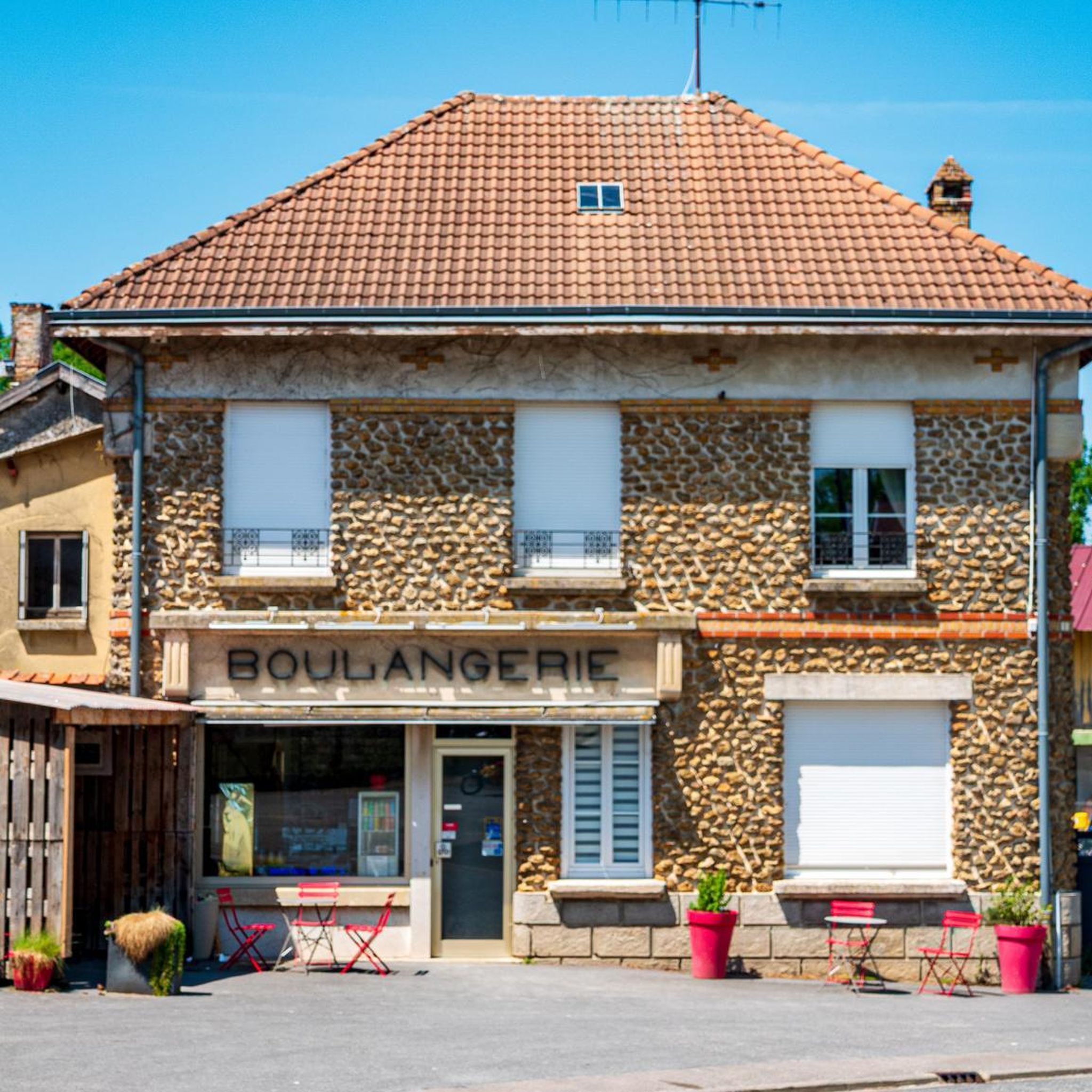
The bakery closes at 12:30 and opens at 17:00
7
0
At the foot of the church plateau, along the Rue de l’Hôtel Dieu, there is a well-preserved German shelter (abri allemand). This concrete construction was used by the German troops as an observation and command post. Its location close to the church offered protection and an overview, which was crucial in this heavily contested sector of the front.
7
0
On the slope of the Église Saint-Martin opposite 32, Rue de l'Hôtel Dieu The church of Sommepy-Tahure, Église Saint-Martin, is located on a raised plateau in the centre of the village. During the First World War, this location had strategic importance, as it offered a view over the surrounding front area in Champagne. The church was badly damaged during the war and later rebuilt, but the area around it still bears the traces of the conflict.
7
0
This national cemetery, located on a hill near Sommepy-Tahure in the Marne, is a major site of remembrance for the First World War. It was built between 1920 and 1924 and contains the remains of 2,201 French soldiers, 721 of whom are in an ossuary. The site centralizes graves from several former battlefields in the region. The necropolis is located in an area that was heavily fought over during the Battles of Champagne. In 1918, the nearby village was liberated by French and American troops, including the 2nd American Infantry Division. The cemetery symbolizes not only the French military sacrifice, but also the Franco-American collaboration during the conflict.
7
0
Sainte-Marie-à-Py played an important role during the First World War, particularly during the Champagne Offensives, when French troops attempted to push back the German lines. The region was badly affected by the fighting, and today the Navarin Monument commemorates the soldiers who fought and died here. The village also has a war memorial in memory of the inhabitants who died in both world wars. The traces of the destruction are still visible in the landscape, a silent witness to the fierce fighting that took place here.
6
0

La Main de Massiges is an exceptional place: It is a living archaeological site that you can visit and explore for free. It is also an extremely touching place of remarkable memory. These are German and French trench lines from the First World War. Excavations by archaeologists still take place, and bodies of soldiers from both countries are raised from the ground and returned to their families every year more than 100 years after their disappearance. By walking among these trenches you will relive the daily life of soldiers and their very difficult living conditions. The Suippes military camp happens to be very close, and shots of military training cannons echo in the silence of the place giving an even more poignant character to this extraordinary visit.
2
0
Frequently Asked Questions
What kind of historical sites can I visit around Sommepy-Tahure?
The region is rich in First World War history. You can explore preserved trench lines at Hand of Massiges, visit the significant Sommepy-Tahure National Cemetery, or see the strategic location of the Église Saint-Martin in Sommepy Tahure, which still bears traces of the conflict.
Are there any specific WWI battlefields or trench systems I can explore?
Yes, Hand of Massiges is an exceptional living archaeological site where you can walk among preserved German and French trench lines from the First World War. It offers a poignant insight into the daily life and difficult conditions of soldiers.
Where can I learn about the soldiers who fought in the region?
The Sommepy-Tahure National Cemetery is a major site of remembrance, containing the remains of over 2,200 French soldiers, including notable figures like fighter pilot Michel Coiffard. Additionally, the Harlem Hellfighters Memorial commemorates the bravery and sacrifice of the African-American 369th Infantry Regiment of the U.S. Army.
What outdoor activities can I do near these attractions?
The area offers various outdoor activities. You can find numerous road cycling routes, ranging from easy to moderate, with distances up to 103 km. For runners, there are several running trails, mostly moderate to difficult, with distances up to 15 km. You can explore these options further on the Road Cycling Routes around Sommepy-Tahure and Running Trails around Sommepy-Tahure guide pages.
Are there any family-friendly attractions in Sommepy-Tahure?
While many sites focus on WWI history, the Harlem Hellfighters Memorial is considered family-friendly and offers a significant historical lesson. Exploring the trenches at Hand of Massiges can also be an engaging educational experience for older children.
What is the best time to visit Sommepy-Tahure battlefields?
The battlefields and remembrance sites are generally accessible year-round. However, visiting during spring or autumn offers milder weather, which is ideal for exploring the outdoor sites like the trenches at Hand of Massiges and walking through the cemeteries. Summer can be warm, and winter might bring colder temperatures and potentially muddy conditions.
Are there any viewpoints or scenic spots in the area?
The region features rolling terrain and historical markers that offer various viewpoints. The Hand of Massiges, categorized as a viewpoint, provides a unique perspective over the preserved trench lines. The Église Saint-Martin in Sommepy Tahure is also situated on a raised plateau, offering strategic views of the surrounding area.
What is the significance of Sainte-Marie-à-Py?
Sainte-Marie-à-Py played a crucial role during the First World War, particularly during the Champagne Offensives. The village and its surroundings were heavily impacted by fighting, and today the Navarin Monument commemorates the soldiers who fought and died there. Traces of the destruction are still visible in the landscape.
Are there any easy walks or beginner hiking trails near Sommepy-Tahure?
While the guide focuses on attractions, the nearby road cycling guide includes an 'easy' rated route: 'Roadbike loop from Manre' which is 46.5 km. For walking, many of the historical sites like the Sommepy-Tahure National Cemetery and the Harlem Hellfighters Memorial offer gentle paths suitable for easy strolls and contemplation.
What do visitors enjoy most about the attractions around Sommepy-Tahure?
Visitors particularly appreciate the profound historical significance and the opportunity for quiet contemplation at the remembrance sites. The ability to walk through preserved trenches at Hand of Massiges and experience the atmosphere of the past is often highlighted as a moving experience. The blend of historical exploration with the natural environment of the Marne department is also a draw.
Is there parking available at the main attractions?
Most historical sites and memorials in the region, including the Sommepy-Tahure National Cemetery and Hand of Massiges, typically have designated parking areas or roadside parking available nearby, especially given their rural locations. It is advisable to check local signage upon arrival.
Can I find cafes or places to eat near the attractions?
The region around Sommepy-Tahure is rural, so dining options might be limited directly at every attraction. However, the village of Sommepy Tahure itself has local amenities, including a bakery. It's recommended to plan ahead or bring provisions, especially when visiting more remote sites.
Most popular routes around Sommepy-Tahure

Get inspired with the komoot mobile app


Explore more
Still not found the Highlight you’re looking for? See guides of the top attractions in other regions:
