Top 11 Lakes around Totland
Best lakes around Totland, Isle of Wight, are primarily coastal lagoons and marshland areas located near the Solent. These unique aquatic environments are often part of nature reserves, offering diverse habitats for wildlife. The area is characterized by its proximity to the sea, with many 'lakes' being saline or brackish lagoons formed within coastal marsh systems. These spots provide opportunities for observing nature and walking along the coast.
Best lakes around Totland
- The most popular lakes is Normandy Lagoon Nature…
Last updated: August 22, 2026
Normandy Lagoon Nature Reserve
Highlight • Historical Site
Tip by

Lymington and Keyhaven Marshes Nature Reserve
Highlight • Viewpoint
Tip by

Sign up now to discover places like this
Get recommendations on the best single tracks, peaks, & plenty of other exciting outdoor places.
Sign up for free
Lymington and Keyhaven Marshes
Highlight (Segment) • Natural
Tip by

Lymington and Keyhaven Marshes Nature Reserve
Highlight (Segment) • Historical Site
Hampshire County Council began purchasing the area in 1974 when it bought Normandy Farm. Pennington Marshes were bought …
Tip by

Eight Acre Pond
Highlight (Segment) • Historical Site
Tip by

Sign up for free to discover even more lakes around Totland.
Sign up for free
Already have an account?
Start today with a free account
Your next adventure awaits.
Login or Signup
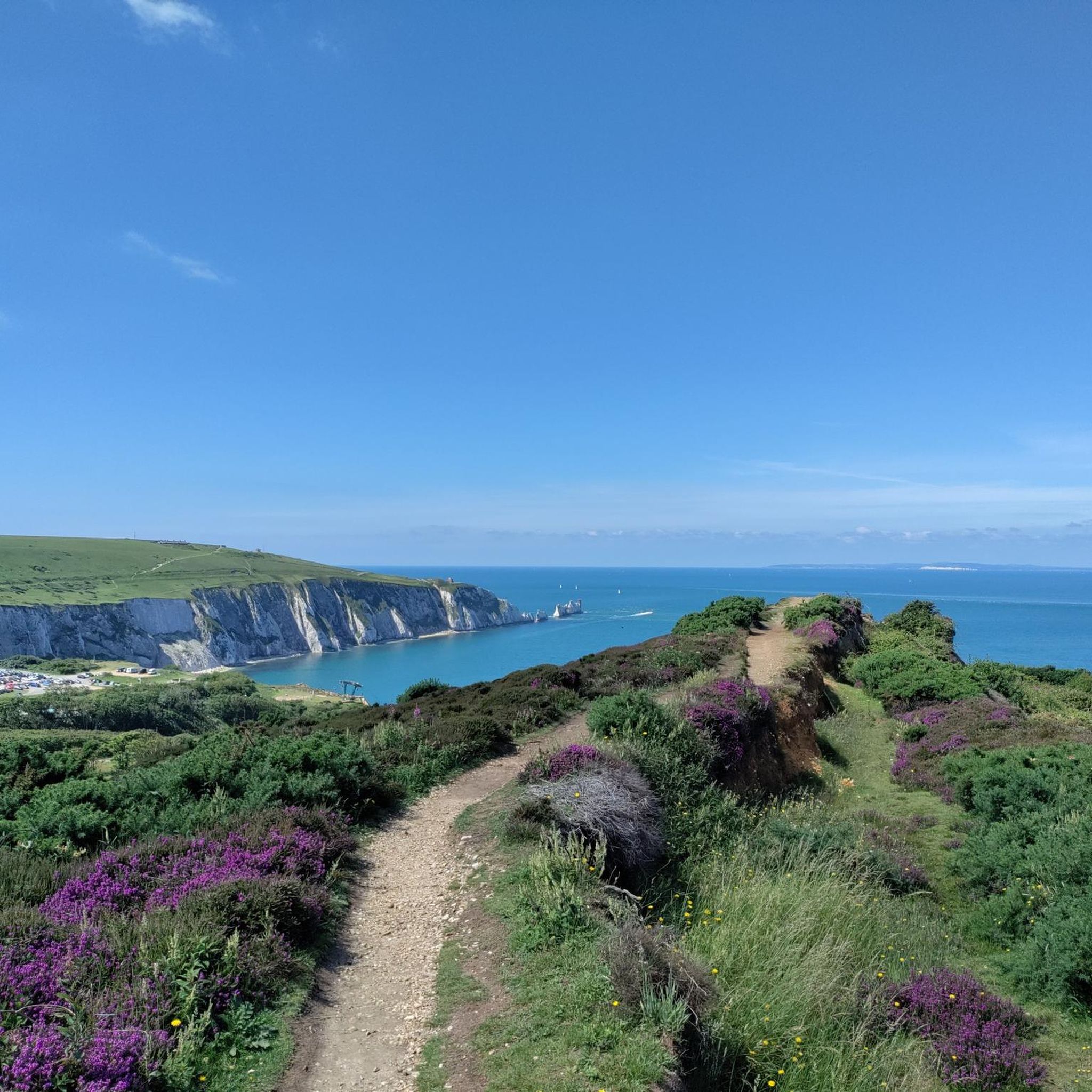
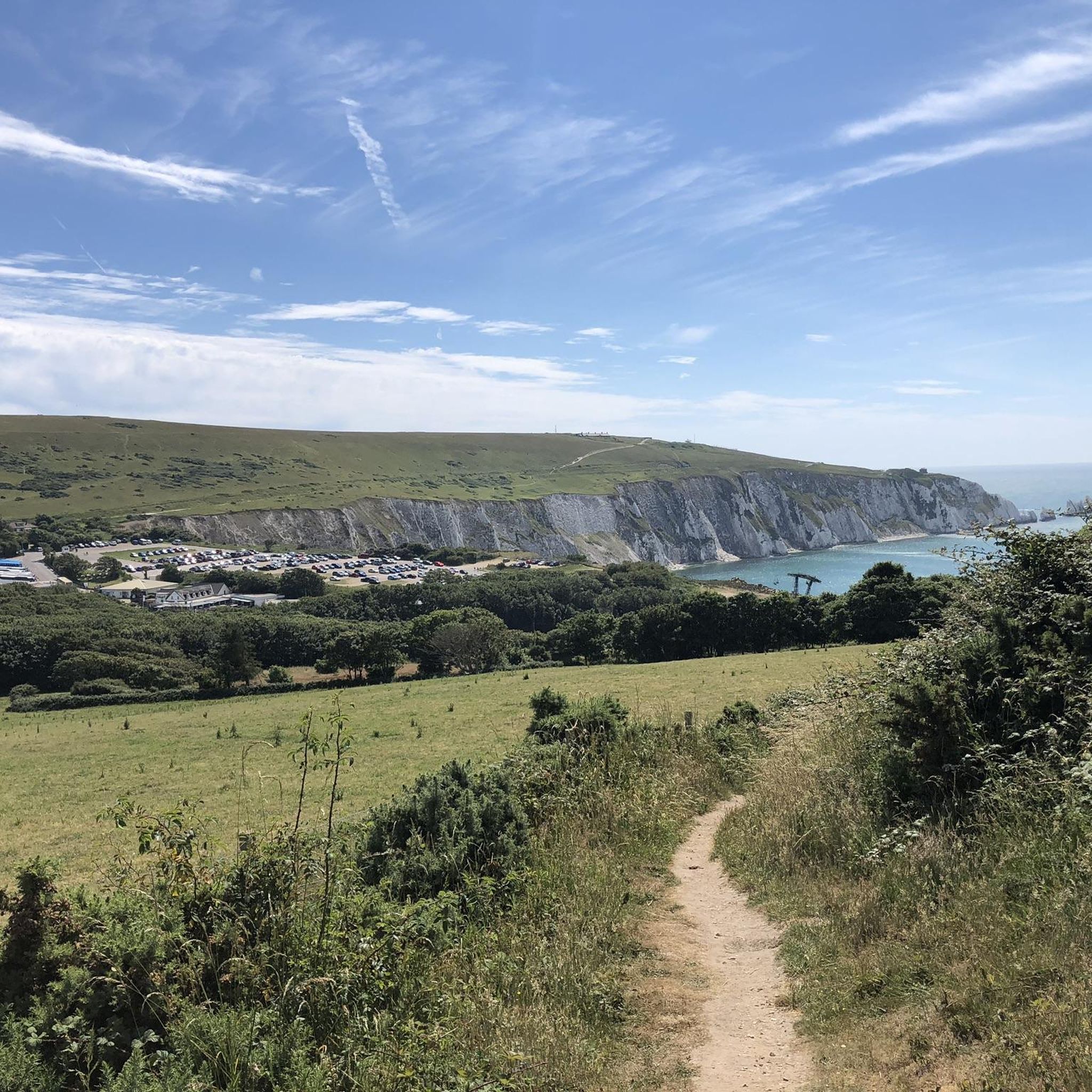

Tips from the Community

If you're walking with a dog that has a tendency to find mud, I recommend keeping it on a lead on the sea wall if the sea is any distance at all from the wall. Smelly, gloopy mud is present just about anywhere between Lymington and Milford-on-Sea!
0
0

Archaeological finds show that a sea salt industry has operated in the Solent for at least 2000 years. The industry flourished and by medieval times was firmly established at Lymington. Salt was obtained by impounding sea water in shallow lagoons known as salterns, and allowing evaporation during the summer months to remove the water. This activity was undertaken on land that had been reclaimed from the sea through the construction of a series of sea walls. The first reference to a medieval salt industry in the Lymington area comes from the Domesday Book of 1086. Salt remained the principle economic asset of the area throughout the middles ages. By the 17th century records show a flourishing economy in the area. The industry reached its peak early in the 18th century when 163 saltpans were in use at Lymington. Many people were employed during the short late summer/autumn salt making period. The smoke and steam from the boiling houses must have given the marshes the appearance of an industrial landscape. During this period sea salt from Lymington was exported as far as Norway, Newfoundland and the USA. The 19th century saw the decline of the industry. New rail links to the salt mines of Cheshire meant it was cheaper to dig salt from the ground and transport it around the country than extract it from sea water. The final Lymington saltern closed in 1865. Today the reserve features the best preserved example of medieval and later salt workings in southern England including Moses, Maiden and Pennington ‘salt docks’. These docks were used for the importation of coal for the boiling houses and export of salt on barges. Following the demise of the salt industry landowners looked for other sources of income. Most drained their holdings to produce the grazing marshes that exist today. The marshes have been grazed ever since. Parts have had other uses including a short-lived golf course, a rubbish tip and a rifle range.
0
0
Coastal lagoons are bodies of salt or brackish water that are partially connected to the sea through narrow openings or permeable barriers. On the Lymington-Keyhaven marshes the lagoons lie just inside the seawall. They are connected to the sea by sluices. Salt water also percolates through the sands and gravel below. The lagoons vary in size from less that 2m to over 200m in width. For most of their length the lagoons are relatively narrow ditches about 50 cm deep with muddy bottoms. As well as sea water the lagoons receive freshwater as rainwater, runoff from adjacent land and from nearby streams. The amount of freshwater dilutes the sea water reducing the salinity. In hot weather salinity levels can rise as evaporation removes freshwater. Lagoons show a great fluctuation in salinity and temperature making them a hostile environment for most marine species. Some highly specialised organisms have evolved to take advantage of these conditions. These lagoonal specialists have restricted distributions and are rare. Some species that occur on the reserve are the lagoon shrimp, starlet anemone, lagoon cockle and foxtail stonewort. More obvious residents of the lagoons are birds which use them throughout the year. Species including little egret, teal and little tern feed in the lagoons. Waders such as curlew, sandpiper, dunlin and little stint stop off on their long migratory journeys.
0
0
Coastal marshes, lagoons and former salt marshes particularly important for wintering birds. Hampshire County Council began purchasing the area in 1974 when it bought Normandy Farm. Pennington Marshes were bought in 1979 followed in 1984 by Keyhaven Marshes. This far-sighted policy was a response to the rapid rate of development and loss of habitat in previous decades. Bringing this area into public ownership was the only way to protect it for future generations to enjoy. By 2006 the reserve extended from the mouth of the Lymington River almost to the village of Keyhaven and covered over 500 acres. The Hampshire & Isle of Wight Wildlife Trust’s involvement in the Lymington area started in 1961, its first year of existence. It entered into an agreement with the Ministry of Public Buildings and Works, to warden an area at the end of Hurst Spit. In the same year 20 acres of salterns at Lymington became a private nature reserve. The Wildlife Trust’s reserve started to expand in 1980 and now encompasses over 700 ha. Today the combined area of the two reserves covers well over 1200 hectares. It incorporates mudflats, salt marshes, shingle banks, coastal grazing marshes, and saline lagoons. The reserve supports important populations of birds and rare and specialist plants and invertebrates. Since the construction of the new seawall in the early 1990s the number of visitors to the reserves has increased. Despite this the reserves continue to offer people a great opportunity to enjoy this unique area and its wildlife.
0
0
All this area is so different to how it would have looked in the 17th/18th century. This would have been a bussling industrial area, with building and pumphouses, hore and carts, and boats all working in the salt extraction industry.
0
0
The marshes were once used as salterns for the thriving salt industry. The salterns are first mentioned in 1132, and continued in use until 1865. They were replaced by oyster beds, but are now disused marshland with some enclosing banks. A circular mound 1.2 metres high and 12 metres across is all that remains of a mill, and there is another mound with an overgrown brick structure and rectangular pond of unknown date. Just north of the marshes, in Lower Pennington, are several 18th-century salt boiling houses. The marshes are a site of special scientific interest and an area of outstanding natural beauty. They are part of the New Forest National Park, and in summer are grazed by cattle and ponies owned by New Forest commoners. Part of the marshes behind the sea wall are a national nature reserve managed by English Nature, and a local nature reserve managed by Hampshire County Council. Part of the intertidal mudland is also a nature reserve. The marshes and tidal muds offer a variety of wildlife habitats, which are important for gulls and terns in spring/summer and waders and wildfowl in autumn/winter.
0
1
Lymington Reedbeds nature reserve is home to a range of fascinating species. Sea birds are abundant and warblers sing all through the year. Migratory birds return to the reedbeds time after time, and during the winter the reserve come to life with waders and water fowl. If you’re lucky, you may even spot an otter or a water vole. Whether you’re a keen birder or simply looking to reconnect with nature, Lymington Reedbeds Nature Reserve is a wonderful place to visit. In the spring, vibrant marsh-marigold bring a welcome splash of colour to the reserve and the air is filled with the songs of sedge and reed warblers. As autumn arrives, watch migrant birds such as yellow wagtail, swallow and martins build up their food stores and rest among the reeds before they depart for warmer climes.
0
0
Lymington and Keyhaven Marshes is a beautiful area of coastline. The internationally important coastal marshes and mudflats are teeming with fish and, as a result, thousands of sea birds and waders flock here. The Trust leases the offshore coastal marsh and mudflats to help protect this unique and historical coastal habitat. Covering nearly 740 hectares between the mouth of the Lymington River and the village of Keyhaven, this coastal reserve offers fantastic views across the Solent to Hurst Castle and the Isle of Wight. Although this is our largest nature reserve, it is not one for exploring but for admiring the stunning vistas. Visit in the spring to see arriving migrant birds such as wheatear, swallow and tern. Vast numbers of black-headed gull can be found nesting on the islands among the mudflats and open water. Out at sea, cormorant dive for fish beneath the waves. Listen to the distinctive high-pitched sounds of redshank and oystercatcher as they wade through the marshes, looking for crustaceans, fish and molluscs to feed on. In summer, discover specialist, salt-tolerant plants among the shingle banks on Hurst Spit. Yellow horned-poppy, sea campion and sea aster flourish here, surviving the salt spray carried on the breeze.
0
0
Frequently Asked Questions
What kind of lakes can I expect to find around Totland?
The Totland area on the Isle of Wight is primarily known for its unique coastal lagoons and marshland areas, rather than traditional inland freshwater lakes. These are often part of nature reserves, offering diverse habitats for wildlife and insights into the region's industrial past.
Which are the most popular lake-like areas to visit near Totland?
Among the most popular are Normandy Lagoon Nature Reserve, known for its wetland and sea views, and Lymington and Keyhaven Marshes Nature Reserve, a significant spot for birdwatching. Visitors also appreciate Eight Acre Pond for its historical significance in sea salt production.
Are there family-friendly activities around the lakes near Totland?
Yes, several areas are suitable for families. Lymington and Keyhaven Marshes Nature Reserve and Eight Acre Pond are both categorized as family-friendly. These locations offer opportunities for nature observation and gentle walks.
What natural features can I observe at these coastal lagoons and marshes?
You can expect to see extensive mudflats, reedbeds, and diverse bird species. At Lymington and Keyhaven Marshes Nature Reserve, you might spot brent geese in winter, various warblers, and specialized salt-tolerant plants. Normandy Lagoon Nature Reserve also offers fantastic wetland and sea views with abundant wildlife.
Are there historical sites related to the lakes around Totland?
Absolutely. Normandy Lagoon Nature Reserve and Eight Acre Pond are both historical sites. Eight Acre Pond was part of the largest sea salt production area in the country, with remnants of 17th and 18th-century salt workings. The marshes at Normandy Lagoon were also historically used as salterns.
What is the best time to visit the lakes and marshes near Totland?
The best time depends on what you wish to see. For birdwatching, winter is excellent at Lymington and Keyhaven Marshes Nature Reserve for brent geese and other waders. Spring brings vibrant marsh-marigold and the songs of sedge and reed warblers. Summer offers pleasant conditions for general walking and enjoying the views.
Can I bring my dog on walks around the lakes?
Yes, some areas are suitable for dogs. For instance, at Lymington and Keyhaven Marshes, there's a footpath along the shoreline. However, it's recommended to keep dogs on a lead on the sea wall, especially if they are prone to finding muddy areas, as the mud can be quite deep and smelly.
What outdoor activities can I do near these lakes?
Beyond exploring the lakes and marshes, you can enjoy various outdoor activities. There are numerous running trails, such as the Tennyson Down Trail, and cycling routes like 'The Red Lion, Freshwater – All Saints' Church, Freshwater loop'. For more options, explore the Running Trails around Totland and Cycling around Totland guides.
Are there hiking trails near the lakes around Totland?
Yes, there are several hiking trails. You can find easy hikes like 'View of The Needles loop from Alum Bay' or 'Freshwater Bay Promenade – Tennyson Monument loop'. For a comprehensive list of routes, refer to the Easy hikes around Totland guide.
What do visitors enjoy most about the lakes and coastal areas near Totland?
Visitors particularly enjoy the stunning wetland and sea views, the abundance of diverse wildlife, especially bird species, and the historical significance of areas like the former salt workings. The tranquility and natural beauty of these unique coastal environments are highly appreciated.
What should I wear for walks around the coastal lagoons and marshes?
Given the coastal nature, it can get quite windy, especially in colder months. A good jacket is recommended. Comfortable walking shoes are essential for exploring the trails and paths along the marshes and lagoons.
Most popular attractions around Totland

Get inspired with the komoot mobile app


Explore more
Still not found your perfect lake around Totland? Check out the guides of these regions to see even more beautiful places.
