Top 3 Castles around Fleet Marston
Best castles around Fleet Marston, a small area in Buckinghamshire, offers a unique historical landscape. While Fleet Marston itself is primarily known for its significant Roman settlement and a medieval church, the surrounding region features several historical sites categorized as castles or castle-like structures. These include grand manor houses, stately homes, and villages with historical follies and converted castles. The area provides a rich context for exploring England's past, from Roman times through the medieval period and beyond.
Best castles…
Last updated: June 28, 2026
Waddesdon Manor
Highlight • Historical Site
Designed with the Neo-Renaissance stylings of a French château, it was built between …
Tip by

Bridleway to Claydon House and All Saints Church
Highlight (Segment) • Religious Site
Tip by

Sign up now to discover places like this
Get recommendations on the best single tracks, peaks, & plenty of other exciting outdoor places.
Sign up for free
Dinton Village
Highlight • Historical Site
Tip by

Start today with a free account
Your next adventure awaits.
Login or Signup
Tips from the Community

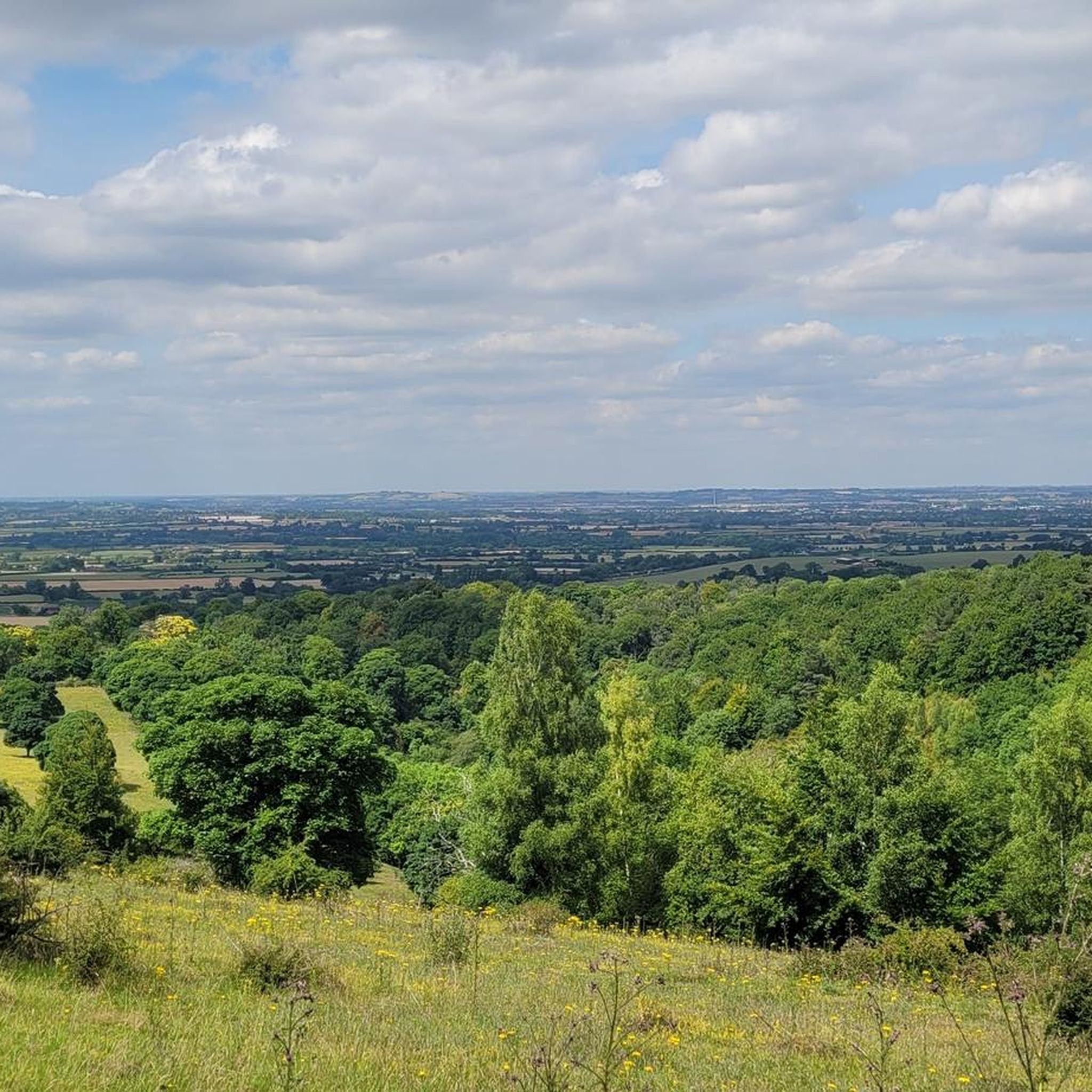
Dinton is a charming little village situated in the south of the Aylesbury Vale on the ancient turnpike leading from Aylesbury to Thame. In the village you'll find an old folly, a converted castle, and a beautiful pub, Bottle & Glass.
1
0

For the light festival the Parterre was changed into a light spectacular in keeping with the illuminated house. Waddesdon is famous for its Carpet Bedding and every spring and summer we change the design of the beds on the Parterre and on either side of the South Fountain. A French-inspired formal garden, a parterre is made up of a symmetrical pattern of beds set off by mown grass and contained by neat pathways and low clipped hedges. Usually designed to be seen from above, in our case from the raised terrace and the main reception rooms and bedrooms on the south side of the Manor. In the centre sits a magnificent fountain, originally made for an Italian palace in Colorno. The parterre was restored in 1994 to designs by Beth Rothschild. In 2000 Waddesdon won the Europa Nostra award for ‘the extraordinary re-creation with modern techniques of a major Victorian garden’.
1
0
Waddesdon Manor is a country house in the village of Waddesdon, in Buckinghamshire, England. Owned by National Trust and managed by the Rothschild Foundation, it is one of the National Trust's most visited properties, with over 463,000 visitors in 2019. The Grade I listed house was built in a mostly Neo-Renaissance style, copying individual features of several French châteaux, between 1874 and 1889 for Baron Ferdinand de Rothschild (1839–1898) as a weekend residence for entertaining and to house his collection of arts and antiquities. As the manor and estate have passed through three generations of the Rothschild family, the contents of the house have expanded to become one of the most rare and valuable collections in the world. In 1957, James de Rothschild bequeathed the house and its contents to the National Trust, opening the house and gardens for the benefit of the general public. Unusually for a National Trust property, the family of James Rothschild, the donor, manage the house. The Rothschild Foundation, chaired by Jacob Rothschild, 4th Baron Rothschild, acts as custodian and continues to invest in the property. Located in the Aylesbury Vale, 6.6 miles (10.6 km) west of Aylesbury, Waddesdon Manor won Visit England's Large Visitor Attraction of the Year category in 2017. In 1874, Baron Ferdinand de Rothschild bought the Waddesdon agricultural estate from the Duke of Marlborough with money inherited from his father Anselm. Rothschild was familiar with the estate from fox hunting in the locality. At the time of purchase, the estate had no house, park or garden. The site of the future Manor House was a bare hill. Known as Lodge Hill, it had been stripped of its timber by the impoverished Duke of Marlborough prior to the sale. Over the following three years, the summit of the hill was levelled; eventually, on 18 August 1877, the foundation stone was laid. The first house party was held in May 1880 with seven of Rothschild's close male friends enjoying a fireworks display. When, finally, the main house was ready in 1883, Rothschild invited 20 guests to stay. Before his premature death in 1898, on weekends between May and September Rothschild was host to many important guests including the future king Edward VII. House parties usually involved 14 to 20 guests. Guests commented on the level of luxury service provided by the 24 house staff.[7] In 1890, Queen Victoria unusually requested to pay a visit. She was impressed with the beauty of the house and grounds as well as Rothschild's ability to quietly manage the day's events. She was struck by the newly installed electric lights designed to look like candles in the chandeliers, and it is reported that she asked for the room to be darkened to fully witness the effect. When Baron Ferdinand died in 1898, the house passed to his sister Alice de Rothschild. She saw Waddesdon as a memorial for her brother and was committed to preserving it. She did add significant items to the collection, particularly furniture and carpets with French royal provenances, Meissen porcelain, textiles and armor. Following Alice de Rothschild's death in 1922, the property and collections passed to her French great-nephew James A. "Jimmy" de Rothschild, who was married to an English woman, Dorothy Pinto. James further enriched the Manor with objects from the collections of his late father Baron Edmond James de Rothschild of Paris. James and Dorothy hosted a Liberal Party rally at Waddesdon in 1928, where David Lloyd George addressed the crowd. During World War II, children under the age of five were evacuated from Croydon and lived at Waddesdon Manor, the only time children lived in the house. James and Dorothy also provided asylum for a group of Jewish boys from Frankfurt at Waddesdon. When James de Rothschild died in 1957, he bequeathed Waddesdon Manor, 120 acres (49 ha) of grounds and its contents to the National Trust, to be preserved for posterity. Dorothy moved to nearby Eythrope and the Manor was never again used as a residence. It opened to the public in 1959, with around 27,000 visitors in the first year. Dorothy chaired the new management committee in close collaboration with the National Trust and took a very keen interest in Waddesdon for the remainder of her long life. At Dorothy's death, in 1989, her nephew Jacob Rothschild inherited her position and responsibilities. At his initiative, the Manor underwent a major restoration from 1990 to 1997, and the visitor attractions were enhanced, including the creation of the Waddesdon Wine Cellars. Jacob Rothschild chairs the family charity handling Waddesdon's management, the Rothschild Foundation. Waddesdon Manor operates as an independent organisation within the National Trust. From 2004 to 2006, the Baron's Room and Green Boudoir were restored to reflect Baron Ferdinand's original arrangements.[16] In 2003 a burglary was committed involving the Johnson Gang, when approximately 100 gold snuff boxes and other items were stolen from the collection prompting the installation of new security measures.[17] In 2021 one small sweet-box from this theft was identified at auction and returned to Waddesdon.[18] Since 2004, there has been an exhibitions programme. Notable exhibitions include the Lod Mosaic in 2014.[19] Waddesdon was one venue celebrating the work of Henry Moore in 2015 and Eliot Hodgkin in 2019. New works of art have been acquired by the Rothschild Foundation to complement the existing collections at Waddesdon, such as Le Faiseur de Châteaux de Cartes by Jean-Baptiste-Siméon Chardin, added in 2007. There has also been a programme of engagement with contemporary artists, beginning with Angus Fairhurst represented by Arnolfini in 2009. Works have been sited near the Manor and on the wider estate including by Richard Long, Sarah Lucas, and Angus Fairhurst. In 2012, Christie's chose the Manor to exhibit sculptures by leading contemporary artists. Between 2013 and 2017, Bruce Munro had a residency at Waddesdon Manor, beginning with the musical and light piece Cantus Arcticus in the Coach House Gallery in 2013. Winter Light (2013), with its distinctive wigwam type structures sited in the gardens of the Manor, was Munro's first solo exhibition of his large-scale pieces; Winter Light returned in 2016–2017. In 2014, Munro developed his pod-like structures, adding elements of language in Snow Code, shown in the Manor. In ...---...SOS, Munro's winter exhibition of 2015–2016, tents were lit up in tune with sound, in response to images of disaster relief. In 2012, Edmund de Waal exhibited work in the Manor, creating a dialogue between his work and the historical interiors. In 2015, artist Joana Vasconcelos was commissioned to install two sculptures entitled Lafite in front of the Manor. In 2016, Kate Malone exhibited a collection of new work inspired by the people, gardens, collections, and archive. Two portrait pots of Baron Ferdinand de Rothschild and Alice de Rothschild by Malone remain on display at the Manor. Prior to the construction of Waddesdon Manor, no house existed on the site. Ferdinand de Rothschild wanted a house in the style of the great Renaissance châteaux of the Loire Valley. Ferdinand chose as his architect Gabriel-Hippolyte Destailleur. Destailleur was already experienced in working in this style, having overseen the restoration of many châteaux in that region, in particular that of the Château de Mouchy. Through Destailleur's vision, Waddesdon embodied an eclectic style based on the châteaux so admired by his patron, Baron Ferdinand. The towers at Waddesdon were based on those of the Château de Maintenon, and the twin staircase towers, on the north facade, were inspired by the staircase tower at the Château de Chambord. However, following the theme of unparalleled luxury at Waddesdon, the windows of the towers at Waddesdon were glazed, unlike those of the staircase at Chambord. They are also far more ornate. The structural design of Waddesdon was not entirely retrospective. Hidden from view were the most modern innovations of the late 19th century including a steel frame, which took the strain of walls on the upper floors, and which consequently permitted the layout of these floors to differ completely from the lower floors. The house also had hot and cold running water in its bathrooms, central heating, and an electric bell system to summon the numerous servants. The building contractor was Edward Conder & Son. After the Manor was completed in 1883, Ferdinand quickly decided it was too small, as his architect had prophesied. The Bachelors' Wing to the east was extended after 1885 and the Morning Room, built in late-Gothic style, was added to the west after 1888. The stables to the west of the Manor were built in 1884. Ferdinand and his stud groom devised the plan, working with Conder. Destailleur designed the façades in a French 17th-century style. The Wine Cellars in the Manor were created during the Centenary Restoration and opened in 1994. They are modelled on the private cellars at Château Lafite Rothschild. More than 15,000 bottles are stored in the Cellars, some 150 years old, the majority from the Château Lafite Rothschild and Château Mouton Rothschild estates. It is the largest private collection of Rothschild wines in the world. There are also wine labels designed by artists such as Salvador Dalí and Andy Warhol.
1
0

A parterre is a part of a formal garden constructed on a level substrate, consisting of symmetrical patterns, made up by plant beds, low hedges or coloured gravels, which are separated and connected by paths. Typically it was the part of the garden nearest the house, perhaps after a terrace.[1] The view of it from inside the house, especially from the upper floors, was a major consideration in its design. The word "parterre" was and is used both for the whole part of the garden containing parterres and for each individual section between the "alleys".
1
0
Amazing collection one of the most beautiful house I've been to
0
0

Scenic way to arrive at National Trust Claydon House. Flat smooth grass in summer. You will pass in front of Claydon House and All Saints Church. The National Trust charges to enter Claydon Hose unless you are a member. Claydon court Café and businesses and this bridleway have no entrance fee. More info https://claydonestate.co.uk/
0
0

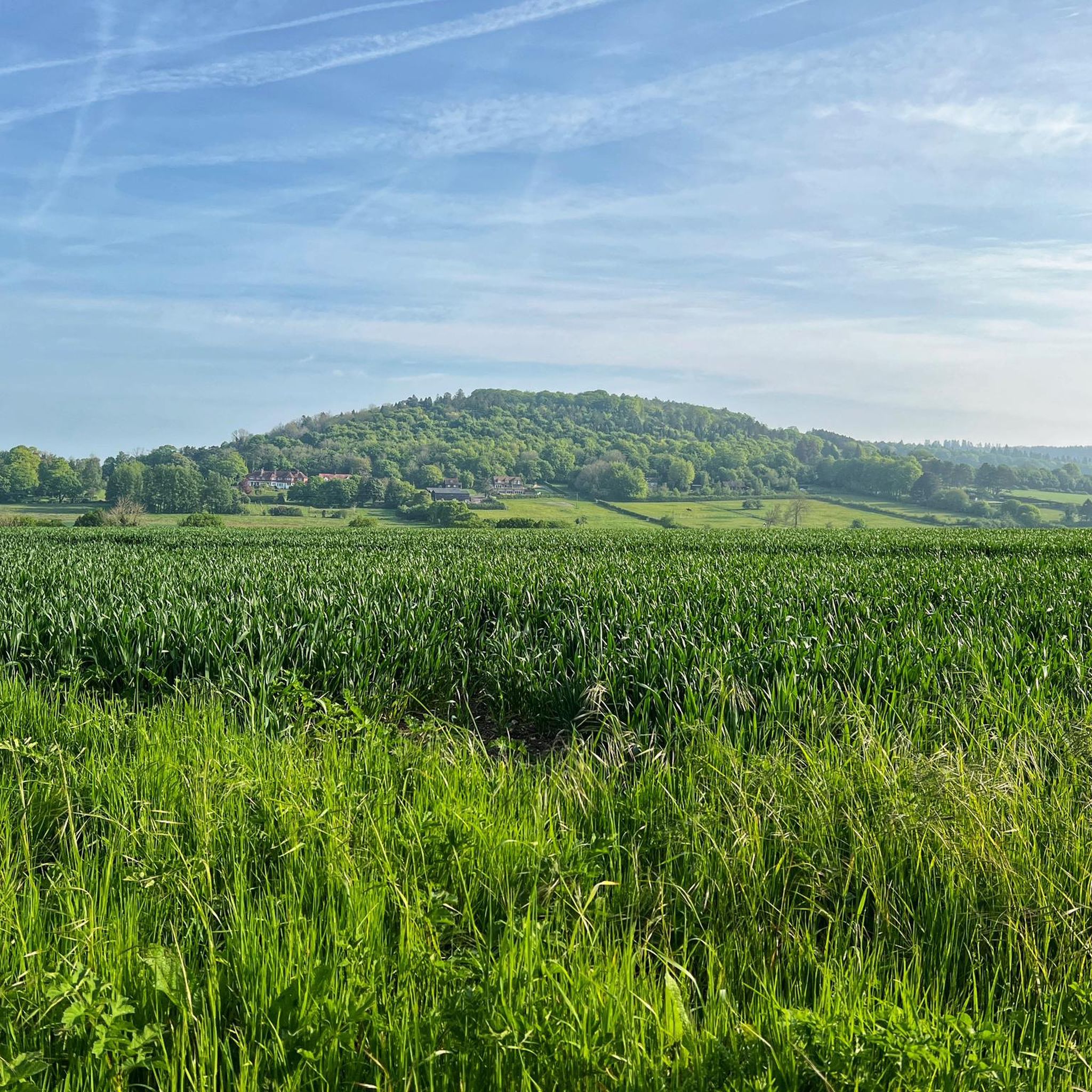
A charming village that appears in the Domesday Book 1086. Worth turning off the A-road for.
0
0
Frequently Asked Questions
What types of 'castles' can I expect to find around Fleet Marston?
Fleet Marston itself is known for its Roman settlement and a medieval church, not traditional castles. However, the surrounding region features historical sites categorized as castles or castle-like structures, including grand manor houses, stately homes, and villages with historical follies and converted castles. Examples include Waddesdon Manor, a Neo-Renaissance château, and Dinton Village, which features an old folly and a converted castle.
Are there family-friendly castle-like attractions near Fleet Marston?
Yes, several sites are family-friendly. Waddesdon Manor is a popular choice, offering lavish grounds with fountains, sculptures, and an aviary that children often enjoy. The Bridleway to Claydon House and All Saints Church is also considered family-friendly, providing a scenic and smooth path suitable for a leisurely walk.
What historical sites are there in Fleet Marston itself, beyond castles?
Fleet Marston is rich in history, particularly its Roman past. Archaeological excavations have uncovered a significant Roman settlement along Akeman Street, including a large cemetery with around 400 burials and over 1,200 Roman coins. The area also features the isolated medieval St Mary's Church, dating back to the 12th century, where John Wesley preached his first sermon.
Can I find walking trails around the castle-like properties?
Yes, many of these estates offer walking opportunities. For instance, the lavish grounds of Waddesdon Manor contain a network of public rights of way. Additionally, the Bridleway to Claydon House and All Saints Church offers a scenic, flat, and smooth grass path perfect for a walk to the historic house and church.
Are there any easy walks or circular routes that include these historical sites?
Yes, there are easy walking options. The Bridleway to Claydon House and All Saints Church is a flat and smooth path. For more general hiking routes in the area, you can explore options like the 'Waddesdon Greenway loop from Berryfields' or 'Headless Stone Sculpture – Hartwell Church Ruins loop from Stone with Bishopstone and Hartwell', which are listed as easy hikes in the Hiking around Fleet Marston guide.
What natural features or viewpoints can be found near these historical sites?
The grounds of Waddesdon Manor are notable for their beautiful blooms, fountains, and sculptures, offering picturesque viewpoints. While not a castle, the nearby Dinton Village is set in the south of the Aylesbury Vale, providing charming rural scenery.
What outdoor activities can I do near the castle-like attractions around Fleet Marston?
Beyond walking, the area offers various outdoor activities. You can find numerous road cycling routes, such as the 'Quainton Windmill – View of the Valley loop from Aylesbury Vale Parkway', detailed in the Road Cycling Routes around Fleet Marston guide. There are also touring bicycle routes, like the 'Upper Winchendon Climb – Cannon's Hill Climb loop from Aylesbury Vale Parkway', available in the Cycling around Fleet Marston guide.
Is there public transport available to reach sites like Waddesdon Manor or Dinton Village?
While specific public transport details for each site can vary, generally, reaching these rural historical sites often requires a combination of public transport and local connections or a car. It's advisable to check local bus routes or taxi services from nearby towns like Aylesbury for the most up-to-date information on reaching Waddesdon Manor or Dinton Village.
What do visitors enjoy most about the historical sites near Fleet Marston?
Visitors frequently appreciate the grandeur and historical significance of places like Waddesdon Manor, often describing it as 'beautiful' and 'a palace'. The scenic routes, such as the Bridleway to Claydon House, are enjoyed for their pleasant, smooth paths. The charm and historical depth of villages like Dinton Village, with its Domesday Book mention and converted castle, also receive positive feedback.
Are there any pubs or places to eat near these historical attractions?
Yes, for example, Dinton Village is home to a beautiful pub, the Bottle & Glass. Near Claydon House, you can find the Claydon Court Café and other businesses, offering refreshments after exploring the Bridleway to Claydon House and All Saints Church.
What is the best time of year to visit the castle-like properties around Fleet Marston?
The best time to visit often depends on your preference. Spring and summer offer lush gardens and pleasant weather for walking the grounds of places like Waddesdon Manor, with the bridleways also being smooth and grassy in summer. Autumn provides beautiful foliage, while winter can offer a quieter, more atmospheric experience, though some attractions might have reduced opening hours.
Most popular attractions around Fleet Marston

Get inspired with the komoot mobile app


Explore more
Looking for the best castles somewhere else? Discover other guides around Fleet Marston:
