Top 20 Castles in Évora
Best castles in Évora are found throughout the Alentejo region, offering insights into Portugal's rich history. The area is characterized by its rolling plains and strategic hilltop locations, which were historically chosen for defensive structures. While Évora itself is known for its well-preserved city walls, the surrounding landscape features numerous castles, each with distinct architectural styles and historical significance. These fortifications provide panoramic views of the Alentejo countryside.
Best castles in Évora
- The most popular castles is Monsaraz Castle, a castle that is an integral part of a beautifully preserved medieval village. From its walls, visitors can admire the surrounding plain and the border with Spain.
- Another must-see spot is Monsaraz Historic Village, a historical site with a well-preserved medieval castle. Visitors can explore its fortress walls and numerous historical buildings, including white-washed houses.
- Visitors also love Evoramonte Castle, a castle with medieval military architecture and Renaissance influences. It is notable for its unusual rectangular shape, cylindrical towers, and historical significance as the site of the Convention of Evoramonte.
- Évora is known for its medieval, circular, and strategically located hilltop castles. These structures offer a variety of architectural styles and historical narratives to explore.
- The castles in Évora are appreciated by the komoot community, with 44 upvotes and 139 photos shared across the various highlights.
Last updated: October 11, 2026
Monsaraz Castle
Highlight • Castle
The construction works began after the Christian reconquest and extended for several reigns. Looking to increase the population and its defense, King D. Afonso III began the construction of the new alcazar and its five square towers.
Tip by

Monsaraz Historic Village
Highlight • Historical Site
Tip by
Sign up now to discover places like this
Get recommendations on the best single tracks, peaks, & plenty of other exciting outdoor places.
Evoramonte Castle
Highlight • Castle
Translated by Google •
Tip by

Montemor-o-Novo Castle
Highlight • Castle
This castle was conquered from the Moors by order of D. Afonso Henriques, and its current walls were built during the reign of D. Dinis.
It was gradually abandoned by the population from the 15th century onwards, and today it preserves important testimonies of the medieval and modern history of Montemor-o-Novo, such as sections of the wall, the Paço dos Alcaides, the Church of Santiago (currently the Castle Interpretation Centre), the Church of Santa Maria do Bispo, the Clock Tower, the Porta da Vila, the Porta do Anjo, the Torre da Má Hora and the Convento da Saudação.
(Source: feriasemportugam.com)
Translated by Google •
Tip by

Castle of Mourão
Highlight • Castle
It is classified as a Property of Public Interest by public decree. (Wikipedia)
Translated by Google •
Tip by
Palace of the Dukes of Cadaval
Highlight • Historical Site
Located opposite the Roman Temple, the Palace is a unique example of the country's architectural heritage, resulting from the fusion of Mudejar, Gothic, and Manueline styles. The building's main building includes a vast multi-story residential area, two interior gardens, and a church that also serves as a pantheon for all generations of the Dukes of Cadaval family. The church is also a national landmark for its grand interiors, dominated by tile panels signed and dated to the early 18th century.
Martim Afonso de Melo, a noble servant of the Master of Aviz and a descendant of the Portuguese royal family, commissioned the construction of the building, then known as the Palácio da Torre das Cinco Quinas (Palace of the Tower of the Five Quinas), which served as the temporary residence of the monarchs Dom João II, Dom João IV, and Dom João V. It was also in this palace that Dom Fernando II, Duke of Braganza, was imprisoned, accused of conspiracy against King Dom João II and later beheaded in Praça do Giraldo, Évora, in 1483.
Today, the palace remains the residence of the Dukes of Cadaval, although the church and parts of the rooms are open to the public year-round, displaying a collection of the family's historical and contemporary pieces—books, charters, armory, paintings, sculptures, furniture, porcelain, portraits, and travel accessories, among others—while also hosting and temporarily hosting various international cultural and artistic exhibitions.
Translated by Google •
Tip by
Páteo de São Miguel
Highlight • Historical Site
Translated by Google •
Tip by
Estremoz Castle
Highlight • Castle
Translated by Google •
Tip by

Palácio de São Miguel
Highlight (Segment) • Historical Site
Together with the other cultural monuments mentioned, as well as the park and the cafés and the views of the rest of the old town, the hill is certainly one of the most beautiful "corners" of Évora!
Translated by Google •
Tip by

Arraiolos Castle
Highlight (Segment) • Castle
For those who arrive in the town of Arraiolos (or pass through the surrounding region) it is impossible not to see the Arraiolos Castle, which stands proudly in the landscape, at the top of Monte de São Pedro.
Historically, the Arraiolos Castle has had several roles. It was built in 1306 by D. Dinis, housing the population within its walls. Later it was the county seat of D. Nuno Álvares Pereira, 2nd Count of Arraiolos, who lived here for many years.
Due to the cold and wind resulting from its location, it ended up losing many of its inhabitants. In an attempt to keep some of the population inside the walls, they began to be closed every night after the bell rang, which continued for several decades.
However, the population eventually spread out along the surrounding slopes and three centuries after it was built, the Castle began to be looted for materials, eventually falling into ruins.
It was during the reign of King John IV that it underwent major renovation work, but it eventually fell into ruins again, worsened by the earthquake of 1755. Between 1959 and 1963, it was partially restored by the State, achieving the appearance it still has today.
Translated by Google •
Tip by
Sign up for free to discover even more castles in Évora.
Already have an account?
Start today with a free account
Your next adventure awaits.

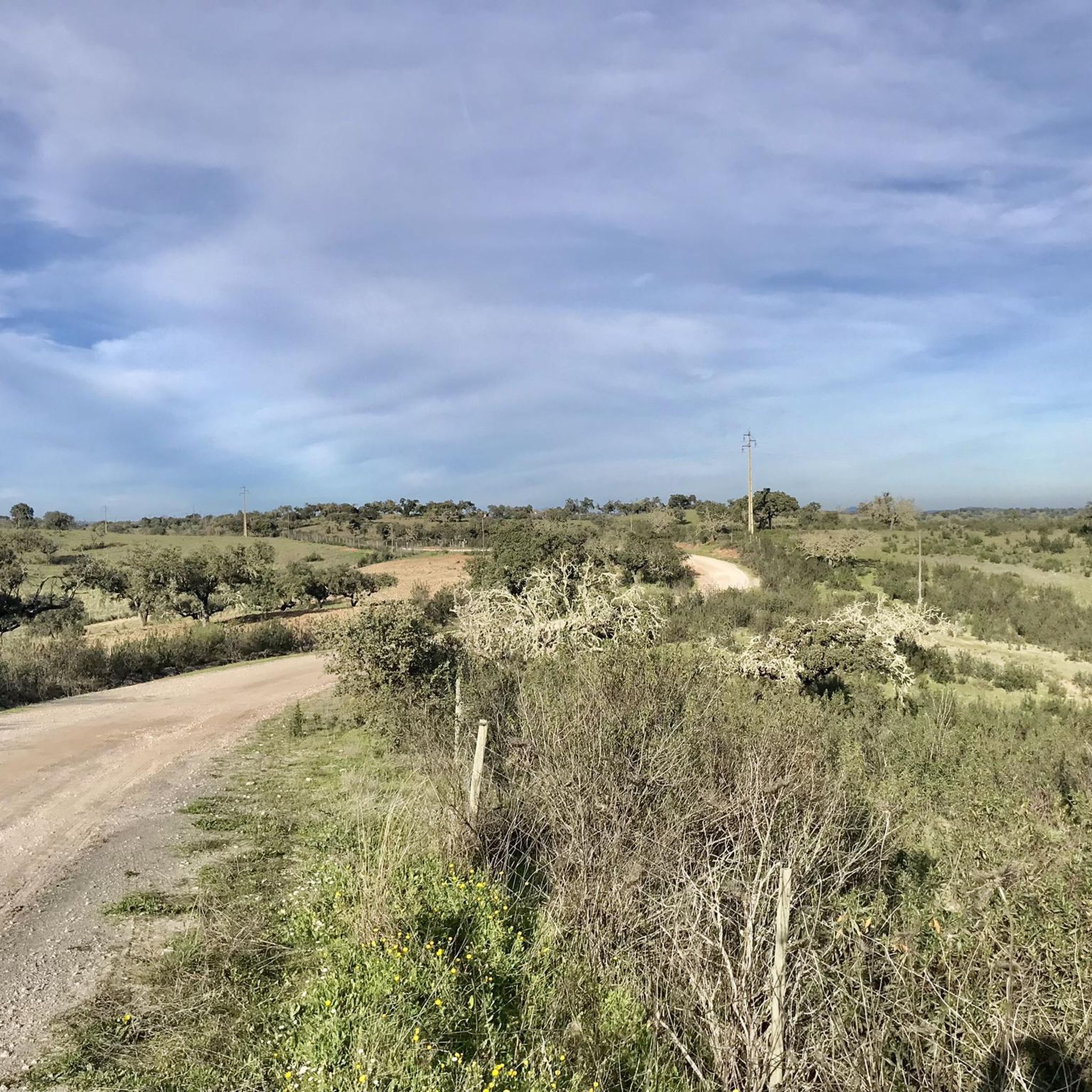
Tips from the Community

The Castelo de Monsaraz is a 14th-century medieval castle and National Monument located on a hilltop with a grand view over the Alqueva Lake and the Spanish border. Very beautiful to see.
7
0

Mourão Castle, classified as a Property of Public Interest since 1957, is one of the most emblematic fortifications in the Alentejo region, rising 208 meters above sea level with a privileged view over the Alqueva reservoir.👍🥾
2
0
With the construction of the Alqueva Dam, and because Monsaraz is not only a monumental town, but also a high point from which to enjoy spectacular views of the waters of the great lake, the number of tourists in this area has increased exponentially in recent years.
3
0
In a region dotted with megalithic monuments, it is believed that the earliest human occupation of this site dates back to a prehistoric hillfort, successively occupied by Romans, Visigoths, and Muslims, who derived their subsistence from activities related to the agro-pastoral economy. The place name is linked to the latter domain, since, in Portuguese, the word xarez (or xerez) derives from the Arabic saris (or sharish), designating the rockrose (xaras) vegetation then abundant along the banks of the Guadiana River. The place name Monsaraz thus evolved from Monte Xarez (or Xaraz).
5
0
Access to a group of houses belonging to the Eugénio de Almeida Foundation. It can be visited.👍🇵🇹
2
1

Located on the left bank of the Guadiana River, it stands in a dominant position above the old medieval town. From its walls, you can see the surrounding plain with Monsaraz Castle to the north and the border with Spain to the east. It is classified as a Property of Public Interest by public decree. (Wikipedia)
14
0

From the walls you can see the surrounding plain with the castle of Monsaraz to the north and the border with Spain to the east.
3
0
Frequently Asked Questions
What makes the castles near Évora unique?
The castles in the Évora region, particularly in the Alentejo, are notable for their diverse architectural styles and strategic hilltop locations. For example, Evoramonte Castle stands out with its unusual rectangular shape and cylindrical towers, while Arraiolos Castle is almost unique for its circular layout. These structures offer a glimpse into different periods of Portuguese history, from medieval military architecture to Renaissance influences.
Which castles offer the best panoramic views of the Alentejo region?
Several castles provide stunning panoramic views. Evoramonte Castle, perched atop a hill, offers breathtaking vistas. Similarly, Montemor-o-Novo Castle and Monsaraz Castle also boast elevated positions with incredible views over the Alentejo landscape, including the border with Spain from Monsaraz.
Are there family-friendly castles to visit near Évora?
Yes, several castles and historical sites in the region are suitable for families. The Monsaraz Castle and its surrounding historic village offer an engaging experience for all ages, with its well-preserved walls and charming streets. Exploring the extensive remains of Montemor-o-Novo Castle can also be an adventurous outing for families.
What historical events are associated with the castles in this region?
The castles in the Évora region are steeped in history. Evoramonte Castle is historically significant as the site where the Convention of Evoramonte was signed in 1834, ending the Portuguese Civil War. Montemor-o-Novo Castle was conquered from the Moors by D. Afonso Henriques, and Vila Viçosa Castle has strong royal connections, having been home to the powerful House of Braganza.
Can I find outdoor activities or hiking trails near the castles?
Yes, the Alentejo region offers opportunities for outdoor activities near its historical sites. For instance, you can find various easy hikes in Évora, including routes like the 'Évora City Walls – Giraldo Square loop'. While not directly adjacent to every castle, these routes provide a way to explore the natural and historical landscape of the wider region.
What is the best time of year to visit the castles in Évora?
The best time to visit the castles in the Évora region is typically during the spring (April to June) or autumn (September to October). During these months, the weather is generally mild and pleasant, making it ideal for exploring outdoor sites and enjoying the panoramic views without the intense heat of summer.
Are there any castles with museums or cultural centers?
Yes, Vila Viçosa Castle, for example, houses the Hunting Museum, featuring Manuel Lopo Caroça de Carvalho's private collection, and the Foundation's Archeology Museum. Montemor-o-Novo Castle also includes the Church of Santiago, which now serves as the Castle Interpretation Centre, providing deeper insights into its history.
How accessible are the castles by public transport?
While Évora itself is accessible by public transport, reaching some of the surrounding castles often requires a car. Many castles, like Evoramonte Castle and Monsaraz Castle, are located in smaller villages or on hilltops, making direct public transport links less frequent. It's advisable to check local bus schedules or consider renting a car for flexibility.
Are there entry fees for the castles, and do I need permits?
Entry fees vary by castle. Some castles, particularly those with museums or active visitor centers like Vila Viçosa Castle, may have an entrance fee. Others, such as the outer walls of Castle of Mourão, might be free to enter. Permits are generally not required for general visitation, but it's always recommended to check specific castle websites for the most current information on fees and opening hours.
What kind of natural features can I expect to see around the castles?
The castles in the Évora region are set within the beautiful Alentejo landscape, characterized by rolling plains, olive groves, and vineyards. From their elevated positions, you can often see vast expanses of countryside. The area around Monsaraz Castle, for instance, offers views extending to the Guadiana River and the Alqueva reservoir, providing a blend of historical architecture and natural beauty.
Which castle is known for its well-preserved medieval village setting?
Monsaraz Castle is an integral part of the beautifully preserved, historic village of Monsaraz. The village itself maintains a magical, ancient atmosphere, with its castle walls, white-washed houses, and narrow, shale-paved streets, offering a truly immersive medieval experience.
Are there any unique architectural features among the castles?
Yes, Arraiolos Castle is particularly notable for its curious and almost unique circular architecture, distinguishing it from many other castles in Portugal. Evoramonte Castle also features a distinctive rectangular shape with cylindrical towers, showcasing a blend of medieval and Renaissance styles.
Most popular routes in Évora
Most popular attractions in Évora

Get inspired with the komoot mobile app


Didn’t find what you were looking for?
Explore Évora’s best castles region by region:
Explore more
Looking for the best castles somewhere else? Discover other guides in Évora:
