Top 5 Caves in Orkney islands
Caves in Orkney islands are primarily dramatic sea caves, carved over millennia by the powerful Atlantic along the region's impressive coastlines. The geological structure of Orkney's Devonian sandstones, with their low angles of dip and fracture systems, allows waves to exploit weaknesses in the cliffs, forming these natural features. Beyond natural formations, the islands also feature ancient man-made chambered cairns that offer cave-like exploration. These varied cave systems provide insights into both natural coastal erosion and historical human activity.
Best caves in Orkney islands
- The most popular caves is The Gloup Sea Cave, a natural monument that is a collapsed sea-cave separated from the open sea by a substantial land bridge. The chasm is approximately 70 meters long, 40 meters wide, and 30 meters deep, filled with seawater entering through an 80-meter wide archway.
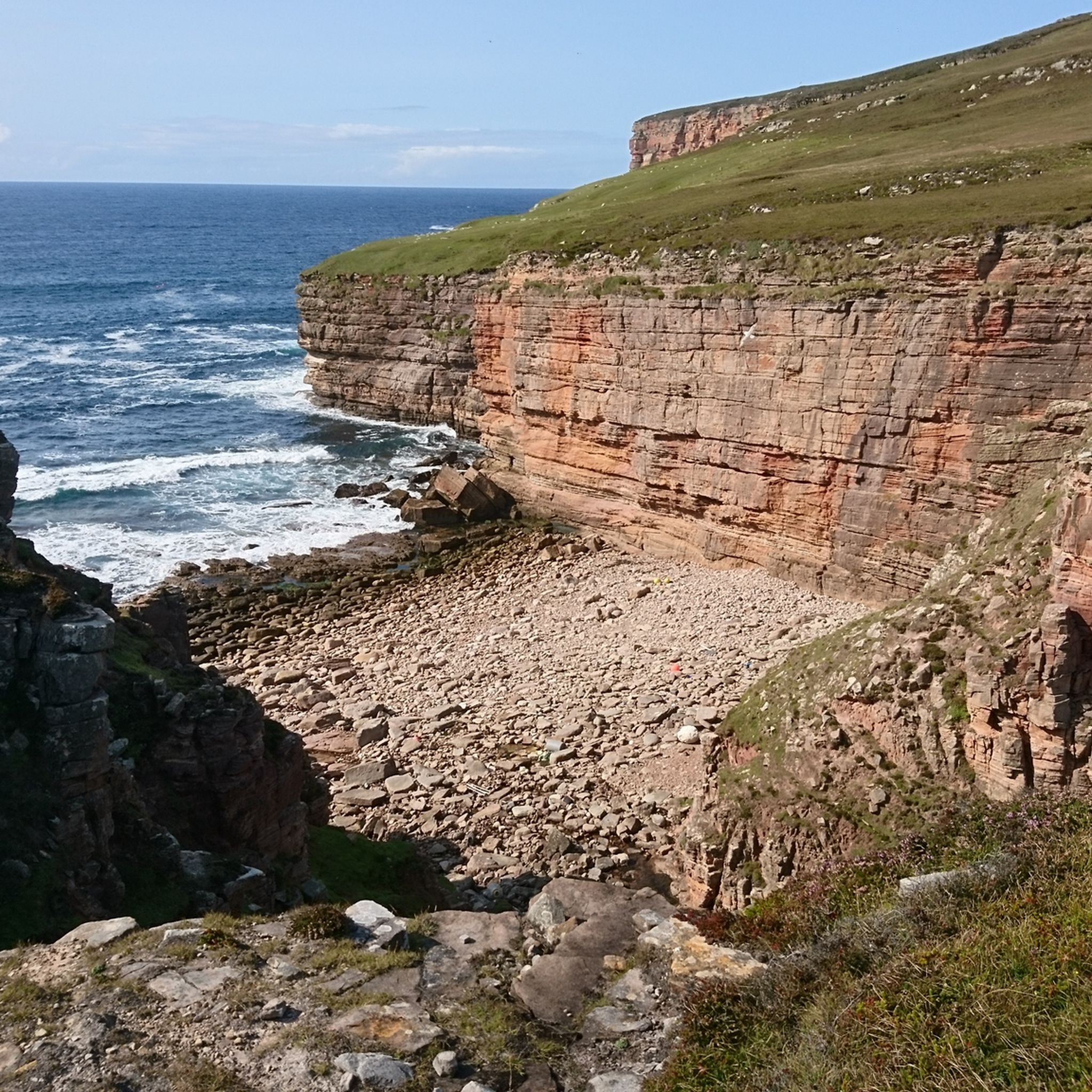
- Another must-see spot is Hole of Ness Sea Cave, a natural monument and collapsed sea-cave. Visitors can expect a visually striking natural feature that highlights the powerful forces of the sea shaping the Orkney coastline.
- Visitors also love Maeshowe Chambered Cairn, a man-made monument requiring registration and shuttle bus access for a guided tour. This ancient structure is impressive and spacious inside, featuring runes and an image of a lion carved into the stone.
- Orkney islands is known for sea caves, gloups (collapsed sea-caves), and ancient chambered cairns. These range from a few meters to extensive systems, providing diverse exploration opportunities.
- The caves in Orkney islands are appreciated by the komoot community, with 58 upvotes and 29 photos shared across the top highlights.
Last updated: June 24, 2026
The Gloup Sea Cave
Highlight • Natural Monument
Tip by

Maeshowe Chambered Cairn
Highlight • Monument
Inconspicuous from the outside - very impressive and spacious inside!
Inside are, among other things, runes and an image of a lion in the stone - made by a Norwegian Norseman.
maeshowe.co.uk/maeshoweabout.html
historicenvironment.scot/visit-a-place/places/maeshowe-chambered-cairn/history
en.wikipedia.org/wiki/Maeshowe
Translated by Google •
Tip by

Sign up now to discover places like this
Get recommendations on the best single tracks, peaks, & plenty of other exciting outdoor places.
Sign up for free
Hole of Ness Sea Cave
Highlight • Cave
Tip by
Vinquoy Chambered Cairn
Highlight • Natural Monument
An entrance passage leads to a central chamber and four small cells.
It's an impressively intact structure, dating from 3,000 BC.
Tip by
Start today with a free account
Your next adventure awaits.
Login or Signup
Tips from the Community

Collapsed cave and great start to a coastal walk. Can't walk down, just look from above.
0
0

If you have a dog with you be sure to keep it on the lead anywhere near the big hole. It's a long way down, and no way up!!!!
0
0

The Gloup is an impressive feature. This collapsed sea-cave is separated from the sea by a substantial land bridge. The chasm is approximately 70m long, 40m wide, 30m deep and filled with seawater. The sea enters the Gloup through the remains of the cave entrance – an arch about 80m wide. The best viewing spots are the wooden platforms at each end, but keep well clear of the grassy edges, and also be aware that the sloping rocks on the seaward side are notoriously slippery.
1
0

The Hole of Ness is an awesome gloup, or collapsed sea-cave. The edge is over-hanging and unstable, so don't be tempted to go for a closer look.
1
0
This is a cairn with a view! Situated on Vinquoy Hill, overlooking Calf Sound and Orkney's North isles. An entrance passage leads to a central chamber and four small cells. It's an impressively intact structure, dating from 3,000 BC.
0
0
The Gloup is an impressive feature. This collapsed sea-cave is separated from the sea by a substantial land bridge. The chasm is approximately 70m long, 40m wide, 30m deep and filled with seawater. The sea enters the Gloup through the remains of the cave entrance – an arch about 80m wide. The best viewing spots are the wooden platforms at each end, but keep well clear of the grassy edges, and also be aware that the sloping rocks on the seaward side are notoriously slippery.
2
1

Registration required. There is a shuttle bus service to the burial mound from the Maeshowe Visiting Centre. Guided tour with lots of information. Inconspicuous from the outside - very impressive and spacious inside! Inside are, among other things, runes and an image of a lion in the stone - made by a Norwegian Norseman. https://www.maeshowe.co.uk/maeshoweabout.html https://www.historicenvironment.scot/visit-a-place/places/maeshowe-chambered-cairn/history/ https://en.wikipedia.org/wiki/Maeshowe
1
0
Frequently Asked Questions
What types of caves can I explore in the Orkney Islands?
The Orkney Islands offer a diverse range of cave experiences. You'll find dramatic sea caves, such as 'gloups' which are collapsed sea-caves, carved by the powerful Atlantic. Additionally, the islands feature ancient man-made chambered cairns that provide a unique cave-like exploration, offering insights into both natural coastal erosion and historical human activity.
Are there any historical or man-made cave-like structures to visit?
Yes, the Orkney Islands are home to several significant man-made chambered cairns. These include Maeshowe Chambered Cairn, which requires registration and a shuttle bus for a guided tour, and is known for its impressive interior and ancient runes. You can also visit Unstan Cairn, which has easy access and an information plaque, and Vinquoy Chambered Cairn, an impressively intact structure dating from 3,000 BC with a view over Calf Sound.
What are some notable sea caves to see in Orkney?
Two prominent sea caves are The Gloup Sea Cave, a spectacular collapsed sea cave in the Mull Head Nature Reserve, and Hole of Ness Sea Cave, another visually striking collapsed sea-cave. Both demonstrate the powerful forces of the sea shaping the Orkney coastline.
What should I know about accessing sea caves like The Gloup and Hole of Ness?
For The Gloup Sea Cave, viewing platforms are available, but caution is advised due to slippery rocks and unstable grassy edges. At Hole of Ness Sea Cave, visitors are strongly cautioned against getting too close as the edge is overhanging and unstable. Always prioritize safety when exploring coastal areas.
Are there family-friendly cave experiences in Orkney?
Yes, Unstan Cairn is categorized as family-friendly, offering easy access and an informative experience about an ancient historical site. While sea caves are impressive, their coastal locations may require more caution, especially with young children.
What is the best time of year to visit the caves in Orkney?
The Orkney Islands are subject to strong weather conditions. Visiting during the warmer, drier months, typically late spring to early autumn (May to September), generally offers more pleasant conditions for exploring coastal areas and historical sites. Always check local weather forecasts before heading out, especially for sea caves.
What kind of wildlife can be seen near the sea caves?
Orkney's sea caves often provide secluded resting spots for seals. The diverse marine life in these areas can also include various seaweeds, sponges, anemones, and sea squirts, particularly in parts with less wave surge and light.
Are there hiking trails near the caves in Orkney?
Yes, the Orkney Islands offer numerous hiking opportunities. For example, the Gloup circular route in the Mull Head Nature Reserve is a moderate 8.7 km hike that includes The Gloup Sea Cave. You can find more hiking routes and guides on the Hiking in Orkney guide page.
What other outdoor activities can I do near the caves?
Beyond hiking, the Orkney Islands are excellent for cycling. You can explore routes like the EuroVelo 12 - North Sea Cycle Route or the Orkney Prehistory Loop. For more options, check out the Cycling in Orkney Islands guide or the Road Cycling Routes in Orkney Islands guide.
What do visitors enjoy most about the caves in Orkney?
Visitors frequently appreciate the dramatic visual experience of natural coastal erosion at the sea caves, noting their sheer scale and the powerful interaction of the sea. For the chambered cairns, the impressive and spacious interiors, along with the historical insights and ancient carvings, are often highlighted as captivating features.
Is public transport available to reach the caves?
While some areas of Orkney are served by public transport, reaching specific cave locations, especially more remote sea caves, might require a car or a combination of bus and walking. For sites like Maeshowe Chambered Cairn, a shuttle bus service is provided from its Visitor Centre.
Are there any specific safety precautions for exploring Orkney's sea caves?
Yes, safety is paramount. The edges of collapsed sea caves like Hole of Ness Sea Cave can be overhanging and unstable. Always keep a safe distance from cliff edges, especially in windy or wet conditions. Rocks can be slippery, and grassy edges unstable. It's advisable to wear appropriate footwear and be aware of tide times if exploring coastal paths near sea caves.
Most popular routes in Orkney islands
Most popular attractions in Orkney islands

Get inspired with the komoot mobile app


Explore more
Extend your search for the best caves by checking out these guides of the top ones in Orkney islands:
