Top 7 Gorges around Moosach
Best canyons around Moosach refer to the gorge-like features and grottoes found in the broader Bavarian region, as Moosach itself is an urban district within Munich. The area is characterized by the Munich gravel plain, which does not typically form natural canyons. However, the surrounding areas offer various natural and man-made formations that provide a similar experience for outdoor enthusiasts. These locations offer diverse natural landscapes and points of interest for exploration.
Best canyons around Moosach
- The most popular canyons…
Last updated: June 27, 2026
Schlocker Grotto (Aying)
Highlight • Religious Site
Translated by Google •
Tip by

Lourdes Grotto
Highlight • Religious Site
Translated by Google •
Tip by

Sign up now to discover places like this
Get recommendations on the best single tracks, peaks, & plenty of other exciting outdoor places.
Sign up for free
Winhart Grotto of Glonn
Highlight • Cave
Translated by Google •
Tip by

Schaurachgraben Waterfall and Rocky Overhang
Highlight (Segment) • Waterfall
Translated by Google •
Tip by

Kupferbachtal
Highlight (Segment) • Gorge
Translated by Google •
Tip by
Sign up for free to discover even more gorges around Moosach.
Sign up for free
Already have an account?
Start today with a free account
Your next adventure awaits.
Login or Signup

Tips from the Community

Lourdes Grotto in the Schlacht district Info at https://www.sueddeutsche.de/muenchen/ebersberg/lourdesgrotte-glonn-1.4928390 ; https://www.merkur.de/lokales/ebersberg/glonn-ort28734/corona-bayern-ebersberg-party-jugendliche-mariengrotte-randale-glonn-polizei-90780620.html and https://www.facebook.com/ebersberger.zeitung/posts/mariengrotte-in-glonn-leidet-unter-n%C3%A4chtlichen-partys/4247690735289124/
0
0

Very atmospheric little grotto dedicated to the Virgin Mary. It is worth looking into the cracks in the corridor walls where one or two surprisingly shaped stones are hidden.
0
0

Suddenly you come across a small but beautiful grotto, an opportunity to take a short rest.
0
0

The Lourdes Grotto is the name given to Marian Grottoes, which are replicas of the Grotto of Massabielle near Lourdes in southern France and Our Lady of Lourdes. In 1858, Saint Bernadette said she saw Our Lady in this grotto. At the site of the Marian apparitions, a Madonna figure adorns the grotto, the original of which Joseph-Hugues Fabisch created for Massabielle in 1864 based on Bernadette's information. Source and further information https://de.m.wikipedia.org/wiki/Lourdesgrotte
1
0
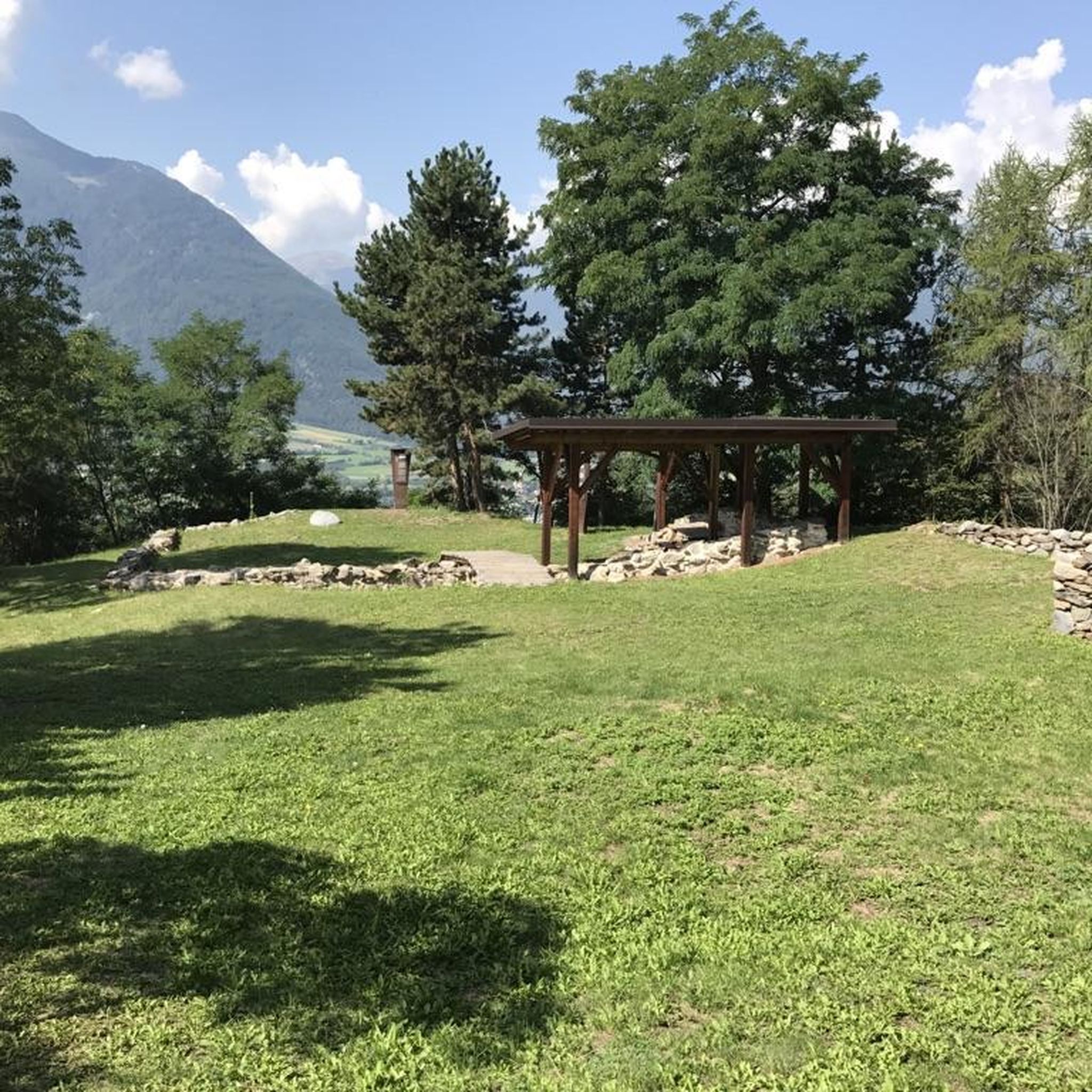
According to legend, at the end of the 19th century, the Ayingen village shepherd at the time, the "Much", sought shelter under an ancient, large beech tree with the sheep he had entrusted to him because of an approaching storm. This spot was popular because a spring rose there where people could cool off. For no apparent reason, all the sheep suddenly ran off in the same direction. The Much found them nearby in what was then a young forest. Minutes later, lightning struck the ancient beech tree and destroyed it completely. The Much would probably not have survived if he had stayed in the old location. Overwhelmed by the event, the Much knelt down and thanked God for his rescue. Afterwards he was changed, taciturn and thoughtful. Weeks later he was found dead in the spot where he had thanked God for his rescue, dressed in his Sunday best. What and how he died was never clarified. The source and the entire history of both grottos can be found at the following link: www.mystisch.net/blog/?p=128
2
0
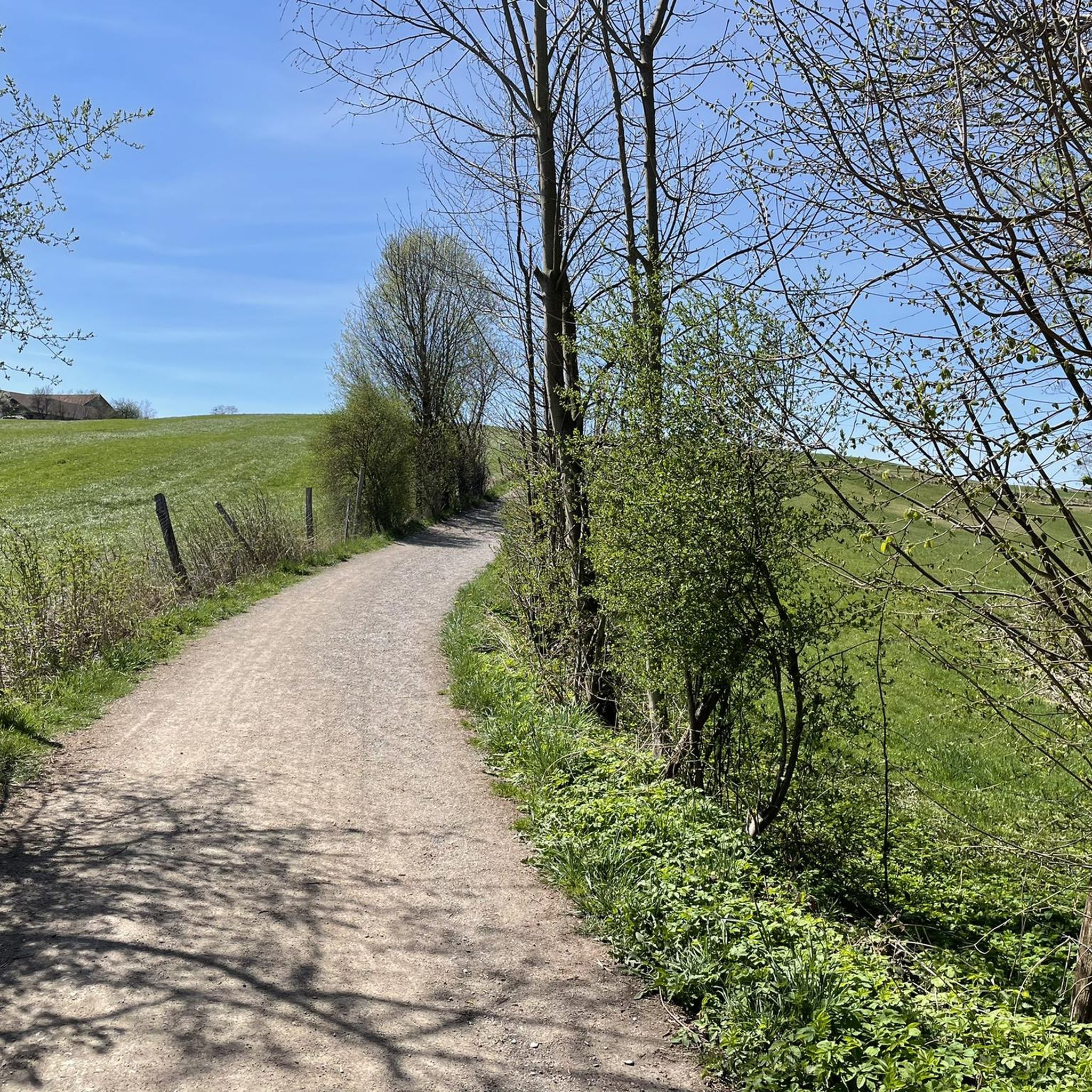
The Kupferbachtal was created at the end of the last Ice Age when the meltwater from the Inn-Chiemsee Glacier and partly from the Isar Glacier could not flow into the Rosenheim Basin, which was still filled with ice, and thus a longer period of standstill at the edge of the glacier (so-called Ellkofen Stage). Northeast towards Wasserburg or Gars towards the Inn (“surrounding channel”). The surrounding channel was formed and used between around 18,000 years ago and around 16,500 to 17,000 years ago. Today the area is characterized by several strong calcareous springs. Source and further information https://de.m.wikipedia.org/wiki/Kupferbachtal
1
0

Worth seeing! Apparently there has been vandalism before, otherwise there would be no wireless wildlife camera in operation under the Madonna.
0
0

Nice waypoint, but not a highlight
1
0
Frequently Asked Questions
What kind of natural features can I expect to find near Moosach that are referred to as 'canyons' or gorges?
While Moosach itself is an urban district in Munich and doesn't have natural canyons, the term refers to gorge-like features, grottoes, and waterfalls found in the broader Bavarian region. These include formations like the Schaurachgraben Waterfall and Rocky Overhang, which features a small gorge and mini waterfall, and the Schaurachgraben and Tina Tunnel, a mystical gorge with Nagelfluhfelsen.
Are there any family-friendly gorges or natural sites suitable for children near Moosach?
Yes, the Schaurachgraben Waterfall and Rocky Overhang is described as a beautiful wilderness playground for children. Additionally, the Lourdes Grotto is also categorized as family-friendly, offering a serene and historical site.
What historical or cultural sites are there among the gorges and grottoes near Moosach?
Several sites offer historical and cultural significance. The Schlocker Grotto (Aying) is a religious building and natural monument associated with a local legend. The Lourdes Grotto is a private, idyllically situated grotto with a rich history, and the Winhart Grotto of Glonn is a man-made grotto built in 1902 in honor of Our Lady of Lourdes.
What outdoor activities can I do near these gorges and grottoes around Moosach?
The wider area around Moosach offers various outdoor activities. You can explore numerous running trails, such as the 'Steinsee – Bench with a View of the Alps loop' or 'Wooden Bridge Over the Moosach loop', detailed in the Running Trails around Moosach guide. For hiking, options like the 'Source of the Moosach – Moosach Springs loop' are available in the Hiking around Moosach guide. Gravel biking routes, including the 'View of the Alps near Glonn – Steinsee loop', can be found in the Gravel biking around Moosach guide.
Are there any specific trails or paths within the gorges near Moosach?
Yes, for instance, the Schaurachgraben and Tina Tunnel features a short S0 trail along a stream, offering a pleasant walk through a mystical area with Nagelfluhfelsen and a water protection zone.
What do visitors particularly enjoy about the gorges and grottoes near Moosach?
Visitors appreciate the natural beauty and unique features. The Schaurachgraben Waterfall and Rocky Overhang is loved as a 'beautiful wilderness playground for children'. The Schaurachgraben and Tina Tunnel is often described as a 'mystical place' and 'a wonderful piece of earth, almost like in the jungle'. The grottoes are valued for their peaceful atmosphere and historical significance.
Can I find actual canyoning experiences (navigating gorges with specialized equipment) near Moosach?
For actual canyoning experiences involving navigating gorges and waterfalls with specialized equipment, you would need to travel to the Upper Bavarian and Allgäu regions. Moosach and its immediate surroundings offer gorge-like features and grottoes for hiking and exploration, but not the rugged terrain typically associated with technical canyoning.
What is the geological context of Moosach and why are there no natural canyons directly within the district?
Moosach is located on the 'Munich gravel plain', which was formed by glacial deposits of loose alluvial, fine- to coarse-grained sediments. This geological composition does not typically form the deep, rugged canyons found in mountainous regions. The 'canyons' referred to in this context are more accurately gorges, grottoes, or other natural and man-made formations in the wider Bavarian area.
Are there any waterfalls to see in the gorge-like areas near Moosach?
Yes, the Schaurachgraben Waterfall and Rocky Overhang is a notable spot featuring a nice little gorge with overhanging rocks and a mini waterfall, making it a popular attraction.
What are some other natural escapes or green spaces near Moosach, if not canyons?
While not canyons, Munich and its surroundings offer significant natural escapes. These include the vast English Garden, the serene Nymphenburg Palace Park, and the recreational areas along the Isar River and its floodplains. Further afield, lakes like Ammersee, Starnberger See, and Tegernsee are popular for nature lovers.
Is the 'Tina Tunnel' at Schaurachgraben accessible to visitors?
The Schaurachgraben and Tina Tunnel is part of a water protection area and features a drinking water tunnel. While the area around it is worth seeing and offers a trail, the tunnel itself is part of the infrastructure and not typically for public access.
Most popular routes around Moosach
Most popular attractions around Moosach

Get inspired with the komoot mobile app


Explore more
Already discovered everything in this region? See additional gorges around Moosach for your next adventure:
