Top 9 Gorges around Glonn
Best canyons around Glonn are characterized by a post-glacial landscape, featuring picturesque gorges, ravines, and grottoes rather than deep river-carved canyons. The region offers a gentle, rolling landscape with forests, valleys, and small water features. These natural formations provide opportunities for hiking and exploring the local geology. Visitors can discover various natural attractions that evoke a sense of natural beauty on a smaller scale.
Best canyons around Glonn
- The most popular canyons is Schaurachgraben Waterfall and Rocky Overhang, a…
Last updated: June 27, 2026
Schlocker Grotto (Aying)
Highlight • Religious Site
Translated by Google •
Tip by

Lourdes Grotto
Highlight • Religious Site
Translated by Google •
Tip by

Sign up now to discover places like this
Get recommendations on the best single tracks, peaks, & plenty of other exciting outdoor places.
Sign up for free
Winhart Grotto of Glonn
Highlight • Cave
Translated by Google •
Tip by

Schaurachgraben Waterfall and Rocky Overhang
Highlight (Segment) • Waterfall
Translated by Google •
Tip by

Kupferbachtal
Highlight (Segment) • Gorge
Translated by Google •
Tip by
Sign up for free to discover even more gorges around Glonn.
Sign up for free
Already have an account?
Start today with a free account
Your next adventure awaits.
Login or Signup
Tips from the Community

Lourdes Grotto in the Schlacht district Info at https://www.sueddeutsche.de/muenchen/ebersberg/lourdesgrotte-glonn-1.4928390 ; https://www.merkur.de/lokales/ebersberg/glonn-ort28734/corona-bayern-ebersberg-party-jugendliche-mariengrotte-randale-glonn-polizei-90780620.html and https://www.facebook.com/ebersberger.zeitung/posts/mariengrotte-in-glonn-leidet-unter-n%C3%A4chtlichen-partys/4247690735289124/
0
0

Very atmospheric little grotto dedicated to the Virgin Mary. It is worth looking into the cracks in the corridor walls where one or two surprisingly shaped stones are hidden.
0
0

Suddenly you come across a small but beautiful grotto, an opportunity to take a short rest.
0
0

The Lourdes Grotto is the name given to Marian Grottoes, which are replicas of the Grotto of Massabielle near Lourdes in southern France and Our Lady of Lourdes. In 1858, Saint Bernadette said she saw Our Lady in this grotto. At the site of the Marian apparitions, a Madonna figure adorns the grotto, the original of which Joseph-Hugues Fabisch created for Massabielle in 1864 based on Bernadette's information. Source and further information https://de.m.wikipedia.org/wiki/Lourdesgrotte
1
0
According to legend, at the end of the 19th century, the Ayingen village shepherd at the time, the "Much", sought shelter under an ancient, large beech tree with the sheep he had entrusted to him because of an approaching storm. This spot was popular because a spring rose there where people could cool off. For no apparent reason, all the sheep suddenly ran off in the same direction. The Much found them nearby in what was then a young forest. Minutes later, lightning struck the ancient beech tree and destroyed it completely. The Much would probably not have survived if he had stayed in the old location. Overwhelmed by the event, the Much knelt down and thanked God for his rescue. Afterwards he was changed, taciturn and thoughtful. Weeks later he was found dead in the spot where he had thanked God for his rescue, dressed in his Sunday best. What and how he died was never clarified. The source and the entire history of both grottos can be found at the following link: www.mystisch.net/blog/?p=128
2
0
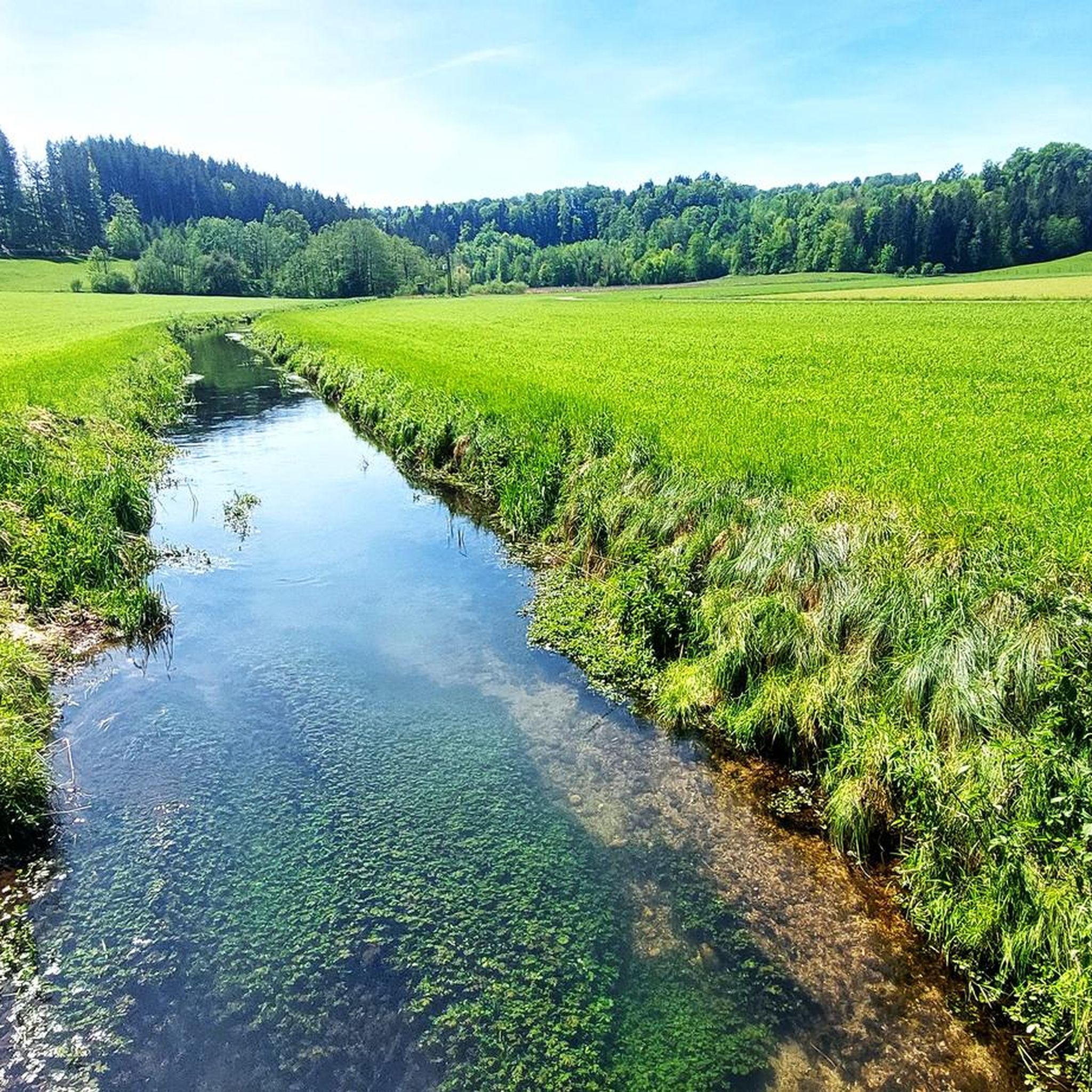
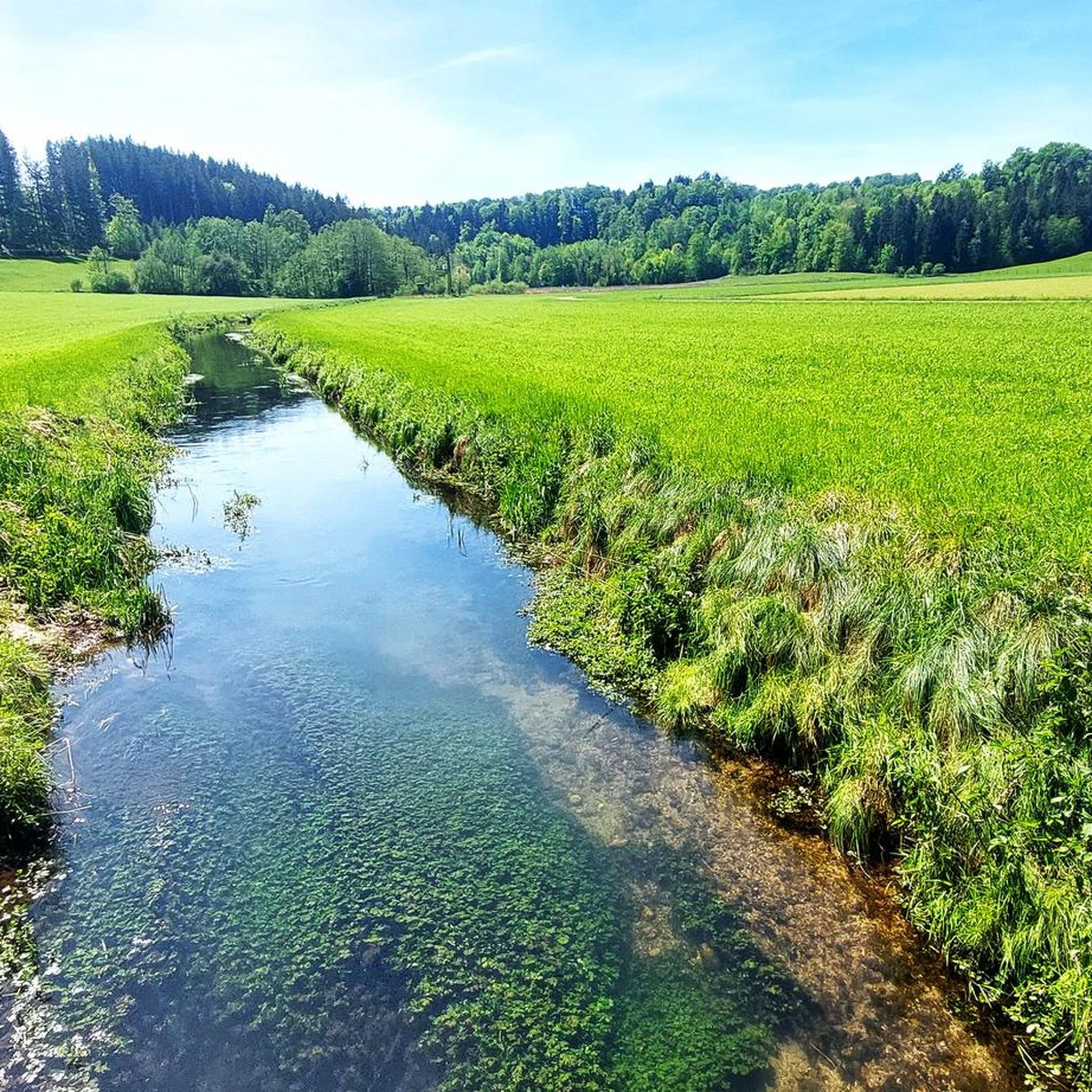
The Kupferbachtal was created at the end of the last Ice Age when the meltwater from the Inn-Chiemsee Glacier and partly from the Isar Glacier could not flow into the Rosenheim Basin, which was still filled with ice, and thus a longer period of standstill at the edge of the glacier (so-called Ellkofen Stage). Northeast towards Wasserburg or Gars towards the Inn (“surrounding channel”). The surrounding channel was formed and used between around 18,000 years ago and around 16,500 to 17,000 years ago. Today the area is characterized by several strong calcareous springs. Source and further information https://de.m.wikipedia.org/wiki/Kupferbachtal
1
0

Worth seeing! Apparently there has been vandalism before, otherwise there would be no wireless wildlife camera in operation under the Madonna.
0
0

Nice waypoint, but not a highlight
1
0
Frequently Asked Questions
What kind of natural formations can I expect to find around Glonn?
Around Glonn, you'll discover a post-glacial landscape featuring picturesque gorges, ravines, and grottoes, rather than deep river-carved canyons. These formations offer a gentle, rolling landscape with forests, valleys, and small water features, providing unique opportunities for exploration.
Are there any family-friendly gorges or natural spots near Glonn?
Yes, several spots are suitable for families. For instance, the Schaurachgraben Waterfall and Rocky Overhang is described as a beautiful wilderness playground for children. The Mangfall River at Westerham also offers family-friendly exploration on foot or by bike.
What are some popular natural attractions or viewpoints around Glonn?
Visitors often enjoy the Schaurachgraben Waterfall and Rocky Overhang, known for its mini waterfall and overhanging rocks. The Mangfall River at Westerham offers an impressive natural gorge and scenic views. Additionally, the Schlocker Grotto (Aying) and Lourdes Grotto are popular for their natural beauty and historical significance.
Are there historical or cultural sites among the natural formations?
Yes, some natural spots also hold historical or cultural significance. The Schlocker Grotto (Aying) is a natural monument associated with a local legend and a natural spring. The Lourdes Grotto and Winhart Grotto of Glonn are both religious buildings and man-made monuments, cared for with local devotion.
What outdoor activities can I do near the gorges and grottoes of Glonn?
The Glonn area is excellent for various outdoor activities. You can explore numerous cycling routes, including gravel biking and road cycling. For gravel biking, consider routes like the 'Kupferbach Riverside Path – Glonn loop from Egmating' found in the Gravel biking around Glonn guide. For road cycling, the 'Ayinger Brewery Inn – Scenic Country Roads of Reisenthal loop from Glonn' is a popular choice from the Road Cycling Routes around Glonn guide. General cycling options are also available in the Cycling around Glonn guide.
What is the best time of year to visit the natural areas around Glonn?
While specific seasonal advice for gorges isn't provided, the region's gentle, rolling landscape with forests and valleys is generally best enjoyed during the warmer months. Spring, summer, and early autumn offer pleasant weather for hiking, cycling, and exploring the natural beauty of Glonn's gorges, ravines, and grottoes.
Are there any less crowded natural spots or hidden gems to explore?
The Winhart Grotto of Glonn, built from local tuff dripstones, is a quiet and idyllic spot. Similarly, the privately owned Lourdes Grotto is described as being idyllically situated on the edge of the forest, offering a peaceful place to stay and enjoy the landscape.
What kind of terrain and difficulty can I expect on trails near Glonn's natural formations?
The Glonn area is characterized by a gentle, rolling landscape. While some paths might involve slight inclines or uneven surfaces typical of forest and valley trails, the overall terrain is not dramatically challenging like deep canyons. Most routes are suitable for hiking and cycling, with varying difficulty grades from easy to moderate, as seen in nearby cycling guides.
Can I bring my dog on trails around Glonn's gorges?
While specific dog-friendly information for each grotto or gorge is not detailed, the general nature of the trails in Glonn's forests and valleys typically allows for dogs, provided they are kept on a leash and owners follow local regulations. It's always advisable to check specific site rules if visiting a grotto that is also a religious or protected site.
What makes the Mangfall River area near Westerham special?
The Mangfall River at Westerham is notable for its deep and impressive natural gorge, which you can explore on foot or by bike. It offers scenic views and is a popular spot for those looking to experience the region's natural beauty along the river.
What do visitors appreciate most about the natural sites in Glonn?
Visitors appreciate the serene natural beauty, the opportunities for peaceful exploration, and the unique blend of natural formations with local history and legends. The small-scale gorges, ravines, and grottoes provide a charming contrast to more dramatic landscapes, offering tranquil experiences and picturesque views.
Most popular routes around Glonn
Most popular attractions around Glonn

Get inspired with the komoot mobile app


Explore more
Already discovered everything in this region? See additional gorges around Glonn for your next adventure:
