Attractions and Places To See around Éole-En-Beauce - Top 6
Best attractions and places to see around Éole-En-Beauce, a municipality in the Beauce region, include historical landmarks and expansive natural landscapes. The area is characterized by its flat terrain and vast agricultural fields, often referred to as "the granary of France." It offers insights into local agriculture and historical charm, with the sky comprising a significant portion of the visible space.
Best attractions and places to see around Éole-En-Beauce
- The most popular attractions is Château de Cambray, a castle…
Last updated: October 9, 2026
Château de Cambray
Highlight • Castle
Translated by Google •
Tip by

Eglise le Gault Saint Denis
Highlight • Other
Translated by Google •
Tip by

Sign up now to discover places like this
Get recommendations on the best single tracks, peaks, & plenty of other exciting outdoor places.
Saint Peter's Church
Highlight • Other
Translated by Google •
Tip by

Eglise Saint Pantaleon
Highlight • Other
Showing Translation
Tip by
Church of Saint Christine
Highlight • Other
Translated by Google •
Tip by
Sign up for free to discover even more attractions around Éole-En-Beauce.
Already have an account?
Start today with a free account
Your next adventure awaits.
Popular around Éole-En-Beauce

Tips from the Community

• Medieval origins: The church finds its foundations in the medieval period, serving then as a center for the social, administrative, and religious life of the community. The ancient paths converging towards the building bear witness to its historical importance in communications between the lordships of Beauce. • Dedication: It is consecrated to Saint Pantaleon (or Pantaleimon), a 4th-century Christian martyr from Nicomedia, traditionally honored as the patron saint of doctors, midwives, and nurses. Devotion to this saint is rooted in several localities in this transitional zone of the Beauceronne plain. • Evolutions and restorations: Like many parish churches in Eure-et-Loir, the building has undergone significant modifications over the centuries (particularly following the ravages of the Wars of Religion and the French Revolution) to adapt to the changing needs of the local community. 🏛️ Architectural description The church is characterized by a rural architecture typical of the Centre-Val de Loire region, built from local materials. • The exterior: The building has a simple longitudinal plan. Its western facade is surmounted by a traditional bell tower that dominates the village rooftops. The exterior masonry reveals the different phases of reconstruction and consolidation of its walls over the ages. • The interior: Designed to encourage contemplation, the interior space has retained its parish furniture, its baptismal font, and preserved statuary. The choir and the nave offer a space of simplicity, typical of small country churches that served as a spiritual and physical refuge for Beauceronne families against bad weather or conflicts.
0
0
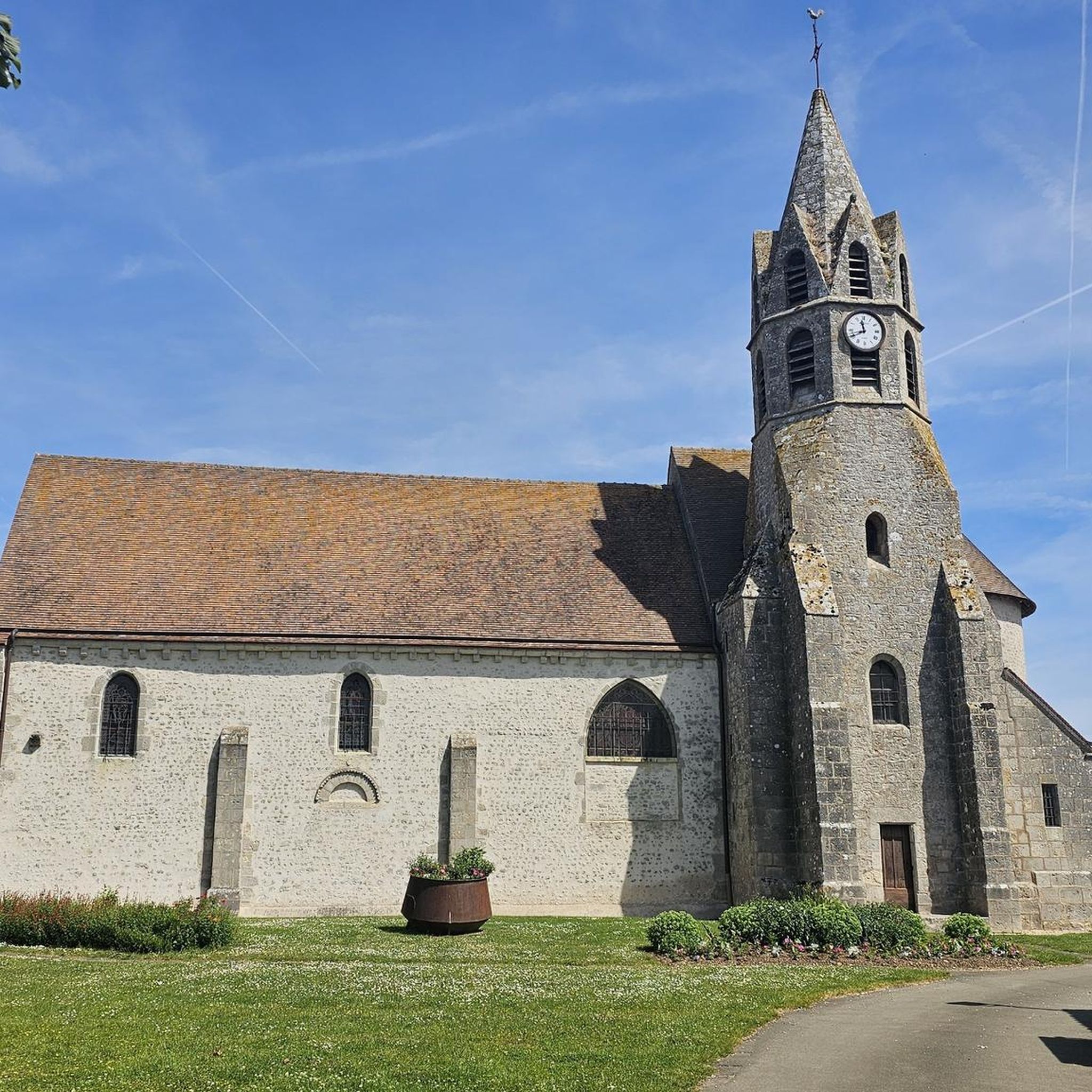
The Sainte Christine church represents a heritage of the rural and religious world characteristic of Beauce, the "breadbasket" of France since the Middle Ages. The Romanesque nave dates from the 12th century and was given a bell tower in the 18th century. The spire then peaked at 28 meters high, visible from afar from the surrounding countryside. In 1835, a hurricane damaged the roof of the bell tower. In 1893, lightning ignited the spire which burned almost entirely. The traces are still visible today. It would take almost 25 years for the church to regain its bell tower, reduced by half to 17 meters in height. The heritage to be restored is in line with the many religious buildings in this area such as the Saint Sébastien church in Baignolet, listed as a Historic Monument.
0
0
Formerly, the church was the presentation of the abbot of Bonneval because the Saint-Florentin abbey had a priory in Cormainville. A walled arcade, still visible to the south of the choir, represents an ancient communication between the church and the priory. The building was registered as a historic monument in 1927.
0
0

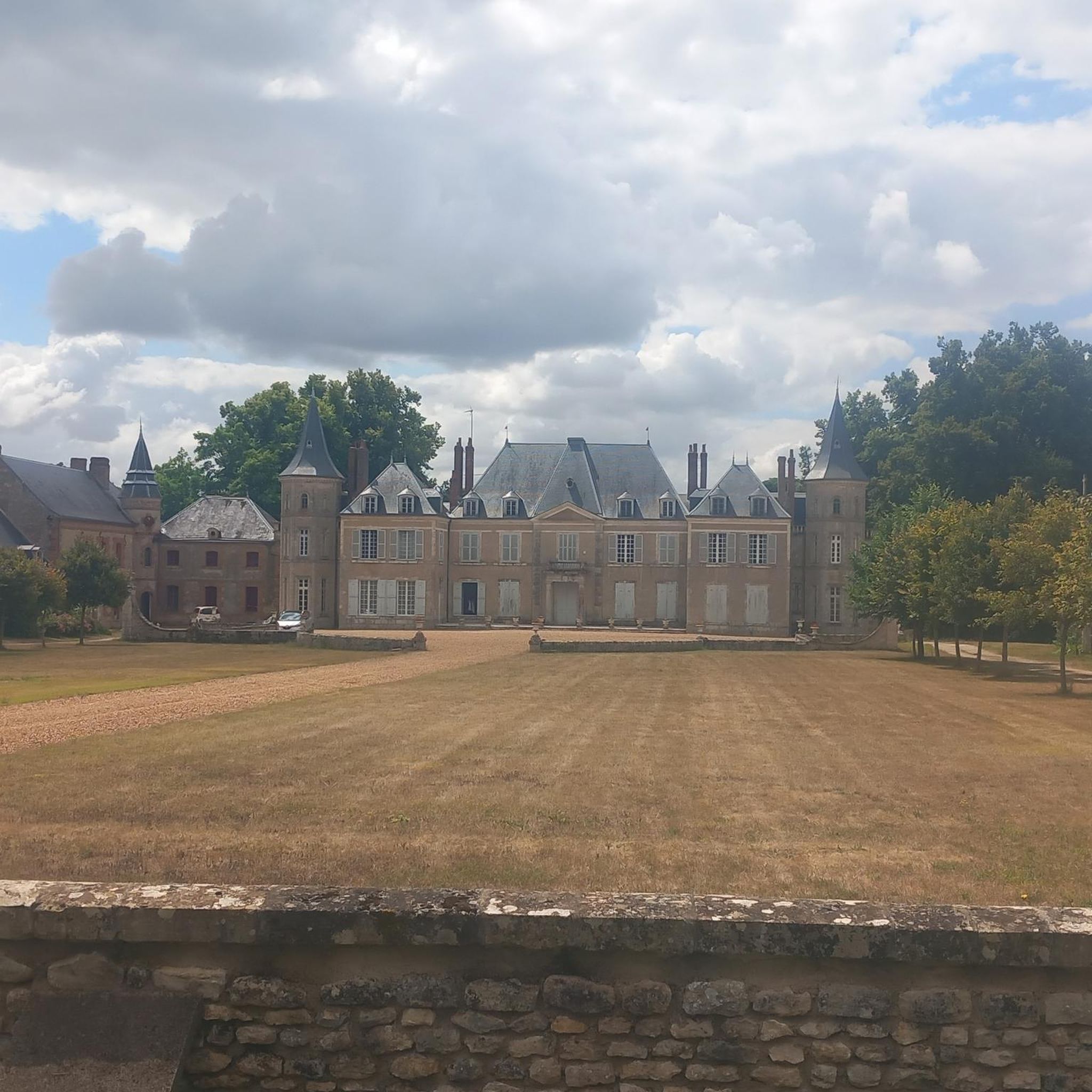
The Cambray orangery is part of the Cambray estate acquired by François Lambert, squire and adviser to the king, auditor in his chamber of accounts, on March 28, 1575 from the nobleman of Oinville, lord of Puiset. The place called Cambray, Combarius under the Romans, was to be a camp. Combrée also means "bushy places", or Cambray is located along the Conie, bordered by reedbeds. The 2 wings of the rear facade were built at the end of the 17th century, beginning of the 18th century by Jacques Lambert, private master of water and forests of the Duchy of Orléans. We note that they were built after the other parts of the castle, with a different aspect of construction, stone on the one hand and bricks around the windows on the other.
1
0

The Saint-Étienne church dates from the 16th and 18th centuries. A beautiful gem to discover without moderation
0
0

Saint-Etienne church dates from the sixteenth and eighteenth centuries.
0
0
Frequently Asked Questions
What historical landmarks can I explore in Éole-En-Beauce?
Éole-En-Beauce is rich in history. A prominent landmark is the Château de Cambray, a historic château with protected facades and roofs, owned by the same family since the 16th century. You can also visit Saint Peter's Church, a historic monument, and Eglise le Gault Saint Denis, dating from the 16th and 18th centuries. Another notable site is the Church of Saint Christine, featuring a Romanesque nave from the 12th century.
What natural features characterize the landscape around Éole-En-Beauce?
The region around Éole-En-Beauce, part of the Beauce, is known as "the granary of France" due to its expansive, linear agricultural landscapes. You'll experience vast horizons where the sky can comprise up to 80% of the visible space, offering striking views, especially at sunset. While not directly within Éole-En-Beauce, the nearby Conie Valley is a significant natural area with a unique freshwater marsh ecosystem and is part of the Natura 2000 network for biodiversity preservation.
Are there cycling routes available near Éole-En-Beauce?
Yes, the flat terrain of Éole-En-Beauce and the wider Coeur de Beauce area is ideal for cycling. You can find various routes, including easy loops like the "Château de Cambray loop from Viabon" or "Bike loop from Fontenay-sur-Conie." For more options, explore the Cycling around Éole-En-Beauce guide, which also includes road cycling routes.
What kind of walking or running trails can I find in the area?
The agricultural landscapes and natural areas around Éole-En-Beauce offer pleasant opportunities for walking and running. You can explore paths that wind through the fields and offer views of the expansive horizons. For specific running routes, consider options like the "Motel Le Quai Fleuri loop from Les Villages Vovéens" or "La Puce loop from Orgères-en-Beauce." More detailed information can be found in the Running Trails around Éole-En-Beauce guide.
What is the best time to visit Éole-En-Beauce for outdoor activities?
The best time to visit Éole-En-Beauce for outdoor activities is generally during spring (April to June) and early autumn (September to October). During these periods, the weather is typically mild and pleasant, making it ideal for cycling, walking, and exploring the agricultural landscapes without the intense heat of summer or the chill of winter. You can witness the fields in bloom or harvest, adding to the scenic beauty.
Are there any family-friendly activities or attractions in Éole-En-Beauce?
While specific family-focused attractions are not detailed, the expansive and flat agricultural landscapes offer a unique environment for family walks and bike rides, allowing children to experience rural life and vast open spaces. Exploring historical sites like the Château de Cambray can also be an educational experience for older children.
Can I observe wildlife in Éole-En-Beauce?
The agricultural and natural areas, particularly around the nearby Conie Valley, are part of the Natura 2000 network, indicating biodiversity preservation. While specific wildlife sightings are not guaranteed, you may encounter various bird species and small mammals typical of a rural, agricultural environment. The marsh ecosystem of the Conie Valley is especially known for its specific flora and fauna.
What is the significance of the Château de Cambray?
The Château de Cambray is a significant historical landmark in Éole-En-Beauce, listed as a "Monument Historique." Its protected facades and roofs of the main building showcase centuries of architectural heritage. The château has been owned by the same family since the 16th century, offering a glimpse into the region's aristocratic past and the heritage of its long-standing owners. Guided tours are available to explore its history.
How can I experience the agricultural landscape of Éole-En-Beauce?
The best way to experience the agricultural landscape of Éole-En-Beauce is by exploring its numerous cycling and walking paths. These routes take you directly through vast fields of wheat, sugar beet, and barley, allowing you to observe large-scale agricultural operations and the characteristic grain storage silos. The flat terrain provides uninterrupted views of the immense skies, a defining feature of the Beauce region.
Are there any easy walking trails around Éole-En-Beauce?
Given the generally flat terrain of the Beauce region, many of the paths and routes around Éole-En-Beauce are considered easy, making them suitable for leisurely walks. While specific walking trails are not detailed in the provided data, the cycling and running routes often follow quiet country roads and agricultural paths that are also suitable for easy walks. The Running Trails around Éole-En-Beauce guide can offer some suitable options.
What is the historical background of Fains-la-Folie?
Fains-la-Folie, now part of Éole-En-Beauce, has deep historical roots dating back to the 16th century, with its church architecture from around 1500. It was formed by the merging of Fains and La Folie Herbault in 1834. This ancient town contributes to the historical charm of the municipality, reflecting centuries of local life and development in the Beauce region.
What do visitors particularly appreciate about the attractions in Éole-En-Beauce?
Visitors to Éole-En-Beauce particularly appreciate the historical significance of its landmarks, such as the Château de Cambray and the various ancient churches. The expansive agricultural landscapes and the vast, open skies are also highly valued for their unique beauty and the sense of tranquility they offer. The komoot community has shown appreciation for these sites, sharing photos and upvotes.

Get inspired with the komoot mobile app


Explore more
Still not found the Highlight you’re looking for? See guides of the top attractions in other regions:
