The best cycling routes around Cuevas Labradas
30
riders
10
rides
Touring cycling routes around Cuevas Labradas traverse the Alfambra River valley, a green corridor characterized by cultivated market gardens and natural poplar groves. The geological composition includes clays, limestone, and gypsum, leading to karstification processes. The area features forests of holm oaks and scrubland, with varied terrain of hills and valleys between the Sierra de Gúdar and the Alfambra-Teruel depression.
Best touring cycling routes around Cuevas Labradas
- The most popular touring cycling route is Port of Cabigordo and Barony of…
Last updated: June 23, 2026
34.9km
02:33
740m
750m
Hard bike ride. Very good fitness required. Mostly paved surfaces. Suitable for all skill levels.
7
riders
101km
08:44
1,780m
1,780m
Hard bike ride. Very good fitness required. Mostly paved surfaces. Suitable for all skill levels.

Sign up for free
4
riders
37.8km
02:58
460m
470m
Hard bike ride. Very good fitness required. Mostly paved surfaces. Suitable for all skill levels.
2
riders
38.7km
02:56
400m
400m
Moderate bike ride. Good fitness required. Mostly paved surfaces. Suitable for all skill levels.
4
riders
92.9km
07:07
1,500m
1,500m
Hard bike ride. Very good fitness required. Mostly paved surfaces. Suitable for all skill levels.
Get access to more routes and recommendations from other explorers.
Sign up for free
Already have an account?
Our route recommendations are based on thousands of hikes, rides, and runs completed by other people on komoot.
Start today with a free account
Your next adventure awaits.
Login or Signup
Popular around Cuevas Labradas
Tips from the Community

Hermitage of the Holy Christ, Aguilar de Alfambra, Teruel.
0
0

Alcalá de la Selva is a charming municipality in the province of Teruel, Aragon. Of Arab origin, it offers a stunning view of the town.
4
0

Alcalá de la Selva is located at an altitude of 1,400 m in the Sierra de Gúdar mountain range. The Alcalá River flows at its feet, feeding an abundance of small vegetable gardens. Today, Alcalá de la Selva, with around 500 inhabitants, is the main winter resort in the province of Teruel.
1
0

Viewpoint at the geodetic point. Stone turret with iron ladder that allows you to climb over the tree line to enjoy the views.
0
0
The geodesic vertex called Peñarroya points 2028.228 m with respect to the base of the observation pillar, but it sits on two bodies of stone masonry. Altitude of the bodies of the order of 10 or 11 meters in total. LIDAR data confirm a ground level elevation of 2017 m. Peñarroya is a chromotoponym that refers to the color of the rocks that make up the mountain. The spelling in the Spanish language is Peñarroya and in the Aragonese language Penyarroya or Peñarroya depending on the spelling chosen for the palatal nasal. The origin of the toponym is quite clear. It combines the common noun peña, from the Latin PĭNNAM, 'battlement', with the adjective RŭBEŭS, -A, -UM 'blond'. The toponym reflects the reddish hue of the terrain. The spelling Penya (in addition to others such as Penna or Peña) is included in many medieval texts in Aragon. For example, in 1448 to designate the summit of the mountain range (of Peña) that rises above Sos del Rey Católico on the border, then, with the kingdom of Navarra.
1
0
The Peñarroya peak is a mountain in the Iberian System located in Alcalá de la Selva, in the province of Teruel (Aragon, Spain). With its 2028,228 m altitude, it constitutes the highest elevation of the Iberian System of Teruel (and the highest elevation of the province of Teruel). It is formed as a residual hill of Cretaceous limestone and sandstone, barely standing out on the erosion surface of the Gúdar mountain range. The most characteristic thing about its summit is its enormous geodesic vertex – about 10 m high – through which you can ascend. From the top you can see the Maestrazgo and the Javalambre mountain range. Altitude 2,028 m Prominence 1,023 m
0
0
The Mirador de Peñarroya is a panoramic viewpoint located in the Matarraña region, in the province of Teruel. The trail is part of the PR-TE 157 circular route, suitable for families. If you are in the area, you can also explore other viewpoints such as El Peñón, which offers impressive panoramic views of Peñarroya and the Alto Valle del Guadiato. Happy hiking! 🚶♀️🌄🌞
8
0

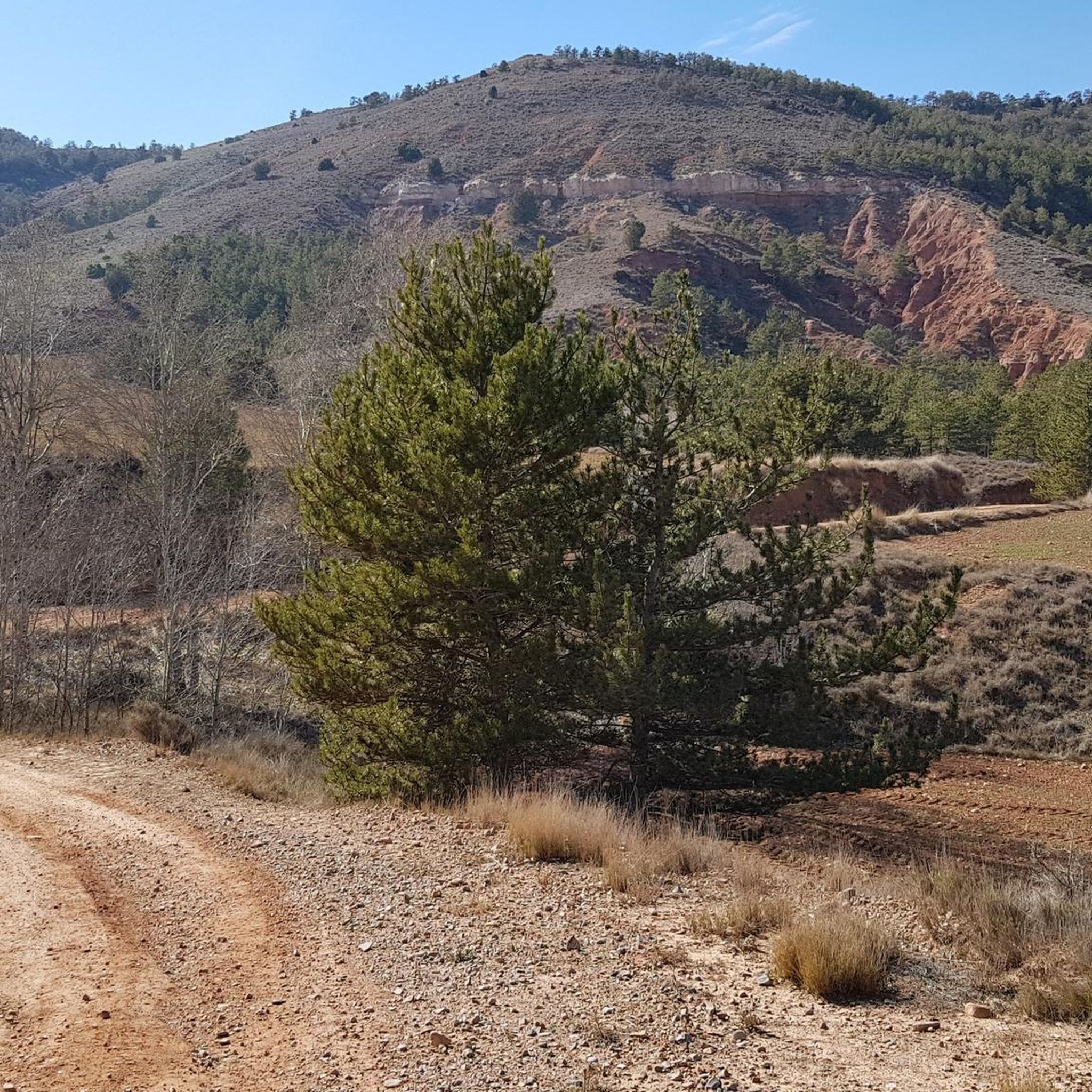
Great scenery, a bit rough with the fully loaded gravel bike, but definitely an absolute tip!
0
0
Frequently Asked Questions
How many touring cycling routes are available around Cuevas Labradas?
There are 7 touring cycling routes available around Cuevas Labradas, offering a variety of experiences for cyclists. These routes primarily range from moderate to difficult in terms of challenge.
What kind of terrain can I expect on touring cycling routes in Cuevas Labradas?
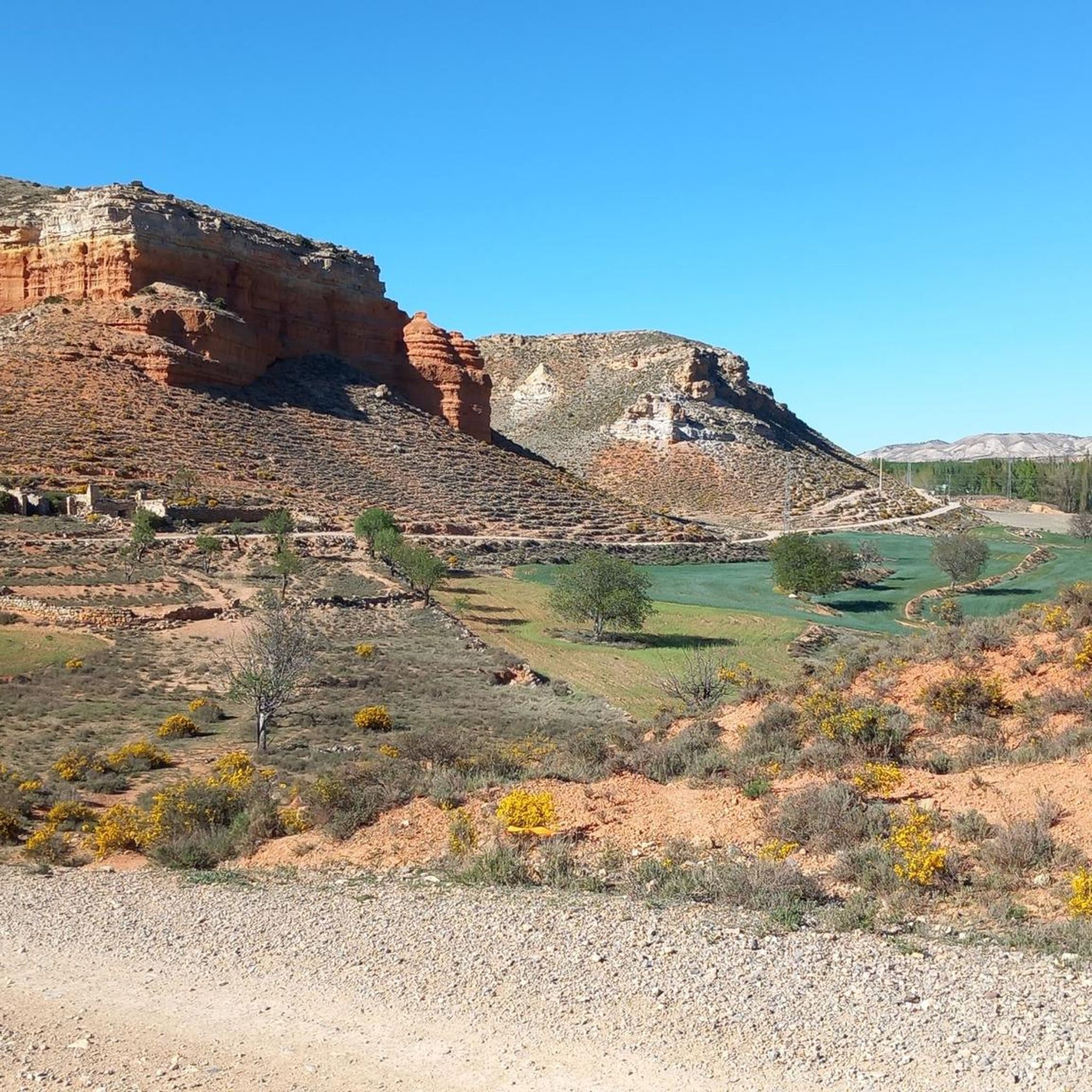
The terrain around Cuevas Labradas is quite varied, characterized by the Alfambra River valley's green corridor with cultivated market gardens and natural poplar groves. You'll encounter areas with clays, limestone, and gypsum, leading to interesting geological formations. Routes also traverse forests of holm oaks and varied hills and valleys, offering picturesque views between the Sierra de Gúdar and the Alfambra-Teruel depression.
Are there any routes that follow a former railway line?
Yes, a major draw for touring cyclists is the Vía Verde Valfambra (Valfambra Greenway). This former railway line has been repurposed into a dedicated hiking and cycling route, traversing Cuevas Labradas from south to north and running parallel to the Alfambra River, offering a unique cycling experience.
What are some notable natural features or landmarks I can see while cycling?
While cycling, you can explore the diverse landscapes of the Alfambra River valley. A particularly noteworthy natural attraction is the Sabina de Cuevas Labradas, a prominent juniper tree located near the Fuente del Chorrillo. You might also encounter the Final stretch of the Escandón pass or the Old Railway Track, which is part of the Vía Verde Valfambra.
Are there any historical or cultural sites accessible by bike?
Yes, the Alcalá de la Selva Castle – Alcalá de la Selva loop from Cedrillas route provides views of the Alfambra depression and passes by historical landmarks. Additionally, the Ermita de la Virgen de Cilleruelos is accessible via a forest track, offering magnificent panoramic views and a developed recreational area.
Are there any circular touring cycling routes in the area?
Yes, several routes are designed as loops. For example, the Port of Cabigordo and Barony of Escriche – circular from Cedrillas is a difficult 34.9 km trail. Another option is the Cedrillas – Peñarroya Summit Viewpoint loop from Cedrillas, a longer 92.9 km route.
What is the best time of year to go touring cycling in Cuevas Labradas?
The region's geographical position between the Sierra de Gúdar and the Alfambra-Teruel depression suggests that spring and autumn would likely offer the most pleasant cycling conditions, with milder temperatures and beautiful natural scenery. Summers can be hot, and winters can be cold, so planning around these seasons is advisable.
Are there options for longer, more challenging touring cycling routes?
Absolutely. For experienced touring cyclists seeking a significant challenge, routes like the Baronía de Escriche – Refugio de Hormigueras loop from El Pobo cover over 100 km with substantial elevation gain. Another demanding option is the Countryside Road Near Teruel – Cedrillas loop from Cedrillas, which is 55.5 km long and also rated as difficult.
Is Cuevas Labradas a good place for astronomical observation?
Yes, the tranquil and authentic rural setting of Cuevas Labradas, combined with its clear, unpolluted skies, makes it an excellent location for astronomical observation, offering a unique experience after a day of cycling.
Where can I find parking for my bike near the routes?
While specific parking areas for cyclists are not detailed for every route, many routes start from nearby towns like Cedrillas or El Pobo. These settlements typically offer parking facilities. Additionally, the Valdecebro Station Rest Area could be a convenient spot for parking and accessing parts of the Vía Verde.
Are there any cafes or accommodation options in Cuevas Labradas for cyclists?
Cuevas Labradas offers a tranquil and authentic rural setting, making it an ideal spot to disconnect. While specific cafes or accommodations are not listed in the route data, the town itself, and nearby settlements like Cedrillas, would be the best places to look for local amenities and places to stay.
Most popular routes around Cuevas Labradas
Most popular attractions around Cuevas Labradas

Get inspired with the komoot mobile app


Explore more
Browse the best Cycling routes in other regions.
