The best MTB trails around Quincerot
5.0
(2)
8
riders
5
rides
Mountain biking around Quincerot offers access to the diverse landscapes of the Bourgogne-Franche-Comté region. The terrain features wooded hills, valleys, and riverbanks, with the Canal de Bourgogne providing additional cycling paths. Hilly uplands and steep-sided valleys characterize the area, offering varied environments for mountain bike trails. The region's natural features provide a mix of moderate climbs and descents.
Best mountain bike trails around Quincerot
- The most popular mountain bike trail is Domaine Saint-Georges – Domaine Saint-Georges loop from Étourvy,…
Last updated: June 20, 2026
5.0
(1)
3
riders
20.8km
01:45
260m
260m
Moderate mountain bike ride. Great for any fitness level. Advanced riding skills necessary.
5.0
(1)
1
riders
20.2km
01:35
200m
200m
Moderate mountain bike ride. Great for any fitness level. Advanced riding skills necessary.

Sign up for free
2
riders
31.5km
02:16
390m
390m
Moderate mountain bike ride. Good fitness required. Advanced riding skills necessary.
1
riders
27.9km
02:13
300m
300m
Moderate mountain bike ride. Good fitness required. Advanced riding skills necessary.
1
riders
47.5km
03:49
550m
550m
Moderate mountain bike ride. Good fitness required. Advanced riding skills necessary.
Our route recommendations are based on thousands of hikes, rides, and runs completed by other people on komoot.
Start today with a free account
Your next adventure awaits.
Login or Signup



Tips from the Community

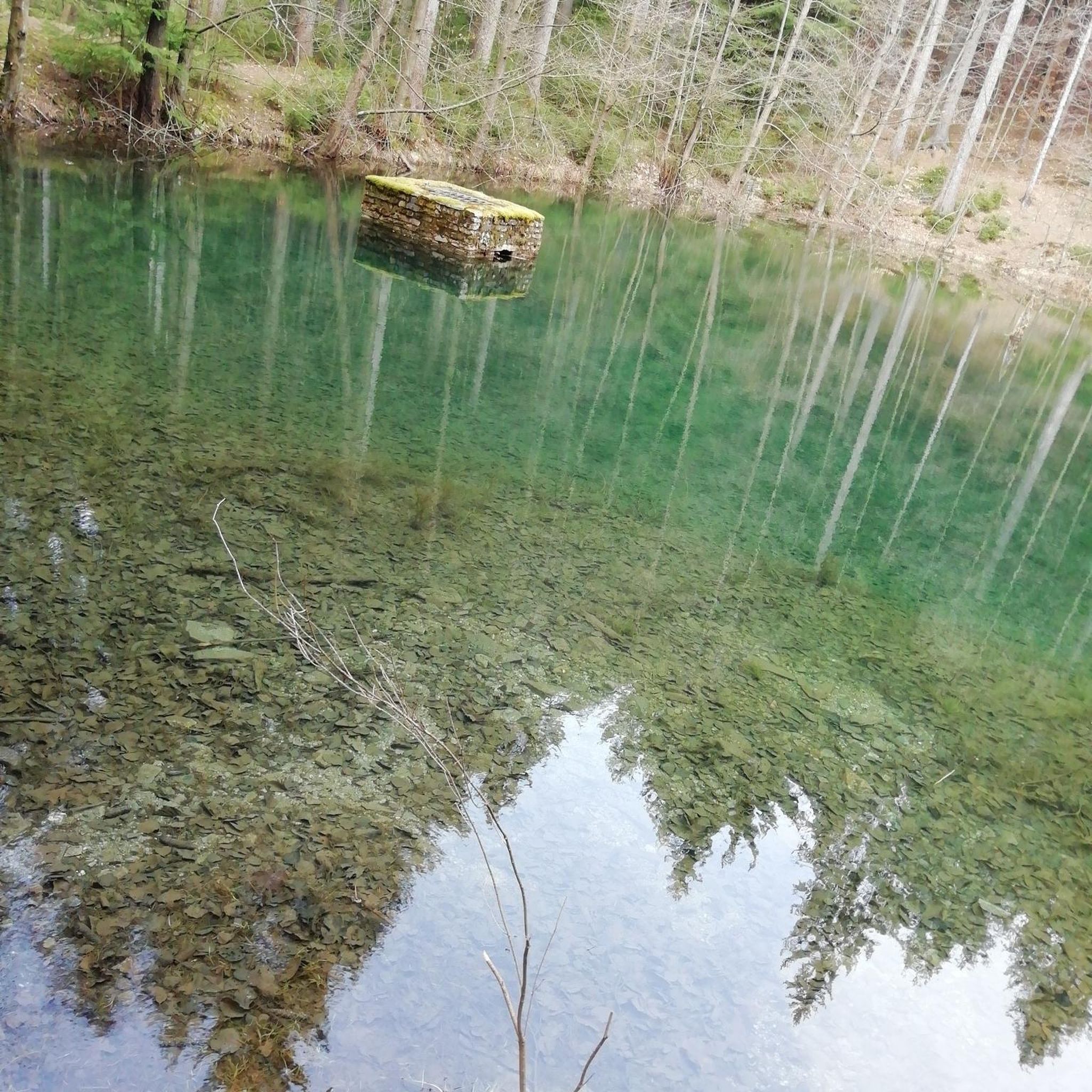
On the road to Vézelay or Santiago de Compostela, the Domaine Saint-Georges offers a welcome break. Here, you can put down your bag, enjoy a shaded picnic area and dip your tired feet in the water.
0
0
This church is characterized by its Gothic architecture. Built between the 13th and 16th centuries, it is distinguished by its impressive statuary and remarkable stained glass windows. Its most famous treasure is the 16th century entombment, a masterpiece of religious sculpture.
0
0

On the edge of a vast forest, the village of Chaource is known for its arboretum which you can visit within the professional forestry school. The town is also known for its Saint-Jean Baptiste church which contains reliquary treasures as well as a very beautiful statue of the Virgin. The village is recognized worldwide for its creamy and firm cheese: Chaource.
0
0

The Burgundy Canal is 242 km long, it connects the Seine basin to the Rhône basin. Previously used for moving goods, but since the 1960s the canal has been used almost exclusively for recreational boating.
0
0

The Dionne pit is a karst source called the Vauclusian source, located in the city center of Tonnerre. It is fed by the infiltration of precipitation into the surrounding limestone plateau as well as by the losses of at least one river. The Dionne pit is remarkable for its flow and the size of its hydrogeological network which extends to more than 40 km. His presence is at the origin of the creation of the city of Tonnerre. An elaborate washhouse was built around the spring in the 18th century. Wikipedia
0
0

A real must-see - this round wash house around a turquoise green source is unique in its kind and well worth the detour.
0
0

The mystery of this pit is complete. The city was built around it.
0
2

The deep basin of the karst spring with the historic washhouse around it is, in my opinion, the main attraction in Tonnerre. Depending on your perspective, when the sun is shining you will see deep turquoise water in front of you. Plus the rushing of the water. You can also just sit here for a while and enjoy. When we visited the spring on a Friday morning, there was surprisingly little going on.
2
0
Frequently Asked Questions
What kind of mountain biking terrain can I expect around Quincerot?
The mountain biking terrain around Quincerot is characterized by the diverse landscapes of the Auxois region. You'll find wooded hills, scenic valleys, and riverbanks, with trails often navigating through forests and open countryside. The region's limestone escarpment also contributes to varied topography, including 'combes' (small dry ravines), offering a mix of moderate climbs and descents.
Are there mountain bike trails suitable for beginners or families in Quincerot?
All mountain bike routes listed for Quincerot are rated as moderate. While there are no specific 'easy' or 'beginner' trails identified, the moderate routes offer a good balance for riders with some experience. For a gentler cycling experience, the towpaths along the nearby Canal de Bourgogne provide extensive, flat routes ideal for families or those seeking a more relaxed ride.
How long are the mountain bike trails in the Quincerot area?
The mountain bike trails around Quincerot vary in length. For example, the Domaine Saint-Georges – Domaine Saint-Georges loop from Étourvy is 20.6 km, while the Tonnerre – Fosse Dionne loop from Mélisey extends to 31.5 km. The longest route, the Saint-Jean-Baptiste Church – Domaine Saint-Georges loop from Chaource, is 47.5 km.
Are there any loop mountain bike trails available in Quincerot?
Yes, all the mountain bike routes around Quincerot are designed as loops, allowing you to start and finish at the same point. Examples include the Église Saint-Valentin loop from Bragelogne and the Château de Turgy loop from Chesley.
What other outdoor activities are available near Quincerot besides mountain biking?
Beyond mountain biking, the Quincerot area offers a variety of outdoor activities. You can enjoy cycling along the historic Canal de Bourgogne, which has extensive towpaths. The region also features several lakes, such as Lac de Pont, popular for walking, swimming, kayaking, and paddle-boarding. Abundant forests provide opportunities for hiking and nature observation.
What historical or cultural sites can I visit near the mountain bike trails?
The region around Quincerot is rich in historical sites. You can visit the UNESCO World Heritage site of Fontenay Abbey, located approximately 8-10 km away. The medieval town of Semur-en-Auxois, with its impressive fortifications, is also nearby, as is the town of Montbard, which offers historical interest.
What do other mountain bikers say about the trails in Quincerot?
The mountain bike trails in Quincerot are highly regarded by the komoot community, with an average rating of 5.0 stars from over 2 reviews. Riders often appreciate the varied terrain, which includes wooded areas and open landscapes, and the well-maintained nature of the paths.
Are there any specific natural features or landmarks to look out for on the trails?
The trails often pass through the characteristic wooded hills and valleys of the Auxois region. Keep an eye out for the limestone escarpment of the Côte d'Or, which shapes the local topography, and the Armançon River in the valley. Some routes, like the Tonnerre – Fosse Dionne loop from Mélisey, lead through areas near the Fosse Dionne, a notable natural spring.
What is the best time of year for mountain biking in Quincerot?
The region's climate generally makes spring and autumn ideal for mountain biking, with milder temperatures and vibrant natural scenery. Summer can also be pleasant, especially on trails that pass through shaded forests. Winter riding is possible, but conditions may vary, with potential for colder weather or wet trails.
Are there options for combining mountain biking with other forms of cycling?
Absolutely. The region is part of a broader network of cycling routes, including the 'Tour de Bourgogne à vélo,' which features nearly 1000 km of signposted trails. You can easily combine mountain biking with rides along the Canal de Bourgogne's towpaths, which are suitable for all types of bikes and offer a different perspective of the picturesque countryside.

Get inspired with the komoot mobile app


Explore more
Browse the best MTB trails in other regions.
