The 4 Most Amazing Peaks around Armentières
Best mountain peaks around Armentières are found in a region characterized by its generally flat terrain and low elevation, situated in northern France near the Belgian border. While Armentières itself does not feature prominent mountain peaks, the surrounding area offers notable elevated points and hills that provide historical context and scenic views. These locations, often referred to as summits or climbs in local guides, are significant for their historical importance and offer opportunities for outdoor exploration. The region's landscape is…
Last updated: July 1, 2026
French Soldiers' Memorial (1914–1918), Kemmelberg
Highlight • Monument
Translated by Google •
Tip by

IGM Kemmelberg Summit Marker
Highlight • Monument
About 2,500 years ago, a Celtic community belonging to the Hallstatt culture settled on the Kemmelberg. The Celts built a fortress and maintained a trading relationship with the …
Translated by Google •
Tip by

Sign up now to discover places like this
Get recommendations on the best single tracks, peaks, & plenty of other exciting outdoor places.
Sign up for free
Monteberg Climb
Highlight (Segment) • Climb
Translated by Google •
Tip by

Kemmelberg Monument
Highlight • Monument
Translated by Google •
Tip by

Mont Kemmel climb from Kemmel
Highlight (Segment) • Climb
Translated by Google •
Tip by

Sign up for free to discover even more peaks around Armentières.
Sign up for free
Already have an account?
Start today with a free account
Your next adventure awaits.
Login or Signup
Popular around Armentières


Tips from the Community

At the top of the Belgium mountains. Hard climb up a cobbled street but worth the effort
0
0

Nice climb over the cobblestones for those who regularly ride their racing bike. Be careful when descending over this road surface.
2
0

Historical information: About 2,500 years ago, a Celtic community belonging to the Hallstatt culture settled on the Kemmelberg. The Celts built a fortress and maintained a trading relationship with the Romans. During the First World War, the Kemmelberg was a strategic point and was heavily fought over by the warring parties. During the spring offensive of 1918, German troops under General Friedrich Bertram Sixt von Armin took possession of the Kemmelberg on April 25. The next day a French counterattack took place, but the German troops advanced as far as the Dikkebusvijver. On April 29, the German advance was halted and the fighting continued until the end of July 1918. On September 5, the Kemmelberg was recaptured by the Allied troops with the help of the Americans. After the fighting, the hill was bare and was replanted with deciduous tree species. Archaeological excavations were carried out from the 1960s onwards. On the western flank there is a French mass grave containing the remains of more than 5,000 French soldiers who died in the First World War. At the top is a memorial column, the Monument Aux Soldats Français, erected in 1932 and inaugurated by General Lacappelle. The column is 17 meters high and depicts the Roman goddess of victory Victoria. The monument is called "Monument Aux Soldats Francais" and is popularly called "The Angel". The column was originally 18 meters high, on top of the column was a laurel wreath with a French soldier's helmet on top, which disappeared after a lightning strike in the 1970s. On the southern edge is the Kemmel command bunker, a former Cold War command bunker of the Belgian army, which has been used as a war museum since the end of October 2009.
3
0

At 156 m, the Kemmelberg is the highest peak in Flanders and perhaps the most famous 'mountain' in the Westhoek and West Flanders. Various hiking trails cross the entire domain and offer you beautiful panoramas over West and French Flanders. You walk on unpaved paths, past forests, meadows, orchards and even vineyards.
2
1
Top location at 156 meters altitude
1
0


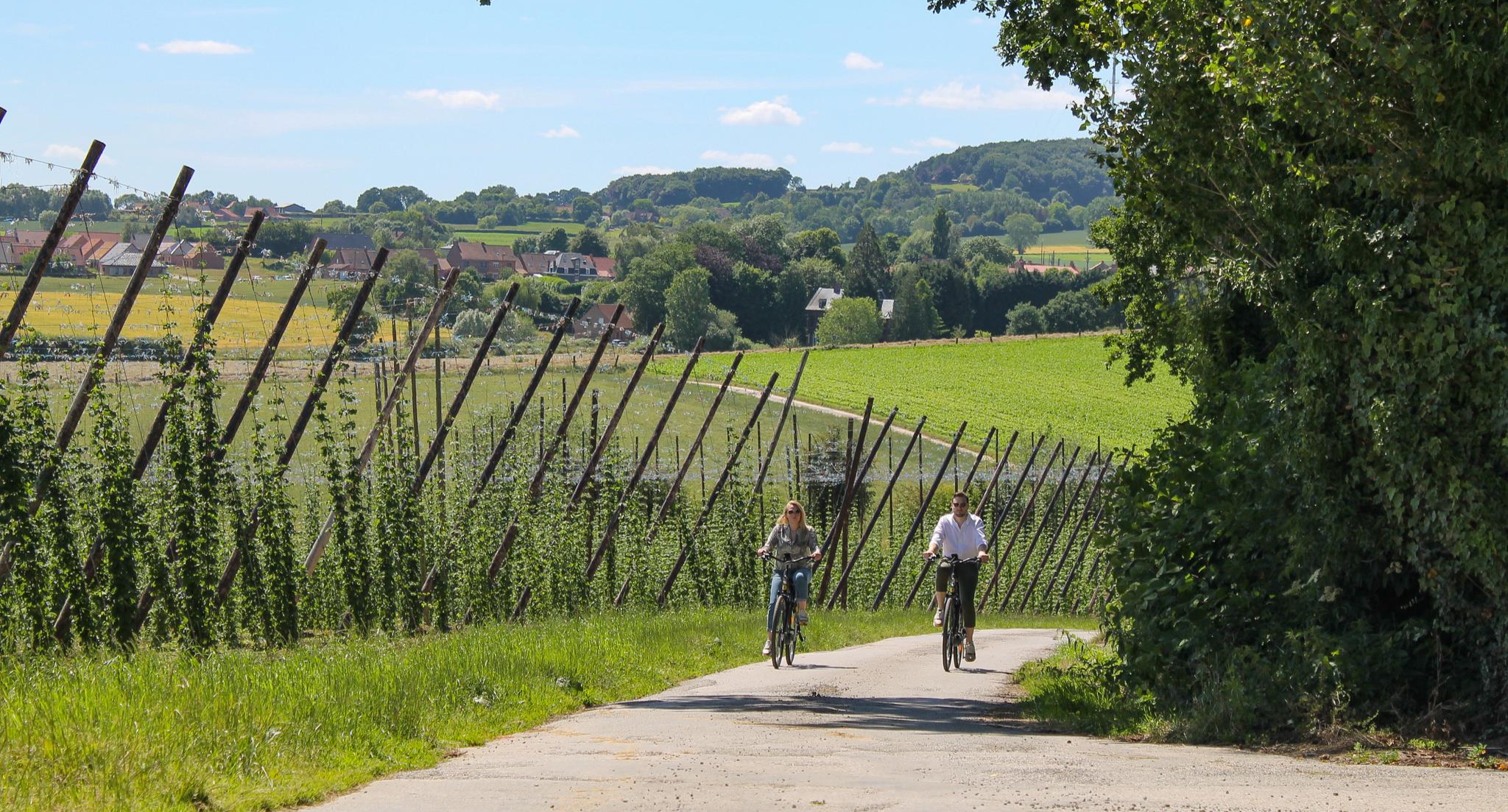
Nice climb, not too steep and along the vineyard. You can also start the ascent of the Kemmelberg from the Monteberg.
2
0

Frequently Asked Questions
What kind of 'mountain peaks' can I expect to find around Armentières?
Armentières is situated in a generally flat region of northern France. The 'mountain peaks' referred to in this guide are actually notable elevated points and hills, such as the Kemmelberg and Monteberg, which are significant for their historical importance, scenic views, and challenging climbs, particularly for cyclists. They are not high-altitude mountain ranges.
What is the most popular elevated point or 'peak' near Armentières?
The most popular elevated point is the IGM Kemmelberg Summit Marker. This summit was a strategic point during the First World War and features the Monument Aux Soldats Français, a memorial column dedicated to French soldiers. It's appreciated for its historical significance and views.
Are there any historical sites on these 'peaks'?
Yes, several of the elevated points around Armentières have significant historical importance. The IGM Kemmelberg Summit Marker, for instance, was a key strategic location during World War I and hosts a French mass grave and a Cold War command bunker now used as a war museum. The Rosenberg was also known as Hill 63 during WWI.
What kind of outdoor activities can I do near these elevated points?
While traditional mountain climbing isn't an option, the area offers excellent opportunities for cycling and hiking. You can find various routes for gravel biking, road cycling, and hiking. For example, there are challenging cycling climbs like Mont Kemmel climb from Kemmel, known for its cobblestones, and the Climb of Kemmelberg via Klokhofweg, which offers hairpin bends and scenic views without cobblestones. For more options, explore the gravel biking, hiking, and cycling guides for Armentières.
Are there family-friendly walks or activities on these hills?
While specific 'family-friendly' categories aren't listed for these particular highlights, the historical sites and viewpoints like the IGM Kemmelberg Summit Marker can be interesting for families. Many of the hiking routes around Armentières, such as 'Les vanupieds des Près du Hem loop' or 'Around the ponds – Crossing of the Lys loop', are rated as easy and could be suitable for families. You can find these in the hiking guide for Armentières.
What is the best time of year to visit the elevated points near Armentières?
Given the region's generally mild climate, spring and autumn are often ideal for exploring the hills and trails, offering pleasant temperatures and beautiful scenery. Summer can also be enjoyable, though it might be warmer. Winter visits are possible, especially for historical exploration, but be prepared for colder weather and potentially wet conditions.
What kind of views can I expect from these elevated points?
From viewpoints like the IGM Kemmelberg Summit Marker, you can expect panoramic views of the surrounding flat landscape of French Flanders and possibly into Belgium. These elevated positions offer a unique perspective of the region, which is otherwise quite low-lying.
Are there any challenging climbs for cyclists in the area?
Yes, the area is well-known among cyclists for its challenging climbs. The Mont Kemmel climb from Kemmel is particularly famous for its cobblestone sections, offering a demanding experience. The Monteberg Climb also provides a gradual uphill on nice asphalt with beautiful views, often used as a run-up to the Kemmelberg.
What should I pack for a visit to these elevated points?
For exploring the hills and trails, comfortable walking or cycling shoes are essential. Depending on the weather, layers of clothing are advisable, along with rain gear. If you plan to cycle, appropriate cycling attire and safety gear are a must. Don't forget water and snacks, especially for longer routes.
Can I find cafes or refreshments near these elevated points?
While specific cafes are not listed directly at the summit markers, the Kemmelberg area, being a popular cycling and historical destination, does have facilities nearby. For example, after the Monteberg Climb, you cycle past Wijngoed Monteberg, which may offer refreshments. It's always a good idea to check local amenities before your visit.
What makes the Kemmelberg unique compared to other hills in the region?
The Kemmelberg stands out due to its significant role in World War I, its challenging cycling climbs (including cobblestone sections), and its historical monuments like the Monument Aux Soldats Français. It offers a combination of natural beauty, physical challenge, and deep historical resonance that is unique in this relatively flat region.
Are there any alternatives to the cobblestone climbs on Kemmelberg?
Yes, if you prefer to avoid the cobblestones, the Climb of Kemmelberg via Klokhofweg offers an excellent alternative. This intermediate climb features 'hairpin bends' and scenic views, providing a different but equally rewarding way to ascend the Kemmelberg without the rough surface.
Most popular routes around Armentières
Most popular attractions around Armentières

Get inspired with the komoot mobile app


Explore more
See even more amazing summits around Armentières with these guides:
