Top 20 Castles in Vendée
Best castles in Vendée offer a journey through the region's rich history, from medieval fortresses to Renaissance residences. The Vendée region, situated along the Atlantic coast, features diverse landscapes including rivers and coastal areas, which historically influenced the strategic placement of these structures. These sites provide insights into centuries of architectural evolution and historical events. Visitors can explore a variety of castle types, each reflecting different eras and defensive strategies.
Best castles in Vendée
- The most popular castles is Apremont Castle, a castle that was rebuilt in the 16th century in the Renaissance style. It offers both free and guided tours to discover its history from its medieval origins to its Renaissance transformations.
- Another must-see spot is Noirmoutier Castle, a castle that houses a museum dedicated to the island's history. This Romanesque keep served as a formidable defense against various invaders.
- Visitors also love Tiffauges Castle, a large medieval castle. It features themed shows, including siege engine demonstrations, providing an engaging understanding of medieval life.
- Vendée is known for its medieval fortresses, Renaissance residences, and Romanesque keeps. These structures showcase a variety of architectural styles and historical significance across the region.
- The castles in Vendée are appreciated by the komoot community. With more than 340 upvotes and over 100 photos, these historical sites are popular among explorers.
Last updated: June 23, 2026
Noirmoutier Castle
Highlight • Castle
Please note: dogs are not allowed inside.
Translated by Google •
Tip by

Commequiers Castle
Highlight • Castle
Translated by Google •
Tip by

Sign up now to discover places like this
Get recommendations on the best single tracks, peaks, & plenty of other exciting outdoor places.
Sign up for free
Montaigu Castle
Highlight • Viewpoint
Translated by Google •
Tip by

Tiffauges Castle
Highlight • Castle
Translated by Google •
Tip by

Beaumarchais Castle
Highlight • Castle
Translated by Google •
Tip by
Apremont Castle
Highlight • Castle
It was built in the 11th century on the promontory which dominates the Vie river and its valley.
Rebuilt in the 16th century, it is today largely in ruins, but has preserved several imposing buildings.
You can discover the history of this castle from the traces of the old medieval fortress to the Renaissance towers built in the 16th century. There are free tours as well as guided tours.
Translated by Google •
Tip by

The Old Castle
Highlight • Castle
Its guided tour allows you to learn more about the construction of the fortress, the military architecture and the life of the islanders at that time. Comic book enthusiasts will also learn that Hergé would have been inspired by the Old Castle to draw that of the Black Island.
The castle is open during the summer season. For more information on its visiting hours, consult the castle website: ile-yeu.fr/que-faire-a-l-ile-d-yeu/se-divertir/activites-sur-l -island/the-old-castle-2265885
Translated by Google •
Tip by

Boistissandeau Castle
Highlight • Castle
Information on the history of the castle: lesherbiers.fr/decouvert/histoire-patrimoine/patrimoine/46-chateau-du-boistissandeau.html
Property of the Vendée department, the castle cannot be visited. Managed by the association "Handi-Espoir" it is part of a remarkable and unique structure in France "the Maison d'Accueil Familial le Boistissandeau" which allows the joint reception of disabled adults with their elderly parents.
Translated by Google •
Tip by
Château de la Touche
Highlight • Other
Translated by Google •
Tip by
Tour de Moricq
Highlight • Castle
Translated by Google •
Tip by

Sign up for free to discover even more castles in Vendée.
Sign up for free
Already have an account?
Start today with a free account
Your next adventure awaits.
Login or Signup
Popular around Vendée
La Vélodyssée — From north to south via the ocean
La Vélidéale - From the Limousin to the Atlantic
French Atlantic coast – 9 bike Tours from La Baule to Saint-Jean-de-Luz
Coast, marshes and hedges — Vendée Vélo Tour
Our first family bike adventure in Western France
Between Fontenay-le-Comte, Parthenay and Niort – Poitou on the water
An island adventure – Tour of Île d'Yeu (GR 80)
From Ouistreham to La Rochelle — riding the Vélo Francette
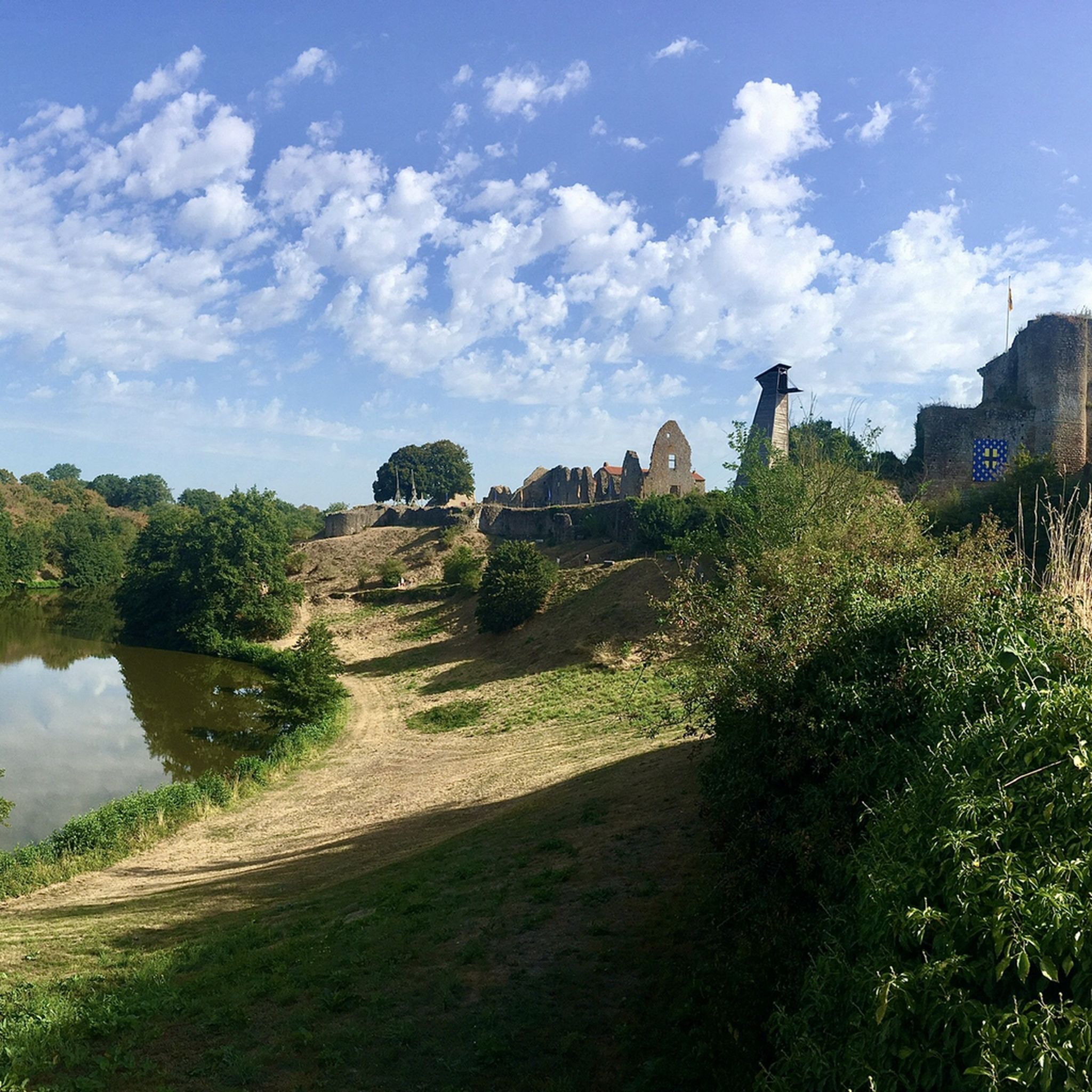
Hiking in Vendée
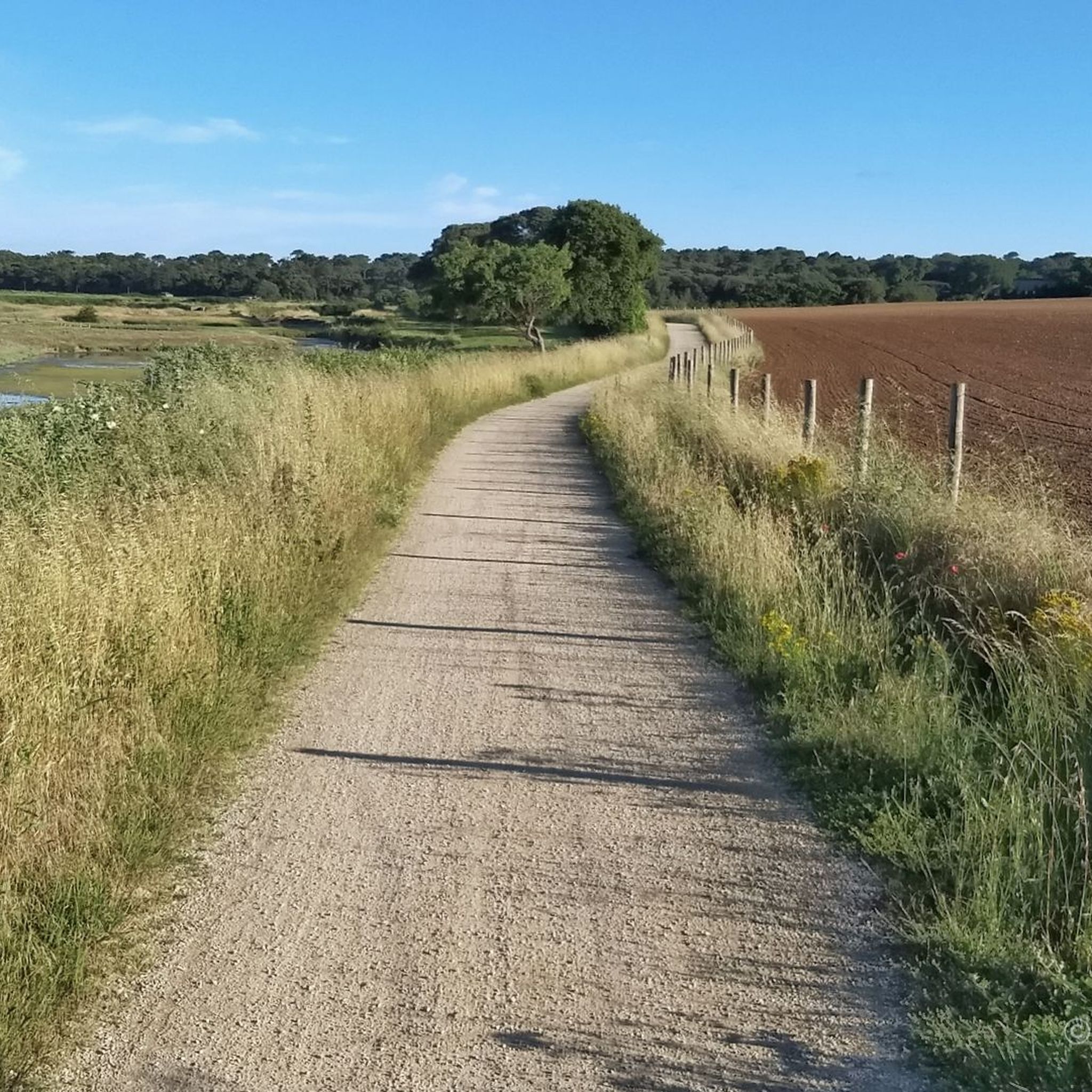
Cycling in Vendée
Other adventures in Vendée


Tips from the Community

Beaumarchais Castle was built in the 16th century by Vincent Bouhier de l'Écluse, on the foundations of an old manor house built around 1450 by the Mauclère family, a former local knighthood. The castle underwent significant alterations in the early 19th century. Notable for its Renaissance architecture, it notably retains a large fireplace on the ground floor, listed as a historical monument since 1962, as well as its protected facades and roofs. Now privately owned, this castle illustrates the history and heritage of the Pays de Brem, an ancient region linking Brétignolles to the Vendée coast. It bears witness to the wealth and maritime trade of its shipowners in the 16th century.
0
0
The Château de Beaumarchais in Brétignolles-sur-Mer is a Renaissance-style building constructed in the 16th century by Vincent Bouhier de L’Écluse, on the foundations of an old medieval manor house. A private property listed as a Historic Monument in 1962, it is remarkable for its facades, roofs, and a Renaissance fireplace on the ground floor. Henry IV stayed there, reinforcing the prestige of the estate and its wines. The current architecture includes characteristic wings and turrets added in the 16th century, and the framework was completed in the 17th century. The château has no connection with the writer Beaumarchais; its name comes from an old contraction linked to the site.
0
0

. Originally, there was an ovoid-shaped enclosure flanked by about ten towers and a gatehouse, located to the northeast. The fortified town was located to the north of the fortress and extended a little to the east. A dry moat separated the fortified town from the fortress. A barbican protected the gatehouse. A Romanesque keep of the Niort type, with its courtyard and small enclosure, was located in the castle courtyard, roughly in the middle in the north-south direction and located to the west. The fortified city extended from the rue de Gaulle, a gate was located at the level of the Carré de l'Europe (the porte de Nantes), then the ramparts continued along the rue de la Place du Champ de Foire, then went back down the Esplanade des Olivettes, where a gate was located towards the roundabout of the rue des Jardins (porte de Tiffauges) then the ramparts ran along the Asson to go up the rue du Pont Jarlet and around the barbican not far from the Presbytery The dry moats surrounding the city were 16 meters deep in the 15th century, today they are flowered and are the subject of different colored squares decorating this part of the ramparts.
0
0
In the 9th century, a castrum, a wooden castle built on a mound of earth, was built to counter the Viking raids that had previously sacked the city of Durivum (Saint-Georges-de-Montaigu). For strategic reasons, this fortress was built on a rocky spur at the junction between the Maine and Asson rivers. Maurice I of Montaigu, the first known lord, witnessed the consecration of the church of Saint-Nicolas de la Chaize-le-Vicomte in 1099. His successor until 1174 was Brient I of Commequiers, married to his daughter, Agathe de Montaigu. Later, his grandchildren, Brient II, Maurice II "the Younger," and Marguerite, succeeded him. It was perhaps this Brient II who had the Romanesque keep built in 1218, a large square tower with flat corner towers. He also removed the wooden palisade, replacing it with a wide moat extending to the Saint-Georges Gate. The Montagues (also known as Belleville by marriage around 1180) pledged allegiance to the Plantagenets, Henry II, Richard the Lionheart, and John Lackland. Margaret of Belleville-Montaigu, daughter of Brient de Montaigu and Agnes de Belleville, granddaughter of Maurice I de Montaigu, sister of Maurice II de Belleville-Montaigu, married Hugh of Thouars in 1203. In 1227, the couple submitted to Philip Augustus through the ceremony of homage. Hugh of Thouars died in 1229, and Margaret remarried in 1235 to the Duke of Brittany, Mauclerc, whose real name was Pierre de Dreux. Marguerite de Montaigu died in 1241, childless. The lordship of Montaigu fell to her nephew, Maurice III de Belleville-Montaigu (d. c. 1297; son of Maurice II). He became lord of Montaigu upon the death of Mauclerc in 1250[2], and his son Maurice IV (d. c. 1292) ensured the succession through his children Jeanne (d. 1284 Geoffroy II David de La Flocellière) and Maurice V de Belleville-Montaigu (he married 1° Sibylle, daughter of Geoffroy VI de Châteaubriant, then 2° Isabelle/Létice de Parthenay, daughter of Guillaume V Larchevêque de Parthenay). Jeanne de Belleville (c. 1300-c. 1359), daughter of Maurice V of Montaigu and Létice of Parthenay, married Olivier IV of Clisson for the second time in 1328. Olivier IV was executed by beheading after being suspected of "felony" against the English, during the Hundred Years' War. Jeanne became a privateer with her children Olivier V and Jeanne de Clisson, in revenge, and was banished from the kingdom of France. While she attacked French ships, the fortress of Montaigu was held by the English, according to the Treaty of Brétigny-Calais, a garrison of which engaged in pillaging the surrounding area. Jeanne lost her ship and withdrew with her children to England. Olivier V, having grown up, rallied to the king of France, recovered his property in 1362 and fought the English with Bertrand du Guesclin. In 1373, Olivier and Bertrand succeeded in driving the English out of Montaigu, and Olivier ceded the lordship to his sister Jeanne, who had married an English captain, Jean Harpedenne. The latter sided with the King of France in 1373 and became Jean de Belleville. His grandson, Jean III, married Charles VII's half-sister, Marguerite de Valois, in 1433. Louis I de Belleville succeeded Jean III. King Louis XI advised him to fortify the town between 1464 and 1468 to protect it from the Bretons.
0
0

A large medieval castle. It features themed shows, including siege engine demonstrations.
2
0

Built in the second half of the 15th and in the 16th century by Louis de Beaumont, lord of Plessis-Macé in Anjou, the castle of Commequiers, now owned by the commune, was, like most of the castles of Bas Poitou, dismantled on the orders of Cardinal Richelieu in 1628, 6 years after the defeat of Soubise at Notre Dame de Riez and Saint Gilles. It was then the property of the La Trémoille, great Protestant lords. Throughout the Middle Ages, the lords of Commequiers exercised their administrative and jurisdictional influence over a vast territory. https://www.payssaintgilles-tourisme.fr/patrimoine-culturel/chateau-de-commequiers/
0
0

great walk to do in Noirmoutier, beach and forest
0
0

Located in the middle of town not far from the church, definitely worth a visit.
1
0
Frequently Asked Questions
Which castles in Vendée are particularly good for families with children?
Several castles in Vendée offer engaging experiences for families. The Tiffauges Castle, known as "Bluebeard's Castle," features medieval war machine demonstrations and reenactments, which are very popular with children. The Château de Saint-Mesmin transforms into a kingdom for kids with tales, games, and training sessions for young knights and princesses. Additionally, Noirmoutier Castle and Apremont Castle are also categorized as family-friendly.
What kind of historical experiences can I expect at Vendée's castles?
Vendée's castles offer a deep dive into history. At Tiffauges Castle, you can explore extensive ruins and the largest conservatory of medieval war machines in Europe, often seen in operation. The Château de Talmont, a seaside fortress, hosts medieval reenactments, falconry, and chivalry displays. Noirmoutier Castle houses a museum detailing the island's history from prehistory to the 20th century, showcasing its role as a formidable defense against invaders.
Are there any castles in Vendée that offer unique natural features or viewpoints?
Yes, several castles are set amidst beautiful natural surroundings. The Château de Talmont, for instance, was strategically located and surrounded by water at high tide, offering a unique coastal perspective. Apremont Castle, perched atop a town overlooking the Vie river, provides beautiful views from its terrace. Montaigu Castle is also noted as a viewpoint, and The Old Castle stands on a rocky outcrop flush with the ocean.
What outdoor activities can I do near the castles in Vendée?
The Vendée region offers numerous outdoor activities. You can find easy hikes like the 'La pointe du Payré et la plage de la Mine' loop or the 'Veillon Loop'. For running, there are trails such as the 'Moulin Papon Lake Loop Trail'. Cycling enthusiasts can enjoy routes like the 'Loop between beach and ports on the island of Noirmoutier' or the 'Circuit of the Île-d'Yeu'. Many of these routes are accessible from various points across the region, including near some castles. For more details, explore the easy hikes in Vendée, running trails in Vendée, and cycling routes in Vendée guides.
What is the best time of year to visit castles in Vendée?
The summer months are particularly vibrant for visiting Vendée's castles, as many sites like the Château de Talmont and Tiffauges Castle host special shows, spectacles, and medieval reenactments. However, the period from April to November also offers various animations and activities, such as those at the Château de Saint-Mesmin. Visiting outside peak summer can provide a more tranquil experience.
Are dogs allowed at Vendée castles?
Policies regarding dogs vary by castle. For example, dogs are generally not allowed inside Noirmoutier Castle. It is advisable to check the specific rules for each castle you plan to visit, especially if you intend to bring your dog.
Are there any castles in Vendée that are particularly well-preserved or offer unique architectural styles?
Vendée boasts a range of architectural styles. Apremont Castle, originally an 11th-century stronghold, was rebuilt in the 16th century in the Renaissance style. The Puy du Fou Château is considered a Renaissance masterpiece, featuring rich interiors and immersive experiences. Noirmoutier Castle is notable for its impressive Romanesque keep.
What amenities are typically available near Vendée castles?
Amenities vary, but many castles are located near towns or villages. For instance, the Château de Saint-Mesmin offers a cafeteria on-site. The region generally provides options for cafes, restaurants, and accommodation, especially in tourist-frequented areas. Some castles, like Tiffauges Castle, are part of larger sites that may include gift shops or refreshment stands.
How long should I plan for a visit to a Vendée castle?
The duration of a visit depends on the castle and your interest. For larger sites like Tiffauges Castle, with its extensive ruins, war machines, and reenactments, you could easily spend half a day or more. Castles with museums, like Noirmoutier Castle, might take 1-2 hours. For smaller sites or those primarily offering viewpoints, a shorter visit of an hour might suffice. Always check the specific castle's offerings to plan accordingly.
Are there any castles in Vendée that are less crowded or considered 'hidden gems'?
While popular sites like Tiffauges Castle attract many visitors, you might find a more tranquil experience at places like Commequiers Castle, a partially restored moated castle. Although currently closed for renovations, it offers a treasure hunt for children. The Old Castle on the Île d'Yeu, accessible by guided tour during the summer, also provides a unique, less conventional castle experience.
What is the history behind Commequiers Castle?
Commequiers Castle was built in the late 15th and 16th centuries by Louis de Beaumont. Like many castles in Bas Poitou, it was dismantled on the orders of Cardinal Richelieu in 1628. Octagonal in shape with eight thick towers, it is believed to have been built following the model of the Bastille. Today, it is owned by the commune and offers a treasure hunt for children to explore its history.
Most popular routes in Vendée
Most popular attractions in Vendée

Get inspired with the komoot mobile app


Explore more
Looking for the best castles somewhere else? Discover other guides in Vendée:
