The best gravel rides around Auchonvillers
4.3
(3)
21
riders
9
rides
Gravel biking around Auchonvillers offers routes through the Somme department in northern France, characterized by its historical World War I landscapes and varied natural terrain. The region features a mix of unpaved paths, quiet country roads, and segments along the Somme Valley. Cyclists can explore areas encompassing hedgerows, serene ponds, and open moors, providing a diverse environment for gravel cycling.
Best gravel bike trails around Auchonvillers
- The most popular gravel bike trail is Newfoundland Memorial – Beaumont-Hamel trails loop from Albert, a 32.5 miles (52.2 km) trail that takes 4 hours 16 minutes to complete. This route features varied terrain through historical sites.
- Another top favourite among local gravel bikers is Newfoundland Memorial – Beaumont-Hamel trails loop from Bucquoy, a moderate 25.3 miles (40.7 km) path. This trail navigates through the Somme countryside, offering a mix of surfaces.
- Local gravel bikers also love the Ulster Tower – Beaumont-Hamel trails loop from Miraumont, a 19.6 miles (31.5 km) trail leading through historical battlefields and rural landscapes, often completed in about 2 hours 41 minutes.
- Gravel biking around Auchonvillers is defined by historical World War I landscapes, unpaved country roads, and segments along the Somme Valley. The network offers options for moderate ability levels, with all 6 routes rated as such.
- The routes in Auchonvillers are highly rated by the komoot community with an average score of 4.0 stars from 1 review. More than 10 gravel bikers have used komoot to explore Auchonvillers's varied terrain.
Last updated: July 5, 2026
4.0
(1)
3
riders
28.2km
02:10
260m
260m
Moderate gravel ride. Good fitness required. Mostly paved surfaces. Suitable for all skill levels.
3
riders
40.7km
02:58
380m
380m
Moderate gravel ride. Good fitness required. Mostly paved surfaces. Suitable for all skill levels.

Sign up for free
5.0
(1)
4
riders
46.0km
02:46
250m
250m
Moderate gravel ride. Good fitness required. Mostly paved surfaces. Suitable for all skill levels.
3
riders
52.6km
03:32
430m
430m
Moderate gravel ride. Good fitness required. Mostly paved surfaces. Suitable for all skill levels.
1
riders
30.9km
02:12
220m
220m
Moderate gravel ride. Good fitness required. Mostly paved surfaces. Suitable for all skill levels.
Get access to more routes and recommendations from other explorers.
Sign up for free
Already have an account?
Our route recommendations are based on thousands of hikes, rides, and runs completed by other people on komoot.
Start today with a free account
Your next adventure awaits.
Login or Signup

Tips from the Community

Those who fight for peace, always impressive
12
0

cemetery containing 876 graves, including 825 British soldiers
2
0

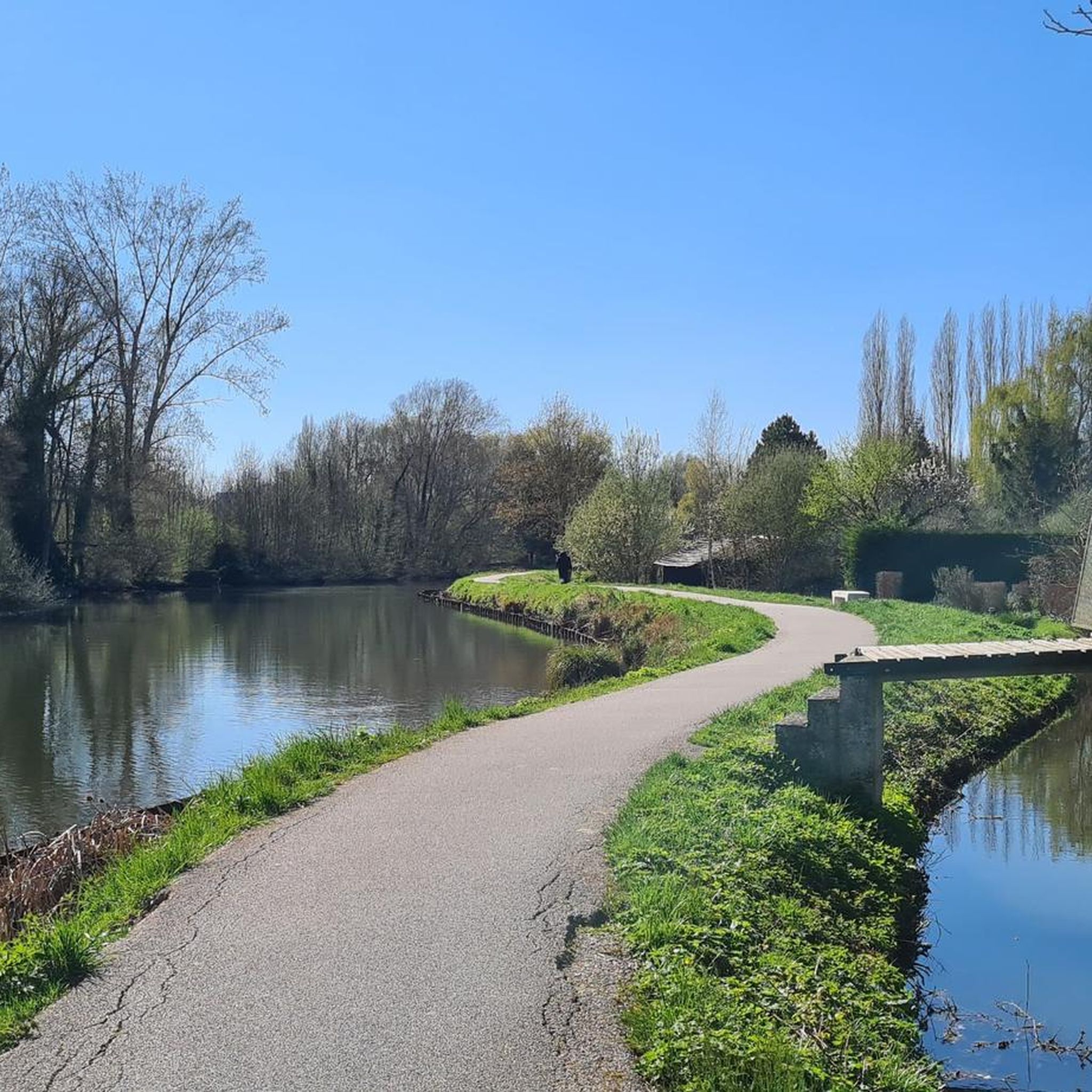
Nice view of the ponds and the villa "Les étangs".
0
0

An interesting anecdote is that the Royal Naval Division was originally formed from reservists of the British Navy who had no place on ships during the war. This unit was trained as infantry and played a crucial role in several battles, including the Battle of the Ancre.
6
0
The British Royal Naval Division Memorial in Beaucourt-sur-l'Ancre commemorates the officers and men of the Royal Naval Division who died during the Battle of the Ancre, part of the great Somme offensive. The memorial is located on Rue d'Hamel (Route D50) and Chemin de Serres les Pusieux.
6
0
The Nymphe d'Aveluy is a historical monument in Aveluy, France, commemorating the artwork created by French soldiers during World War I. During periods of rest between battles, soldiers created sculptures and engravings, including the famous "Nymphe d'Aveluy". These works were often photographed and sent to their families on postcards.
1
0
Grove Town Cemetery in Méaulte contains 1,392 graves: 1,365 British, 12 Canadian, 14 Australian, and 1 New Zealander. In September 1916, during the Battle of the Somme, two dressing stations were established at this site, which was known to the troops as Grove Town (grove = grove / town = town), where those who did not survive their wounds were buried until April 1917. In August and September 1918, following the victorious Allied counteroffensive, other bodies were also buried in this cemetery.
0
0
The Méaulte Military Cemetery was built in December 1915 and was in use until February 1917, although after the fighting of 1918 and the armistice, more bodies were buried there. It contains 312 graves (303 British, 2 Canadian, 1 Australian, and 6 Indian), including 21 unidentified bodies. The village of Méaulte was occupied by the British from 1915 until March 26, 1918, when it was captured by the Germans. It was finally liberated by the British 12th Division, supported by tanks, on August 22, 2018.
0
0
Frequently Asked Questions
What kind of terrain can I expect on gravel bike trails near Auchonvillers?
Gravel biking around Auchonvillers offers a diverse mix of surfaces. You'll encounter unpaved paths, quiet country roads, and segments that follow the Somme Valley. The region is characterized by historical World War I landscapes, hedgerows, serene ponds, and open moors, providing varied environments for cycling.
How many gravel bike trails are available around Auchonvillers?
There are 6 distinct gravel bike trails around Auchonvillers listed on komoot. All of these routes are rated as moderate in difficulty, offering a consistent challenge for cyclists.
What is the typical difficulty level of gravel biking routes in this area?
All the gravel biking routes around Auchonvillers are rated as 'moderate'. This means they offer a good balance of challenge and accessibility, suitable for cyclists with some experience looking for engaging rides.
Can I combine gravel biking with exploring World War I historical sites?
Absolutely. The region is rich in WWI history, and many gravel routes pass through or near significant memorials and battlefields. For example, the Ulster Tower – Beaumont-Hamel trails loop from Miraumont leads directly through historical battlefields. You can also visit sites like the Newfoundland Memorial or the Thiepval Memorial.
Are there any circular gravel routes around Auchonvillers?
Yes, all the gravel routes listed for Auchonvillers are designed as loops or circular trails. This allows you to start and finish your ride in the same location, making logistics easier. An example is the Newfoundland Memorial – Beaumont-Hamel trails loop from Bucquoy.
What natural landscapes will I encounter on these trails?
The gravel trails in the Somme department offer a blend of natural beauty. You'll cycle through hedgerows, past serene ponds, and across open moors. The broader Somme region also features the tranquil Somme River valley and hints of natural reserves like the Réserve naturelle de l'Étang Saint-Ladre, providing picturesque scenery.
What do other cyclists enjoy most about gravel biking in Auchonvillers?
The area is highly rated by the komoot community, with an average score of 4.0 stars. Cyclists often praise the varied terrain that combines historical sites with natural landscapes, offering a unique and engaging experience away from crowded areas.
What is a good moderate-length gravel route to explore the Somme countryside?
For a moderate-length ride that navigates through the Somme countryside with a mix of surfaces, consider the Newfoundland Memorial – Beaumont-Hamel trails loop from Bucquoy. It's a 25.3-mile (40.7 km) path that offers a great experience.
Are there any longer gravel routes for a full day out?
If you're looking for a longer ride, the Newfoundland Memorial – Beaumont-Hamel trails loop from Albert is a great option. This trail spans 32.5 miles (52.2 km) and typically takes over four hours to complete, featuring varied terrain through historical sites.
What is the best time of year for gravel biking in Auchonvillers?
Spring and autumn generally offer the most pleasant conditions for gravel biking in the Somme department, with milder temperatures and beautiful scenery. Summer can be enjoyable, but be prepared for potentially warmer weather. Winter riding is possible, but trails may be muddy or wet.
Are the gravel trails around Auchonvillers suitable for dogs?
While specific regulations for dogs on these gravel trails are not detailed, many unpaved paths and quiet country roads in rural France are generally dog-friendly, especially if your dog is well-behaved and kept on a leash. Always be mindful of local signage, livestock, and other trail users.
Are there places to eat or stay near the trails in Auchonvillers?
Auchonvillers itself is home to the 'Ocean Villas' guest house and museum. In the surrounding villages and towns of the Somme department, you can find various accommodations, cafes, and pubs to refuel and rest after your rides. It's advisable to check options in nearby Albert or Miraumont for more choices.
Can I reach Auchonvillers by public transport with my bike?
Public transport options directly to Auchonvillers with bike carriage might be limited. Regional trains in France (TER) often allow bikes, but it's best to check specific routes and schedules with SNCF or local transport providers. Driving to the area and parking is often the most convenient option for cyclists.
Most popular routes around Auchonvillers
Most popular attractions around Auchonvillers

Get inspired with the komoot mobile app


Explore more
Browse the best Gravel rides in other regions.
