Top 19 Castles around Bekkevoort
Best castles around Bekkevoort are found in a region characterized by its historical significance and natural landscapes. Bekkevoort itself was historically home to a Commandery of the German Order, established in 1229, which played a crucial role in the village's development. While traditional castles are not present in their original form today, historical remnants and fortifications offer insights into the area's past. The surrounding area features varied terrain, including valleys and hills, providing a backdrop for exploring these historical sites.
…Last updated: June 27, 2026
Horst Castle
Highlight • Castle
Translated by Google •
Tip by

Lobos Manor Farm
Highlight • Castle
Originally, this was the …
Translated by Google •
Tip by

Sign up now to discover places like this
Get recommendations on the best single tracks, peaks, & plenty of other exciting outdoor places.
Sign up for free
Fort Leopold
Highlight • Historical Site
Translated by Google •
Tip by

Zuurbemde Castle
Highlight • Castle
Translated by Google •
Tip by

Kasteel Terlenen
Highlight • Castle
The Terlenen castle site, on the border of Grazen and Rummen (Geetbets), is a well-preserved example of a 19th-century manor farm. An extensive farm, brewery and distillery …
Translated by Google •
Tip by

Sign up for free to discover even more castles around Bekkevoort.
Sign up for free
Already have an account?
Start today with a free account
Your next adventure awaits.
Login or Signup

Tips from the Community

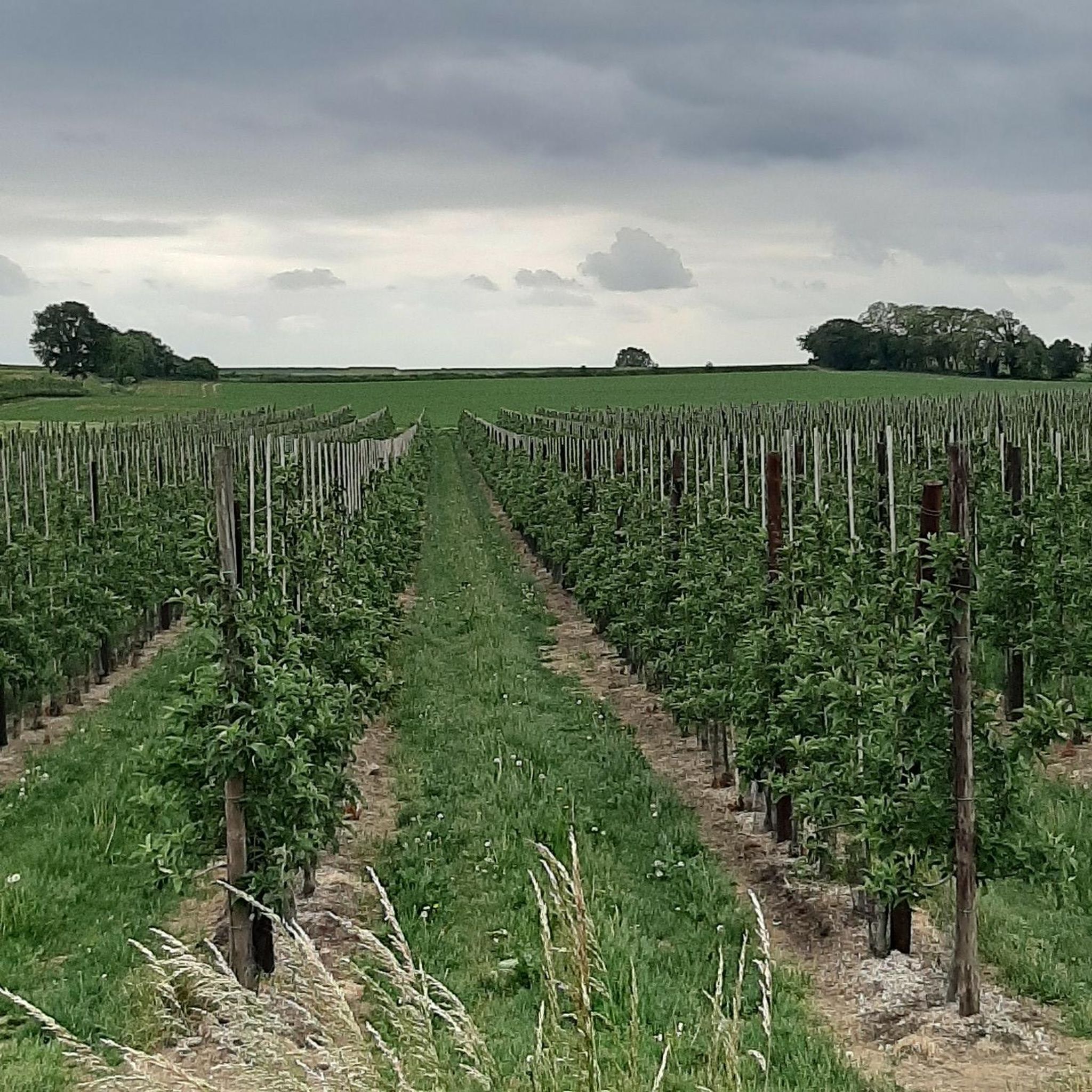
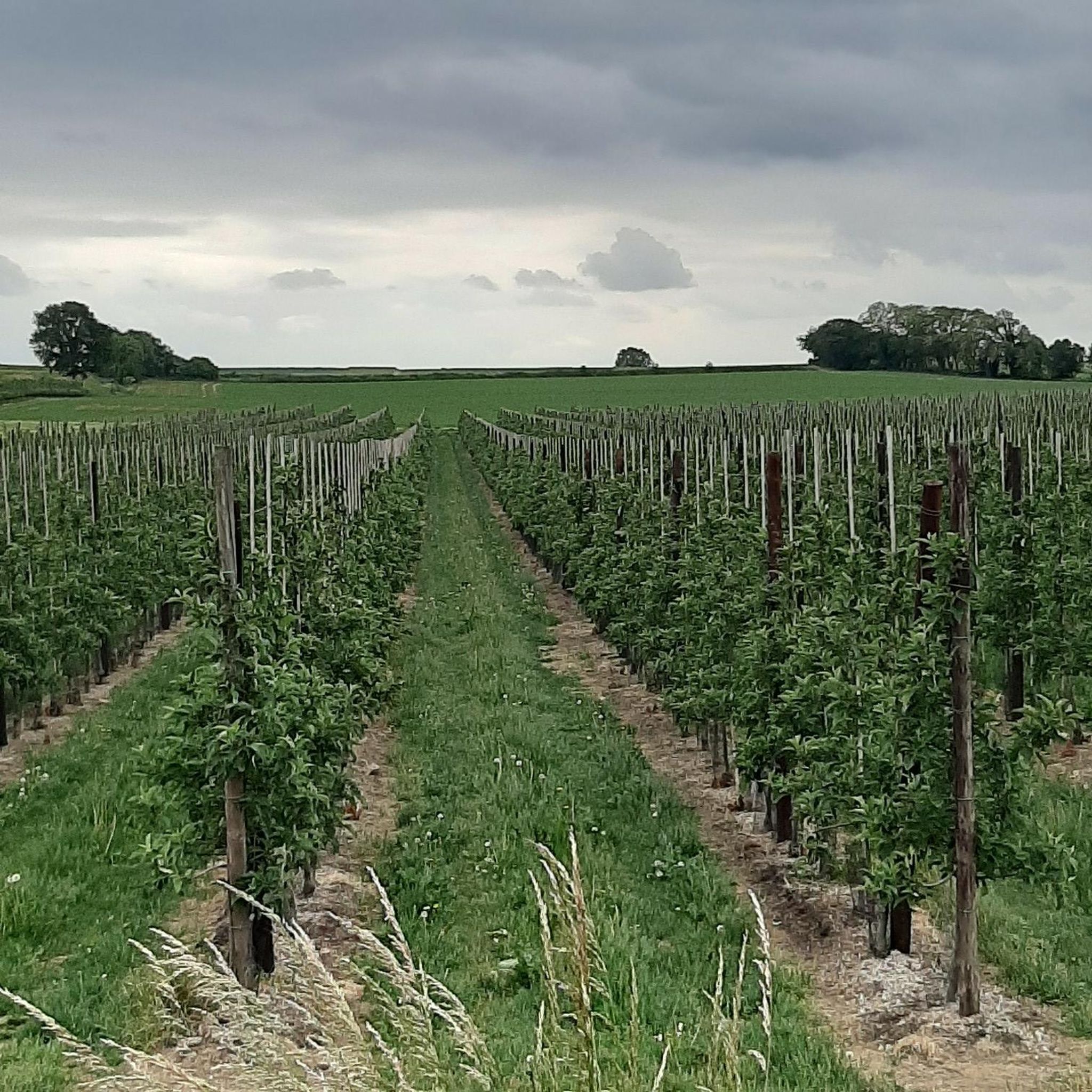
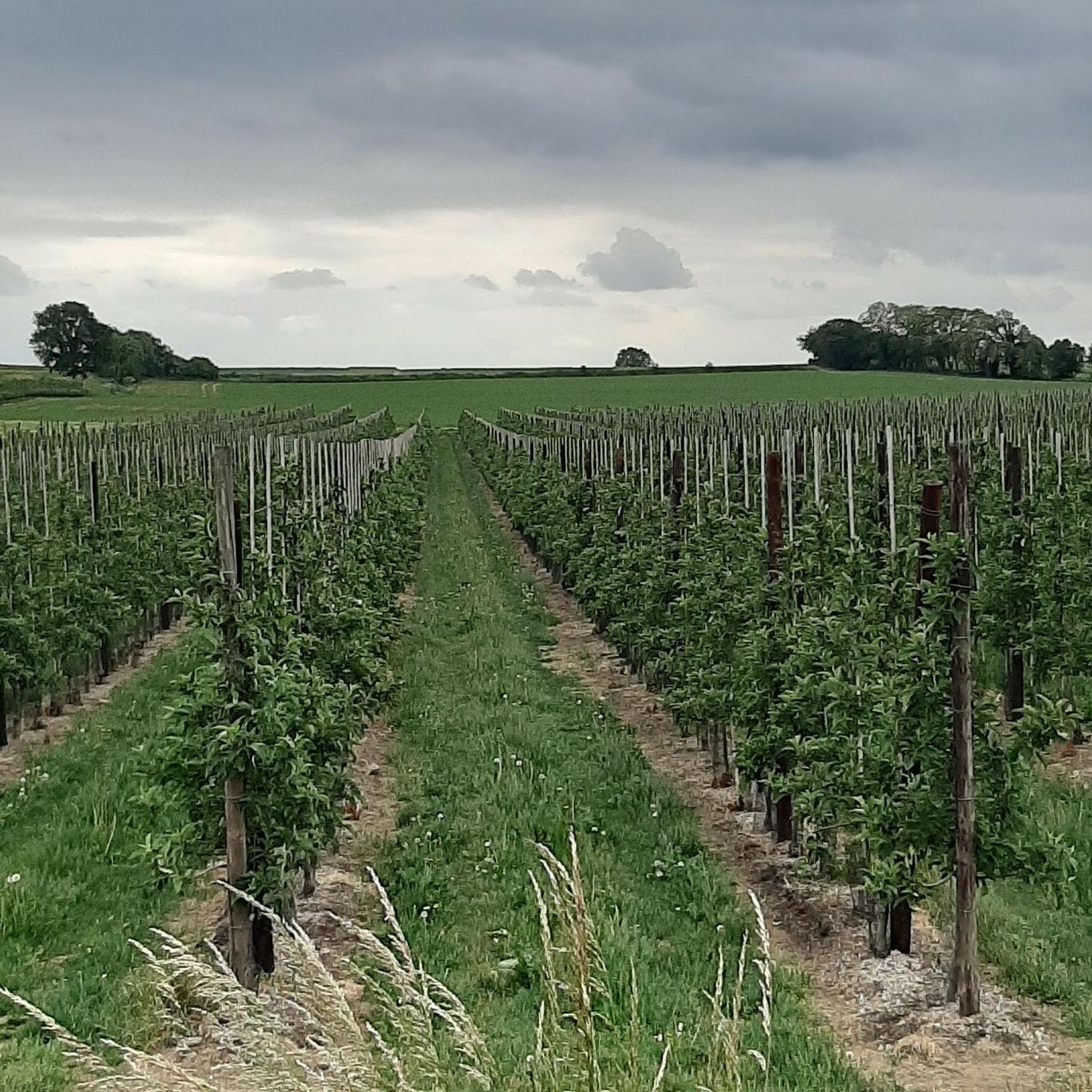
At the public sale in 1798, Ter Lenen came into the hands of the Coenen family from Zoutleeuw, who remained the owner continuously until 1963. The Primitive Cadastral Map, drawn by surveyor Denis in 1827, shows a completely changed picture compared to the Ferraris Map. The farm complex has been reduced to two wings, and in place of the southeastern part of the partially filled moat is a new, almost square volume, identifiable as the current small castle. Nothing remains of the ring moat on the Ferraris Map. The small castle faces a jagged, elongated pond in the northwest direction, originally perhaps a brick clay pit, but a "pleasure pond" of 34.5 acres according to the Primitive Cadastre, which suggests the existence of an early landscape garden, a 'jardin anglais'. Between 1800 and 1820 (with a focus around 1810), numerous gardens and parks in the region – mostly limited in surface area and formal, regular, geometric, 'French' or whatever they were called – were given a new, 'irregular' look. The undulating contours of the water features, widenings, swellings, and sudden constrictions – often these are dammed and widened streams and canals, sometimes excavation pits – are typical of this early romantic or early landscape design. The "pleasure pond" was, strangely enough, surrounded by utilitarian plots in 1827 according to the cadastral register: orchard, meadow, garden-without-more, and even ordinary arable land around the small castle. The 320 m long and 15 m wide strip plot was an avenue that opened from the southeast near the farm buildings. It connected Ter Lenen via the Oppenstraat with the village center of Rummen and formed the main access. The current access road from the southwest, marked on the Verdaelstraat by a gate with two pillars of red and sintered brick and a flanking fence, was built around 1880 (the initials 'VC' incorporated in the ironwork stand for the then owner Victor Coenen), but the monumental, blue stone round arch gate with grooved frame testifies to the original importance of the northeastern access, although this gate is part of a stable wing built around 1897. Inventaris Onroerend Erfgoed: Garden of the Ter Lenen country house, https://id.erfgoed.net/erfgoedobjecten/134181
5
0
The Ter Lenen estate is located on the right bank of the Melsterbeek, in the middle of meadow and pastureland. Until the French Revolution, the Ter Lenen farm was part of the extensive possessions of the Cistercian abbey of Oriënte, located slightly further south, which had bought the "curia de Leenen" in 1240, together with 52.5 bunders or more than 60 ha of arable land and pasture, from a certain Rolin de Lare. In the 14th century, Ter Lenen was an important exploitation, as the farm included two barns, two sheepfolds and a horse stable. On the Ferraris map, the "cense Ter Lenen" is depicted as a complex of detached buildings on a moated, rectangular 'island'. A vegetable garden occupied most of the northern half of this island. Meadows, high-stem orchards and arable land formed the wider setting. Inventory of Immovable Heritage: Garden of the Ter Lenen country house, https://id.erfgoed.net/erfgoedobjecten/134181
5
0
The core of Horst Castle probably dates back to the 13th century and is characterised by a square keep. The keep probably belonged to the oldest core that was further expanded into a fortified castle in the 15th century. During the troubles under Maximilian of Austria in 1489, the castle of Horst was taken by the people of Leuven and set on fire. According to literary sources, only the keep, part of the entrance gate and a defensive wall remained standing. The residential and east wing were renovated and expanded in the 16th century. The round tower also dates from this period. The outer wall was provided with a rectangular bay window. The castle lost its military character and became more of a pleasant residential area with a view of the moat, the ponds and the inner courtyard. Brick construction with sandstone layers characterise these buildings. In 1587, however, the castle was set on fire again during the raids of the Geuzen. It was not until the beginning of the 17th century that restoration work began. It is difficult to deduce from the available sources to what extent this involved restoration or an embellishing conversion of the castle complex. Presumably nothing changed in the internal structure, but only after the structurally necessary repairs were the interiors completely refinished. Maria-Anna Van den Tympel had a new chapel built against the keep in the 17th century. At the beginning of the 19th century, the complex must have been damaged by plundering and neglect, and it is possible that it also suffered from plundering during the Brabant Revolution of 1830. Around 1850, the castle must have been habitable again, but the castle buildings only served as a farm. In the land registry, the site around the castle is called "De Notelaren Boomgaerd". Around that time, the most dilapidated part must have been demolished, namely the southern part and the superstructure of the gate. The rest of the complex was probably restored with reused demolition material and in traditional style. The castle was divided in 1880, with one part being registered as a school house. In 1897, a further division followed, with two plots being designated as houses. Several restoration campaigns followed in the 20th century. Inventory of Immovable Heritage: Horst Castle, https://id.erfgoed.net/erfgoedobjecten/43619
6
0
Since December, there has been a spire on the castle again after the unstable spire was removed more than four years ago and could be viewed on a wooden platform in the pond. Now it is back. And the other works are also progressing quickly. More about the replaced spire on https://www.vrt.be/vrtnws/nl/2024/12/10/torenspits-staat-weer-op-kasteel-van-horst-holsbeek/
6
0

Behind Fort Leopold there is a nice steep single track towards Schaffen airport.
0
0

Whatever the future brings, the fact remains that the castle domain is very beautiful to walk in. Tip the glaze walk of Visit Vlaams-Brabant (https://www.visitvlaamsbrabant.be/wandelen/vind-een-wandeling/vlakwandeling)
11
0

An old fort that dates from the war. If there is a guide you can visit it. Really worth it. When you are on top of the fort you have a view over the entire city of Diest. In the fort also live a lot of bats.
0
0
Frequently Asked Questions
What kind of historical sites can I explore around Bekkevoort?
While Bekkevoort itself was historically home to a significant Commandery of the German Order, established in 1229, traditional castles are not present in their original form today. However, you can explore sites with medieval remnants and historical fortifications. For a well-preserved castle, consider visiting Horst Castle, an idyllic moated castle from the 13th century. You can also see Fort Leopold, a rare 19th-century defensive stronghold, or the site of Warandebos Forest and Medieval Castle Remains, where a 14th-century castle once stood.
Are there any family-friendly castles or historical sites near Bekkevoort?
Yes, Horst Castle is considered family-friendly, offering a beautiful setting with its moat and grounds. Zuurbemde Castle also features a beautiful domain with ponds, suitable for family walks.
Can I visit the historical Commandery of Bekkevoort?
The original Commandery of Bekkevoort was largely destroyed during religious wars and by 1700. Today, only a renovated pointed gable and a spacious room with 18th-century stucco work remain, integrated into a 19th-20th-century main building. While its historical significance is immense, there isn't a traditional 'castle' structure to visit, but rather historical remnants within a modern building.
What outdoor activities can I do near these castles?
The region around Bekkevoort offers various outdoor activities. You can find numerous road cycling routes, such as the 'Horst Castle – Wijngaardstraat loop from Bekkevoort' (49.4 km, moderate). For hiking, explore trails like the 'Oude Diestsebaan – Chapel of the Three Sisters loop from Bekkevoort' (13.9 km, moderate). Mountain biking enthusiasts can try routes like the 'Doornhofpad – Buurtweg 69 loop from Molenbeek-Wersbeek' (39.5 km, moderate). You can find more details on these and other routes in the Road Cycling Routes around Bekkevoort, Hiking around Bekkevoort, and MTB Trails around Bekkevoort guides.
Is <a href="https://www.komoot.com/highlight/266355" target="_blank" rel="noopener">Horst Castle</a> accessible for wheelchairs or buggies?
While the grounds of Horst Castle are generally accessible, the castle itself is noted as being difficult to access for wheelchair users and buggies due to its historical structure.
Are dogs allowed at the castles?
At Horst Castle, dogs are allowed on the castle grounds but not inside the castle building itself.
What natural features can I see around the castles?
The area around Bekkevoort's historical sites features varied terrain, including valleys and hills. Horst Castle is nestled in the green valley of the Wingebeek, surrounded by an impressive moat and a large pond. Lobos Manor Farm is located in the valley of the Zwarte Beek, within a park with remarkable trees. The Warandebos Forest, where medieval castle remains are found, is a nature reserve known for its unique plant richness.
What is the history behind <a href="https://www.komoot.com/highlight/2963781" target="_blank" rel="noopener">Lobos Manor Farm</a>?
Lobos Manor Farm, or Loboskasteel, is a 19th-century whitewashed brick mansion. It stands on the site of an original moated castle that was destroyed in 1465 during the siege of Herk-de-Stad by Charles the Bold. Only remnants of the moat remain from the original structure.
What is <a href="https://www.komoot.com/highlight/3308421" target="_blank" rel="noopener">Fort Leopold</a> and its significance?
Fort Leopold is a 19th-century brick fort completely dug into the Lazarijberg. It was commissioned in 1844 and represents a rare surviving type of defensive stronghold, featuring a central fortified building and two lapel batteries. It was part of the fortifications of Diest, highlighting the town's historical importance as a fortified location.
Are there any viewpoints near the castles around Bekkevoort?
Yes, Horst Castle itself offers beautiful views, especially from a distance across its moat. Fort Leopold is also listed as a viewpoint, and Zuurbemde Castle is situated in a very beautiful domain for walking, offering scenic views.
What do visitors enjoy most about the castles around Bekkevoort?
Visitors appreciate the historical significance and the picturesque settings of these sites. Horst Castle is particularly loved for its idyllic moated appearance and its connection to the cartoon character De Rode Ridder. The surrounding natural landscapes, like the Warandebos Forest, are also highly valued for walks and their unique flora.
Most popular routes around Bekkevoort
Most popular attractions around Bekkevoort

Get inspired with the komoot mobile app


Explore more
Looking for the best castles somewhere else? Discover other guides around Bekkevoort:
