Top 20 Castles in Fife
Castles in Fife, Scotland, offer insights into the nation's history. The region features a diverse landscape, from coastal areas overlooking the North Sea and Firth of Forth to inland settings. Fife's historical significance is evident in its array of fortifications, palaces, and ruins. These sites provide a tangible connection to Scotland's past.
Best castles in Fife
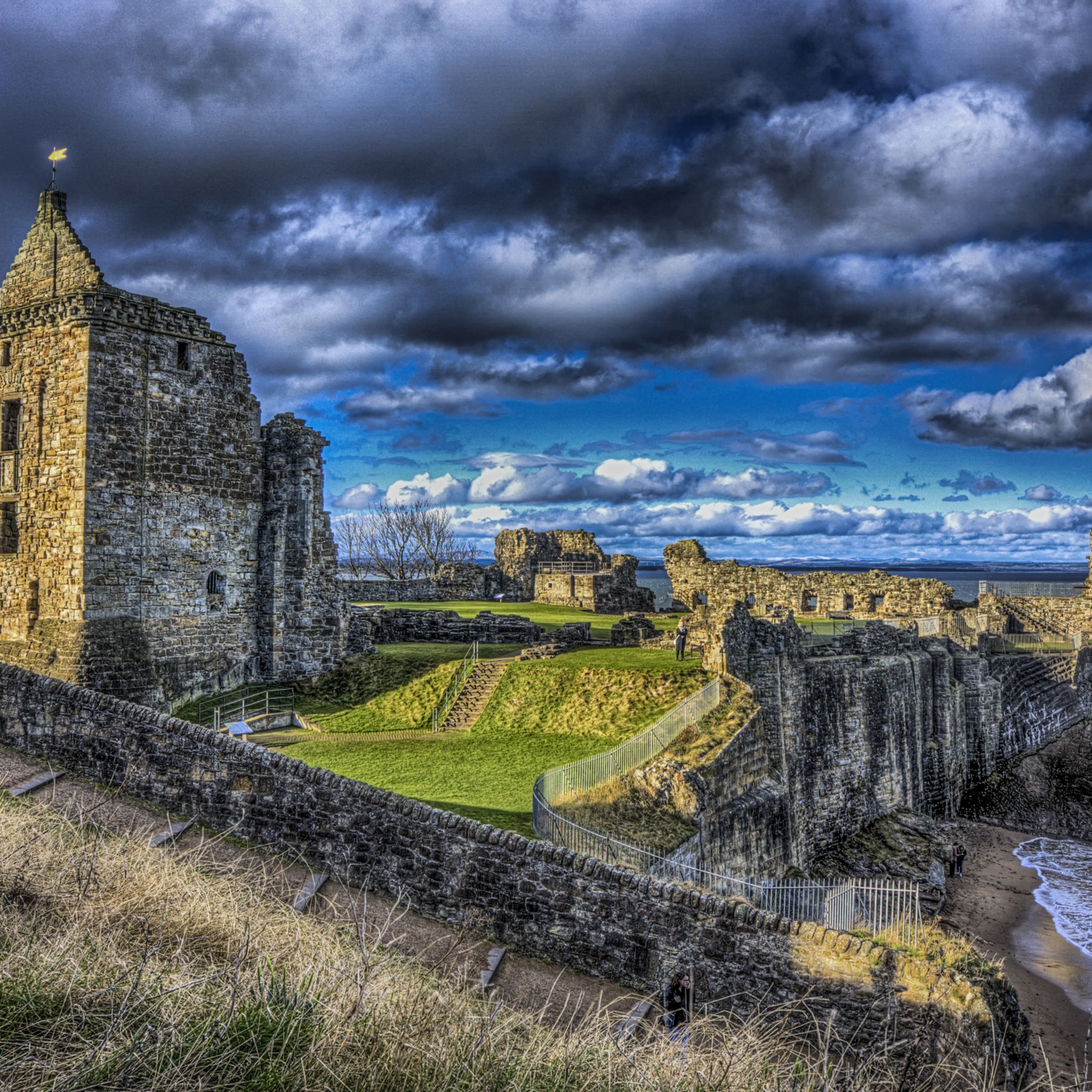
- The most popular castles is St Andrews Castle, a historical site that served as a bishop’s palace, fortress, and prison. Its ruins are situated on the coast, offering views of the sea.
- Another must-see spot is MacDuff's Castle, a castle ruin. Visitors can explore the remains of this historical fortification.
- Visitors also love Falkland Palace, a historical site. This palace served as a royal retreat for Scottish monarchs.
- Fife is known for fortified tower houses, coastal ruins, and preserved palaces. The region offers a variety of castles to see and explore, from medieval structures to Renaissance architecture.
- The castles in Fife are appreciated by the komoot community, with more than 120 upvotes and over 200 photos shared by visitors.
Last updated: June 24, 2026
St Andrews Cathedral Ruins
Highlight • Historical Site
Tip by

MacDuff's Castle
Highlight • Castle
Tip by

Sign up now to discover places like this
Get recommendations on the best single tracks, peaks, & plenty of other exciting outdoor places.
Sign up for free
Seafield Tower
Highlight • Castle
Seafield Tower, also known as the devil’s tower, is five stories high and was built using the local red sandstones. It would have had a vaulted storage area on the ground floor and great hall on the first floor and the upper floor level would have been for the Lord’s accommodation. The tower is protected by barnskin or curtain wall. Unfortunately, all has been lost due to the coast erosion- the significant northwest corner collapsed during the storm in 2013.
The 1744 plan of the tower shows ancillary buildings to the west of the tower, providing necessary support to the residents, including bakery, brewery and stables.
Tip by

Falkland Palace
Highlight • Historical Site
Inspired by the grand châteaux of France, in the 16th century James IV and his son, James V, transformed this favoured retreat of the royal Stuarts – the palace became one of the finest examples of Renaissance architecture in Scotland.
One of Falkland’s most famous royal residents – Mary, Queen of Scots – was enchanted with the palace, and took advantage of Falkland’s vast estate to pursue falconry and hunting, while also enjoying a game of tennis in what is now the oldest surviving real (or royal) tennis court in the world.
Today, visitors can wander through our historic orchard, complete with a living willow labyrinth, and marvel at the beauty of our formal gardens designed by Percy Cane.
Although it fell into disrepair after 1660, Falkland Palace was saved from ruin in the 19th century by the 3rd Marquess of Bute. Innovative and passionate, Bute gave the palace a new lease of life.
Intricate wood panelling, impressive painted ceilings and beautifully carved furniture provide a visually stunning insight into Bute’s artistic vision, showcasing his respect for the palace’s Renaissance roots.
Source: nts.org.uk/visit/places/falkland-palace
Tip by

Old Tulliallan Castle Ruins
Highlight • Castle
Tip by
Lady's Tower
Highlight • Monument
Tip by
Culross Palace and the Historic Village
Highlight • Historical Site
Explore the beautiful refurbished palace with its decorative painted ceilings and furnishings of the period. Behind the palace is the restored 17th century garden, complete with herbs, vegetables and fruit trees.
The Town House, once the legal and commercial centre of Culross, is also open to visitors as is the Study, where Bishop Leighton of Dunblane reputedly composed his sermons.
Tip by
Newark Castle Ruins
Highlight • Viewpoint
Tip by
Balmerino Abbey Ruins
Highlight • Historical Site
Tip by
Bessie Bar Steps
Highlight • Trail
Tip by
Sign up for free to discover even more castles in Fife.
Sign up for free
Already have an account?
Start today with a free account
Your next adventure awaits.
Login or Signup
Popular around Fife
The Central Belter — Gravel trails of the coast and Cairngorms
The North Sea Coast Cycle Route part 7 — Scotland
A fantastic journey along Britain’s entire East Coast – NCN 1
Intrusion into Scottish Territory – The Pictish Trail
Around the edge in 80 days — cycling the coastline of Britain
Fishing villages and rural idyll – cycling the Coast and Castles North
Hiking in Fife
Cycling in Fife
Road Cycling Routes in Fife
Running Trails in Fife
Other adventures in Fife


Tips from the Community

Saint Andrew, to whom this former church—whose ruins still serve as a picturesque backdrop—was dedicated, belongs to the circle of the twelve apostles whom Jesus Christ called to follow him. However, in biblical accounts, he is usually somewhat overshadowed by his far more famous brother, Saint Peter. The Gospels present the calling of the two brothers in different ways. According to the Gospel of John (John 1:40-42), Andrew is called first (together with another unnamed disciple). Later, he tells his brother that he has found the Messiah. In Scotland, however, Saint Andrew is particularly venerated, as he is the patron saint of the country, and the X-shaped white "St. Andrew's Cross," on which he was executed, forms the Scottish national flag against a blue background. The feast day of Saint Andrew is celebrated on November 30th in all major Christian denominations.
0
0


Admission was free - really worth seeing!
0
0

It's astonishing how "new" the graves, or rather the inscriptions on the gravestones, are, given that the church was abandoned during the Scottish Reformation in the 16th century. There are at least inscriptions from recent years. We set out to find the oldest date possible, although we were far from able to verify all of them. On a wall inscription in the east, toward the old bell tower, we found 1708, and on a nearby gravestone, 1712. We didn't find any older ones, or some were weathered and unreadable.
1
0

St Andrews Cathedral is the ruin of a cathedral in the Scottish town of St Andrews in the council area of Fife. The complex, located near the North Sea shore near St Andrews Castle in the historic centre of St Andrews, was central to the development of the town and its status as the Christian centre of Scotland.[1] Numerous buildings are individually listed and the entire complex is classified as a Scheduled Monument.[2] It is one of the Guardianship Monuments of Historic Scotland.[3] St Andrews Cathedral is not to be confused with the Cathedral Church of St Andrew in Inverness.
1
0

Along the costal path, this castle is hard to miss. Unfortunately it has been fenced off due to its condition, but it still well viewed from the path.
0
0

Impressive well preserved building and interior. Beautiful terraced garden
0
0
Frequently Asked Questions
Which castles in Fife are most significant historically?
Fife is rich in historical castles. St Andrews Castle, for example, served as a bishop’s palace, fortress, and prison, playing a key role in the Scottish Reformation. Falkland Palace was a beloved royal retreat for Scottish monarchs, including Mary, Queen of Scots. Aberdour Castle is one of Scotland's oldest standing masonry castles, with parts dating back to the 12th century, showcasing centuries of architectural evolution.
Are there any family-friendly castles to visit in Fife?
Yes, several castles in Fife are great for families. St Andrews Castle allows exploration of its ruins, including the famous bottle dungeon and siege tunnels, which can be fascinating for older children. Falkland Palace offers beautiful gardens and a glimpse into royal life, often appealing to all ages. Culross Palace and the Historic Village also provide an engaging historical experience for families.
What kind of outdoor activities can I do near Fife's castles?
Many castles in Fife are situated near scenic routes perfect for outdoor activities. You can find excellent cycling routes, such as those included in the Cycling in Fife guide, which might take you past coastal ruins like Newark Castle. For those who enjoy gravel biking, the Gravel biking in Fife guide offers routes that pass by historical sites. Additionally, some castles are integrated into walking paths, offering opportunities for leisurely strolls or more challenging mountain hikes, as detailed in the Mountain Hikes in Fife guide.
Which castles in Fife offer unique architectural features?
Fife's castles boast diverse architectural styles. Aberdour Castle is notable for its blend of medieval, Renaissance, and Stuart architecture, featuring a 17th-century painted ceiling. Kellie Castle is renowned for its fabulous plasterwork ceilings, pine panelling, and distinctive crow-stepped gables. Ravenscraig Castle is historically significant as one of the first castles in Britain designed specifically to withstand cannon fire, with its unique D-shaped towers.
Are there any hidden gem castles in Fife worth discovering?
Yes, Fife has some lesser-known but equally captivating castles. Kellie Castle, a charming fortified tower house, is often considered a hidden gem, known for its intricate interiors and beautiful Arts and Crafts garden. MacDuff's Castle, while a ruin, offers an atmospheric and free-to-explore site with local legends of a 'grey lady'. Newark Castle, a romantic ruin perched on a crumbling cliff, provides picturesque views along the coastal path.
When is the best time of year to visit castles in Fife?
The best time to visit castles in Fife is generally during the spring and summer months (April to September) when the weather is milder and daylight hours are longer, making it ideal for exploring ruins and gardens. However, many castles, especially those with indoor sections like Falkland Palace and Kellie Castle, are open year-round, offering a quieter, atmospheric experience during the autumn and winter.
Which castles in Fife provide stunning coastal views?
Several castles in Fife offer dramatic coastal vistas. St Andrews Castle is spectacularly situated on a clifftop overlooking the North Sea. Ravenscraig Castle dramatically perches on a rocky promontory with views of the Firth of Forth. Newark Castle Ruins, located on a crumbling cliff near St Monans, also provide wonderful views out to sea from its atmospheric remains.
Are there any castles in Fife known for their gardens?
Yes, several castles in Fife feature beautiful gardens. Aberdour Castle boasts a delightful walled garden and terraces. Falkland Palace is set amidst beautifully manicured gardens and features the oldest surviving royal tennis court. Kellie Castle is renowned for its Arts and Crafts garden, filled with old varieties of roses, offering a tranquil experience.
Can I visit any castle ruins for free in Fife?
Yes, MacDuff's Castle is a set of atmospheric ruins that can be explored for free. While entry to Ravenscraig Castle itself may not always be possible, its grounds are accessible and offer historical importance and stunning views. The ruins of Newark Castle are also freely viewable from the coastal path.
What makes St Andrews Castle a unique visit?
St Andrews Castle is unique due to its dramatic clifftop location and its turbulent 450-year history as a bishop's palace, fortress, and state prison. Visitors can explore the infamous bottle dungeon, where Protestant preacher George Wishart was imprisoned, and the complex siege tunnels, which offer a tangible connection to its dark and compelling past during the Scottish Reformation.
What is special about Falkland Palace?
Falkland Palace is special as an exquisite Renaissance palace that served as a cherished retreat for generations of Scottish monarchs, including Mary, Queen of Scots. It features stunning interiors like the Chapel Royal and Tapestry Gallery, beautifully manicured gardens, and the oldest surviving royal tennis court. Its picturesque setting has also made it a popular filming location, notably for 'Outlander'.
Are there any castles in Fife that played a significant role in military defense?
Ravenscraig Castle is particularly significant in military history as arguably the first castle in Britain designed specifically with defense against firearms and cannon fire in mind. St Andrews Castle also played a crucial military role, enduring brutal sieges and featuring complex mine and countermine tunnels dug during conflicts like the siege of 1546-47.
Most popular routes in Fife
Most popular attractions in Fife

Get inspired with the komoot mobile app


Didn’t find what you were looking for?
Explore Fife’s best castles region by region:
Explore more
Looking for the best castles somewhere else? Discover other guides in Fife:
