The best gravel rides around Plessis-De-Roye
4.0
(2)
9
riders
3
rides
Gravel biking around Plessis-De-Roye, located in the Oise department of northern France, offers routes through a landscape characterized by extensive forests and agricultural lands. Approximately 45% of the territory is covered by forests and another 45% by agricultural areas, providing a network of unpaved roads, forest tracks, and rural paths. The region features varied terrain, from well-packed dirt to looser gravel surfaces, with the Divette river adding to the natural environment. This setting provides diverse gravel cycling opportunities away from…
Last updated: July 4, 2026
3
riders
53.0km
03:15
360m
360m
Moderate gravel ride. Good fitness required. Mostly paved surfaces. Suitable for all skill levels.
2
riders
37.8km
02:26
400m
390m
Moderate gravel ride. Good fitness required. Mostly paved surfaces. Suitable for all skill levels.

Sign up for free
1
riders
26.8km
01:38
90m
100m
Easy gravel ride. Great for any fitness level. Mostly paved surfaces. Suitable for all skill levels.
1
riders
Moderate gravel ride. Good fitness required. Mostly paved surfaces. Suitable for all skill levels.
4.0
(2)
2
riders
39.3km
02:36
450m
450m
Moderate gravel ride. Good fitness required. Mostly paved surfaces. Suitable for all skill levels.
Our route recommendations are based on thousands of hikes, rides, and runs completed by other people on komoot.
Start today with a free account
Your next adventure awaits.
Login or Signup



Tips from the Community

charming village with a beautiful church and a very reputable old inn!
0
0

excellent journey
0
0

Created in 1919, the Méry-la-Bataille national necropolis contains the remains of 1,538 soldiers who died for France during the Battle of Matz in June 1918. Adjacent to the municipal cemetery, it brings together the bodies exhumed from various temporary cemeteries in the Oise, of which 1,286 are buried in individual graves and 254 in two ossuaries. This memorial pays tribute to the soldiers who fell during one of the decisive offensives of the First World War, which helped halt the German advance towards Paris.
0
0

This impressive cemetery was built in 1920-1921 on a site that was heavily contested during the First World War. It contains the remains of 1,258 French soldiers, 547 of whom are buried in two ossuaries. One French soldier from the Second World War is also buried here. Adjacent is a German military cemetery with the remains of 1,095 soldiers, 388 of whom are buried in collective graves, together with four British and two French soldiers. The necropolis is located in a region where the German advance towards Paris passed through in 1914, and where fierce fighting took place in 1918 during the Battle of Matz. Today it is a serene place of remembrance and reconciliation, in the middle of a landscape that was once the scene of devastating battles.
4
0
Each cross indicates the function of the warrior.
4
0
The Lassigny military cemetery is an impressive and sober memorial site where 1,777 German soldiers from the First World War are buried. The cemetery was created in 1919 by the French military authorities, initially as a Franco-German communal cemetery. Its origins lie in a mass grave from the summer of 1918, in which 55 unknown French soldiers were buried. In 1922, the French bodies were transferred to another cemetery, after which the site was converted into a German military cemetery. The fallen came from more than 27 municipalities in the region, up to 18 km away. In 1977, the cemetery took on its current form, with metal crosses bearing the names and dates of the fallen. A monolithic memorial marks the entrance to the site.
4
0
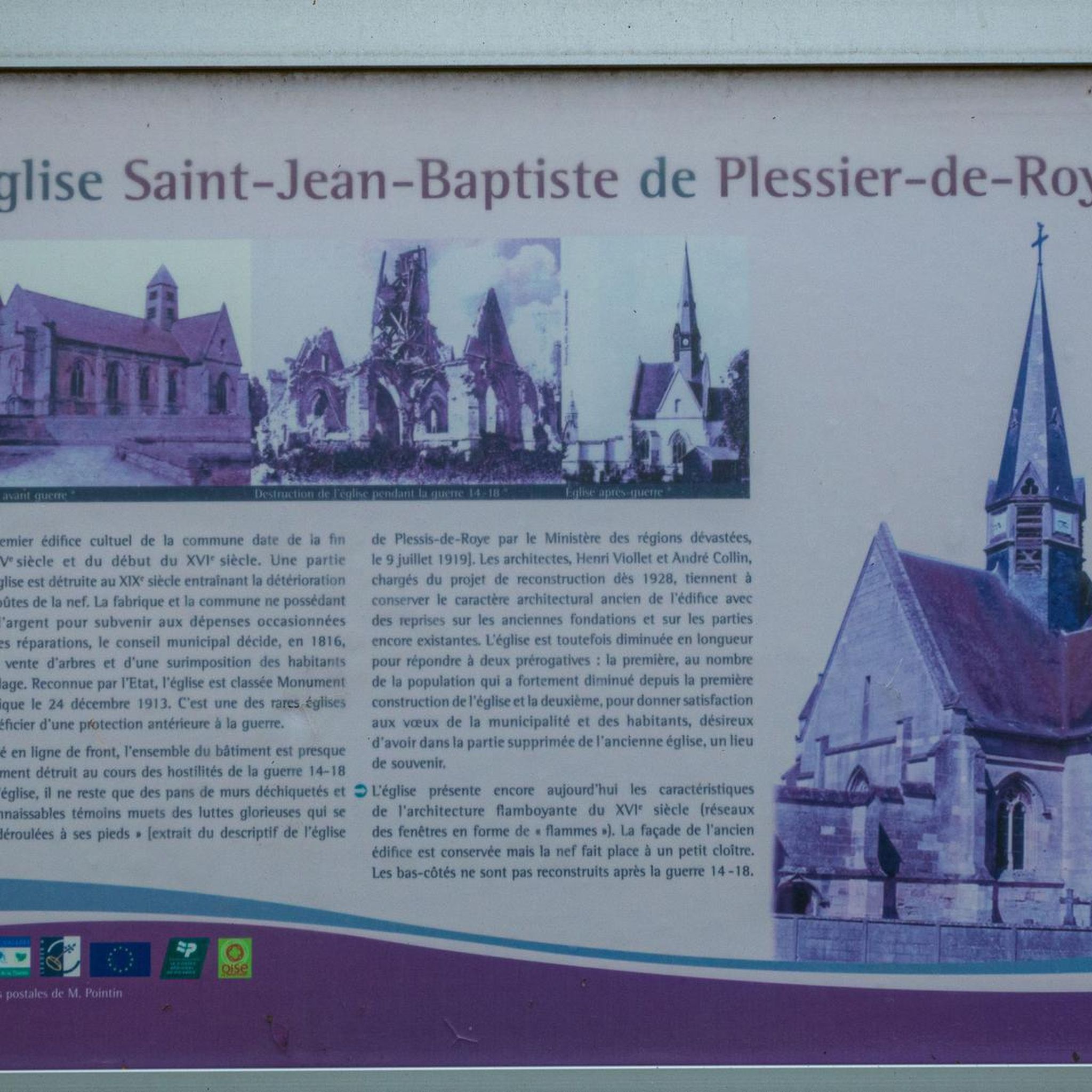
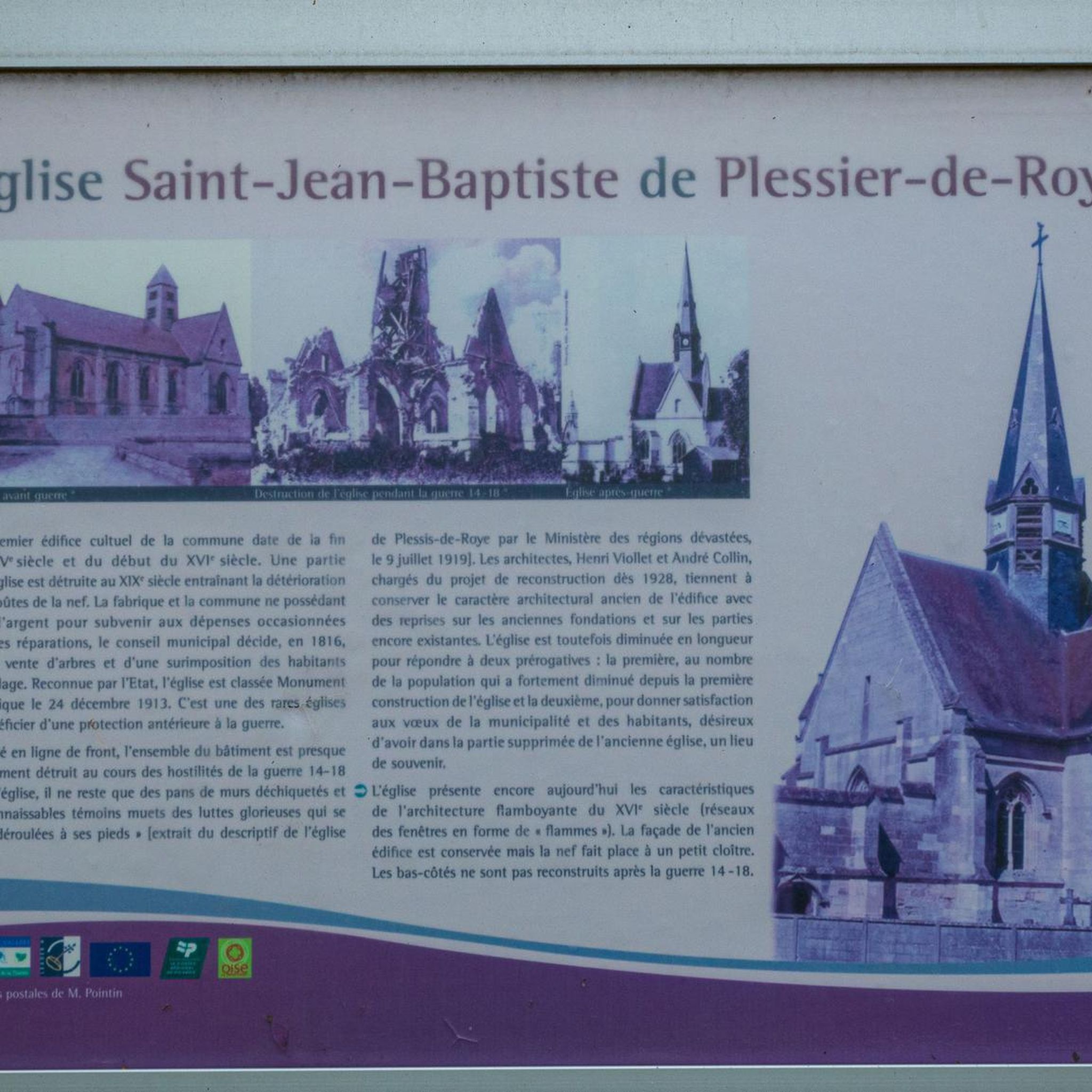
The Église Saint-Jean-Baptiste in Plessis-de-Roye is an exceptional example of reconstruction architecture with a deeply symbolic meaning. Originally built in the first half of the 15th century, the church was almost completely destroyed during the First World War. It was rebuilt between 1930 and 1932 by the architect André Collin, who deliberately chose to leave the nave unfinished. This gave the church the character of a small cloister — a powerful symbol of loss and remembrance of the devastation of war.
4
0
Frequently Asked Questions
What kind of terrain can I expect on gravel bike trails around Plessis-De-Roye?
The region around Plessis-De-Roye is characterized by extensive forests and agricultural lands, meaning you'll primarily encounter unpaved roads, forest tracks, and rural paths. The terrain varies from well-packed dirt to looser gravel surfaces, offering a diverse and engaging experience away from main roads.
Are there gravel bike routes suitable for beginners or those looking for an easier ride?
Yes, while many routes are moderate, the area offers options for various skill levels. For an easier ride, consider the 2 falls – Lock of Longueil Annel, loop from Cité du Champ Louvet, which is an easy 25.1 km trail with less elevation gain.
How many gravel bike trails are available in the Plessis-De-Roye area?
There are several gravel bike trails around Plessis-De-Roye, with komoot featuring at least 5 routes in the immediate vicinity. These routes offer a good variety of distances and experiences through the local landscape.
What are some notable landmarks or attractions I might see while gravel biking here?
While gravel biking, you can explore the natural beauty of the Oise department. For historical and cultural points of interest, consider visiting nearby attractions such as Château Mennechet or the Notre-Dame d'Ourscamp Abbey. The region also has a historical park on the Butte du Plémont detailing World War I history.
What do other gravel bikers say about the trails in Plessis-De-Roye?
The gravel biking routes around Plessis-De-Roye are highly rated by the komoot community, with an average score of 3.5 stars from over 3 reviews. Riders often praise the varied terrain, including forest tracks and rural landscapes, and the opportunity to explore away from main roads.
Are there any circular gravel bike routes available?
Yes, many of the gravel routes in the area are designed as loops. For example, the The Wash House – Carrière Martin loop from Cuvilly is a moderate 39.3 km circular trail that takes you through varied landscapes.
What is the best season to go gravel biking around Plessis-De-Roye?
The Oise region, including Plessis-De-Roye, is beautiful throughout the year. Spring and autumn generally offer pleasant temperatures and vibrant scenery, making them ideal for gravel biking. Summer can also be great, especially in the shaded forest sections, while winter rides are possible but may require more suitable gear for potentially muddy or colder conditions.
Can I find routes that are suitable for families with children?
The extensive network of forest paths and agricultural roads in the Oise department offers many quieter sections that can be suitable for families. While specific 'family-friendly' routes are not explicitly listed, easier and shorter loops on well-packed surfaces, like parts of the 2 falls – Lock of Longueil Annel, loop from Cité du Champ Louvet, could be adapted for family outings.
Are there options for longer gravel bike tours in the area?
Yes, if you're looking for a longer ride, the Footbridge over the Aisne – Vieux-Moulin loop from Ribécourt is a moderate 53.0 km path that offers varied terrain and scenic countryside, providing a more extended gravel biking experience.
Is it possible to access the gravel trails using public transport with a bike?
While specific public transport options directly to trailheads with bike carriage can vary, the broader Oise region is generally accessible. It's advisable to check local train or bus services for their bike policies and nearest stops to Plessis-De-Roye or surrounding towns before planning your trip. For general cycling tourism routes in the Oise region, you might find useful information on the Chantilly-Senlis Tourisme website.
Where can I find parking for my car when starting a gravel bike ride?
Parking availability can vary depending on your chosen starting point. Many rural areas and small villages around Plessis-De-Roye offer public parking spaces. It's recommended to check the specific starting location of your chosen route on komoot for details on nearby parking facilities.
Are there any gravel routes that include historical sites?
Yes, some routes combine natural landscapes with historical interest. The French Army Amx13 – Necropolis of Méry-la-Bataille loop from La Neuville-sur-Ressons is a 43.8 km trail that leads through historical sites and rural landscapes, offering a blend of nature and heritage.
Most popular routes around Plessis-De-Roye
Most popular attractions around Plessis-De-Roye

Get inspired with the komoot mobile app


Explore more
Browse the best Gravel rides in other regions.
