The best gravel rides around Scherlenheim
4.7
(3)
27
riders
13
rides
Gravel biking around Scherlenheim offers access to diverse landscapes within the Bas-Rhin department of France. The region features extensive forested areas, such as the Haguenau Forest, providing networks of forest tracks suitable for gravel bikes. Agricultural lands and vineyards are connected by quiet country roads and gravel paths. Additionally, riverine paths along waterways like the Moder and Rhine offer unpaved sections, while the proximity to the Vosges mountains provides options for more challenging, hilly terrain.
Best gravel bike trails around…
Last updated: July 2, 2026
5.0
(1)
7
riders
84.9km
06:05
1,080m
1,080m
Hard gravel ride. Very good fitness required. Mostly paved surfaces. Suitable for all skill levels.
2
riders
141km
09:45
2,090m
2,090m
Hard gravel ride. Very good fitness required. Mostly paved surfaces. Suitable for all skill levels.

Sign up for free
5.0
(1)
3
riders
31.1km
02:04
260m
260m
Moderate gravel ride. Good fitness required. Mostly paved surfaces. Suitable for all skill levels.
5.0
(1)
7
riders
87.7km
04:57
390m
390m
Moderate gravel ride. Good fitness required. Mostly paved surfaces. Suitable for all skill levels.
3
riders
52.3km
03:42
740m
740m
Hard gravel ride. Very good fitness required. Mostly paved surfaces. Suitable for all skill levels.
Get access to more routes and recommendations from other explorers.
Sign up for free
Already have an account?
Our route recommendations are based on thousands of hikes, rides, and runs completed by other people on komoot.
Start today with a free account
Your next adventure awaits.
Login or Signup

Tips from the Community

The chapel was probably built in the 18th century on top of the southern hill, offering a breathtaking view of the village. Its name comes from the large wooden cross, painted black, installed in front of the chapel, facing the village of Dauendorf. On the feast of the Assumption and Pentecost, a pilgrimage of parishioners leaves the village heading towards the chapel. A religious celebration takes place outdoors under the large cross, as the chapel cannot accommodate all the faithful. (Info Commune de Dauendorf).
0
0

MAGNIFICENT COURSE TO RECOMMEND
0
0

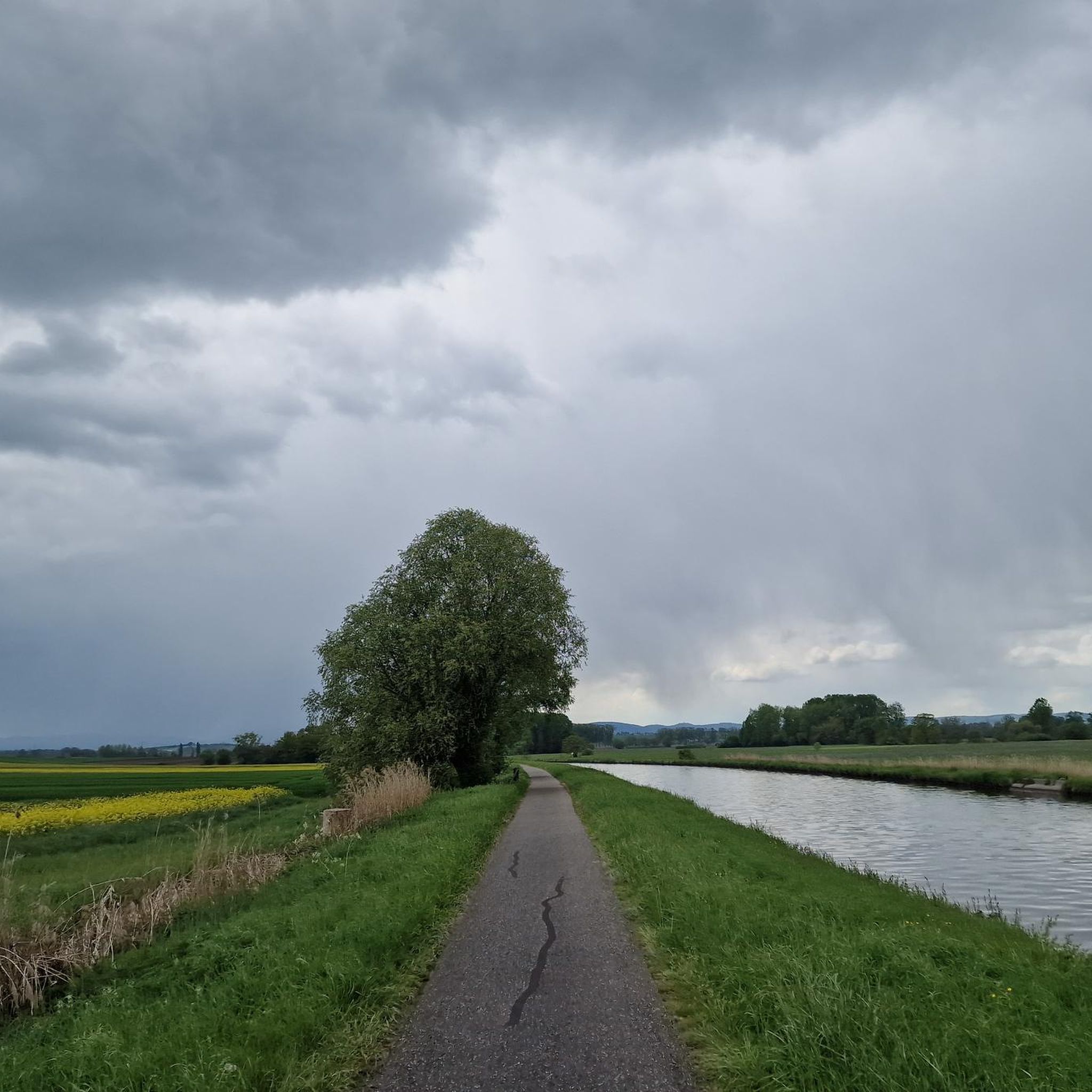
Great bike path. No cars, few bikes, and even fewer pedestrians.
1
0

The Château des Rohan, formerly called "The Little Alsatian Versailles," is located in the city center of Saverne on the Rhine-Marne Canal. This former bishop's castle, built in the 13th century and restored in the 19th century on the initiative of Napoleon III, now houses a museum, a cultural center, a youth hostel, and a school. The neoclassical façade (park side), made of pink sandstone, is 140 meters long, which is the same horizontal height as Strasbourg Cathedral. The Château des Rohan Museum presents extensive Gallo-Roman and medieval archaeological collections. It consists of three departments: Art and History, Louise Weiss, and Archaeology. The Art and History department encompasses many areas: paintings, prints, and 15th- and 16th-century polychrome wood carvings from the churches of Saverne and the region, as well as a room dedicated to the history of the castle. Louise Weiss Department To honor her Alsatian ties (her family originally came from Petite-Pierre near Saverne), journalist Louise Weiss (1893-1983) donated her collections (ethnographic objects, paintings, drawings, 19th- and 20th-century decorative arts, and personal archives) to the Saverne Museum in 1981 and 1983. Archaeological Department In the vaulted cellars of the castle, the museum houses a rich archaeological collection, including numerous Gallo-Roman funerary and votive steles. Tours of the museum and access to the castle roof are available (upon request). Admission (museum + roof access): €5 (adults) and €4 (students)
0
0

alley always well decorated
0
0

A large neoclassical palace from the late 18th century, especially in relation to the relatively small town. Located at the lower end of the old town, it has a large park at the rear, facing the Rhine-Marne Canal. The palace now belongs to the city and houses two museums, a primary school, a youth hostel, and several theaters and event venues. The varied history of its use is interesting; details can be found online: https://de.m.wikipedia.org/wiki/Rohan-Schloss
5
0

Saverne was already a Roman military post in the 4th century. From the 15th century until the French Revolution, Saverne was the residence of the powerful bishops of Strasbourg. The Château de Rohan, which boasts the longest neoclassical façade of any building in France, still bears witness to this.
1
0
Frequently Asked Questions
How many gravel bike trails are available around Scherlenheim?
There are over 20 gravel bike trails around Scherlenheim, offering a mix of moderate and difficult routes. This includes 10 moderate and 11 difficult options, ensuring choices for various skill levels.
What kind of terrain can I expect on gravel bike trails near Scherlenheim?
The terrain around Scherlenheim is diverse, featuring extensive forest tracks, vineyard paths, and riverine routes. You'll find shaded paths in significant forested areas like the Haguenau Forest, quiet country roads through vineyards and agricultural fields, and pleasant paths along waterways such as the Moder and Rhine. The proximity to the Vosges mountains also provides options for more challenging, hilly terrain.
Are there any challenging gravel bike routes for experienced riders?
Yes, Scherlenheim offers several challenging routes for experienced gravel bikers. For instance, the Château de La Petite Pierre – Saverne Town Center loop from Steinbourg is a difficult 84.7 km path with significant climbs. Another demanding option is the Saverne Town Center – Saverne Marina loop from Wilwisheim, which spans 141.4 km through river valleys and forested areas.
What do other gravel bikers enjoy most about the trails in Scherlenheim?
The gravel bike trails around Scherlenheim are highly rated by the komoot community, with an average score of 4.7 stars from 7 reviews. Riders often praise the varied terrain, which includes extensive forest tracks, vineyard paths, and riverine routes, providing a diverse and engaging experience for different ability levels.
Are there any family-friendly gravel biking options in the Scherlenheim area?
While many routes are rated moderate to difficult, the region's network of quiet country roads through agricultural fields and sections of riverine paths along the Rhine and Moder often provide flatter, more accessible sections suitable for families. Look for routes that specifically mention canal paths or less elevation gain for a more relaxed family outing.
What are some interesting places to explore or attractions near the gravel bike routes?
Beyond the trails, you can explore historical and cultural sites. Consider visiting the Villa Meteor in Hochfelden, or the charming Half-Timbered Houses in Bouxwiller. The Wingersheim lock also offers a picturesque spot to observe local waterways.
What is the best time of year for gravel biking around Scherlenheim?
The Bas-Rhin department, including Scherlenheim, is generally pleasant for cycling from spring through autumn. Spring offers blooming landscapes, while autumn provides beautiful foliage, especially in forested and vineyard areas. Summer can be warm, but forest tracks offer welcome shade. Winter riding is possible but may require appropriate gear for colder, potentially wetter conditions.
Are there any long-distance gravel biking routes near Scherlenheim?
Yes, for those seeking longer adventures, the Saverne Town Center – Saverne Marina loop from Wilwisheim is a substantial 141.4 km route. Another option is the Bruche Canal – Canal de la Bruche loop from Hochfelden, which covers 106.5 km through varied terrain.
Can I access gravel bike trails near Scherlenheim using public transport?
The Bas-Rhin department has a regional public transport network. While Scherlenheim itself is a rural commune, nearby larger towns like Hochfelden or Saverne, which are starting points for some routes, may offer better public transport connections. It's advisable to check local bus or train schedules for bike transport options to reach specific trailheads.
Are there any circular gravel bike routes available?
Many of the gravel bike routes around Scherlenheim are designed as loops, allowing you to start and finish in the same location. Examples include the popular Bruche Canal – Canal de la Bruche loop from Hochfelden and the La Petite-Pierre – Château de La Petite Pierre loop from Hattmatt, which offers a challenging 52.3 km ride.
Where can I find more information about cycling routes in the wider Bas-Rhin region?
For additional cycling inspiration and information on the broader Bas-Rhin region, you can explore resources like Visit Pays Rhénan, which provides details on various bike tours. The region also offers numerous walking and hiking trails, some of which may be suitable for gravel biking, as detailed on Visit Haguenau.
Most popular routes around Scherlenheim
Most popular attractions around Scherlenheim

Get inspired with the komoot mobile app


Explore more
Browse the best Gravel rides in other regions.
