Top 20 Castles around Bertem
Best castles around Bertem offer a glimpse into the region's historical architecture and heritage. The area features a variety of historical sites, including castles with origins dating back to the 12th century. These structures are often set within wooded landscapes, providing points of interest for those exploring the natural surroundings. Bertem's historical significance is reflected in its preserved architectural landmarks.
Best castles around Bertem
- The most popular castles is Ter Heyden Keep, a castle that features a residential tower…
Last updated: August 19, 2026
Ter Heyden Keep
Highlight • Castle
Tip by

Mirror Pond with a view of the AfricaMuseum
Highlight • Lake
Translated by Google •
Tip by

Sign up now to discover places like this
Get recommendations on the best single tracks, peaks, & plenty of other exciting outdoor places.
Sign up for free
Ter Heiden Tower
Highlight • Castle
Translated by Google •
Tip by

Saint Hubert Chapel
Highlight • Religious Site
Translated by Google •
Tip by

Arenberg Castle
Highlight • Castle
Translated by Google •
Tip by

Sign up for free to discover even more castles around Bertem.
Sign up for free
Already have an account?
Start today with a free account
Your next adventure awaits.
Login or Signup
Tips from the Community


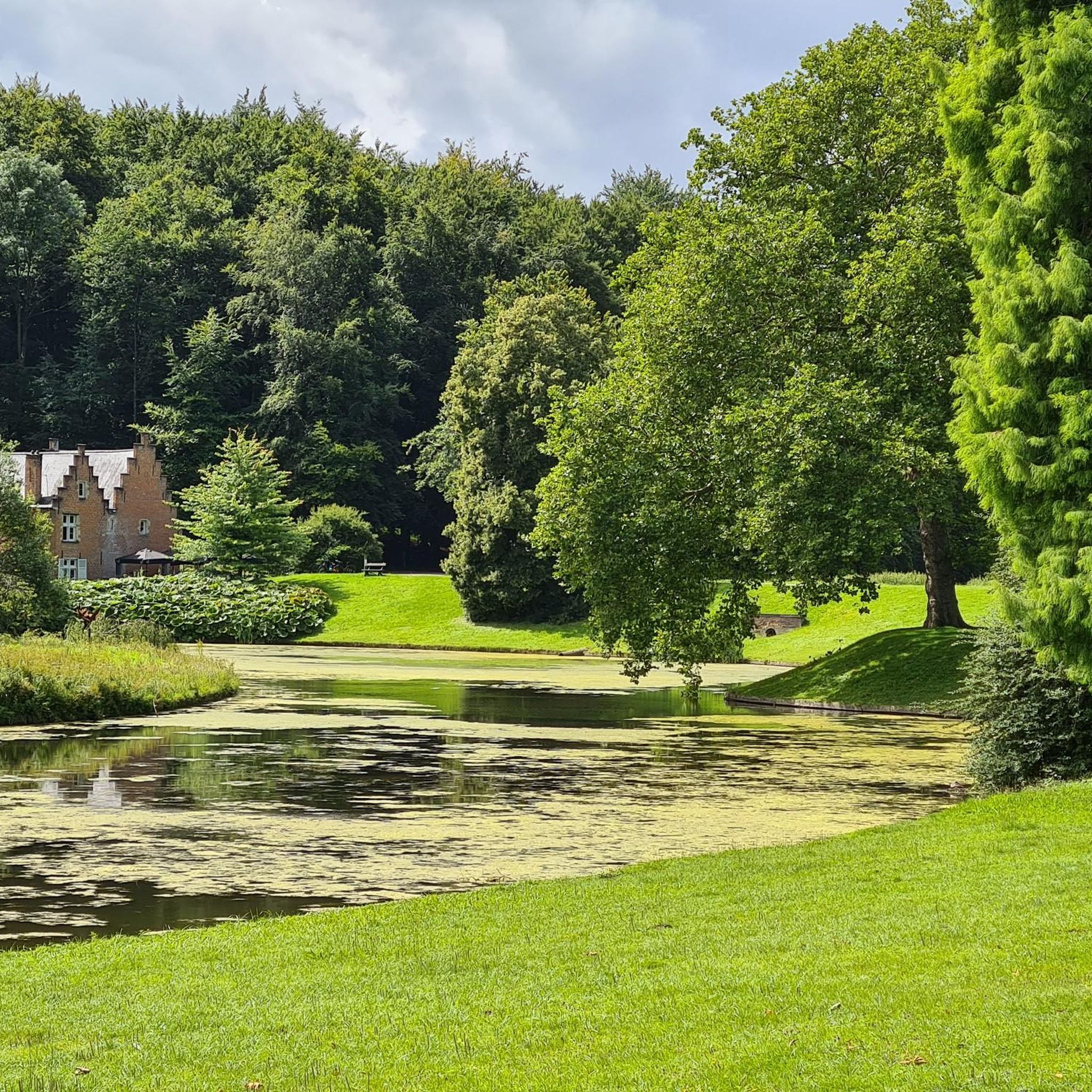
A beautiful place for rest and walking: you can stroll along it, enjoy the greenery and water, and it is part of the historical and natural charm of Tervuren.
7
0

The veneration of Saint Hubert in Tervuren, the presumed place of death of the patron saint of hunters, dates back to at least the 16th century and is probably even older. Every year on the last Sunday in October, an open-air mass is celebrated there in honor of Saint Hubert, and horses and dogs are blessed to protect them from running amok.
4
0

The Donjon Ter Heyden, also known as the tower of Ter Heyden, is a residential tower in the Belgian town of Rotselaar (province of Flemish Brabant) from the mid-fourteenth century. The donjon was built between 1350 and 1363 by order of Gerard van der Heyden, the then bailiff of the Duchy of Brabant, when he acquired the status and funds through a marriage with a noblewoman to erect a building of such calibre.
3
0

The watermill at Arenberg Castle was probably rebuilt around 1636 on a watermill site known before 1286, which was then equipped with two waterwheels. Major repairs were carried out on the locks around 1722-23 and 1733-35, and images of the mill also indicate modifications to the mill building in the 18th century. Around 1875, the watermill underwent a facade restoration and extension according to the then prevailing views, under the direction of architect Claes. At the same time (1870-80), the mill was equipped with a new bluestone lock and two wooden waterwheels. The waterwheels were replaced by metal wheels at the end of the 19th century, and the locks were also modified in the early 20th century. In 1940, the mill was demolished and the mill was converted into a drawing room; externally the mill was preserved, as well as the lock and the two water wheels. Source and more information: https://inventaris.onroerenderfgoed.be/erfgoedobjecten/42570
7
0
The first mention of a castle dates from 1371 when it was a heavy keep built by Rasse de Grez, also known as Raes van Graven, a knight who lived from 1368 to 1450 and was lord of Heverlee, Vaalbeek, Bertem, Blanden, Malève and Terbruggen, among other things. The castle was demolished and the domain was ceded to the Croys (family of Croÿ) in 1446. During the first half of the sixteenth century, the reconstruction of the castle was restarted under Guillaume II de Croÿ (Willem II van Croÿ). His successor and nephew, Philip II van Croÿ, had it completed and finished, including a moat. He also had the park laid out and the avenue to Leuven extended. After the death of Charles III of Croÿ in 1612, the castle went via his sister, Anna, to the Dukes of Arenberg who lived there until the First World War. In 1920 the university acquired the domain. Sources and more info: - https://inventaris.onroerenderfgoed.be/erfgoedobjecten/42570 - https://www.kuleuven.be/erfgoed/gebouwen-en-monumenten/arenbergkasteel
7
0

Frequently Asked Questions
Which castles are most popular with visitors around Bertem?
Visitors frequently appreciate Ter Heyden Keep, known for its striking location in the middle of an artificial lake. Another highly rated spot is Ter Heiden Tower, a 30-meter high residential tower with six levels, standing on a white stone base in the water.
Can I visit Leefdaal Castle?
While Leefdaal Castle is a notable Renaissance castle with late medieval origins dating back to the 12th century, it is privately owned and not open to the public for interior visits. You can, however, appreciate its exterior and the surrounding historical landscape.
What is unique about Ter Heyden Keep?
Ter Heyden Keep is a residential tower from the mid-fourteenth century, uniquely situated in the middle of an artificial lake. Its impressive structure and setting make it a popular spot for visitors to admire.
Are there family-friendly castles to visit near Bertem?
Yes, Ter Heyden Keep and Arenberg Castle are both considered family-friendly. Sint-Hubertus Chapel, located near the remains of the former Castle of Tervuren, also offers a historical site within a park setting that families might enjoy.
Are any castles around Bertem wheelchair accessible?
Arenberg Castle is noted as being wheelchair accessible. This castle, now part of KU Leuven's science campus, offers a chance to explore its historical grounds.
What kind of historical significance do the castles in the Bertem region hold?
The castles around Bertem, such as Leefdaal Castle and Ter Heyden Keep, showcase architectural evolution from the 12th century through the Renaissance. They reflect the region's rich past, with structures built by prominent families and later undergoing significant renovations, often serving as status symbols in the late Middle Ages.
Can I find viewpoints or natural settings near the castles?
Many castles are set within beautiful natural surroundings. Leefdaal Castle is situated in a wooded area with a watermill, and Arenberg Castle is located within the expansive Arenberg Park, offering green spaces and viewpoints. Ter Heyden Keep is notable for its setting in an artificial lake.
Are there hiking trails around the castles near Bertem?
Yes, there are several hiking opportunities. For example, you can find routes like the 'Leefdaal Castle – Beautiful view over the fields loop' which is an easy 6.2 km hike. You can explore more hiking trails in the area by visiting the Hiking around Bertem guide.
What other outdoor activities can I do near the castles?
Beyond hiking, the area offers options for running and mountain biking. You can find running routes like the 'Cycle Path Through the Fields – Leefdaal Castle loop' (moderate, 11 km) in the Running Trails around Bertem guide. For mountain biking, check out the MTB Trails around Bertem guide for routes such as the 'Huldenbergroute'.
What do visitors enjoy most about the castles around Bertem?
Visitors particularly enjoy the picturesque settings, such as the 'nice tower in the middle of an artificial lake' at Ter Heyden Keep, which invites pleasant viewing. The 'super nice atmosphere with the castle and forest roads' around Leefdaal Castle is also frequently mentioned.
Is <a href="https://www.komoot.com/highlight/1400340" target="_blank" rel="noopener">Arenberg Castle</a> open to the public?
Arenberg Castle is now part of KU Leuven and serves as a campus for Science and Technology. While the castle itself houses university functions, the surrounding Arenberg Park is a protected villagescape and generally accessible for walks and enjoyment of the historical grounds.
Most popular attractions around Bertem

Get inspired with the komoot mobile app


Explore more
Looking for the best castles somewhere else? Discover other guides around Bertem:
