The best MTB trails around gmina gmina Nurzec-Stacja
5.0
(4)
37
riders
8
rides
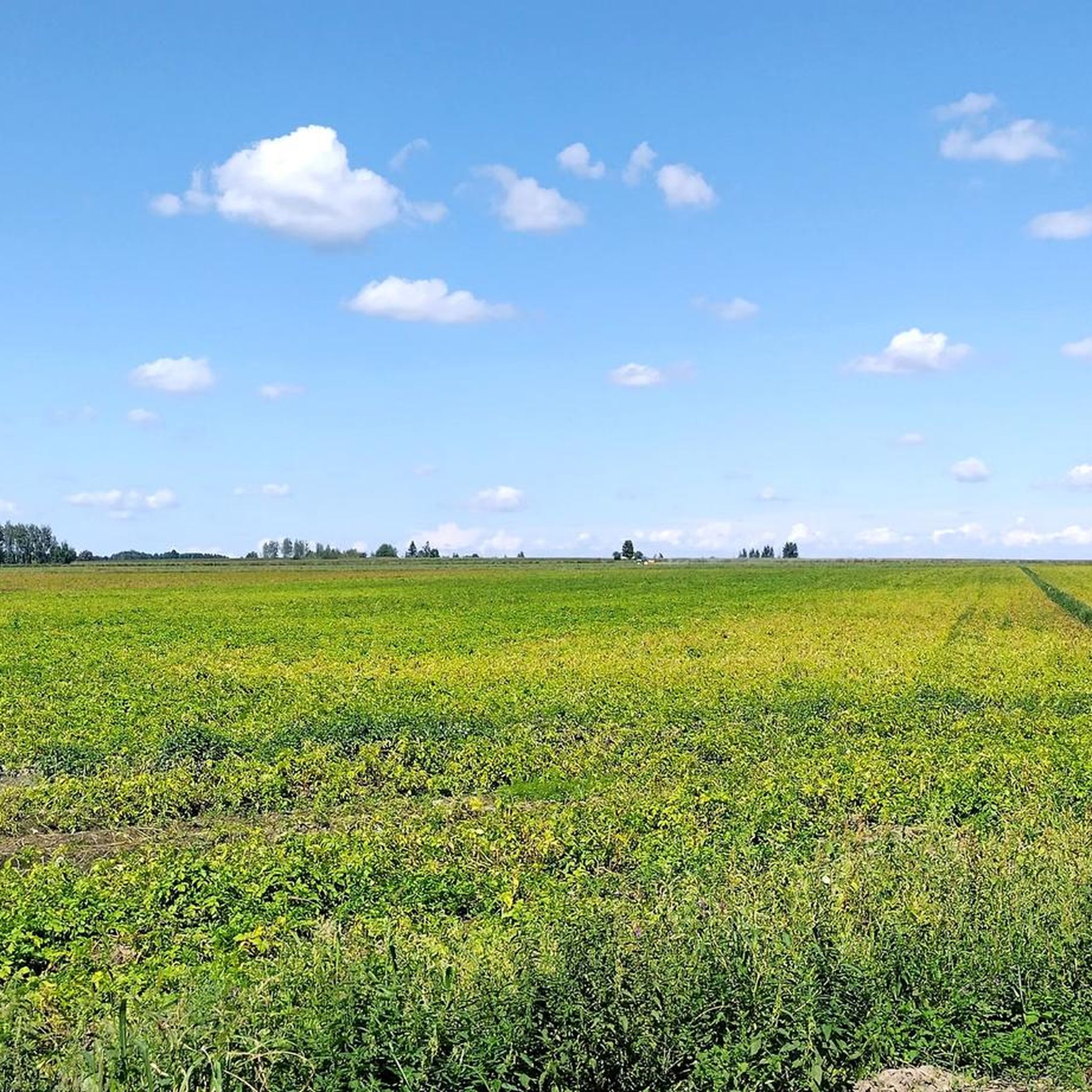
Mountain biking around gmina gmina Nurzec-Stacja offers routes through varied terrain, characterized by river valleys and agricultural landscapes. The region features gentle elevation changes, making it accessible for different skill levels. Trails often follow waterways like the Mahomet River and pass through areas with specific geological features such as chalk quarries. The landscape provides a mix of open views and forested sections suitable for mountain biking.
Best mountain bike trails around gmina gmina Nurzec-Stacja
- The most popular mountain bike trail…
Last updated: May 21, 2026
11
riders
19.4km
01:33
160m
160m
Moderate mountain bike ride. Great for any fitness level. Advanced riding skills necessary.
5.0
(1)
11
riders
8.30km
00:41
60m
60m
Moderate mountain bike ride. Great for any fitness level. Advanced riding skills necessary.

Sign up for free
5.0
(1)
5
riders
27.8km
01:59
140m
150m
Easy mountain bike ride. Great for any fitness level. Suitable for all skill levels.
5.0
(1)
4
riders
15.5km
01:19
160m
160m
Easy mountain bike ride. Great for any fitness level. Suitable for all skill levels.
5.0
(1)
6
riders
Easy mountain bike ride. Great for any fitness level. Suitable for all skill levels.
Get access to more routes and recommendations from other explorers.
Sign up for free
Already have an account?
Our route recommendations are based on thousands of hikes, rides, and runs completed by other people on komoot.
Start today with a free account
Your next adventure awaits.
Login or Signup


Tips from the Community

Fronołów – a stop on the Siedlce–Czeremcha railway line located in the village of Mierzwice-Kolonia, in the Masovian Voivodeship, Poland. The name Fronołów is supposedly derived from the surname of the Russian engineer Fronołów, who was supposed to have designed a steel railway bridge at this location. However, this information is false. The bridge was designed by Lavr Proskurjakov. The name Fronołów likely comes from a corruption of the name of the nearby village of Franopol.
1
0

Before organizing your route, be sure to check the ferry times and ticket prices: https://podlasie.siematycze.pl/83-siematycze-przeprawa-promowa-mielnik-zabuze It's worth having cash with you.
3
2
Mahomet is located northeast of Siemiatycze, it is a left tributary of the Kamionka River. Its length is 8 kilometers.
0
0
Wooden Orthodox chapel, next to it there is a cross
0
0
The Roman Catholic Church of the Transfiguration of the Lord is located in the eastern part of Mielnik, on a hill. It is an oriented, neo-Baroque church, with its facade facing the road. The church was built in the years 1912-1920. Its efficient construction was prevented by war accidents and financial difficulties. During the Polish-Bolshevik fighting in 1920, the church was damaged, so its full completion took place after all the fighting had ceased. Even before the Bolshevik invasion, thanks to the efforts of Father Ikonowicz, it was possible to build a large altar, the most necessary accessories for celebrating the Holy Mass were acquired and the old organ was installed. Thanks to the efforts of the next parish priest - Father Konstanty Cegielski, two bells were funded in 1927. In 1940, the church was converted into a canteen for Soviet soldiers guarding the border. In 1941 and 1944, artillery shells destroyed the porch and damaged the walls and roof. During this period, partial repairs to the church were started by the then administrator of the Mielnik parish – Fr. Henryk Kardasz, parish priest from Niemirów. After another destruction in 1944, the church was partially restored. In 1972, a belfry was built. Next to the church is the cemetery of the Transfiguration of the Lord, established in 1913, where the parish priest of Mielnik was buried. Next to the church, in 1981, a chapel of St. Barbara, the patron saint of miners and workers of the Mielnik chalk mine, was built. Two missionary crosses were also placed on the church square, one of which was consecrated by Pope John Paul II during his pilgrimage to Drohiczyn in 1999. Since 1950, pastoral work in the Mielnik parish has been carried out by the fathers from the Congregation of the Sacred Hearts of Jesus and Mary. Currently, the main altar contains a painting of the Mother of God with Child, while the side altars contain paintings of the Transfiguration of the Lord and Blessed Father Damian de Veuster from the Congregation of the Sacred Hearts.
0
0
The Mielnik Land History Centre – Museum in Mielnik is engaged in the popularization and dissemination of the history of the Mielnik Land. Throughout the year, souvenirs, photographs, ethnographic monuments and other exhibits are collected, which are a memento of people living in the Mielnik Commune. Therefore, in addition to exhibitions of paintings, photographs and other arts, local exhibitions related to the life and activities of the Mielnik residents are also organized. Work is also carried out on finding interesting historical sources regarding the history of Mielnik and the surrounding area, as well as interviews with the oldest residents of the Mielnik Commune, which are later recorded and stored in the ODZM. The ODZM – Museum also houses the Tourist Information Point.
0
0
The open-pit chalk mine in Mielnik was recognized as one of the 16 new Wonders of Poland in the National Geographic magazine plebiscite in 2023. Chalk is a sedimentary rock and comes from the Cretaceous period. It is a soft, not very compact, porous rock. In the place where it was deposited 71-83 million years ago there was a sea, where various marine creatures gathered: ammonites, belemnites, sea urchins, snails, crabs. Thanks to the limestone crustaceans and their armor, chalk deposits began to form. The beginnings of chalk mining in Mielnik date back to the 16th century. It was extracted for construction purposes, using the so-called "poor man's shaft" method. Initially, it was used to whitewash interiors, and lime was also burned from it. The first mention of a lime miner dates back to 1551. It was not until the 18th century that mass lime production began in Mielnik. Until the mid-20th century, chalk was extracted manually in Mielnik for the needs of local residents. In 1954, a state-owned enterprise was established, which professionally dealt with the extraction and processing of chalk. It was extracted using pickaxes, shovels, axes. In 1956, construction of a chalk drying and grinding plant began. In the second half of the 20th century, excavators and bulldozers were introduced. After extraction, the chalk was stored at the plant on heaps. From there, horses pulled wagons with chalk to the kilns on a narrow-gauge railway, where the drying process took place in coal-fired kilns. Then it was loaded back onto wagons and taken to the mill, where the chalk was ground. The minerals were manually loaded onto carts and transported to the tile factory in Siemiatycze and Milejczyce. In its heyday, over 100 people worked in the plant and the mine. In the 60s and 70s, a second chalk mine also operated in Mielnik nad Bugiem, in the place of today's football stadium. In the 90s, the plant was privatized, and the number of people employed also decreased significantly. Chalk is used for various purposes: in agriculture for soil deacidification, for the production of cement and tires. It is a component of fodder chalk, fertilizer chalk, paint chalk, and technical chalk. It is used in the pharmaceutical industry, for window seals, roof tiles, paints, powders, toothpastes, in the ceramics, chemical, and even cosmetics industries.
0
0
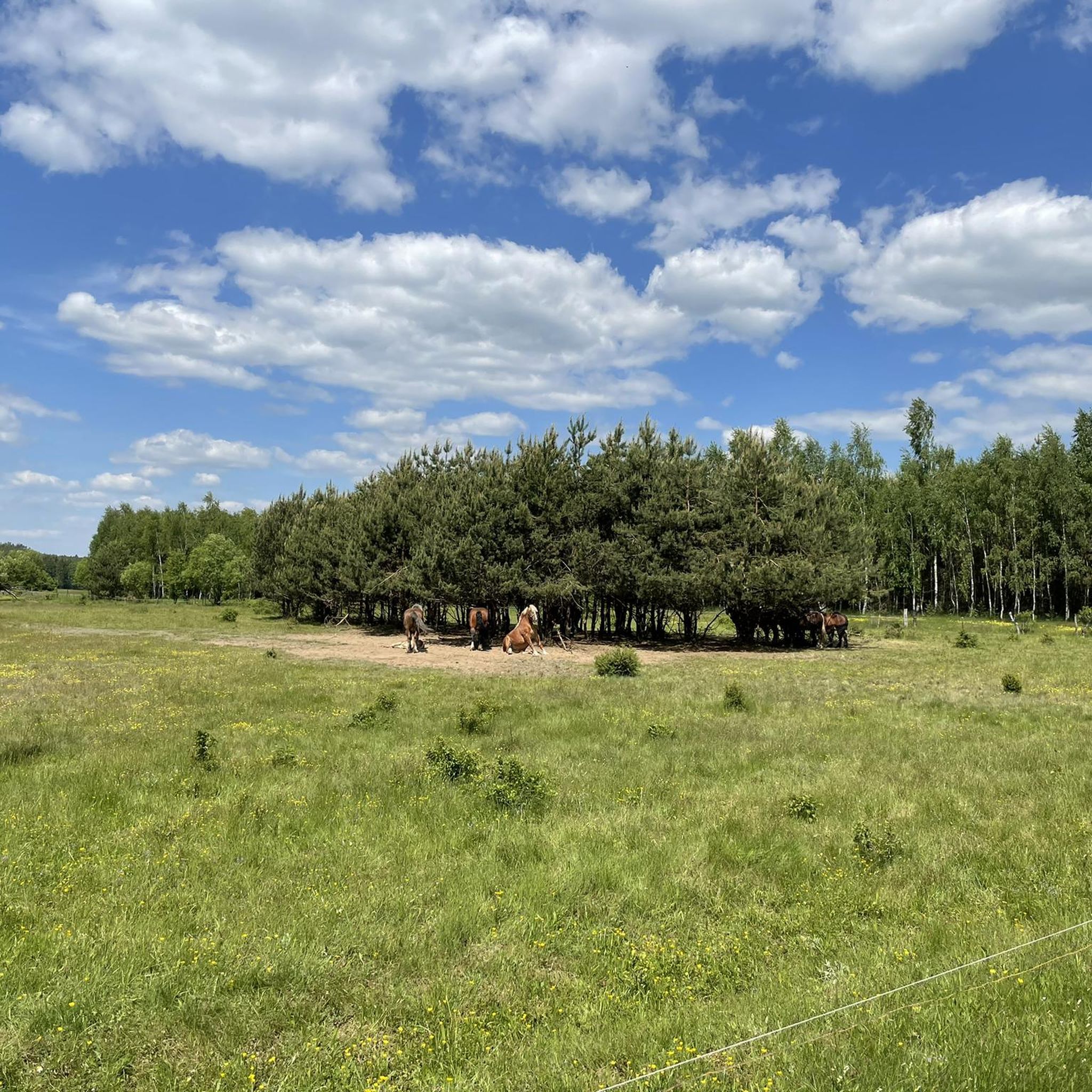
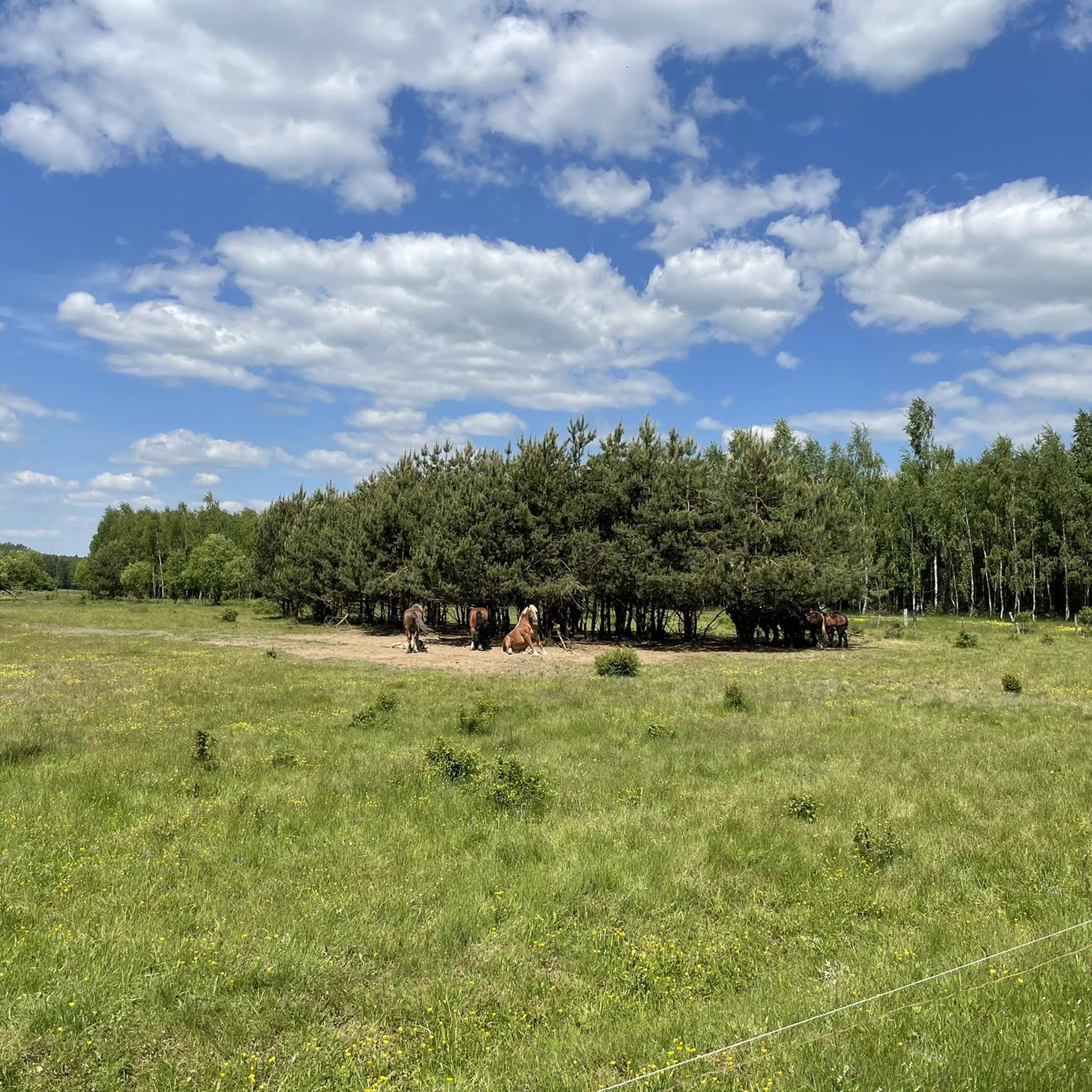
Rowska Mountain and its slopes are an ideal place for grazing sheep
0
0
Frequently Asked Questions
How many mountain bike trails are available in gmina gmina Nurzec-Stacja?
There are 8 mountain bike trails documented in gmina gmina Nurzec-Stacja on komoot, offering a variety of experiences for different skill levels.
Are there easy mountain bike trails suitable for beginners or families?
Yes, gmina gmina Nurzec-Stacja offers 4 easy mountain bike trails. A great option for a relaxed ride is the Fronołów – Ferry loop from Fronołów, which is 27.8 km long and takes you through rural landscapes. Another accessible choice is the Corner on Krótka – Kino Górnik Sign loop from Mielnik, covering 15.5 km.
What are the typical distances for mountain bike trails in this region?
The mountain bike trails in gmina gmina Nurzec-Stacja vary in length. You can find shorter routes like the Flock of Sheep on Góra Rowska – Mielnik Chalk Quarry loop from Mielnik at 6.7 km, up to longer excursions such as the Fronołów – Ferry loop from Fronołów which is 27.8 km.
Are there any challenging or advanced mountain bike trails in gmina gmina Nurzec-Stacja?
The trails in gmina gmina Nurzec-Stacja are primarily categorized as easy or moderate. There are no trails currently listed as difficult, making the region more suitable for casual riders, beginners, and those looking for moderate challenges rather than extreme technical terrain.
What kind of terrain can I expect on the mountain bike trails?
The terrain around gmina gmina Nurzec-Stacja is characterized by river valleys, agricultural fields, and local geological formations like chalk quarries. You'll encounter a mix of open views and forested sections, with generally gentle elevation changes, making for accessible and varied riding.
What do other mountain bikers say about the trails in gmina gmina Nurzec-Stacja?
The mountain bike trails in gmina gmina Nurzec-Stacja are highly rated by the komoot community, with an average score of 5.0 stars from 4 reviews. Riders often appreciate the varied terrain, including river valleys and agricultural landscapes, and the accessibility for different skill levels.
Are there circular mountain bike routes available?
Yes, many of the mountain bike routes in gmina gmina Nurzec-Stacja are designed as loops, allowing you to start and finish at the same point. Examples include the Beach in Siemiatycze – Mahomet River loop from Siemiatycze and the Beach in Siemiatycze – Mahomet River loop from Słowiczyn.
What are some interesting places to see along the mountain bike trails or nearby?
While riding, you might encounter views of the Mahomet River and agricultural landscapes. Nearby attractions include the significant pilgrimage site of Holy Mount Grabarka (Święta Góra Grabarka), the Church of the Icon of the Mother of God 'Joy of All Who Sorrow' in Koterka, and historical sites like the Molotov Line Bunkers. You can also visit the Viewpoint of the chalk mine for unique geological insights.
When is the best time of year for mountain biking in gmina gmina Nurzec-Stacja?
The best time for mountain biking in gmina gmina Nurzec-Stacja is typically during the spring, summer, and early autumn months. During these periods, the weather is generally favorable, and the trails are most accessible. Always check local weather conditions before heading out.
Are there any specific natural landmarks or reserves to explore?
Yes, the region features several natural points of interest. You can find the Głogi Nature and Landscape Complex Educational Trails, which offer insights into the local environment, and the Góra Uszeście Nature Reserve. The area is also known for its chalk quarries, providing unique geological features.
Where can I find starting points or trailheads for mountain biking?
Many routes are loops that can be started from various points within the gmina. For example, the 'Beach in Siemiatycze – Mahomet River loop' can be accessed from Siemiatycze or Słowiczyn, and the 'Fronołów – Ferry loop' starts from Fronołów. It's best to check the specific route details on komoot for recommended starting locations.
Most popular routes around gmina gmina Nurzec-Stacja
Most popular attractions around gmina gmina Nurzec-Stacja

Get inspired with the komoot mobile app


Explore more
Browse the best MTB trails in other regions.
