Attractions and Places To See around Siedlce - Top 20
Best attractions and places to see around Siedlce, a city in eastern Poland, offer a blend of historical landmarks, cultural sites, and natural areas. Situated in the Masovian Province, the region is characterized by its forested landscapes. Siedlce developed significantly in the 18th century, becoming a cultural hub under the Czartoryski family. Visitors can explore a variety of sites reflecting its rich history and natural surroundings.
Best attractions and places to see around Siedlce
- The most popular attractions is Dworek Mościbrody, a historical site that is a picturesque, historic manor house located near Siedlce, surrounded by a beautiful park and ponds. It offers a peaceful atmosphere, traditional cuisine, and serves as a hotel and restaurant.
- Another must-see spot is Church of the Assumption of the Blessed Virgin Mary, Niwiski, a religious building. This classicist church from 1787, founded by Kazimierz Ossoliński, is an important point on the bicycle route through Mazovia.
- Visitors also love Manor in Ostrówek, a historical site built in 1923 in the style of a Baroque-Classicist Polish manor house. The building has transitioned from a residential function to a cultural and social one, popularizing the area.
- Siedlce is known for its historical sites, religious buildings, and natural monuments. The region offers a variety of attractions to see and explore, from manor houses and churches to nature reserves.
- The attractions around Siedlce are appreciated by the komoot community, with 18 upvotes and 9 photos shared across 12 highlights.
Last updated: June 18, 2026
Ruins of Twarowskis Palace
Highlight • Historical Site

Church of the Assumption of the Blessed Virgin Mary, Niwiski
Highlight • Religious Site
In 1803, the patronage of the church was taken over by Apolonia Rudzińska née Ossolińska, followed by Julian Kuszell. Then Julia Przanowska née Kuszll and with her Stanisław Przanowski
Translated by Google •
Tip by

Sign up now to discover places like this
Get recommendations on the best single tracks, peaks, & plenty of other exciting outdoor places.
Sign up for free
Dworek Mościbrody
Highlight • Historical Site
Translated by Google •
Tip by

Manor in Ostrówek
Highlight • Historical Site
Translated by Google •
Tip by

Tenement houses by the Cathedral of the Immaculate Conception of the Blessed Virgin Mary
Highlight • Settlement
Translated by Google •
Tip by
Sign up for free to discover even more attractions around Siedlce.
Sign up for free
Already have an account?
Start today with a free account
Your next adventure awaits.
Login or Signup

Tips from the Community

beautiful area, you can relax and eat well in the restaurant
0
0

The Church of the Assumption of the Blessed Virgin Mary in Niwiska is a classicist church from 1787, founded by Kazimierz Ossoliński, chamberlain of Mielnik. Built as a single-nave hall building, it was consecrated in 1904 by the Bishop of Lublin, Franciszek Jaczewski. Located in the center of the village, at ul. Rynek 5, it is an important point on the bicycle route through Mazovia. For road cyclists, access is convenient, and the area offers quiet roads with little traffic. It is worth taking a bike lock to safely visit the interior of the church and relax in the nearby market square.
0
0
Dworek Mościbrody is a picturesque, historic manor house located in the Masovian Voivodeship, near Siedlce. Surrounded by a beautiful park and ponds, it offers a peaceful atmosphere and traditional cuisine, especially known for its carp dishes. It is an ideal place to relax in historical interiors and for bicycle trips along the nearby, picturesque routes. The manor house serves as a hotel and restaurant, and also organizes events and tastings of local specialties. It is worth stopping here during your trip to feel the atmosphere of the old Polish nobility and enjoy the peace of the Masovian countryside.
0
0

The palace was composed of neo-Gothic, neo-Romanesque, and oriental elements. Built of brick and plastered, set on an irregular, elongated plan with an irregular shape. The building has a basement, two-storey in part with a residential attic covered with a hipped roof with sheet metal surfaces. The palace's body is strongly segmented and consists of cuboid elements. The building is dominated by a three-storey tower topped with a battlement and a Lombard frieze placed under the crowning cornice. Basically, the body consists of six juxtaposed bodies. The body most protruding to the front is also the main axis placed asymmetrically. It is preceded by a massive porch pierced by a Tudor arch, which houses the main entrance to the palace. Above it is an open terrace surrounded by a stone balustrade. Terrace doors finished with a pointed arch and tracery decoration. All the elements were composed as pseudo-towers. They were flanked on two sides by smooth corner pilaster strips and topped with a prominent crowning cornice, under which a Lombard frieze runs, above which a battlement was placed. On one of the side elevations, a pillared portico of the side entrance was squeezed between two tower masses. Window openings of various sizes and shapes.
0
0
The Cisie-Zagrudzie park and palace complex. The house was built at the turn of the 19th and 20th centuries at the behest of the Twardowski family. The estate, originally called Cisie, was owned in 1783 by Dominik Przeździecki, the starost of Mińsk. In the 19th century, the estate passed into the possession of the family of the founders of the palace, and in 1909 it belonged to priest Stanisław Szaniawski. In the interwar years, the estate was in the possession of Jerzy Konopka. In the late 1920s, the estate belonged to Stanisław Klawe and the land amounted to 160 hectares. In 1927, the next owner was Józef Maria Mielżyński, who two years later passed it to Jerzy Konopka. Baron Jerzy Konopka (1887-1954) of the Nowina coat of arms, married since July 1914 to Maria Ludwika Sokołowska (1890-1944) of the Korab coat of arms, was the last pre-war owner of the Cisień estate and lived here in the years 1929-1944. After the end of World War II, a primary school and then teachers' apartments were placed in the palace. The palace was abandoned in the 1980s. In 1999, the building was taken over by a private owner. Currently, the house remains abandoned and is in poor technical condition. Around it are the remains of a park, in fairly good condition.
0
0
The Ostrówek estate, covering 353 ha, was owned by Stanisław Lipiński in the late 1920s. The manor house was built in 1923 in the style of a baroque-classicist Polish manor house. The building is single-storey with a usable attic, covered with a hipped roof with an extension on the axis topped with a wavy gable. The gable shows the date of construction above an oval window. The entrance is preceded by a balcony supported by two pairs of spindle-shaped columns. The manor house was probably built as a result of the expansion of an older building, a fragment of which survived as an annex to a newer building. The Ostrówek Manor House, built in 1923, reopened after a hundred years. The building changed its function from residential to cultural and social, which contributed to the popularisation of this place and the promotion of the entire area.
0
0
Monumental cathedral visible from afar
1
0
They are located near the Cathedral of the Immaculate Conception of the Blessed Virgin Mary
1
0
Frequently Asked Questions
What historical landmarks can I explore in Siedlce?
Siedlce offers a rich array of historical landmarks. You can visit the impressive Siedlce Town Hall, a blend of Classic and Baroque styles, which also houses the Regional Museum. The Ogiński Palace, now part of City Park "Alexandria," is another significant site, rebuilt in classical style by Duchess Aleksandra Ogińska. Other notable historical buildings include the St. Stanislaus Church, Siedlce's oldest brick sacral building, and the Old City Library, originally an Odwach.
Are there any notable cultural sites or museums in Siedlce?
Yes, Siedlce has several cultural sites. The Regional Museum is located within the historic Town Hall. The Diocesan Museum is particularly noteworthy as it houses "The Ecstasy of St. Francis," a painting by the master El Greco. Additionally, General Władysław Sikorski Square serves as a central point for city celebrations and features an obelisk dedicated to the general.
Where can I find natural beauty and outdoor recreation near Siedlce?
For natural beauty and outdoor recreation, visit City Park "Alexandria", which was once the grounds of the Ogiński Palace and transformed into an English-style garden. The Muchawka Reservoir and Municipal Bathing Area is a popular summer spot with a sandy beach, offering opportunities for water bikes, boats, and kayaks. You can also explore the Broszkowskie Ponds Nature Reserve, known for its wildlife.
What kind of family-friendly attractions are available?
Many attractions around Siedlce are family-friendly. The Muchawka Reservoir offers a bathing area and water activities suitable for families. Historical sites like Dworek Mościbrody and Manor in Ostrówek provide picturesque settings for walks and exploration. The Moose Statue is a unique and interesting stop for children. Additionally, the Broszkowskie Ponds Nature Reserve is a great place for families to observe nature.
Are there hiking opportunities around Siedlce?
Yes, there are several hiking opportunities around Siedlce, with many easy routes. You can find trails like the "Pier at Zalew nad Muchawką loop" or the "Aleksandria City Park – Cathedral of Siedlce loop." For more details and route options, check out the Hiking around Siedlce guide or the Easy hikes around Siedlce guide.
What cycling routes are available near Siedlce?
Siedlce offers various cycling routes for different skill levels. Popular options include the "Forest Picnic Area – Chapel of St. John of Nepomuk loop" and the "Muchawka Reservoir – Beach Volleyball Court loop." For a comprehensive list of routes, including those passing by Dworek Mościbrody, explore the Cycling around Siedlce guide.
What is the best time of year to visit Siedlce?
Siedlce can be enjoyed throughout the year, but the best time depends on your interests. Summer is ideal for water activities at the Muchawka Reservoir and enjoying City Park "Alexandria." Spring and autumn offer pleasant weather for exploring historical sites and hiking trails. The region's forested areas are particularly beautiful during autumn with changing foliage.
Are there any unique or lesser-known places worth visiting?
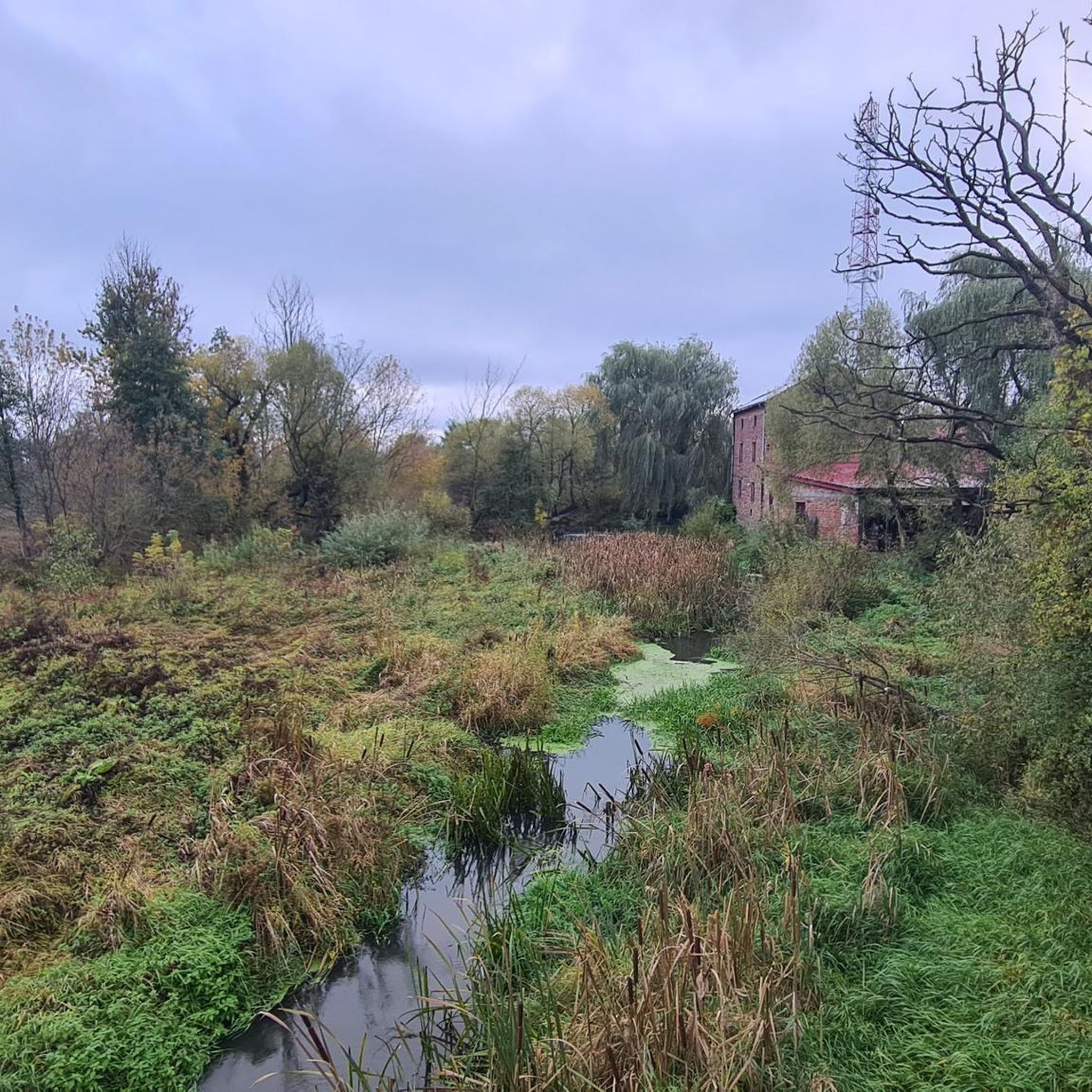
Beyond the main attractions, consider visiting the Mill on the Muchawka River, a brick facility from 1925 with historical significance due to its proximity to the 1831 Battle of Iganie. The Historic Tenement House on Florianska Street, with its blend of Renaissance, Baroque, and Classicist elements, is an architectural symbol of Siedlce. Also, the Former National Bank of Poland building showcases academic classicism from the interwar period.
What do visitors particularly enjoy about the attractions near Siedlce?
Visitors appreciate the blend of history and nature. Places like Dworek Mościbrody are praised for their peaceful atmosphere, traditional cuisine, and beautiful surroundings, making them ideal for relaxation and bicycle trips. The historical significance of sites like the Church of the Assumption of the Blessed Virgin Mary, Niwiski, and the architectural beauty of the Manor in Ostrówek are also highly valued.
Is Siedlce suitable for history enthusiasts?
Absolutely. Siedlce is rich in history, offering numerous sites for enthusiasts. Key attractions include the Siedlce Town Hall, Ogiński Palace, Cathedral of the Immaculate Conception of the Blessed Virgin Mary, and St. Stanislaus Church. The city also boasts the Oldest High School Building, where renowned Polish writer Bolesław Prus was a student, and the Regional Museum for deeper insights into the area's past.
Can I find places for relaxation and dining near the attractions?
Yes, several attractions offer opportunities for relaxation and dining. Dworek Mościbrody is a prime example, serving as a hotel and restaurant known for its traditional cuisine and peaceful setting. The Muchawka Reservoir area also provides a pleasant environment for unwinding, often with nearby cafes or eateries, especially during summer.
Are there any religious sites of architectural significance?
Siedlce features several architecturally significant religious sites. The Cathedral of the Immaculate Conception of the Blessed Virgin Mary is a prominent Neo-Gothic landmark with impressive 75-meter towers and historical stained glass. The St. Stanislaus Church is Siedlce's oldest brick sacral building, showcasing Baroque-Classicist design. Outside the city, the Church of the Assumption of the Blessed Virgin Mary, Niwiski, is a beautiful classicist church from 1787.
What is the significance of the Moose Statue?
The Moose Statue was erected in 2013 to commemorate the 90th anniversary of the Polish Hunting Association. This life-size bronze sculpture, created by Eugeniusz Ochnio, symbolizes the region's connection to nature and hunting traditions, and is a unique photo opportunity.
Where can I experience local nature reserves?
To experience local nature reserves, visit the Broszkowskie Ponds Nature Reserve. This area is known for its diverse wildlife, particularly frogs, and offers a tranquil setting for nature observation and walks. It's a great spot to connect with the natural environment of the Masovian Province.
Most popular routes around Siedlce
Most popular attractions around Siedlce

Get inspired with the komoot mobile app


