Top 20 Natural Monuments around Lille
Best natural monuments around Lille feature diverse natural spaces within and surrounding the urban landscape. The region offers significant natural havens, including extensive parks, unique ecological sites, and varied geological formations. These areas provide opportunities to explore varied flora, fauna, and historical elements combined with natural beauty. The landscape is characterized by its blend of natural features and urban integration, making it a destination for outdoor exploration.
Best natural monuments around Lille
- The most popular natural monument is The Zwart…
Last updated: August 20, 2026
The Zwart Water
Highlight • Lake
Translated by Google •
Tip by

De Hoge Mouw with its sleeping giant
Highlight • Monument
Translated by Google •
Tip by

Sign up now to discover places like this
Get recommendations on the best single tracks, peaks, & plenty of other exciting outdoor places.
Sign up for free
Devil's Pit Pond
Highlight • Lake
Translated by Google •
Tip by

Achtzaligheden Tree
Highlight • Natural Monument
Translated by Google •
Tip by

Drieboomkensberg Pilgrimage Site
Highlight (Segment) • Religious Site
Translated by Google •
Tip by
Sign up for free to discover even more natural monuments around Lille.
Sign up for free
Already have an account?
Start today with a free account
Your next adventure awaits.
Login or Signup

Other adventures around Lille

Tips from the Community

The Drieboomkensberg Pilgrimage Site (also spelled Drieboomkesberg) is a historic place of devotion in Westmalle (municipality of Malle), located on the highest point of a group of inland dunes. Dedication: The site is dedicated to Our Lady of Fever (also known as Help of the Sick). Origin of the name: The place is named after three large larch trees that used to stand on the hill. Tradition: For generations, the sick and believers have come together here for reflection and healing. In May, the Marian month, the Sint-Martinus parish of Westmalle still organizes an annual pilgrimage to this place. The Great Crucifix: On the top stands a large blue stone crucifix that was donated in 1948 by Count Thierry de Renesse and blessed by the abbot of the Westmalle Abbey.
7
0

Many captivating stories have been written about this well (not just any well). The first probably dates back to 1571, when Lieske Coolbonders committed suicide by drowning herself in the well while the devil himself was pursuing her. Lieske was the illegitimate daughter of Katrien Coolbonders, who was raped by a Spanish nobleman. The nobleman was murdered by Katrien's husband. The body was first dumped in the Devil's Well. Later, it was buried somewhere nearby. (Efkesweg.be)
5
0
Viewed from above, with a little imagination, the Kempen Ridge's relief can be seen as if a giant were sleeping beneath the landscape. Because of the vegetation on the sand dunes, they no longer move, and the giant's slumber is not disturbed. In 2018, Gijs Van Vaerenbergh's artwork, "A Giant Sculpture," was unveiled. It was placed on the 30-meter-high summit of the Hoge Mouw sand dune. (Efkesweg.be)
7
0

This tree was once magnificent. Now it seems to be dying... 😟
1
0

In a thunderstorm, it is best not to touch it, a lightning strike can be dangerous. Inside it is a Faraday cage and you are safe, but what if you touch the corten steel at the moment that lightning strikes? Still, stay away from this beautiful work of art in a thunderstorm!?
4
0

A small pilgrimage round through the Molenbos on the Drieboomkesberg...
12
0
Looking for the Westmalse barley...
8
0

Beautiful resting place in the heath
2
0
Frequently Asked Questions
What makes the natural monuments around Lille unique?
The natural monuments around Lille offer a diverse range of landscapes, from unique fens and ancient forests to shifting dunes and varied heathlands. These areas are appreciated for their ecological significance, providing habitats for diverse flora and fauna, and often feature historical elements or unique geological formations. They serve as vital green havens within and near the urban landscape, offering serene escapes and opportunities for outdoor exploration.
Which natural monuments are particularly popular with visitors?
Visitors frequently enjoy The Zwart Water, known for its dark-bottomed fen and a floating platform used by nesting birds. Another favorite is De Hoge Mouw with its sleeping giant, a ridge of ferrous sandstone hills with shifting dunes that have inspired local legends. Devil's Pit Pond is also highly regarded for its varied nature reserve featuring dry and wet heathland, fens, and bog.
Are there family-friendly natural monuments near Lille?
Yes, several natural monuments are suitable for families. The Zwart Water, De Hoge Mouw with its sleeping giant, Devil's Pit Pond, Achtzaligheden Tree, and Snepkens Pond are all categorized as family-friendly, offering accessible environments for walks and nature observation.
What kind of natural features can I expect to see at these monuments?
You can expect to encounter a variety of natural features. These include tranquil lakes and fens like The Zwart Water and Snepkens Pond, extensive forest areas, and unique geological formations such as the ferrous sandstone ridge and shifting dunes at De Hoge Mouw. Many areas also feature diverse ecosystems like heathlands and bogs, as seen at Devil's Pit Pond.
Are there opportunities for outdoor activities near these natural monuments?
Absolutely. The region around Lille offers various outdoor activities. You can find numerous cycling routes, such as the moderate 'Den Haert Sand Path – The Zwart Water nature reserve loop', or the 'Warandeplas – Achtzaligheden Tree loop'. For mountain biking, options include the 'The Black Water – Lichtaart Singletrack loop'. Running enthusiasts can explore trails like the 'Lake in the Forest – Beech Avenue loop'. For more details on routes, visit the MTB Trails around Lille, Running Trails around Lille, and Cycling around Lille guides.
Do any of the natural monuments have historical significance?
Yes, some natural monuments carry historical weight. The Achtzaligheden Tree, for instance, is a mythical pine tree estimated to date back to 1850, known for its capricious shape and local legends. De Hoge Mouw's landscape has inspired legends about mythical creatures for centuries. Additionally, the 'devil's pits' at Devil's Pit Pond are popularly linked to ancient pagan practices and prehistoric burial fields.
What is special about The Zwart Water?
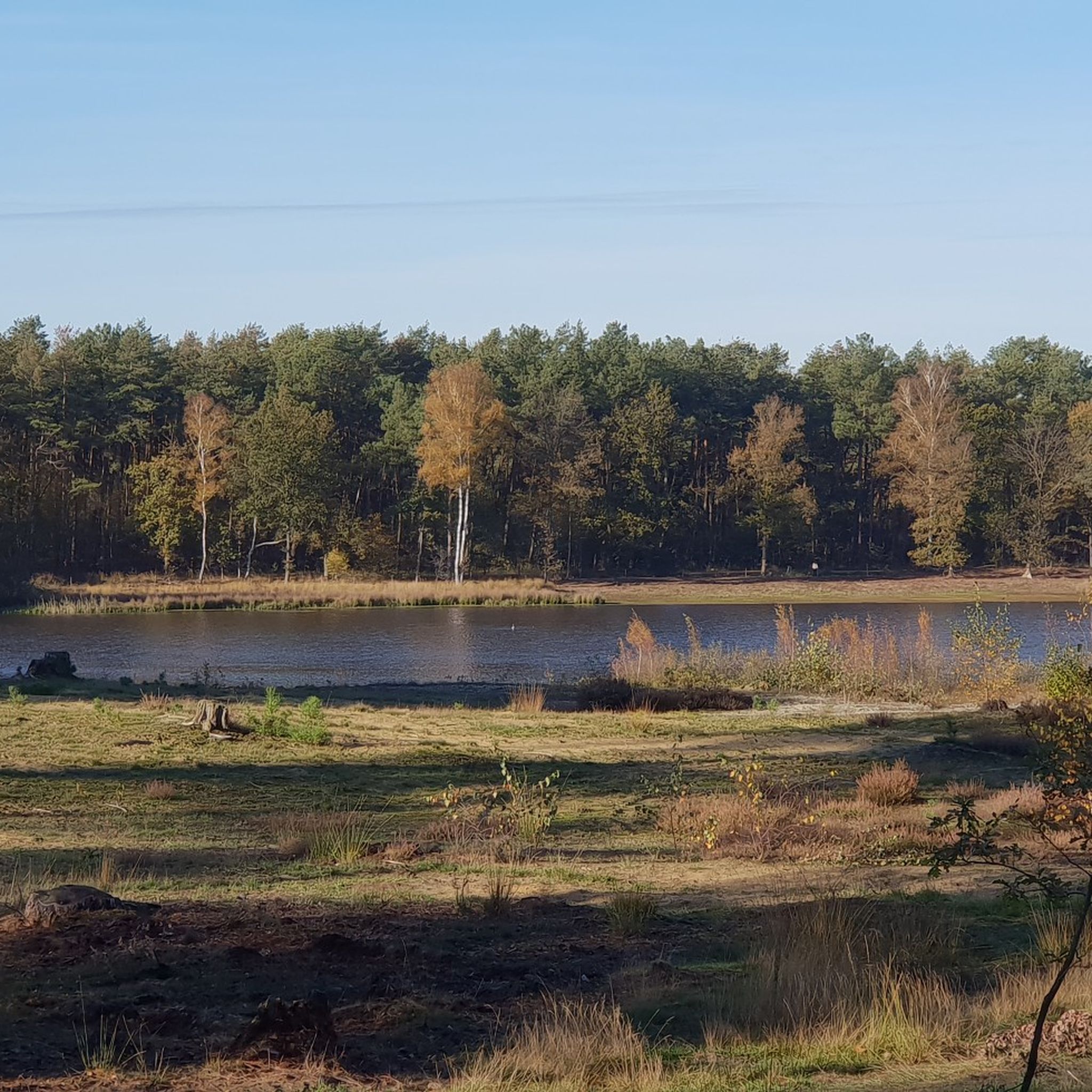
The Zwart Water is a unique fen characterized by its dark bottom color, which comes from peat that developed in the area. It features woods on the edge, gale thickets, willow breeches, and lean grassland. A notable feature is a floating platform in the middle of the water, frequently used by birds for resting and nesting. It's a tranquil spot where the sky reflects on the water, offering a peaceful experience.
Are there good viewpoints within these natural monuments?
Yes, several natural monuments offer excellent viewpoints. The Zwart Water has a beautiful viewing hut for observing bird activity. De Hoge Mouw, being the highest point of its ridge, provides expansive views of the surrounding landscape, forest, and heath. The Achtzaligheden Tree is also considered a viewpoint within the Lilse woods.
What kind of wildlife can be observed in these natural areas?
The natural monuments around Lille are rich in wildlife. At The Zwart Water, you can observe various bird species, especially those nesting on the floating platform. Snepkens Pond, one of Flanders' oldest nature reserves, is a bird sanctuary with a strong attraction for birds due to its water features. The diverse habitats of places like Devil's Pit Pond also support a variety of flora and fauna specific to Kempen landscapes.
What is the best time to visit the natural monuments around Lille?
While specific seasonal advice for each monument isn't available, generally, spring and autumn offer pleasant temperatures for exploring the natural monuments. Spring brings blooming flora and active wildlife, while autumn showcases vibrant foliage. Summer is also suitable, especially for water-related activities, but can be warmer. Winter offers a different, often quieter, perspective on the landscapes.
Are there any urban green spaces in Lille that are considered natural havens?
Yes, within Lille itself, there are significant green spaces that serve as natural havens. The Jardin des Géants is a unique blend of modern art and wild nature with bamboo groves and ponds. The Parc de la Citadelle, Lille's largest green space, offers diverse natural areas and wildlife. The Parc de la Deûle is an extensive peri-urban park known for its ecological design and birdwatching opportunities, and the historic Jardin Vauban provides a picturesque English garden setting.
What is the Achtzaligheden Tree and its significance?
The Achtzaligheden Tree is a mythical pine tree located near the Rollekensberg in the Lilse woods. Estimated to be from around 1850, it's known for its capricious shape and was originally named after the eight beatitudes of Christ because it had eight trunks. It has been a tourist attraction for years and is steeped in local history and legends, including tales of a 17th-century robbery.
Most popular attractions around Lille

Get inspired with the komoot mobile app


Explore more
Extend your search for the best caves by checking out these guides of the top ones around Lille:
