The best cycling routes around Ciomad - Balvanyos
23
riders
4
rides
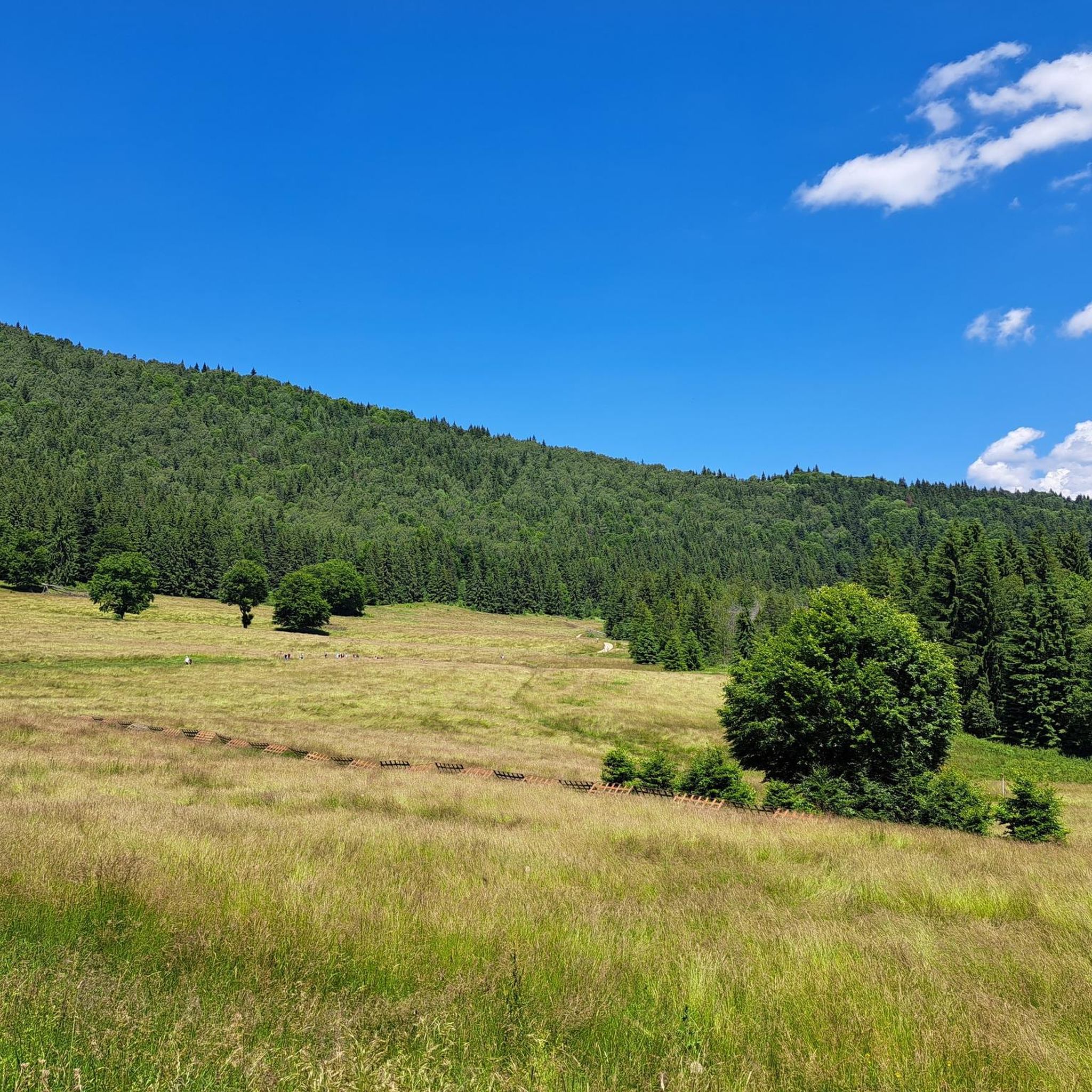
Touring cycling routes around Ciomad - Balvanyos traverse a landscape shaped by volcanic activity in the Eastern Carpathians. The region features serpentine roads, offering varied elevations and curves for cyclists. Notable natural features include the Ciomad Mountains, home to Lake Saint Ana, Europe's only volcanic lake with an intact crater, and the adjacent Mohos Peat Bog. The area also presents post-volcanic phenomena such as mofettas and mineral water springs.
Best touring cycling routes around Ciomad - Balvanyos
- The most popular…
Last updated: August 25, 2026
9
riders
Hard bike ride. Very good fitness required. Mostly paved surfaces. Suitable for all skill levels.
3
riders
94.9km
05:52
930m
930m
Hard bike ride. Very good fitness required. Mostly paved surfaces. Suitable for all skill levels.

Sign up for free
6
riders
118km
07:01
680m
680m
Hard bike ride. Very good fitness required. Mostly paved surfaces. Suitable for all skill levels.
4
riders
147km
09:12
1,520m
1,520m
Hard bike ride. Very good fitness required. Mostly paved surfaces. Suitable for all skill levels.
Our route recommendations are based on thousands of hikes, rides, and runs completed by other people on komoot.
Start today with a free account
Your next adventure awaits.
Login or Signup
Popular around Ciomad - Balvanyos
Tips from the Community

Anyone visiting Lake Sfânta Ana doesn't need meteorologists to predict the weather. They have an empirically proven method at their disposal, provided by the volcano itself: two cracks in the mountain that predict the weather. Locals know: "If the fumes from the cracks burn your nose, it's a sign of a thunderstorm. If not, it will be a sunny day, perfect for hiking."
11
0

contains bicarbonate, chlorides, sodium and CO2, which is recommended for the treatment of enterocolitis
0
0
Balvanyos or Băile Balvanyos (in Hungarian Bálványos, in German Bad Götzenburg) is a permanent spa town of local interest in Covasna County, Transylvania, Romania,[2] in the administrative territory of the Turia commune,[3] northwest of the city of Târgu Secuiesc of the same county. It is characterized by the presence of numerous mineral water springs, by mophetic carbon dioxide emissions - of post-volcanic character - as well as by the beauty of the landscape.[2]
0
0
Saint Ana Lake in the Ciomatului Mare crater is the only lake of volcanic origin in Central and Eastern Europe and the most visited tourist attraction in Szeklerland. It is surrounded by the steep walls of the volcanic cone of Monte Ciomat, with several higher peaks: Ciomatul Mare (1301 m), Ciomatul Mic (1238 m), Tata Hill (1174 m) or Piscul Pietros (1125 m). The lake, unique in Europe, is located at an altitude of 946 m, has a diameter of 1737 m and a greatest depth of 7 m. From the crater rim, 13 temporary streams formed after the rains carry water and gravel into the lake. The lake is fed by rainwater and water from snowmelt. The lake's sedimentation process began at the northern and western edges, with the lake floor being covered by an increasingly thick layer of mud. The lake is currently 6.5 m deep at its deepest point. In good weather, especially without wind, you can see gas bubbles rising from the bottom of the lake, which are actually an expression of post-volcanic activity. In the northern, northeastern part of the lake, you can see a layer of floating peat about a meter thick.
0
0
Tusnad (Tusnad Baths) Tusnad Baths is the smallest town in Romania, located in the southernmost corner of Harghita County. The municipality has 1,728 inhabitants, according to the 2002 census. The spa was founded in 1842. In 1935, Tusnád separated from the municipality, became independent and was named Tusnád Baths. In 1968, the town became a town and in 1970, many large hotels were built here. After the fall of communism, due to disputed property rights, it began to decline, but today it has recovered. Modern pensions, guest houses, ski slopes and an adventure pool await tourists. Tusnad Baths and the natural conditions and chemically very diverse healing springs, the climate and the beauty of the landscape have an excellent healing effect on diseases such as neurosis, heart and circulatory problems, gastrointestinal and motor problems and glandular diseases. The Tusványos Free University and Youth Camp is held here and the EU camp has been organized here for many years. Lake Csukás is located under the Sólyomkő rock, is an artificial lake fed by the Olt river and has existed since 1894. Its heyday was in the 1920s. After 1948 the spa was nationalized and a large red star was placed in the middle of the 2 hectare and 3 meter deep Csukás Lake. In winter the lake was used as an ice rink. After 2000 the lake became private property. The distance between Tusnad and Lake St. Anne through Bixad is 24 km.
0
0

When arriving at the lake, make sure to start circumnavigating it in a counter-clockwise fashion, to make sure that the rewarding coffee and pastry hut is at the end of your walk…
2
0

I can't say whether this private room still exists. It's worth remembering. The landlord put three large bottles on the table for me and said, "You can drink that!". I assumed water or lemonade, ... no it was Palinka, the Romanian plum brandy :))
0
0
The probably Hungarian Szekler, the exact origin of this ethnic group is not known, were like the Transylvanians brought by the Hungarian king to the unsettled areas for their protection.
0
0
Frequently Asked Questions
What kind of terrain can I expect when touring cycling in Ciomad - Balvanyos?
The Ciomad - Balvanyos region is characterized by its unique volcanic origins in the Eastern Carpathians. Cyclists will encounter splendid serpentine roads, offering varied elevations and curves. The terrain is generally mountainous, shaped by ancient volcanic activity, which means challenging ascents and descents are common.
Are there any circular touring cycling routes available in Ciomad - Balvanyos?
Yes, several touring cycling routes in the region are designed as loops. For example, you can explore the Lake Sfânta Ana loop from Bicsadu Oltului Hm., which is 40.6 km long and features significant elevation gain. Another option is the Balvanyos Resort – Turia Reformed Church loop from Târgu Secuiesc, a longer 95.0 km path with challenging ascents and descents.
What natural landmarks can I see along the touring cycling routes?
The region is rich in natural wonders. You can cycle past Lake Saint Ana, Europe's only volcanic lake with a fully intact crater, and the adjacent Mohos Peat Bog, which features unique Siberian tundra-like vegetation. The area is also known for its post-volcanic phenomena, including mofettas (natural gas emanations) and mineral water springs.
Are there any therapeutic or relaxing spots to visit after a ride?
Absolutely. The Ciomad - Balvanyos Massif is famous for its mineral water springs and traditional baths. You can find places like the Apor Girls' Baths and Csiszár Baths, which offer opportunities for invigorating breaks and therapeutic treatments after a day of cycling. The region also features mofettas, such as the Sulfur Cave (Puturosu Cave), known for its therapeutic properties.
What is the general difficulty level of touring cycling routes in Ciomad - Balvanyos?
The touring cycling routes in Ciomad - Balvanyos are primarily suited for advanced riders due to the difficult terrain. All four routes listed in this guide are rated as 'difficult,' featuring significant elevation gains and challenging ascents and descents through the volcanic landscape.
How long do the touring cycling routes typically take to complete?
The duration varies depending on the route and your pace. For instance, the Lake Sfânta Ana loop from Bicsadu Oltului Hm., which is 40.6 km, typically takes around 3 hours 4 minutes. Longer routes, such as the Balvanyos Resort – Turia Reformed Church loop from Sfântu Gheorghe (118.5 km), can take approximately 6 hours 59 minutes.
Are there any historical sites or viewpoints along the cycling paths?
Yes, for those interested in history and panoramic views, the ruins of Balvanyos Fortress are perched at an altitude of 1029 meters, offering historical intrigue and sweeping vistas over Băile Bálványos. A cycling route could include an ascent to explore this ancient site.
What is the best time of year for touring cycling in Ciomad - Balvanyos?
While specific seasonal recommendations are not detailed, the area around Lake Saint Ana, situated at 950 meters, offers a pleasant microclimate. Generally, late spring, summer, and early autumn would provide the most favorable weather conditions for tackling the region's challenging mountainous terrain.
How many touring cyclists have explored this region using komoot?
More than 20 touring cyclists have used komoot to explore the varied and challenging terrain of Ciomad - Balvanyos, indicating a growing interest in this unique volcanic landscape.
Can you recommend a longer, challenging touring cycling route starting from a major town?
For experienced riders seeking a significant challenge, the Miercurea Ciuc Historic Center – Vásár Road loop from Miercurea Ciuc is a demanding option. This route covers approximately 149.0 km and features over 1500 meters of elevation gain, making it the longest and most elevation-intensive route in this guide.
Are there any unique geological phenomena to observe while cycling?
Beyond the volcanic lake and peat bog, the Ciomad-Balvanyos Massif is renowned for its cold post-volcanic manifestations. These include mofettas (natural gas emanations), solfataras, and various mineral water springs. The Buffogó Peat Bog, north of Puturosu peak, is another botanical reserve where carbon-dioxide gas emissions bubble through its pools, creating a unique natural spectacle.
Most popular routes around Ciomad - Balvanyos

Get inspired with the komoot mobile app


Explore more
Browse the best Cycling routes in other regions.
