Top 9 Castles around Kanzach
Best castles around Kanzach include a unique reconstructed 13th-century timber castle, offering insight into early medieval life. The region features historical sites and structures, providing a glimpse into past eras. Kanzach is situated in a landscape that allows for exploration of both historical architecture and surrounding natural areas. The area offers various opportunities for visitors interested in historical landmarks and cultural heritage.
Best castles around Kanzach
- The most popular castles is Bussen Pilgrimage Church and Castle Ruins, a religious_building…
Last updated: June 29, 2026
Bussen Pilgrimage Church and Castle Ruins
Highlight • Religious Site
Translated by Google •
Tip by

Bachritterburg Kanzach Open-Air Museum
Highlight • Historical Site
The history of the Bach Knights can probably be described in close unity with the genealogy of the Lords of Pflummern but also with the ruling situation in …
Translated by Google •
Tip by

Sign up now to discover places like this
Get recommendations on the best single tracks, peaks, & plenty of other exciting outdoor places.
Sign up for free
Monastery Church of Bad Buchau
Highlight • Religious Site
774 - 1776 converted from a Gothic church in the style of French classicism for the noble canonesses. Josef Christian from …
Translated by Google •
Tip by
Katzentürmle (City Fortifications), Bad Saulgau
Highlight • Historical Site
The city fortifications were probably of poor quality from the beginning - also due to the notorious lack of money. As early …
Translated by Google •
Tip by
Hanging Gardens of Neufra Castle
Highlight • Castle
The historic hanging garden of Neufra
The historic hanging garden is a Renaissance garden that was created between 1569 and 1573 by Count Georg von Helfenstein …
Translated by Google •
Tip by
Sign up for free to discover even more castles around Kanzach.
Sign up for free
Already have an account?
Start today with a free account
Your next adventure awaits.
Login or Signup
Tips from the Community

Great church, which belongs to the castle
2
0

The Hanging Gardens are 50 m ahead.
0
0

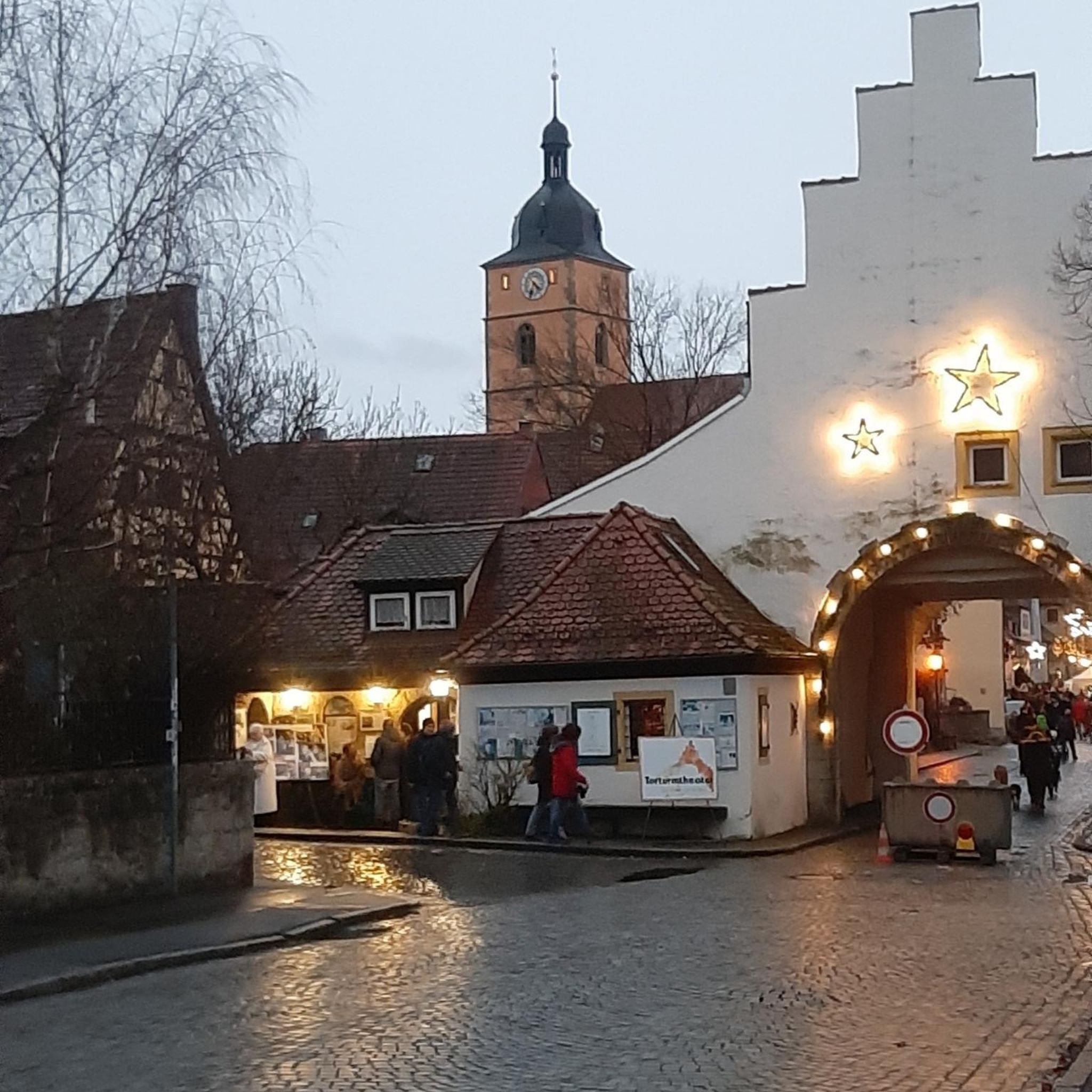
From the history of the city and the guild Saulgau, still called Sulgen in the Middle Ages, was surrounded by a city wall in the 14th century, into which 3 gate towers were built. Source and further information: https://www.dorauszunft.de/ueber-uns/geschichte.html
4
0

One of the last remaining towers of the city wall. Worth seeing from inside and outside the city walls
0
0

Collegiate Church of St. Cornelius and Cyprian", Bad Buchau 774 - 1776 converted from a Gothic church in the style of French classicism for the noble canonesses. Josef Christian from Riedlingen created the sculptures in the church, and Andreas Brugger painted the ceiling paintings in the choir and central nave. The church patrons Cornelius and Cyprianus still refer to the Carolingian tradition today. Adelindis, revered as a Swabian folk saint, rests with her three sons in the crypt of the collegiate church. Text / Source: Upper Swabia's sights https://www.oberschwaben-tourismus.de/attractions/stiftskirche-st.-cornelius-und-cyprian-b4c91cc6ec#:~:text=The%20Stiftskirche%20was%20not%20as%20Pfarrkirche%20built%2C%20but, and%20Cyprianus%20refer%20to%20the%20time%20of the%20Carolingians.
12
0
Bachritterburg, Kanzach The history of the Bach Knights can probably be described in close unity with the genealogy of the Lords of Pflummern but also with the ruling situation in Kanzach. “Lords of Kanzach” are mentioned several times in documents from the 12th to 14th centuries. First it is Bernardus and his son Ortolfus who are named as witnesses in documents from Bishop Otto of Constance and Duke Henry of Bavaria and Saxony for the Salem monastery in 1169 and 1171. With the next mention in 1227, the Kanzach local nobility probably moved to Pflummern. Kanzach is subsequently a branch of the Pflummer family castle. In the document from 1227, Bilgerinum de Pphlumnar and his son Ortolfum de Cantza are named as witnesses. Bilgerinum (vulgo) Peregrinus, the knight from and to Pflummern (from the Chronicle of the Lords of Pflummern, Aloys von Pflummern 1795) is considered the progenitor of the Lords of Pflummern. This knight's seat was donated to the Reichenau Monastery by the then Swabian Duke Berchthold, who had his seat on the Bussen. He was later freed from this and given his own nobility. In 1180 Peregrinus was steward to Emperor Philip, the Duke of Swabia. Peregrinus is considered a co-founder of the monasteries of Salem, St. Gallen and Heiligkreuztal (written down by Father Bucelini, a well-known historian and Benedictine monk from Weingarten Abbey). After his father's death (1227), his son Ortolph also became steward (to Emperor Friedrich II). Text / Source: Municipality of Kanzach, Rathausweg 6, 88422 Kanzach https://www.bachritterburg.de/die-burg/die-bachritter/
13
4

This is really worth seeing. Too bad the tavern was closed.
1
0
Hanging garden of Neufra The historic hanging garden of Neufra The historic hanging garden is a Renaissance garden that was created between 1569 and 1573 by Count Georg von Helfenstein with 202 serfs in front of his castle as a "hanging garden" on a flat surface on a specially built extension of the natural castle hill. The garden is supported by fourteen vaults up to nine meters high. The historic garden was restored in 1988 on the private initiative of Waltraud Johannsen based on a drawing from the archives of the Princes of Fürstenberg with the help of the Monuments Office. Text / Source: Historical Hanging Garden Foundation, Schlossberg 12, 88499 Riedlingen-Neufra https://www.haengegarten.de/de/index.php
15
1
Frequently Asked Questions
What makes the Bachritterburg Kanzach Open-Air Museum unique?
The Bachritterburg Kanzach Open-Air Museum is a meticulously researched and scientifically accurate reconstruction of a 13th-century wooden motte-and-bailey castle. It offers an unparalleled opportunity to experience medieval life firsthand, showcasing what early medieval castles looked like before the prevalence of stone constructions.
Can I experience medieval life at Bachritterburg Kanzach?
Yes, the Bachritterburg Kanzach Open-Air Museum provides a living history experience. Visitors can explore detailed recreations of castle rooms, workshops, and a castle garden. The site regularly hosts 'Living History' events, especially on weekends, where costumed interpreters demonstrate forgotten crafts like chainmail production and natural dyeing of fabrics. Educational programs and interactive displays are also available.
Are there family-friendly castles to visit around Kanzach?
Yes, several castles and historical sites in the area are family-friendly. The Bachritterburg Kanzach Open-Air Museum is designed for visitors of all ages, offering interactive experiences and educational programs for children. Other family-friendly options include Bussen Pilgrimage Church and Castle Ruins and the Katzentürmle (City Fortifications) in Bad Saulgau.
What kind of views can I expect from castles in the Kanzach area?
From the tower of Bussen Pilgrimage Church and Castle Ruins, you can experience unique views of Upper Swabia and, on clear days, even the Alps. The Hanging Gardens of Neufra Castle also offer beautiful views of the Danube valley.
Are there hiking trails near the castles around Kanzach?
Yes, the Kanzach region offers various hiking opportunities. For example, there's an easy 2.8 km loop trail around the Bachritterburg Kanzach Open-Air Museum. You can find more hiking routes, including easy and moderate options, in the Hiking around Kanzach and Easy hikes around Kanzach guides.
What are the opening hours for Bachritterburg Kanzach?
From April 1st to September 30th, the Bachritterburg Kanzach Open-Air Museum is open daily from 10:00 to 18:00, closed on Mondays (except Easter Monday and Whit Monday). From October 1st to November 5th, it's open Tuesday to Friday from 13:00 to 17:00, and Saturday and Sunday from 10:00 to 18:00. Groups can arrange visits outside these hours by appointment.
Is Bachritterburg Kanzach accessible for all visitors?
The Bachritterburg Kanzach Open-Air Museum is designed with well-maintained paths connecting all buildings, making it suitable for visitors of most ages and abilities. While generally accessible, some areas might have limited accessibility for wheelchairs due to the nature of the reconstruction. On-site parking is available.
Are there any other historical sites besides castles in the Kanzach area?
Yes, the region offers other significant historical sites. The Bad Schussenried Monastery is a notable religious and historical building that showcases the history of monastic life, science, and religion, often hosting exhibitions. Additionally, the Katzentürmle (City Fortifications) in Bad Saulgau provides insight into medieval city defenses.
Can I find places to eat or stay near the castles in Kanzach?
While specific cafes or accommodations are not detailed for every castle, the Bachritterburg Kanzach Open-Air Museum has a castle tavern that serves food. For broader options, nearby towns like Kanzach and Bad Saulgau would offer various restaurants, pubs, and accommodation choices.
What is the best time of year to visit the castles around Kanzach?
The period from April to October is generally ideal for visiting, as the Bachritterburg Kanzach Open-Air Museum is fully open during these months, and 'Living History' events are more frequent. The tower at Bussen Pilgrimage Church and Castle Ruins is also open for climbing in the summer months, offering the best views. While some sites may be accessible in winter, certain features or opening hours might be limited.
Are dogs allowed at the castles in Kanzach?
Information on dog policies varies by specific site. For the Bachritterburg Kanzach Open-Air Museum, it's best to check their official website or contact them directly regarding dog-friendly access, especially for indoor areas or during special events. Many outdoor areas and hiking trails around the castles are generally dog-friendly, but always keep dogs on a leash and clean up after them.
Most popular routes around Kanzach
Most popular attractions around Kanzach

Get inspired with the komoot mobile app


Explore more
Looking for the best castles somewhere else? Discover other guides around Kanzach:
