The best gravel rides around L'Herbergement
4.0
(24)
74
riders
15
rides
Gravel biking around L'Herbergement offers diverse terrain within the scenic Vendée region of France. The area features a blend of rural countryside, encompassing forests, rolling hills, and expansive agricultural lands. Riders can expect mixed-surface paths, transitioning between quiet country roads, farm tracks, and forest trails, with generally moderate elevation changes. This landscape provides varied gravel exploration opportunities suitable for a range of skill levels.
Best gravel bike trails around L'Herbergement
- The most popular gravel bike trail is Montaigu Castle –…
Last updated: July 3, 2026
11
riders
45.7km
02:56
450m
450m
Hard gravel ride. Good fitness required. You may need to push your bike for some segments of this route.
6
riders
Hard gravel ride. Very good fitness required. Mostly paved surfaces. Suitable for all skill levels.

Sign up for free
8
riders
54.1km
03:20
210m
210m
Moderate gravel ride. Good fitness required. Mostly paved surfaces. Suitable for all skill levels.
4.3
(3)
4
riders
29.9km
01:49
120m
120m
Easy gravel ride. Great for any fitness level. Mostly paved surfaces. Suitable for all skill levels.
3.5
(2)
7
riders
56.9km
03:54
360m
360m
Moderate gravel ride. Good fitness required. Mostly paved surfaces. Suitable for all skill levels.
Get access to more routes and recommendations from other explorers.
Sign up for free
Already have an account?
Our route recommendations are based on thousands of hikes, rides, and runs completed by other people on komoot.
Start today with a free account
Your next adventure awaits.
Login or Signup




Tips from the Community

19th century church whose unfinished bell tower was topped with a slate spire which clashes a little - a lot - with the rest of the monument.
0
0

Unfortunately signs that camping is prohibited
0
0
A beautiful 16th-century castle. It was in the woods behind the castle that the final battle of the Second Vendée War took place, marked by the capture of the Vendée general Charette.
2
0
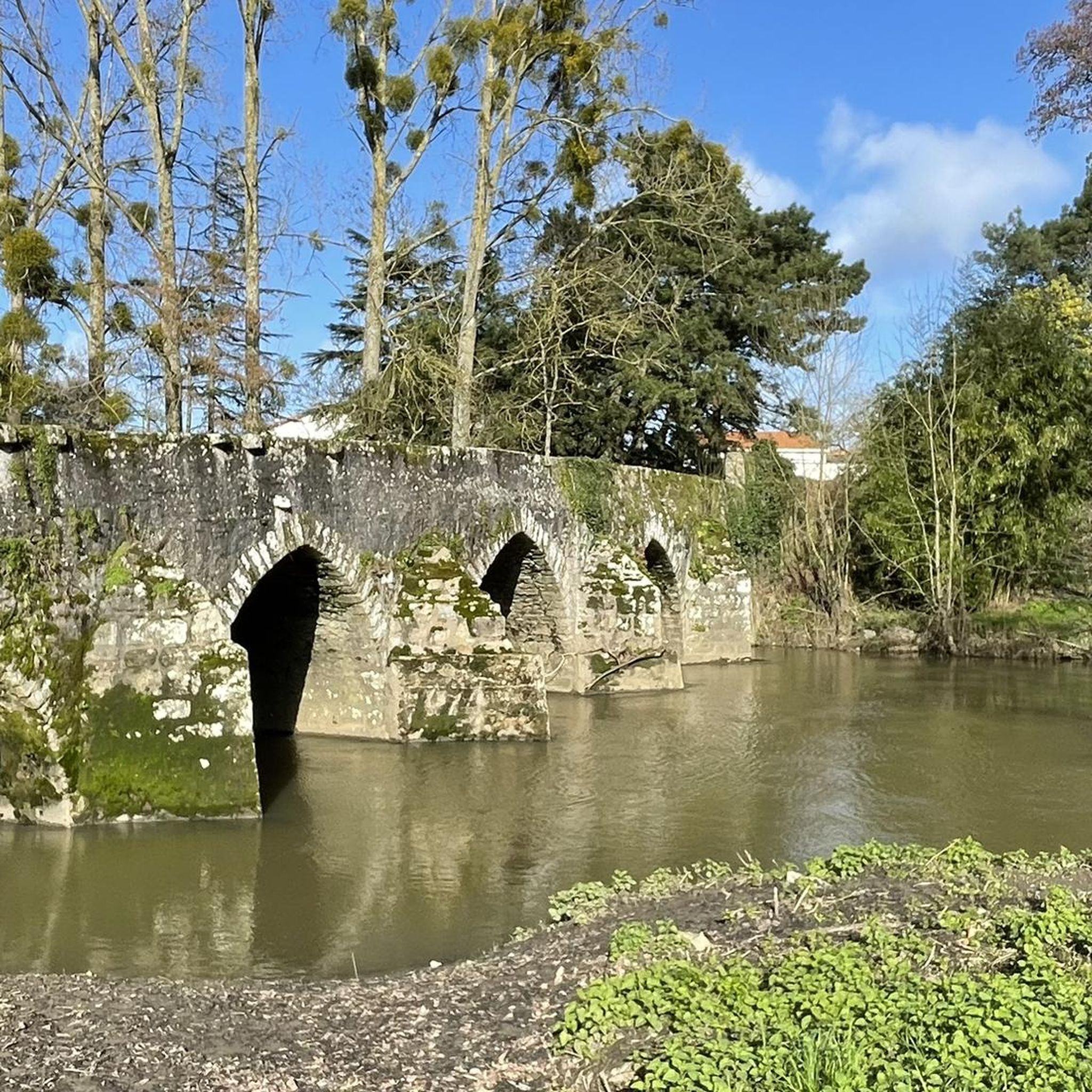
A beautiful site on the Petite Maine River. Overall, the path along it between La Poitevinière and St Georges is very pleasant. Also known as the Chauveau Mill.
0
0

As part of Heritage Days, Isabelle Favre, owner of the La Roche Thévenin estate, opened her property to the public. She allowed visitors to discover both the exterior and interior of her residence. "Traces of this ancient 5,000-hectare barony can be found as early as 1411," explains Isabelle Favre. This fiefdom was then called La Roche Brisard, after its former lords. It was in 1515 that it became the property of the Thévenins, one of the most notable and oldest families in the Barony of Montaigu. Nine generations of Thévenins have succeeded one another. The Château de La Roche Thévenin burned during the Revolution. The plane trees, cedars, and magnolias date from that time, in 1887, when the Abbot of Meslay purchased this house for sick priests. Another owner of the property is the sculptor Grootaers, who is responsible for the fountain in the Place Royale in Nantes and some of his sculptures, which led to the estate being listed as a Historic Monument. Isabelle Favre and her husband purchased this property in 1984. But their love at first sight quickly turned into a nightmare: the building, hidden by lush vegetation, required extensive renovations. Twenty-eight years of work revealed, beneath the cement slabs, terracotta mosaics, a granite staircase with arrow slits, the Thévenin coat of arms on a doorframe, and a Stations of the Cross hidden in a chapel converted into a hayloft.
0
0
Bultière Lake is an artificial reservoir. The Bultière Dam was built in 1994. It is located in the commune of Chavagne en paillers. It supplies the drinking water network. Its surface area is 72 hectares and contains 5.2 million cubic meters of water. It is possible to walk around the lake via a 15-km trail. This lake, with its exceptionally rich fish population, awaits you with almost every type of fish (perch, pike, zander, catfish, carp, roach, bream, tench, etc.). You can go predator fishing from the shore or from a boat to catch zander, pike, and catfish. It is, of course, possible to still fish for roach, bleak, or bream. Carp are also present in this lake. A night carp fishing route located on the right bank in the Maurosière sector will delight those who love a good catch.
0
0
Located east of the Parc des Remparts, the first part of the Val d'Asson Park opened in September 2020. The second part will open in July 2023. In total, it covers 5 hectares of greenery in the heart of the city. Located in the city center, parking is available at Place de l'Hôtel-de-Ville or Rue du Pont-Jarlet. Admission is free and the park is open year-round. The various paths and footbridges are accessible to people with reduced mobility. The 5 hectares of parkland connect the city center with the Hauts de Montaigu district. Crossed by the Asson River, the park features a variety of vegetation that grows along the stream's banks. When it was created, the preservation of flora and fauna was a major objective. An eco-grazing area was created there.
0
0
The Church of Saint-Jean-Baptiste is Gothic in style and features an imposing façade. It is built of stone and features ornate carved details. The façade features a richly decorated main portal, adorned with statues, reliefs, or architectural motifs. Inside the church, you will find a spacious, vaulted main nave supported by pillars or columns. The vaults feature decorative star and ribbed motifs typical of Gothic architecture. Restored over a period of five years, the interior of the building now reveals warm colors ranging from yellow to pinkish-red. Colored stained-glass windows are also a characteristic feature of Gothic churches, and the Church of Saint-Jean-Baptiste has magnificent stained-glass windows depicting biblical scenes and saints. In summary, the Church of Saint-Jean-Baptiste in Montaigu is an example of Gothic architecture with an imposing façade and decorative elements. It houses side chapels, a choir, a main altar, and colorful stained-glass windows. In addition to its aesthetic appeal, it is also an active place of worship and a significant historical landmark for the local community. The Church of Saint John the Baptist in Montaigu has a rich history dating back several centuries. Here is a brief overview of its history: The original church in Montaigu was built in the 11th century, but little information is available about this early structure. Over the following centuries, the church underwent alterations and expansions, reflecting changing architectural styles. In the 14th century, the church was rebuilt in the Gothic style, with a spacious main nave, elegant vaults, and carved details. Construction was completed in the 15th century, giving the church its current appearance. During the French Revolution in the 18th century, the Church of Saint John the Baptist was used for secular purposes. It was converted into a community hall and suffered significant damage, including the destruction of decorative and religious elements. After the Revolution, the church was gradually restored and returned to worship. Repair and renovation work was undertaken to restore damaged architectural features. Over the years, modifications and improvements were made to the Church of Saint-Jean-Baptiste. Side chapels were added, stained-glass windows were installed, and religious ornaments were restored. Today, the Church of Saint-Jean-Baptiste is an active place of worship for the Catholic community of Montaigu. It is also a tourist and cultural attraction, attracting visitors with its Gothic architecture, stained-glass windows, and history. Religious events, ceremonies, and concerts are regularly held there.
0
0
Frequently Asked Questions
How many gravel bike trails are available around L'Herbergement?
There are over 35 gravel bike trails available around L'Herbergement, offering a diverse range of experiences for cyclists. These routes are highly rated by the komoot community.
What kind of terrain can I expect on gravel bike trails around L'Herbergement?
The terrain around L'Herbergement is quite varied, characterized by a blend of rural countryside, forests, rolling hills, and expansive agricultural lands. You'll encounter mixed-surface paths, transitioning between quiet country roads, farm tracks, and forest trails. Elevation changes are generally moderate, making it accessible for various skill levels.
Are there any family-friendly gravel routes in L'Herbergement?
While specific 'family-friendly' designations aren't always explicit, the region's generally moderate elevation changes and varied terrain mean many routes can be enjoyed by families. Look for routes described as 'easy' or 'moderate' for a more relaxed experience. The broader Vendée region is known for its accessible cycling infrastructure.
What are some scenic points of interest I can see while gravel biking?
Many gravel routes in the area pass by interesting landmarks. For instance, you might cycle near historical sites like Montaigu Castle or the renovated The Old Bridge of Rocheservière. The region also features tranquil water bodies and serene rural landscapes, offering picturesque views throughout your ride.
What do other gravel bikers say about the trails in L'Herbergement?
The gravel trails around L'Herbergement are highly rated by the komoot community, with an average score of 4.2 stars from over 5 reviews. More than 50 gravel bikers have used komoot to explore the varied terrain, often praising the diverse landscapes and the mix of quiet roads and natural paths.
Are there options for longer gravel bike rides in the area?
Yes, L'Herbergement offers several longer gravel routes. For example, The Old Bridge of Rocheservière – Viaduct loop from L'Herbergement - Les Brouzils is a challenging 58.9-mile (94.9 km) trail. Another option is Montaigu Castle – The Rousselin mill loop from Montaigu Vendée, which covers 40.5 miles (65.2 km).
Can I find circular gravel routes around L'Herbergement?
Absolutely. Many of the gravel routes in the area are designed as loops, allowing you to start and finish in the same location. Examples include Le Moulin Gros – Vendée vélo loop from Montaigu Vendée and Montaigu Castle – Bultière Dam loop from Montaigu Vendée.
What is the best time of year for gravel biking in L'Herbergement?
The Vendée region generally offers pleasant cycling conditions for much of the year. Spring and autumn are often ideal, with milder temperatures and beautiful scenery. Summer can also be great, though it's wise to start earlier in the day to avoid the midday heat. Winter rides are possible, but be prepared for cooler, potentially wetter conditions.
Is L'Herbergement suitable for beginner gravel cyclists?
Yes, L'Herbergement and the surrounding Vendée region are suitable for beginners. While there are challenging routes, the area is known for its generally moderate elevation changes and a good mix of easy and moderate trails. This allows new gravel cyclists to enjoy the varied terrain without overly technical sections.
Where can I find information about parking for gravel bike trails?
Parking availability often depends on the specific starting point of your chosen route. Many routes begin near towns or villages where public parking is available. For detailed information on parking at specific trailheads, it's best to check the individual route descriptions on komoot or local tourism websites like Achards Tourisme for general cycling infrastructure.
Are there any specific regulations for cycling in the Vendée region?
Generally, standard French cycling regulations apply, such as wearing a helmet (mandatory for children under 12, recommended for all), having working lights and reflectors, and following road signs. For specific local regulations or information on cycling paths, you can consult local tourism resources like Achards Tourisme.
Are there cafes or places to stop along the gravel routes?
The routes often pass through or near charming villages and towns where you can find cafes, bakeries, and small shops to refuel. While specific cafes on every trail aren't guaranteed, planning your route to include stops in Montaigu, Rocheservière, or other local communities will provide opportunities for refreshments.
Can I bring my dog on the gravel bike trails?
Many outdoor areas in France are dog-friendly, especially on trails and in rural settings, provided dogs are kept under control, ideally on a leash, and owners clean up after them. However, specific regulations can vary by municipality or protected natural areas. It's always best to check local signage or specific route details if you plan to bring your dog.
Most popular routes around L'Herbergement
Most popular attractions around L'Herbergement

Get inspired with the komoot mobile app


Explore more
Browse the best Gravel rides in other regions.
