The best gravel rides around San Cristóbal De La Cuesta
5.0
(1)
120
riders
36
rides
Gravel biking around San Cristóbal de La Cuesta offers routes through varied terrain, characteristic of the Castile and León region. The area features undulating topography, with "cuestas" (hills or ridges with gentle and steep slopes) providing diverse elevation changes suitable for mixed-surface cycling. Routes often combine asphalt and unpaved segments, traversing landscapes that include agricultural areas and views towards the nearby city of Salamanca and the Tormes River. This environment supports a range of gravel biking experiences, from easier rides…
Last updated: July 16, 2026
9
riders
Moderate gravel ride. Good fitness required. Mostly paved surfaces. Suitable for all skill levels.
7
riders
67.9km
04:48
420m
420m
Moderate gravel ride. Good fitness required. Mostly paved surfaces. Suitable for all skill levels.

Sign up for free
8
riders
41.4km
03:10
370m
370m
Moderate gravel ride. Good fitness required. Mostly paved surfaces. Suitable for all skill levels.
10
riders
37.8km
02:42
230m
230m
Moderate gravel ride. Good fitness required. Mostly paved surfaces. Suitable for all skill levels.
2
riders
26.3km
01:55
180m
180m
Moderate gravel ride. Good fitness required. Mostly paved surfaces. Suitable for all skill levels.
Get access to more routes and recommendations from other explorers.
Sign up for free
Already have an account?
Our route recommendations are based on thousands of hikes, rides, and runs completed by other people on komoot.
Start today with a free account
Your next adventure awaits.
Login or Signup


Tips from the Community

Nothing to add to all the superlatives, magnificent!
11
0
Enormous square that comes alive in the evening when it is illuminated.
7
0
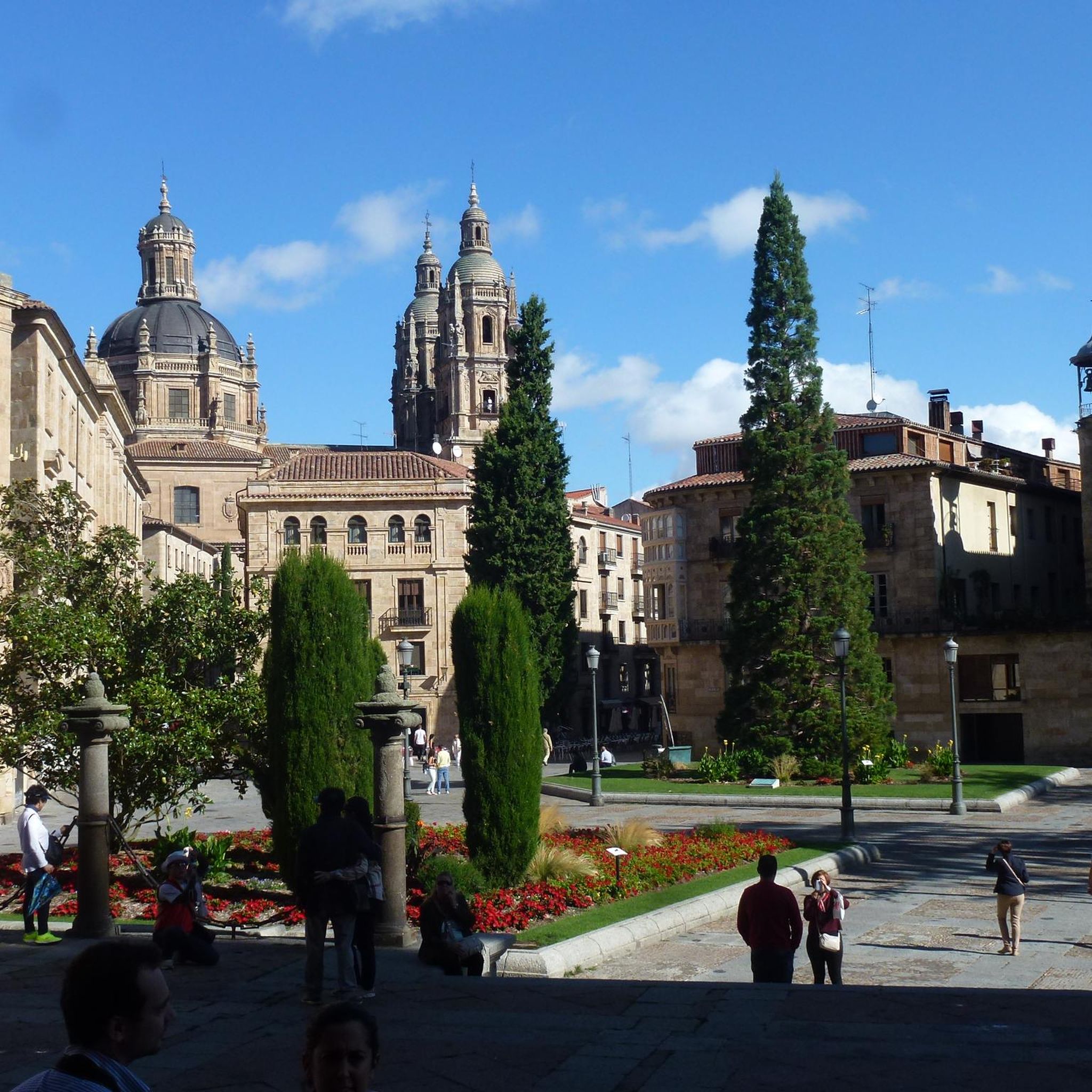
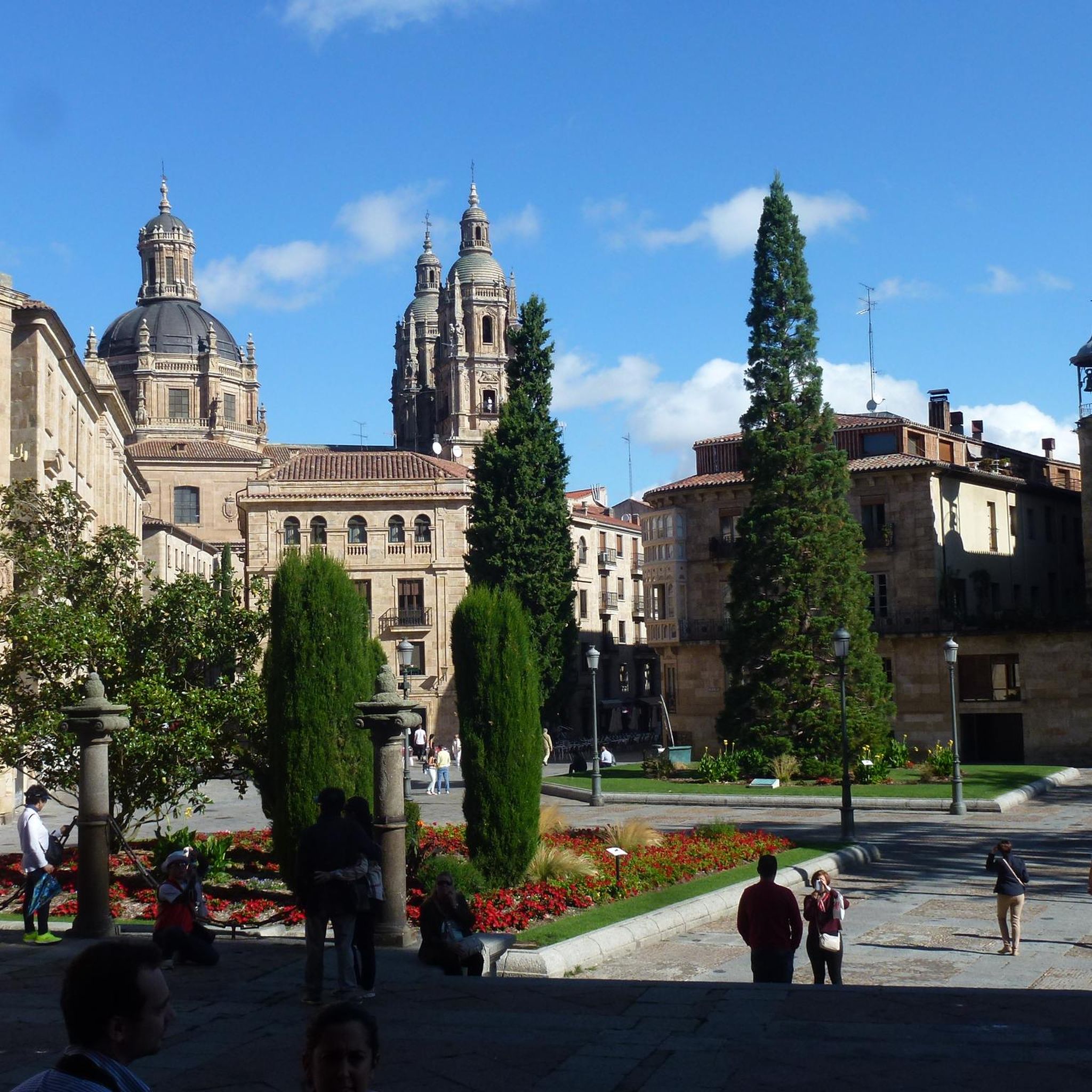
It is one of the highest cathedrals in Spain and is known for its detailed plateresque facade, rich interior, and the famous, intriguing "astronaut" on the north facade. The astronaut or alien shows timelessness or that not everything you see is true.
9
1
Beautiful bridge and view
13
0

The bell tower of Salamanca Cathedral is one of the most emblematic elements of its architecture. It forms part of the New Cathedral, although it is integrated into the complex that includes the Old Cathedral. Baroque style predominates, although the base is Renaissance, reflecting the transition between the two cathedrals. Height: Approximately 92 meters, making it one of the tallest points in the city.
14
0
The history of Salamanca's Roman bridge is intertwined with that of the city itself, and it has been one of its defining features for centuries. Located in a position that facilitated human settlement and the development of economic activity, its proximity to the three hills and the Tormes River made it a strategic location. It is a solid bridge, resistant to the passage of time. For centuries it served as the main access point to the city, until a new bridge was completed over the Tormes River in 1913, allowing the passage of vehicles.
10
0

great view back over Salamanca
3
0

The New Cathedral of Salamanca, dedicated to the Assumption of the Virgin, began construction in 1513, although construction lasted until 1733. Great architects such as Juan and Rodrigo Gil de Hontañón, Juan de Álava, and the Churriguera brothers, among others, worked there. The initial style was late Gothic, and despite the extensive work, this stylistic unity assigned by the Chapter has been maintained. On the exterior, we can see impressive facades with highly elaborate and unique decorative details, such as those on the three doors of the main façade, an interesting iconographic ensemble with reliefs of scenes from the Nativity and the Epiphany, and, above the large central ogee arch, a beautiful Calvary. The Palm Doorway depicts the sculptural group of the Entry of Jesus into Jerusalem. On this façade there are sculpted figures that do not correspond to the period, since we can see, to mention the most well-known, a monster eating ice cream or a curious astronaut (author's licenses in a 1992 restoration to justify the historical moment of its incorporation).
1
0
Frequently Asked Questions
How many gravel bike trails are available around San Cristóbal De La Cuesta?
There are over 25 gravel bike routes in the San Cristóbal De La Cuesta area, offering a variety of experiences for different skill levels. You'll find a mix of easy, moderate, and challenging trails.
What kind of terrain can I expect on gravel bike trails in this region?
The region around San Cristóbal de la Cuesta is characterized by undulating topography, with 'cuestas' (hills or ridges with gentle and steep slopes) providing diverse elevation changes. Routes often combine asphalt and unpaved segments, traversing agricultural areas and offering views towards the nearby city of Salamanca and the Tormes River. This mixed-surface environment is ideal for gravel biking.
Are there gravel biking routes suitable for beginners or families?
Yes, there are routes suitable for all fitness levels, including easier rides with mostly paved surfaces. While specific 'family-friendly' routes aren't explicitly highlighted, the area offers 2 easy and 21 moderate routes that could be suitable depending on your family's experience. For a moderate option, consider the Roman Bridge of Salamanca – View of Salamanca Cathedral loop from Villamayor, which is 41.5 km long.
What about more challenging gravel bike routes?
For experienced gravel bikers seeking a challenge, the region offers 5 difficult routes. One such option is the View of Salamanca Cathedral – Plaza Mayor of Salamanca loop from Moriscos, a demanding 67.9 km path that provides extensive views of Salamanca's landmarks and explores the wider countryside.
What are some notable landmarks or attractions I can see while gravel biking?
Many routes offer views of historical sites. You can often spot the Salamanca Cathedral and pass by the ancient Roman Bridge of Salamanca. Some routes also lead close to the iconic Plaza Mayor of Salamanca, a beautiful 18th-century square.
Are there any circular gravel bike routes available?
Many of the gravel routes in the area are designed as loops, allowing you to start and end at the same point. Examples include the Roman Bridge of Salamanca – Plaza Mayor of Salamanca loop from Salamanca and the View of La Armuña at Sunset loop from Moriscos.
What is the best time of year for gravel biking in the Salamanca region?
The Castile and León region generally experiences hot, dry summers and cold winters. Spring (April-May) and autumn (September-October) typically offer the most pleasant temperatures for gravel biking, with comfortable weather and beautiful scenery. Always check local weather forecasts before heading out.
Where can I park my car when accessing gravel bike trails?
Many routes start from towns like Villamayor, Moriscos, or Salamanca itself, where public parking options are generally available. For specific trailheads, it's advisable to check the individual route details on komoot for suggested starting points and parking information.
Is it possible to reach gravel bike trailheads using public transport?
San Cristóbal de la Cuesta is close to Salamanca, which is well-connected by public transport. While direct public transport to every trailhead might be limited, you can often reach the starting points of routes originating from larger towns like Salamanca or its immediate vicinity via local bus services. Planning your route in advance on komoot can help identify accessible starting locations.
What do other gravel bikers say about the trails here?
The gravel biking routes around San Cristóbal De La Cuesta are highly rated by the komoot community, with an average score of 3.0 stars. Over 100 gravel bikers have explored the varied terrain using komoot, appreciating the mix of asphalt and dirt surfaces and the views of historical landmarks.
How long are the gravel bike trails typically?
The length of gravel bike trails in the area varies significantly. You can find shorter routes, such as the View of La Armuña at Sunset loop from Moriscos at 23.6 km, to longer, more challenging rides like the View of Salamanca Cathedral – Plaza Mayor of Salamanca loop from Moriscos, which spans 67.9 km.
Are there any permits required for gravel biking in the Salamanca province?
Generally, no specific permits are required for gravel biking on public roads and established trails in the Salamanca province. However, always respect private property and any local signage regarding access restrictions, especially in agricultural areas or protected natural spaces.
Most popular routes around San Cristóbal De La Cuesta
Most popular attractions around San Cristóbal De La Cuesta

Get inspired with the komoot mobile app


Explore more
Browse the best Gravel rides in other regions.
