The best gravel rides around Wasseiges
4.1
(7)
42
riders
8
rides
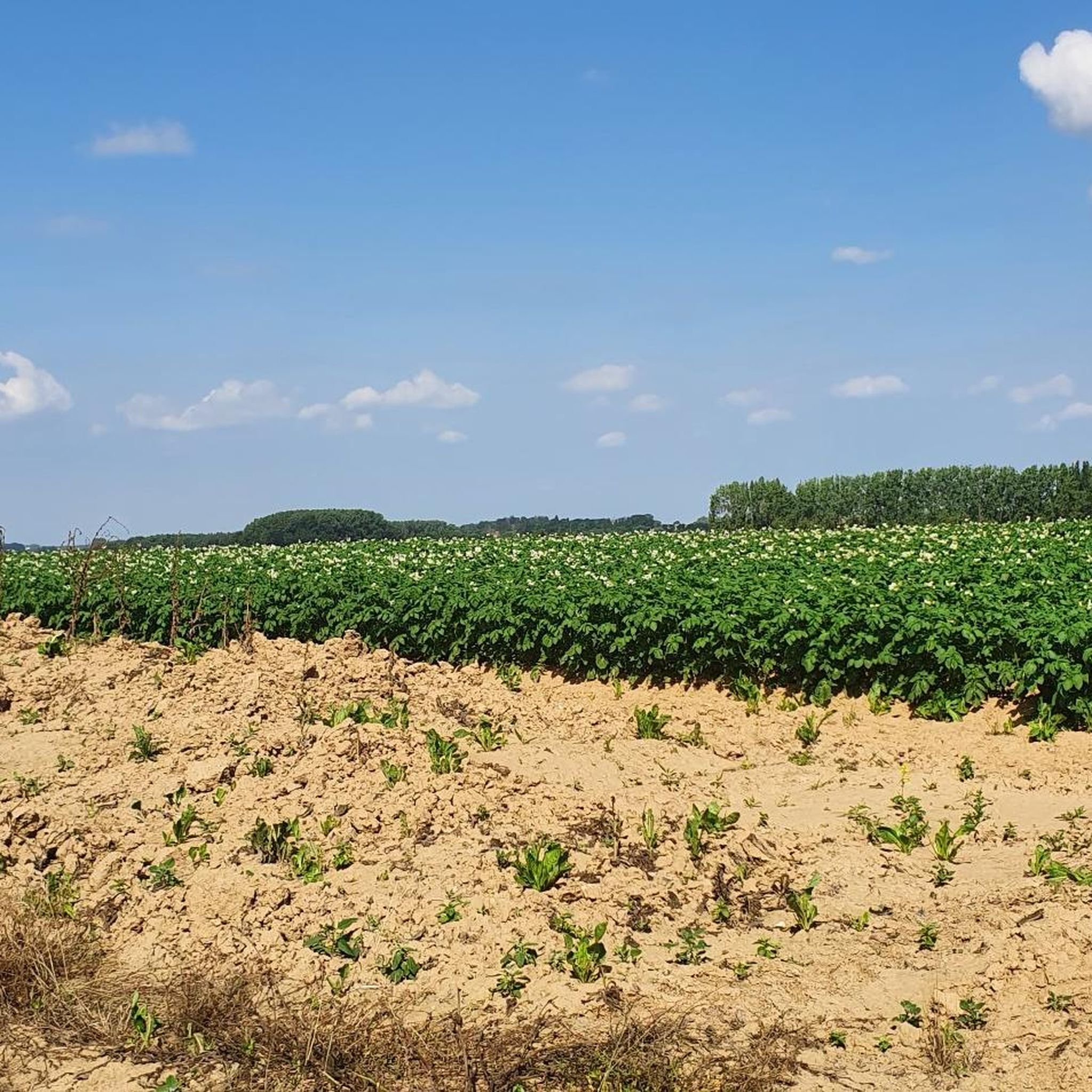
Gravel biking around Wasseiges features a landscape characterized by rolling agricultural fields, historical sites, and river valleys. The terrain often includes a mix of paved country roads, unpaved farm tracks, and dedicated cycling paths like the RAVeL network. Elevation changes are generally moderate, offering accessible climbs and descents suitable for gravel bikes.
Best gravel bike trails around Wasseiges
- The most popular gravel bike trail is Ruins of Moha Castle and Cliffs – Fousseroûl Castle-Farm loop from Reppe, a 10.1 miles (16.3 km) trail that takes 55 minutes to complete. This route explores historical ruins and agricultural landscapes.
- Another top favourite among local gravel bikers is Racour Station – Picnic Area on RAVeL L142 loop from Wasseiges, a difficult 40.9 miles (65.9 km) path. This trail follows a section of the RAVeL network, offering a longer distance through varied scenery.
- Local gravel bikers also love the Seron Tumulus I – Andenne Dam and Bridge loop from Tillier, a 45.6 miles (73.4 km) trail leading through historical tumuli and along river features, often completed in about 5 hours 30 minutes.
- Gravel biking around Wasseiges is defined by historical landmarks, agricultural landscapes, and sections of the RAVeL network. The region offers a network of routes with options for various ability levels, from moderate loops to more challenging long-distance paths.
- The routes in Wasseiges are highly rated by the komoot community with an average score of 4.5 stars from over 10 reviews. More than 40 gravel bikers have used komoot to explore Wasseiges's varied terrain.
Last updated: July 8, 2026
4.5
(2)
6
riders
29.5km
01:51
320m
310m
Moderate gravel ride. Good fitness required. Mostly paved surfaces. Suitable for all skill levels.
5.0
(2)
4
riders
66.0km
03:51
420m
420m
Hard gravel ride. Good fitness required. You may need to push your bike for some segments of this route.

Sign up for free
3
riders
25.9km
01:37
210m
210m
Moderate gravel ride. Good fitness required. Mostly paved surfaces. Suitable for all skill levels.
4.0
(1)
6
riders
35.3km
02:08
220m
220m
Hard gravel ride. Good fitness required. You may need to push your bike for some segments of this route.
4.0
(1)
3
riders
16.1km
00:54
160m
160m
Moderate gravel ride. Good fitness required. Mostly paved surfaces. Suitable for all skill levels.
Get access to more routes and recommendations from other explorers.
Sign up for free
Already have an account?
Our route recommendations are based on thousands of hikes, rides, and runs completed by other people on komoot.
Start today with a free account
Your next adventure awaits.
Login or Signup
Tips from the Community

Remarkable bourgeois house with a special history: it did indeed serve for a time as a convent for French Benedictine nuns who – at the time of the Combes law (1902-1905), which advocated a strict separation of church and state – fled their country and settled here. The history of the house, however, goes back two centuries further: In 1708, Pierre Verlaine de Lomprez built a house on the abbey grounds. Marie-Jeanne inherited the house in the abbey courtyard. She lived there with her husband, Nicolas Gaspard Devaux, administrator of the estate of the prince-bishop of Liège and steward of his forests. In 1903, expelled French Benedictine nuns found a refuge in Moha, where they ran a kindergarten. In 1905, religious services were held in an annex to the house, while awaiting the rebuilding of the village church, which was reopened in 1917. The L-shaped house is built of limestone rubble from local quarries. In the 19th century, renovations were carried out: annexes were built and new openings were added. Source: bibliotheca.wanze.be
3
0
Moha has two rocky outcrops: one on the north side, with (the ruins of) the castle; one on the south side, with the Church of Our Lady of the Rosary. It's quite impressive how the church towers over the village. The neo-Gothic basilica church was built in 1912 on the site of a previously renovated house of worship.
4
0

A really nice place to have a drink after your walk (open Wednesday and Sunday)
0
0
Quarries have been a major industry in this region for almost a century. In recent decades, further expansion projects have been planned here in Moha. These have repeatedly met with resistance from residents of neighboring Vinalmont, where the rural hamlets of Wanzoul and Roua are threatened by an expansion of the quarry's current infrastructure. During a public inquiry organized by the local government in 1997, the number of written protests (nearly 1,500) exceeded the total number of residents of Vinalmont (over 1,070). Source: Wikipedia
3
0
The fortified tower, situated on the edge of the Fosseroule stream and defending the valley, is considered a peripheral bastion of Moha Castle, located a mile and a half away. Agricultural and residential buildings form an enclosed complex, built between the 17th and 19th centuries. In the eastern corner stands an imposing tower, built of limestone rubble, with a square plan (16th century) on a wider, sloping base. This tower originates from an earlier structure, the cellars of which have also been preserved. The openings were modified, and in the 17th century, the tower was extended on the south side with a bay of limestone rubble and brick, reaching the limits of the original structure. To the west of the tower stands a two-story house, perpendicular to the tower, built of limestone rubble, probably dating from the 17th century. Source: bibliotheca.wanze.be
3
0
Please note that the second part of the walk is inaccessible due to the quarry expansion. There are no signs indicating the direction of travel. A sign from the town indicates the change in the local road where you rejoin the trail. Information should be provided at each end to avoid unnecessary backtracking.
1
1

The Château de Fosseroule is actually the Ferme-château de Fosseroule, a historic farmhouse with castle features, located at the confluence of the Mehaigne and Fosseroule rivers, near the famous medieval Château de Moha. It is a former walled farm and residence built in the 17th-19th centuries with an impressive east tower, a beautiful example of local heritage. The Fosseroule, after which the castle is named, flows into the Mehaigne River here. The castle grounds house a rural gîte "La Vieille Brasserie" (separate building) - see https://visitwallonia.be/fr-be/content/gite-rural-huccorgne-la-vieille-brasserie
6
0

Beautiful location with a stunning view of one of the old quarry lakes.
0
0
Frequently Asked Questions
How many gravel bike trails are available in the Wasseiges area?
There are 18 gravel bike routes around Wasseiges, offering a variety of experiences. These include 4 easy, 4 moderate, and 10 difficult trails, catering to different skill levels.
Are there any easy or beginner-friendly gravel bike routes in Wasseiges?
Yes, Wasseiges offers several easy routes suitable for beginners. One such option is the Ruins of Moha Castle and Cliffs – Fousseroûl Castle-Farm loop from Reppe, which is 16.3 km long and explores historical ruins and agricultural landscapes with moderate difficulty.
What kind of terrain can I expect on gravel bike trails around Wasseiges?
The terrain around Wasseiges is characterized by rolling agricultural fields, historical sites, and river valleys. You'll encounter a mix of paved country roads, unpaved farm tracks, and dedicated cycling paths, including sections of the RAVeL network. Elevation changes are generally moderate.
Are there challenging gravel routes for experienced riders in Wasseiges?
Absolutely. For experienced riders seeking a challenge, routes like the Seron Tumulus I – Andenne Dam and Bridge loop from Tillier offer a more demanding experience. This 73.4 km trail leads through historical tumuli and along river features, with significant elevation gain.
Can I find loop routes for gravel biking in Wasseiges?
Many of the gravel bike trails in Wasseiges are designed as loops. For example, the Camping Capfun L'Hirondelle – Hameau de Vissoul loop from Tumulus de Vissoul is a moderate 22.25 km circular route, perfect for exploring the local scenery.
What are some scenic viewpoints or attractions I can see along the gravel bike trails?
The Wasseiges area is rich in historical and natural sights. Along your rides, you might encounter highlights such as the Château de Fallais, the Seron Tumulus I, or enjoy a View of Famelette Castle. The Sept Fontaines Nature Reserve also offers natural beauty.
What do other gravel bikers enjoy most about Wasseiges?
The komoot community highly rates the gravel biking in Wasseiges, with an average score of 4.5 stars. Reviewers often praise the varied terrain, which combines historical landmarks, agricultural landscapes, and sections of the RAVeL network, offering diverse and engaging rides.
Are there any routes that follow the RAVeL network?
Yes, the RAVeL network is integrated into some of the gravel routes. The Racour Station – Picnic Area on RAVeL L142 loop from Wasseiges is a notable example, offering a longer 65.9 km distance through varied scenery along a section of the RAVeL.
What is the typical length of gravel bike trails in Wasseiges?
Gravel bike trails in Wasseiges vary significantly in length. You can find shorter routes like the 16.3 km Ruins of Moha Castle and Cliffs – Fousseroûl Castle-Farm loop from Reppe, up to longer, more challenging rides such as the 73.4 km Seron Tumulus I – Andenne Dam and Bridge loop from Tillier.
Are there any routes that pass through parks or natural reserves?
Yes, some routes offer access to natural areas. While not directly passing through a large park, the region features natural highlights like the Sept Fontaines Nature Reserve, which can be explored in conjunction with nearby trails.
What is the best season for gravel biking in Wasseiges?
Given the agricultural landscape and moderate elevation, spring and autumn are generally ideal for gravel biking in Wasseiges, offering pleasant temperatures and vibrant scenery. Summer can also be enjoyable, though some exposed sections might be warm. Winter rides are possible, but be prepared for potentially wet or muddy conditions on unpaved tracks.
Are there any less crowded gravel trails in the Wasseiges area?
While specific crowd levels can vary, exploring some of the longer, more challenging routes or those slightly further from central Wasseiges, such as the Narrow Path Along Brick Wall – Orp-Jauche Park loop from Hannut, might offer a more secluded experience away from the most popular spots.
Most popular attractions around Wasseiges

Get inspired with the komoot mobile app


Explore more
Browse the best Gravel rides in other regions.
