The best gravel rides around Pessano Con Bornago
4.3
(346)
2,726
riders
82
rides
Gravel biking around Pessano Con Bornago features a landscape shaped by its extensive network of canals and rivers, including the Martesana Canal and the Adda River. The region is situated within the Po Valley, characterized by agricultural landscapes and alluvial soil. Routes often combine paved paths and dirt roads, offering varied terrain for cyclists. These trails provide opportunities to explore local agricultural areas and historical water management systems.
Best gravel bike trails around Pessano Con Bornago
- The most popular gravel…
Last updated: July 3, 2026
4.6
(12)
83
riders
67.3km
04:21
150m
150m
Moderate gravel ride. Good fitness required. Mostly paved surfaces. Suitable for all skill levels.
4.5
(16)
129
riders
70.8km
04:27
330m
330m
Hard gravel ride. Good fitness required. You may need to push your bike for some segments of this route.

Sign up for free
4.3
(45)
272
riders
57.8km
03:10
360m
360m
Moderate gravel ride. Good fitness required. Mostly paved surfaces. Suitable for all skill levels.
4.7
(10)
72
riders
60.6km
03:42
140m
140m
Moderate gravel ride. Good fitness required. Mostly paved surfaces. Suitable for all skill levels.
4.4
(9)
71
riders
84.1km
04:54
170m
170m
Moderate gravel ride. Good fitness required. Mostly paved surfaces. Suitable for all skill levels.
Get access to more routes and recommendations from other explorers.
Sign up for free
Already have an account?
Our route recommendations are based on thousands of hikes, rides, and runs completed by other people on komoot.
Start today with a free account
Your next adventure awaits.
Login or Signup

Tips from the Community

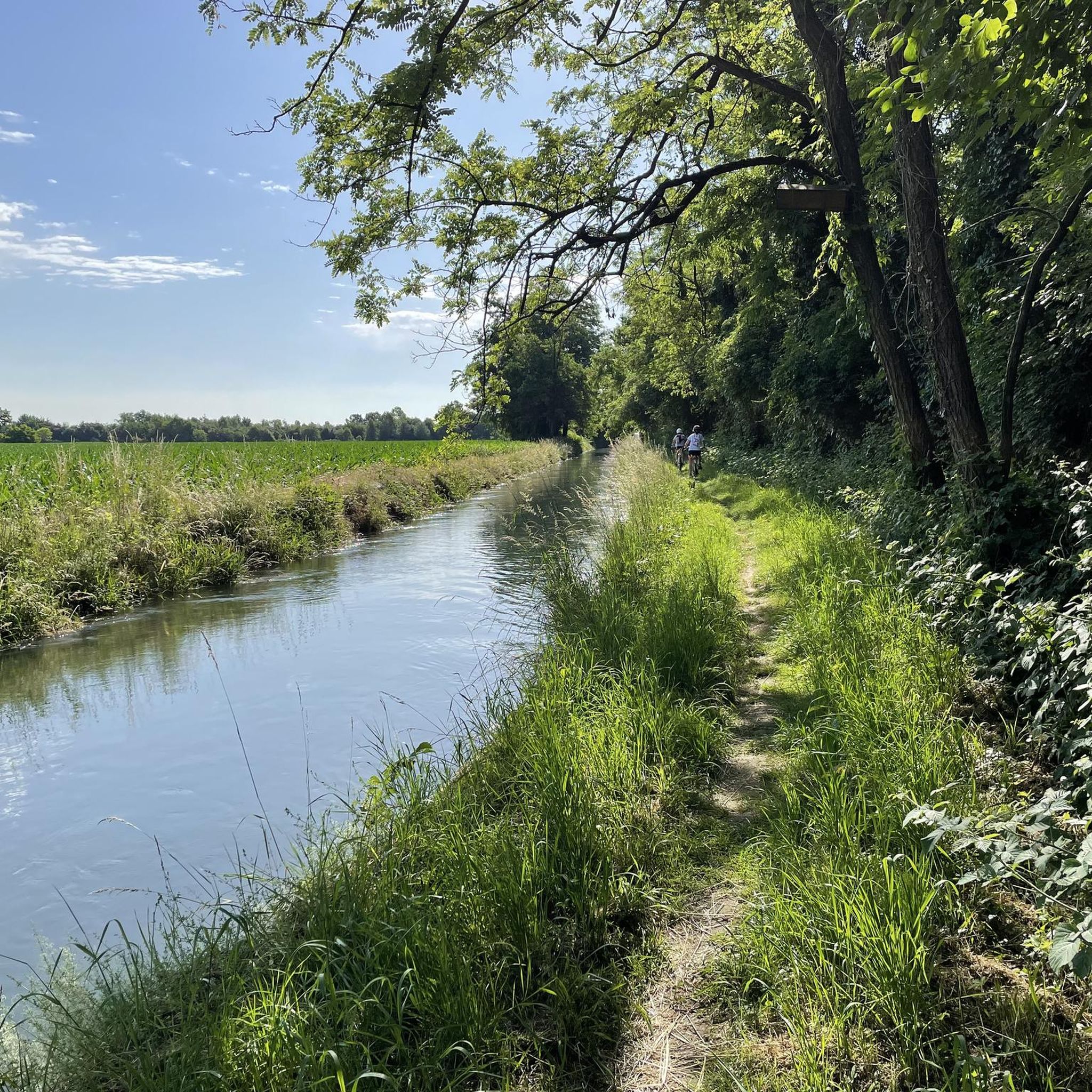
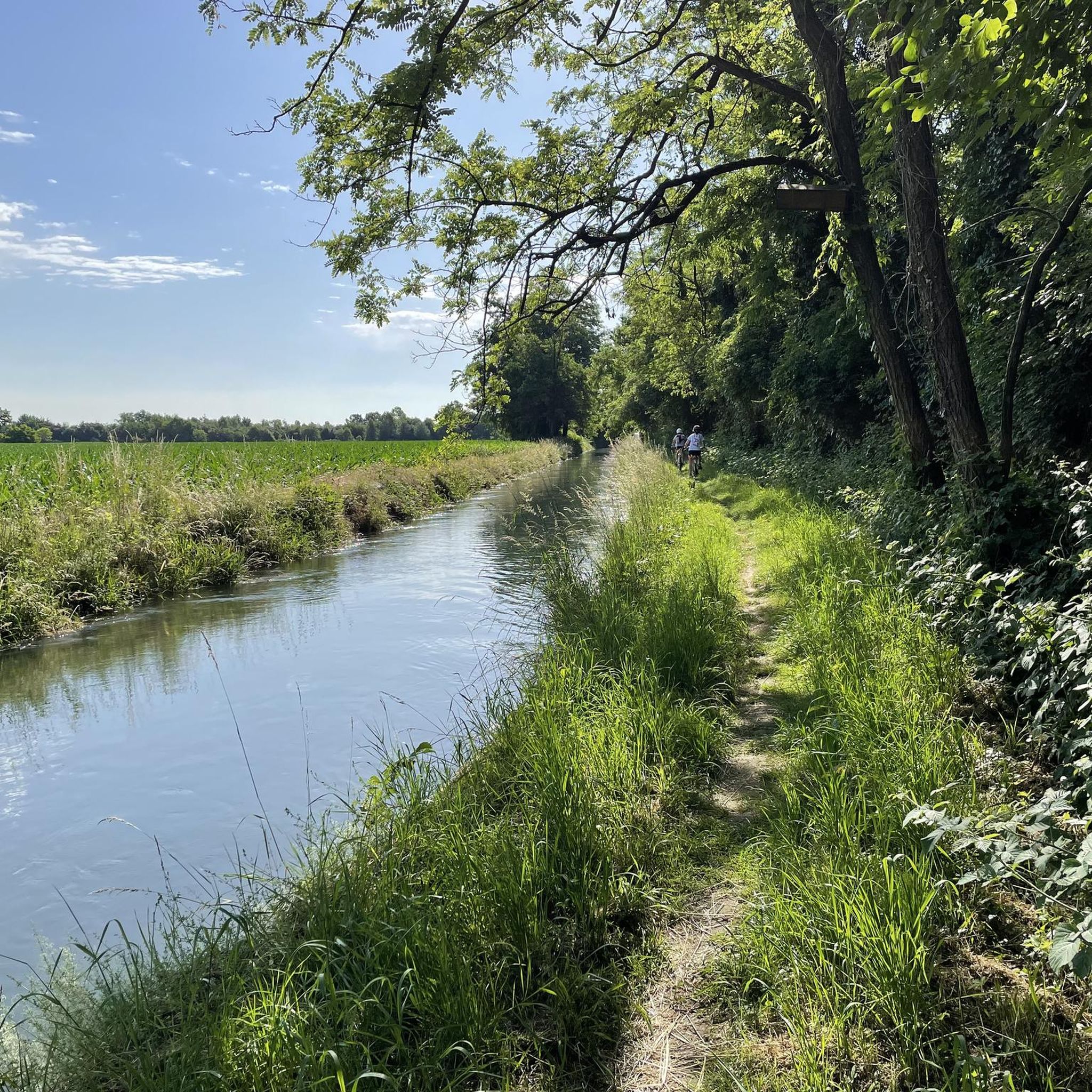
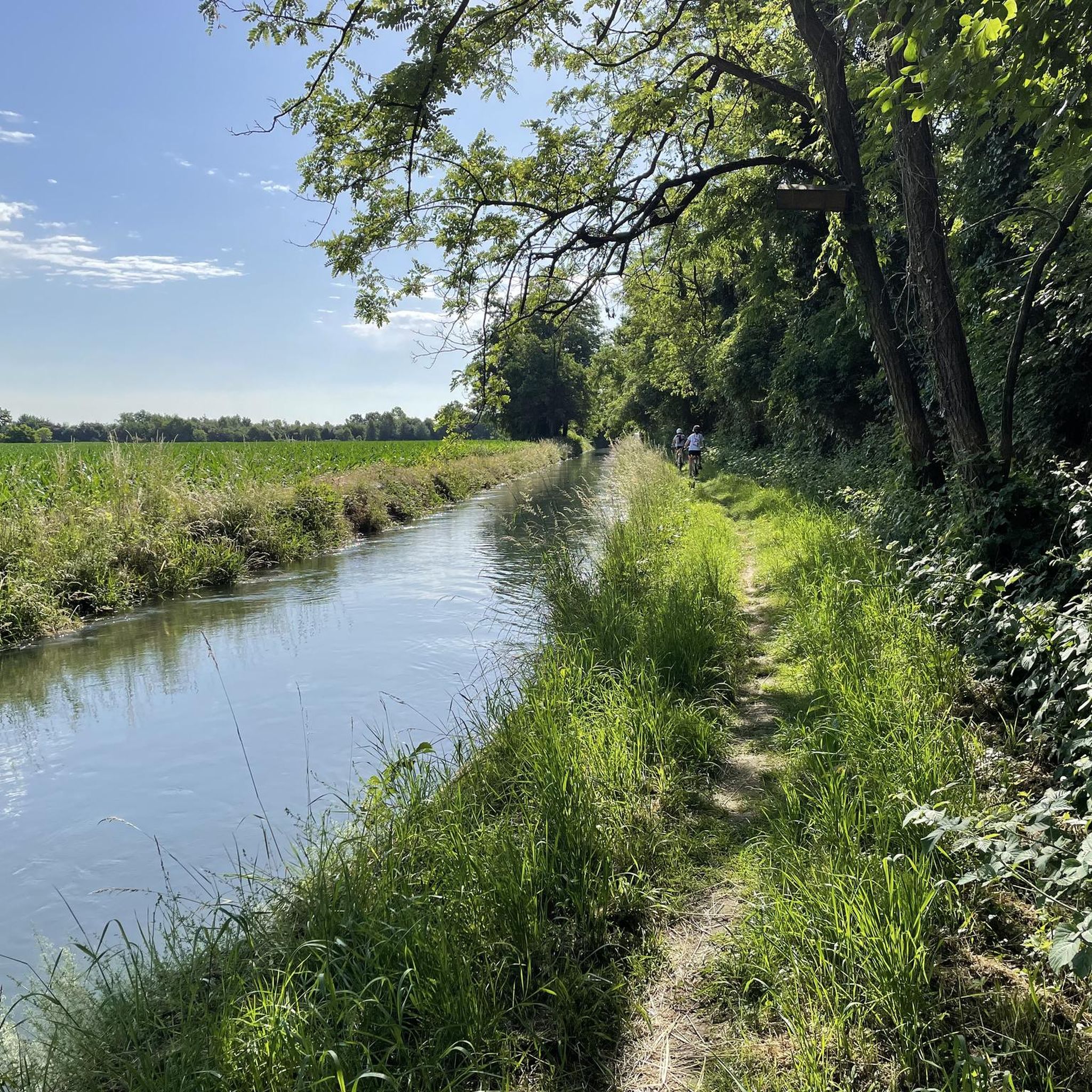
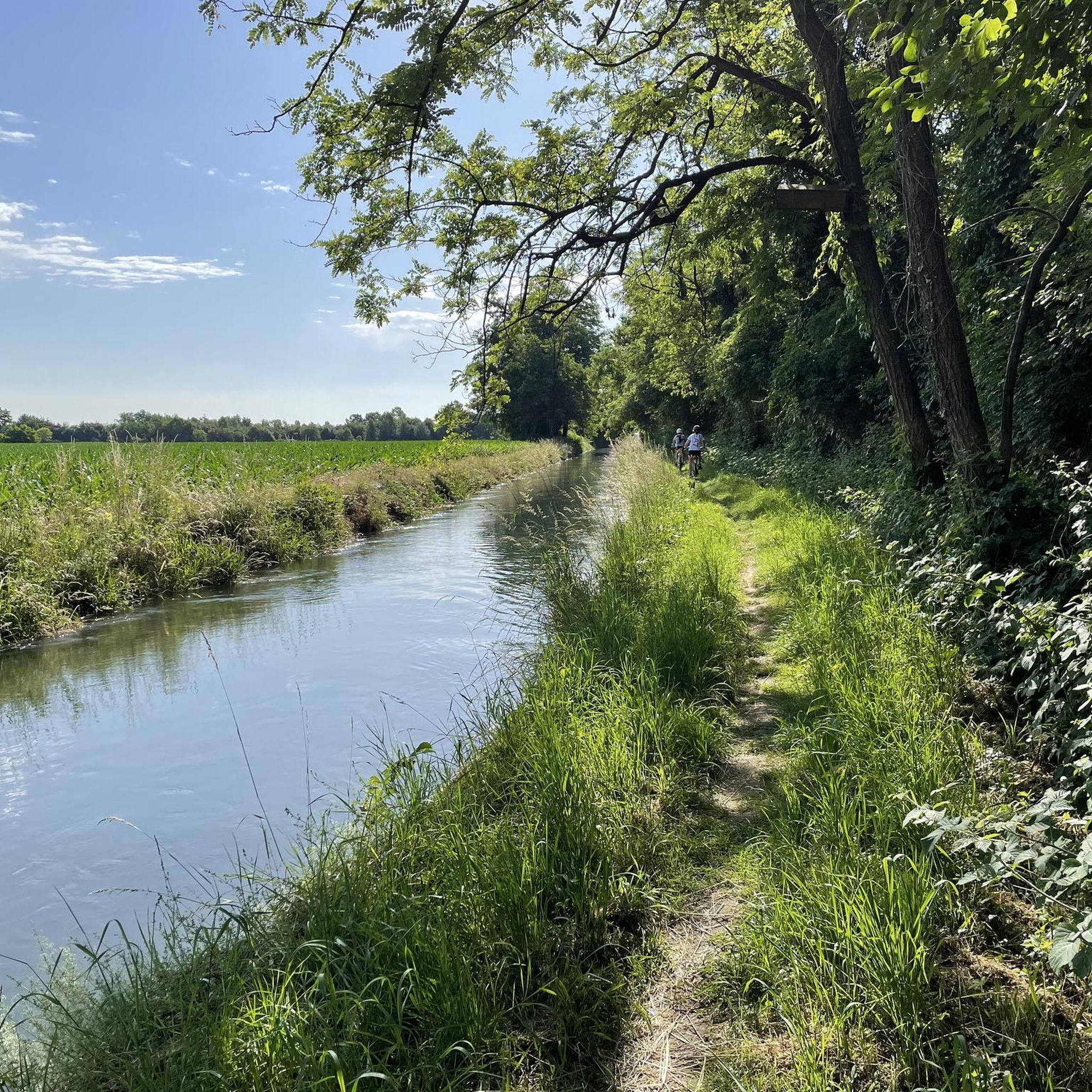
The Canale della Muzza is an important hydraulic work from the 12th-13th century that branches off the Adda river in Cassano d'Adda and extends for about 39 km to Castiglione d'Adda. It is one of the oldest and largest irrigation canals in Europe, fundamental for Lodi's agriculture, now also flanked by cycle paths.
0
0

The bridge over the Muzza Canal, located in Lavagna (a hamlet of the municipality of Comazzo in the province of Lodi), is a historical landmark for crossing this ancient artificial waterway. The Muzza is a branch of the Adda river, known for being one of the oldest canals in Europe. Lavagna Lodigiana is a small rural village immersed in the countryside that develops right next to the canal. The bridge area is frequented by cyclists and hikers who travel along the Muzza cycle path or the Muzza-Ponte di Lavagna route, enjoying the river landscape.
0
0

The Esterle power plant was particularly well-designed from an architectural point of view, as it was intended to be representative of the Edison company that built it. It looks more like a Lombard pleasure villa than a true industrial facility. The effort to integrate the building into the surrounding territory, made in the early 20th century during the construction of the plant, was remarkable. Today it represents a significant example of monumental industrial archaeology and is known for its particular beauty. Inside, the walls and ceiling of the engine room were decorated with great care, as were the floors, lamps, light fixtures, and numerous wrought-iron furnishings.
0
0

Any trail that winds through its vicinity is wonderful, a shame about the interruption between Zelo and Galgagnano of the path due to the hunting area, incidentally a beautiful place part of the ADDA sud Park but inexplicably in the hands of one or more private individuals who have made it their "hunting park" by fencing it all in. I happened to get inside by mistake, finding one of the numerous open gates and could no longer get out, finding the others closed, receiving a couple of shots in the air behind my back to make me understand that I was not welcome! A real shame because it interrupts the descent from Zelo towards Lodi along the Adda. Beyond the "hunting park" I believe that the passage along the river (state-owned area!!) SHOULD always be guaranteed without any ifs or buts!
0
0
The Adda River is the fourth longest watercourse in Italy with its 313 kilometers and is entirely within the Lombardy region. It represents one of the main left tributaries of the Po River and has a very large hydrographic basin that covers about a third of the regional territory
0
0
The Muzza canal (61 km long in total) is a branch of the Adda River and has recently celebrated its 800th anniversary, making it one of the oldest in Europe. Its name, with slight variations over the centuries, still recalls the Roman family Mutia who moved here in 90 BC, starting the first land reclamation works. Smaller watercourses branch off from the wide canal, winding through the countryside for a total length of about 1000 kilometers, mainly intended for agricultural irrigation. The surrounding landscape of countryside and farmhouses is evocative, with a succession of tree-lined rows and open fields. It is also very interesting from a naturalistic point of view as it attracts many aquatic birds that can be observed along the route.
1
0
The Muzza canal (61 km long in total) is a branch of the Adda River and recently celebrated its 800th anniversary, making it one of the oldest in Europe. Its name, with slight variations over the centuries, still recalls the name of the Roman Mutia family who moved here in 90 BC, initiating the first land reclamation works. From the wide canal branch off smaller watercourses which, winding through the countryside for a total length of about 1000 kilometers, are mainly intended for agricultural irrigation. The landscape of countryside and farmhouses surrounding it is evocative, with alternating rows of trees and open fields. It is also very interesting from a naturalistic point of view as it attracts many water birds that can be observed along the route.
1
0
The Naviglio della Martesana, definitively completed in 1496 under the guidance of Ludovico il Moro, flows from Trezzo sull’Adda to Milan for a total length of 38 km. The route runs alongside the ancient Roman road (the current SS 11 padana superiore) which crossed the Adda with two branches: at Vaprio and Cassano. Irrigation of the land located above the spring belt was for a long time the predominant use of the canal, so much so that initially navigation was limited to two days a week; concurrently with the improvement of the agricultural structure thanks to irrigation, a notable flourishing of stately villas occurred in the Baroque era, intended to enjoy the convenience of travel on water and to control owned lands.
1
0
Frequently Asked Questions
How many gravel bike trails are available around Pessano Con Bornago?
There are over 115 gravel bike trails around Pessano Con Bornago, offering a wide range of options for different skill levels and preferences. You'll find everything from shorter, flatter rides along canals to longer, more challenging routes with some elevation gain.
Are there easy gravel bike trails suitable for beginners or families?
Yes, Pessano Con Bornago offers several easier gravel bike trails. While many routes feature longer distances, you can find options that are flatter and follow the extensive canal systems, which are generally more accessible. For a moderate option, consider the Bridge over the Muzza – Martesana Canal loop from Gorgonzola, which is about 39 km long and takes around 2 hours 38 minutes.
What are the typical lengths and durations of gravel bike routes in this area?
Gravel bike routes around Pessano Con Bornago vary significantly in length and duration. You can find shorter rides, like the moderate 39 km Bridge over the Muzza – Martesana Canal loop from Gorgonzola, which takes under 3 hours. However, many popular routes are longer, ranging from 60 km to over 110 km, often requiring 5 to 8 hours to complete, such as the Adda River – Vacchelli Canal entrance loop from Gessate (67.5 km, 5h 11m).
Are there any scenic gravel bike routes with notable landmarks or natural sights?
Absolutely. The region is characterized by its canals and rivers, offering scenic rides along waterways like the Adda River and Martesana Canal. Many routes pass by historical water management systems, agricultural areas, and natural highlights. For example, the Martesana Canal – Groppello Water Wheel loop from Cassina de' Pecchi explores the canal and passes the historic Groppello Water Wheel. You can also find natural attractions like Increa Park or the Pignone Park and Waterfall on the Adda River nearby.
What kind of terrain can I expect on gravel bike trails around Pessano Con Bornago?
The terrain around Pessano Con Bornago is diverse, primarily shaped by its extensive network of canals and rivers. You'll encounter flat, accessible paths along waterways, which are ideal for smooth riding. However, some longer routes also include sections with moderate elevation gain, providing a varied experience through local agricultural areas and historical landscapes.
Are there any loop trails for gravel biking in the area?
Yes, many of the gravel bike trails around Pessano Con Bornago are designed as loops, making them convenient for starting and ending at the same point. Popular loop options include the Groppello Water Wheel – Martesana Canal loop from Cassina de' Pecchi (98.8 km) and the Martesana Canal – Groppello Water Wheel loop from Gorgonzola (75.7 km).
What do other gravel bikers say about the trails in Pessano Con Bornago?
The gravel biking routes in Pessano Con Bornago are highly regarded by the komoot community, holding an average rating of 4.4 stars from over 250 reviews. Many riders praise the scenic canal paths, the varied terrain, and the opportunities to explore the region's unique water management systems and agricultural landscapes.
Are there any specific attractions or points of interest near the gravel trails?
Beyond the canals and rivers themselves, the area offers several points of interest. You can find natural spaces like Increa Park and the Le Foppe Oasis of Cavenago Brianza. Historical sites include the Chapel by the Lake in Monza Park and the Laghetto of the Royal Villa of Monza, offering cultural and natural diversions along your ride.
When is the best time of year for gravel biking around Pessano Con Bornago?
The region's climate generally allows for gravel biking through much of the year. Spring and autumn often provide pleasant temperatures and vibrant scenery, making them ideal. Summer can be warm, so early morning or late afternoon rides are recommended. Winter rides are also possible, especially on the flatter canal paths, though you should be prepared for cooler temperatures and potentially damp conditions.
Are there options for advanced gravel bikers looking for a challenge?
Yes, advanced gravel bikers will find challenging routes around Pessano Con Bornago. Many trails are quite long, with some featuring significant elevation gain over their distance. For instance, the Martesana Canal – Groppello Water Wheel loop from Cassina de' Pecchi is a difficult 113.6 km path with over 1000 meters of elevation gain, providing a substantial endurance test.
Can I find places to eat or drink along the gravel bike routes?
While specific cafes are not listed for every route, the extensive network of trails often passes through or near towns and villages along the canals and rivers. These settlements typically offer opportunities to find cafes, restaurants, or shops where you can refuel and refresh during your ride.
Most popular routes around Pessano Con Bornago
Most popular attractions around Pessano Con Bornago

Get inspired with the komoot mobile app


Explore more
Browse the best Gravel rides in other regions.
