The best cycling routes around Jettingen
4.7
(411)
2,077
riders
73
rides
Touring cycling routes around Jettingen traverse a diverse landscape featuring gentle hills, more challenging climbs, and wide forest paths. The region is characterized by picturesque forests and green meadows, offering varied terrain for cyclists. Its proximity to the Northern Black Forest provides access to idyllic landscapes and scenic views. Some routes also follow pleasant riverside paths, enhancing the touring experience.
Best touring cycling routes around Jettingen
- The most popular touring cycling route is Nagold–Jettingen Cycle Path – Nagold River Path…
Last updated: June 29, 2026
4.5
(93)
192
riders
31.2km
01:54
250m
240m
Moderate bike ride. Good fitness required. Mostly paved surfaces. Suitable for all skill levels.
4.1
(34)
180
riders
24.0km
01:33
320m
320m
Moderate bike ride. Good fitness required. Mostly paved surfaces. Suitable for all skill levels.

Sign up for free
4.7
(63)
268
riders
55.0km
03:40
690m
690m
Hard bike ride. Very good fitness required. Mostly paved surfaces. Suitable for all skill levels.
4.5
(11)
101
riders
12.4km
00:51
210m
210m
Moderate bike ride. Good fitness required. Mostly paved surfaces. Suitable for all skill levels.
4.5
(13)
46
riders
13.2km
00:50
120m
120m
Easy bike ride. Great for any fitness level. Mostly paved surfaces. Suitable for all skill levels.
Get access to more routes and recommendations from other explorers.
Sign up for free
Already have an account?
Our route recommendations are based on thousands of hikes, rides, and runs completed by other people on komoot.
Start today with a free account
Your next adventure awaits.
Login or Signup
Tips from the Community

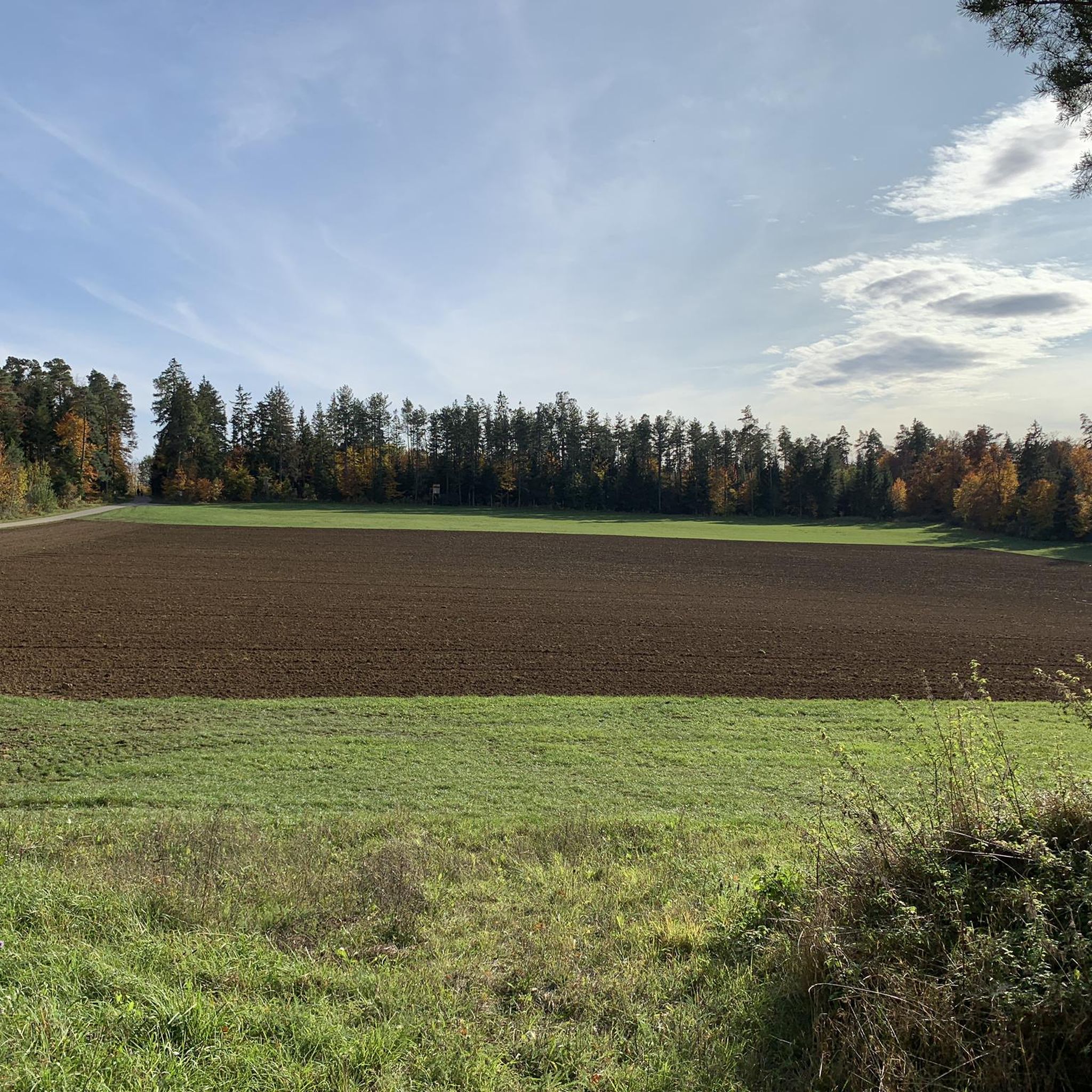
beautiful view into the Black Forest
0
0

The Mandelberg Castle, also called Mantelburg, is located on a wooded ridge in the middle of a deep forest, above the Waldachtal valley. The present-day path leads into the former moat of the castle and offers visitors the opportunity to circle the complex almost completely. Burg Mandelberg lies on a rock that was completely separated from its surroundings by a moat. The outer bailey was located in the moat, among other places. It included a small cave, which can still be visited today, as well as some buildings, of which foundations and meter-high walls are still recognizable. Via a zwinger with two defensive towers, which are still recognizable as stumps, one reaches the inner bailey. The inner bailey presents a similar picture to the outer bailey. The steeply sloping terrain once housed a palas, a well, a mighty curtain wall, and the keep. Further buildings may have existed due to the size of the open spaces. Today, all three mentioned buildings are still present, although they differ greatly in their state of preservation. The palas was built onto the southern outer wall and can be found up to a height of two meters or more. Due to the sloping terrain, it appears very stepped. The partially used bossed ashlar stones, which indicate a Staufen origin, are clearly recognizable. Besides a door frame with a washed-out threshold, some small windows can still be found. The palas probably had one or two stories. In the middle of the courtyard lies the old well. A grate adorns its top. Behind the well to the northwest, north of the keep, one encounters the old and thick curtain wall, which secured the castle towards the moat, and the remains of another small wall that might once have belonged to a building. The crowning glory of the castle is the rebuilt and restored keep, which with its proud height towers a few meters above the surrounding forest. It is still accessible today via its original entrance. A spiral staircase, consisting of a steel construction, leads there. In place of the former landing, then fastened and secured by still existing beam supports, a steel/concrete construction brings the visitor into the interior of the tower. Slightly above the entrance, further beam supports bear witness to a surrounding walkway. Source: https://burgenarchiv.de/burg_mandelberg_in_baden-wuerttemberg#kurzinfo
0
0
The Mandelberg Castle ruin, also called Mantelberg Castle ruin, is the ruin of a hilltop castle 570 m above sea level in the Bösingen district of the municipality of Pfalzgrafenweiler in the district of Freudenstadt in Baden-Württemberg, above the Waldach valley. The keep, used as a viewing tower, and parts of the foundation walls are still present. Archaeological excavations showed that a predecessor structure was built in the 11th century. The castle is first mentioned in documents in 1287. In 1385, Count Wolf von Eberstein bought the structure from Hans Müller von Mandelberg for 1000 guilders. As early as 1387, the owner was Margrave Rudolf of Baden. The castle itself burned down completely during the Peasants' Wars in 1525 and was not rebuilt. In 1970, the municipality of Pfalzgrafenweiler bought the building remains. The 35-meter-high keep was renovated and made accessible in 1975. Archaeological evidence could be provided for the destruction of the castle in 1525 mentioned in sources. No traces of the castle's use after 1525 could be found. The archaeological investigations revealed that the castle was built and expanded in three phases. The first structure, consisting of wooden or half-timbered buildings, was likely built in the late 11th century and used until the mid-13th century. Towards the end of its period of use, the much larger second castle was built. The complex had a almond-shaped floor plan with dimensions of 45 by 32.5 meters. In the west of the site stands the almost square keep, which is still preserved today. The wall from this tower to the north corner of the complex, presumably a shield wall, was added later, as was the wall adjoining the keep to the south. These walls supported a rampart walk. The inner buildings at the time could no longer be determined, as further expansion took place in the mid-15th century. A cistern was already built in the 14th century; during the expansion in the 15th century, a new palace was built in the south corner, and possibly a utility building in the north corner. The barbican on the east side was also likely built in the 15th century. This was later partially renewed. It is assumed that the castle was completely surrounded by a barbican by around 1500 at the latest. Source: https://de.wikipedia.org/wiki/Ruine_Mandelberg
0
0

Not far from the water tower is this bench with a frame. It offers itself to take a framed picture of the Northern Black Forest
10
0

Parking and rest area with a view
0
0

The Mantelberg Castle was first mentioned in documents in 1287. At that time, the owners were the Müller von Mantelberg family, who, like some other families from the area, bore a golden fish on a black field as their coat of arms. In 1385, Reaf Wolf von Eberstein acquired the castle, and in 1389, Margrave Rudolf von Baden. Afterwards, it was a Baden fief in the possession of various notable nobles. The approximately 33-meter-high keep survived the destruction by the rebellious peasants in 1525. In 1973/74, it was structurally secured and made accessible by the municipality of Bösingen with subsidies from the district of Freudenstadt, the state of Baden-Württemberg, and the Überschwäbische Elektrizitätswerke.
0
0

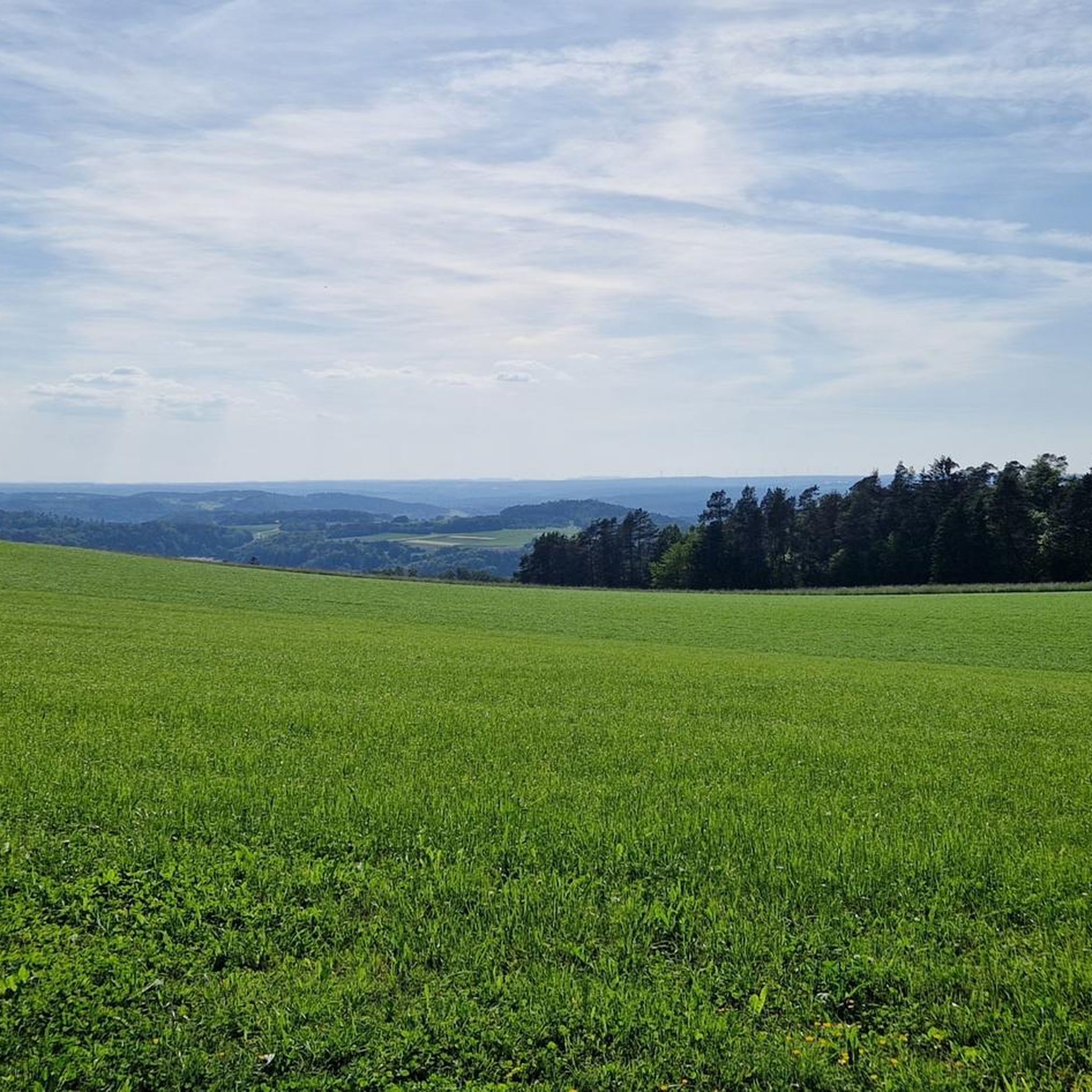
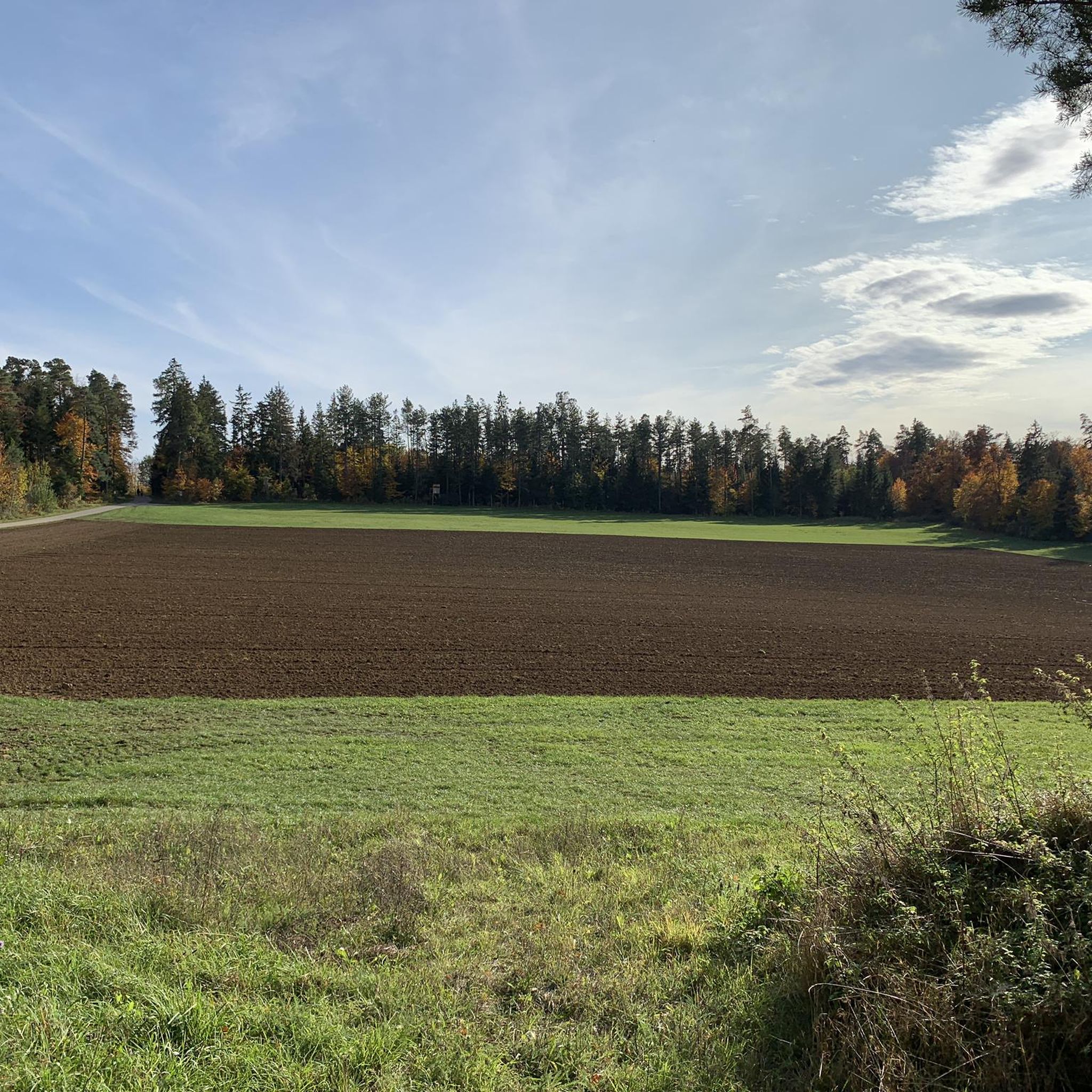
Picture frame with a beautiful view of the Northern Black Forest. In good weather, the 1163m high Hornisgrinde, the highest peak in the Northern Black Forest, can be seen from it.
7
0

I think the view all the way to the Hornisgrinde is exaggerated; perhaps a more general direction is more accurate. The elevation of Simmersfeld with its wind turbines at 900 meters is visible on the horizon.
2
0
Frequently Asked Questions
How many touring cycling routes are available around Jettingen, and what are their difficulty levels?
There are over 70 touring cycling routes around Jettingen. These include a variety of options: approximately 20 easy routes, over 35 moderate routes, and around 10 difficult routes, catering to different skill levels and preferences.
Are there touring cycling routes suitable for families with children in Jettingen?
Yes, Jettingen offers several easy touring cycling routes that are great for families. A good option is the Old Water Tower Kühlenberg – View of Hornisgrinde loop from Jettingen, which is an easy 8.2-mile (13.2 km) trail. The region's diverse terrain includes wide forest paths that are generally suitable for a relaxed family ride.
Can I find circular touring cycling routes in the Jettingen area?
Many of the touring cycling routes around Jettingen are designed as loops, allowing you to start and end at the same point. For example, the View of the Swabian Alb – View of the Gäu Near Jettingen loop from Jettingen is a popular moderate circular route offering scenic views.
What kind of scenic viewpoints or natural attractions can I expect along the cycling routes?
The routes around Jettingen offer diverse scenery, from picturesque forests and green meadows to views of the Black Forest. You can also visit natural monuments like the Xanderklinge Gorge Trail or the Xanderklinge Gorge with Waterfalls. The Old Water Tower Kühlenberg is a notable landmark that provides panoramic views, especially when open as a lookout tower on the first Sunday of the month.
Are there any historical or cultural sights to explore while cycling?
Yes, cycling routes in the region may pass by interesting historical and cultural sites. The Herrenberg Market Square – Herrenberg Old Town loop from Jettingen can lead you through charming villages with picturesque architecture. The nearby region also features sites like Burgruine Mandelberg, a castle ruin, and the Urschel Fountain in Nagold, associated with local legends.
What do other touring cyclists enjoy most about cycling in Jettingen?
The area is highly rated by the komoot community, with an average score of 4.6 stars from over 400 reviews. Cyclists often praise the diverse terrain, which includes gentle hills, dense forests, and pleasant riverside paths. The scenic views towards the Black Forest and the variety of routes suitable for different ability levels are also frequently highlighted.
Are there any routes that follow rivers or offer waterside views?
Yes, some routes around Jettingen offer pleasant rides along rivers. The Nagold–Jettingen Cycle Path – Nagold River Path loop from Jettingen is a prime example, offering varied terrain along the Nagold River. The region's proximity to the Nagold River provides opportunities for scenic riverside cycling.
What is the best time of year to go touring cycling in Jettingen?
Jettingen's diverse landscapes, including picturesque forests and green meadows, make it appealing for touring cycling throughout the warmer months. Autumn is particularly recommended for its beautiful foliage, offering a stunning backdrop for your rides. However, the varied terrain is enjoyable from spring through early autumn.
Are there any longer or more challenging touring cycling routes for experienced cyclists?
For experienced cyclists looking for a challenge, Jettingen offers routes with more significant climbs and longer distances. The Nagold–Jettingen Cycle Path – Nagold River Path loop from Jettingen is a difficult 34.2-mile (55.0 km) trail with over 2,200 feet (690 meters) of elevation gain, providing a demanding yet rewarding experience.
Can I find places to stop for refreshments or a meal along the cycling routes?
Cycling through the charming villages around Jettingen often provides opportunities to stop for refreshments. Many routes pass through or near small towns that feature local cafes or pubs where you can take a break and enjoy local hospitality. You might also find huts or barbecue areas like the Sulzer Eck barbecue area.
Is public transport accessible for reaching the cycling routes in Jettingen?
While specific public transport connections for each route vary, Jettingen is situated in the district of Böblingen, which generally has public transport options. It's advisable to check local bus or train schedules to see how they connect to your chosen starting points for the cycling routes.
Are there specific parking areas available for cyclists near the trailheads?
For many popular cycling routes in the Jettingen area, you can typically find parking options in or near the starting villages. While specific designated cyclist parking isn't always highlighted, general public parking in towns like Jettingen or Nagold often serves as convenient access points for the trails.
Most popular routes around Jettingen
Most popular attractions around Jettingen

Get inspired with the komoot mobile app


Explore more
Browse the best Cycling routes in other regions.
