Attractions and Places To See in Bandelier National Monument - Top 20
Best attractions and places to see in Bandelier National Monument preserves Ancestral Puebloan history and diverse natural landscapes across its 33,000 acres. The monument features rugged canyon and mesa country, with archaeological sites dating back over 11,000 years. It encompasses varied elevations, from the Rio Grande to over 10,000 feet at Cerro Grande, supporting diverse ecosystems and over 70 miles of hiking trails.
Best attractions and places to see in Bandelier National Monument
- The most popular attractions is Alcove House…
Last updated: October 10, 2026
Bandelier National Monument
Highlight • Natural Monument
Tip by

Alcove House
Highlight • Cave
Tip by

Sign up now to discover places like this
Get recommendations on the best single tracks, peaks, & plenty of other exciting outdoor places.
Tyuonyi Pueblo Ruins
Highlight • Historical Site
Tip by

Tsankawi Village
Highlight • Historical Site
Tip by

Cavates
Highlight • Cave
Tip by
Sign up for free to discover even more attractions in Bandelier National Monument.
Already have an account?
Start today with a free account
Your next adventure awaits.
Popular around Bandelier National Monument
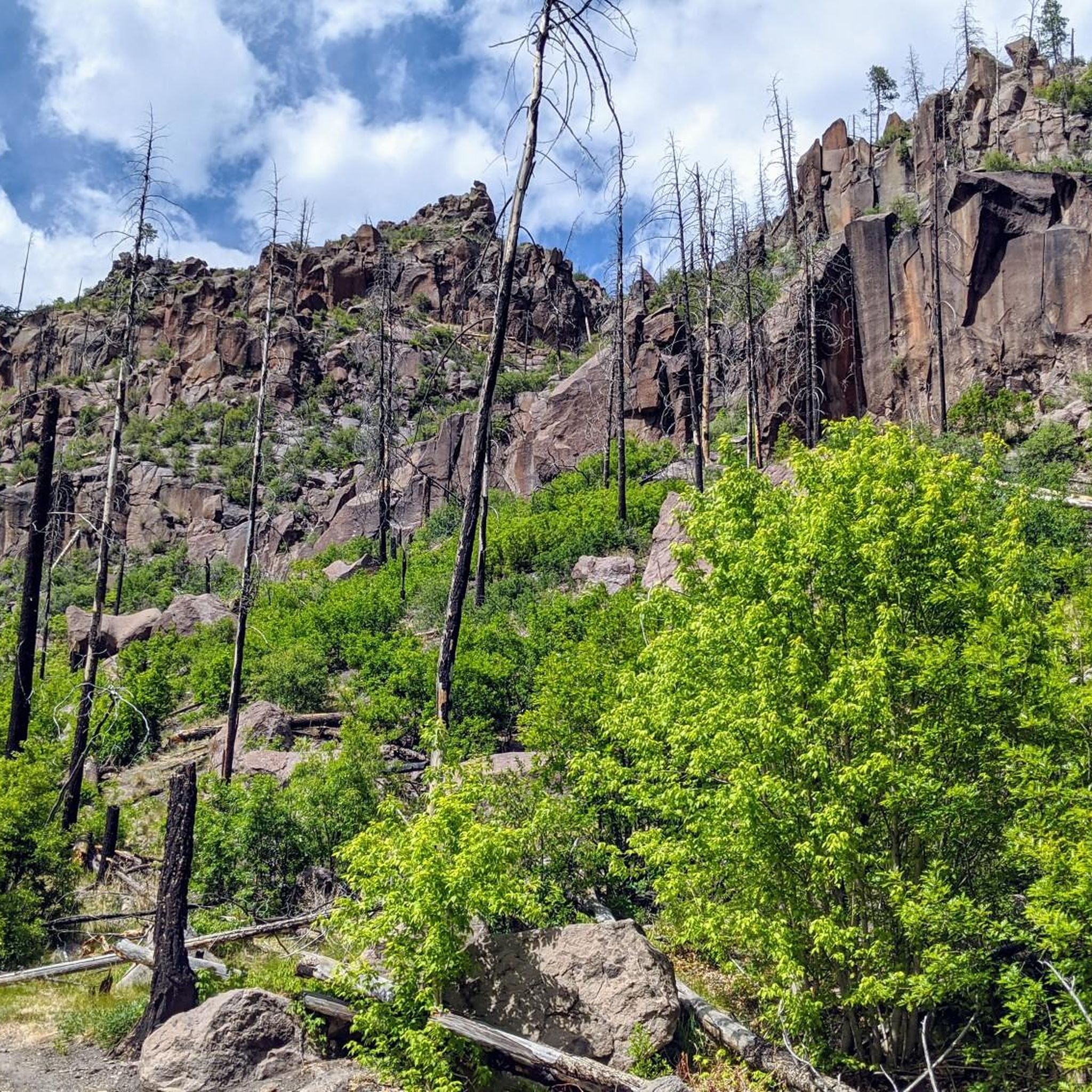
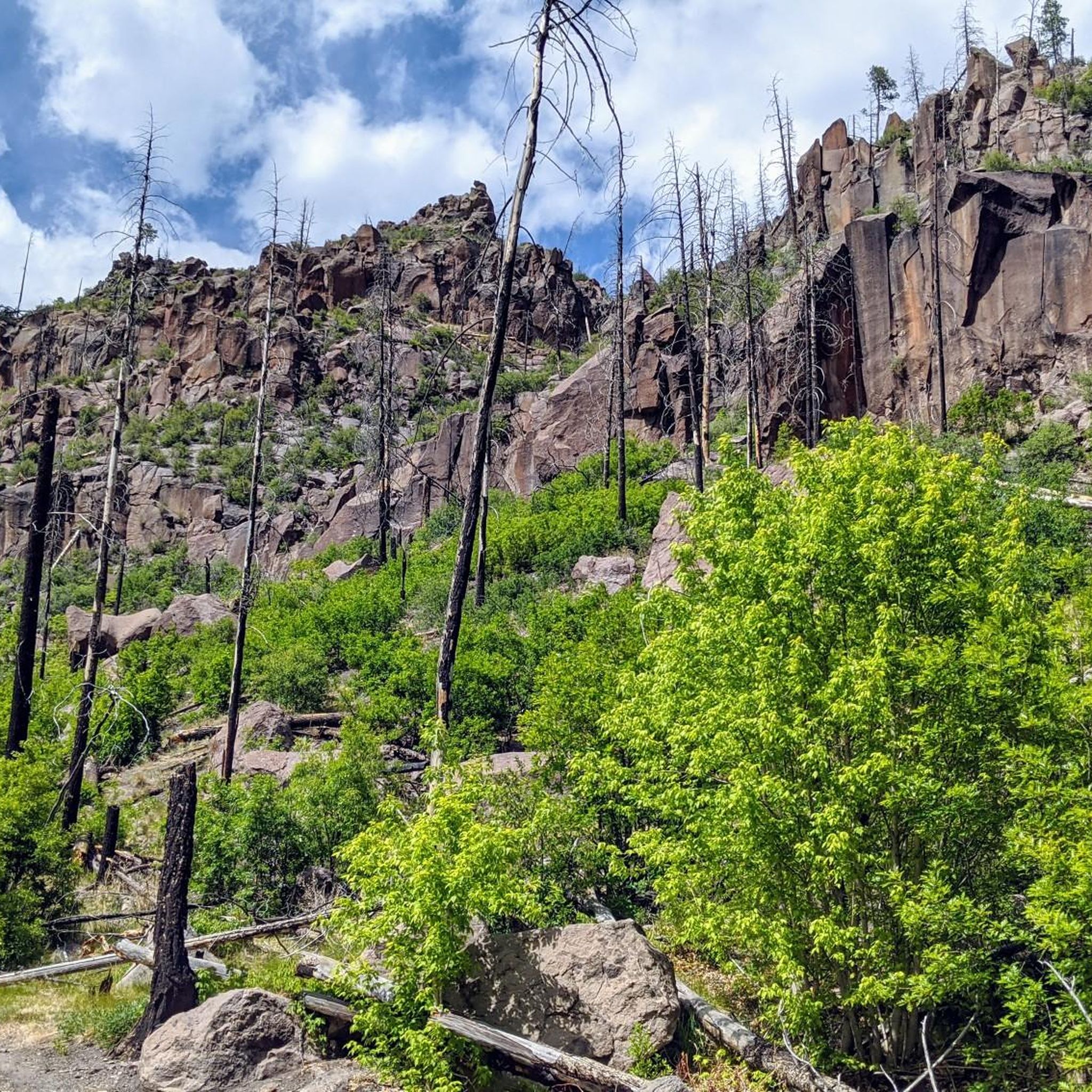
Other adventures in Bandelier National Monument

Tips from the Community

The cavetes are located just below the ancient central village plaza in the cliff bands that make up the mesa. These cavates (human excavated cavities) were places where people could take shelter from the elements; the thick stone walls provided insulation from both the cold of winter and heat of summer. Talus pueblos were also most-likely constructed in front of the entrance to the cavates to further protect people from wind, rain, snow, and perhaps most importantly in the desert, heat. Please only enter cavetes that are immediately adjacent to the trail - the other cavets are dangerous to access.
0
0
This spot is near where the center ancient Tsankawi Village once stood. From here you get fantastic views out over the mesa of Jémez Mountains to the west, the Sangre de Cristo Mountains and the Española Valley to the east, and about 70 miles south you can see the Sandia Mountains, near Albuquerque. In addition to the natural high ground that the mesa afforded the Indigenous people and caves that dot the cliffsides, there used to be tall defensive walls to protect this central plaza. You can see the remains of these walls and other structures as well as pottery shards. Collecting these important historical artifacts is illegal and even moving them from one spot to another in the village can disrupt our understanding of the area. As you leave this area you get to walk on ancient pathways carved into the rock itself. There are some ancient small stone steps carved in the cliffs, but please stick to the ladders rather than climb the steps.
0
0

Tyuonyi Pueblo is the largest ruin in Bandelier National Monument. Once containing over 400 rooms in a two-story structure, this ruin is now just a leveled site but still contains a load of history.
0
0

This alcove is located 140 feet above the floor of Frijoles Canyon and once housed 25 Ancestral Pueblo people. The Alcove House is now accessed by a series of wooden ladders.
0
0
Bandelier National Monument was designated as a natural monument in 1916 by President Woodrow Wilson to preserve the homes and territory of the Ancestral Puebloans. Most of the pueblo structures in the monument date back to between 1150 and 1600 AD.
0
0

Cave that can only be reached via steep ladders.
0
0


Well preserved cliff homes of the Ancestral Puebloans from 1150 to 1600 CE in Bandelier, a 33,677-acre (13,629 ha) United States National Monument in New Mexico. The Monument is 50 sq miles (130 km²) of the Pajarito Plateau, on the slopes of the Jemez Volcanic field. Over 70% of the Monument is wilderness, with over one mile elevation change, from about 5,000 feet (1,500 m) along the Rio Grande to over 10,000 feet (3,000 m) at the peak of Cerro Grande on the rim of the Valles Caldera, providing for a wide range of life zones and wildlife habitats. There are three miles of road, and more than 70 miles of hiking trails. It protects Ancestral Pueblo archeological sites, a diverse and scenic landscape, and the country's largest National Park Service Civilian Conservation Corps National Landmark District since 1916. https://en.wikipedia.org/wiki/Bandelier_National_Monument
3
2
Frequently Asked Questions
What historical sites can I explore in Bandelier National Monument?
Bandelier National Monument is rich in Ancestral Puebloan history. You can explore sites like the Alcove House, a sacred cave 140 feet above Frijoles Canyon, accessed by ladders. The Tsankawi Village offers ancient carved paths, cavates, and petroglyphs. In Frijoles Canyon, the Pueblo Loop Trail guides you through excavated homes, kivas, and Cavates carved into the cliff walls. Don't miss the Petroglyphs found throughout the monument, which hold significant spiritual meaning.
What natural features define the landscape of Bandelier National Monument?
The monument spans over 33,000 acres of rugged canyon and mesa country, shaped by volcanic ash (Bandelier Tuff) from ancient eruptions. Key natural features include Frijoles Canyon, carved by Frijoles Creek, and the scenic Rio Grande forming the southern boundary. The varied elevations, from 5,000 feet along the Rio Grande to over 10,000 feet at Cerro Grande, create diverse ecosystems, from juniper grasslands to ponderosa pine forests.
Are there family-friendly hikes in Bandelier National Monument?
Yes, several trails are suitable for families. The Pueblo Loop Trail is a popular 1.4-mile paved trail in Frijoles Canyon, making it accessible for many. The Falls Trail is another easy option, a 3-mile round trip leading to the Upper Falls. The Tsankawi Loop Trail, though it involves ladders, is a 1.5-mile hike that many families enjoy for its unique historical elements.
What are the most popular hiking trails in Bandelier National Monument?
Among the most popular trails are the Pueblo Loop Trail, which explores the main archaeological sites in Frijoles Canyon, and the extension to Alcove House, known for its ladders and unique perspective. The Tsankawi Loop Trail is also highly regarded for its ancient carved paths and panoramic views.
What is the best time of year to visit Bandelier National Monument?
While the monument is open year-round, spring and fall generally offer the most pleasant weather for hiking and exploring, with milder temperatures. Summers can be hot, and winters can bring cold temperatures, though the thick stone walls of the cavates provided insulation from both extremes for the Ancestral Pueblo people.
Are there any trails that involve climbing ladders?
Yes, for a unique experience, the trail to Alcove House requires climbing four wooden ladders and stone stairs to reach the sacred cave 140 feet above the canyon floor. The Tsankawi Loop Trail also involves climbing ladders as you navigate ancient carved paths.
What other outdoor activities can I do near Bandelier National Monument?
Beyond hiking, the region offers opportunities for road cycling and running. You can find various road cycling routes, including the challenging 'Tsankawi Section Trailhead – Frijoles Mesa loop'. For runners, there are several running trails, such as the 'Frijoles Trail to Yapashi Pueblo ruins loop' for a more difficult run or the 'Tsankawi Trail' for an easier option.
Can I see wildlife in Bandelier National Monument?
Yes, the monument's diverse ecosystems, ranging from 5,000 to over 10,000 feet in elevation, support a wide array of plant and animal life. You might spot various wildlife in the juniper grasslands, ponderosa pine forests, and along the canyons and mesas.
Is there a visitor center at Bandelier National Monument?
Yes, the visitor center provides valuable exhibits on the site's inhabitants, showcasing Ancestral Pueblo pottery, tools, and artifacts. It also features dioramas, contemporary Pueblo pottery, and an introductory film to help you understand the monument's history and significance.
Are there opportunities for stargazing at Bandelier National Monument?
Yes, Bandelier National Monument offers ranger-led programs to appreciate the wonders of the night sky. The monument is actively pursuing designation as an International Dark Sky Park, highlighting its excellent conditions for stargazing.
How long should I plan to spend at Bandelier National Monument?
To fully experience the main archaeological sites and some of the popular trails like the Pueblo Loop Trail and the hike to Alcove House, plan for at least half a day. If you wish to explore the Tsankawi section or venture into more extensive backcountry trails, a full day or even multiple days would be beneficial.
What is the significance of the cavates at Bandelier National Monument?
The Cavates are human-excavated cavities carved into the soft volcanic tuff cliff bands. These served as shelters for the Ancestral Pueblo people, providing insulation from both the cold winters and hot summers. They were often complemented by talus pueblos built in front of their entrances for additional protection.
Most popular routes in Bandelier National Monument
Most popular attractions in Bandelier National Monument

Get inspired with the komoot mobile app


Explore more
Still not found the Highlight you’re looking for? See guides of the top attractions in other regions:
