Attractions and Places To See around March - Top 20
Best attractions and places to see around March, a region in Breisgau, Germany, offers a diverse range of experiences. Located near the Black Forest, the area features historical sites, cultural landmarks, and natural viewpoints. Visitors can explore medieval architecture, vibrant market squares, and scenic vistas overlooking the Rhine Valley and Vosges mountains. The region provides opportunities for both urban exploration and enjoying the surrounding natural landscapes.
Best attractions and places to see around March
- The most popular attractions is Münsterplatz…
Last updated: June 23, 2026
Münsterplatz Freiburg
Highlight • Religious Site
Showing Translation
Tip by

Marktplatz Endingen
Highlight • Historical Site
Showing Translation
Tip by

Sign up now to discover places like this
Get recommendations on the best single tracks, peaks, & plenty of other exciting outdoor places.
Sign up for free
Rosskopf Tower
Highlight • Viewpoint
Translated by Google •
Tip by
Schlossberg Tower
Highlight • Viewpoint
Translated by Google •
Tip by

Schwabentor (Swabian Gate), Freiburg im Breisgau
Highlight • Historical Site
Today it houses the Zinnfigurenklause, a museum in which historical events are recreated with pewter figures.
Translated by Google •
Tip by

Sign up for free to discover even more attractions around March.
Sign up for free
Already have an account?
Start today with a free account
Your next adventure awaits.
Login or Signup
Tips from the Community

One of the beautiful old city gates that you should definitely see on a tour of Freiburg's city center. You'll almost automatically pass by it. Of course, you can also take the tram and drive through. 🙃
6
0
Brief information on accessibility: Schwabentor is wheelchair accessible from Salzstraße and can be viewed from the outside. Accessible restrooms are located at Augustinerplatz. The tin figure hermitage in Schwabentor is not wheelchair accessible.
10
2

Schwabentor, Freiburg im Breisgau The Schwabentor was built in the mid-13th century as a city gate within the fortifications to protect the citizens. Leaving the city walls behind must have been a real adventure in the Middle Ages: Unfamiliar forests and routes, and the constant fear of being attacked by robbers, created uncertainty for merchants and travelers alike. For all those not deterred by their own fear, the "Thorn Puller" warned against leaving the city. A tormented expression adorns the relatively large head of the small, neckless figure, which sits with crossed legs above the gateway of the defensive tower, pulling a thorn from its foot. Since antiquity, the thorn has been a symbol of sin and punishment, which is why historians assume that the small relief served as a warning not to stray from the right path. Those who nevertheless passed through the Schwabentor on the Salt Road could immediately cross the Dreisam Bridge and reach the most important trade routes of the Black Forest. A salt merchant from Swabia once traveled along one of these routes to Freiburg, having fallen in love with the city on his previous business trips. He intended to buy Freiburg with several barrels full of money, but the citizens only mocked and laughed at him, especially when he exuberantly opened the barrels and discovered that his miserly wife had taken precautions. Less enthusiastic about her husband's idea of spending all his money on a city, she had wisely traded the money for sand and stones before his departure. It is said that this legend gave the Schwabentor (Swabian Gate) its name. Therefore, the salt merchant and his wagon have adorned the inside of the city gate since the 17th century. On the outside, Freiburg's patron saint – St. George the dragon slayer – is prominently displayed. Text / Source: City of Freiburg, Rathausplatz 2-4, 79098 Freiburg https://visit.freiburg.de/attraktionen/schwabentor
20
2
Freiburg's Münsterplatz - archaeology and history After an introductory overview of the state of research, Chapter 1, taking into account the latest excavations, examines the archaeologically tangible burials up to the abolition of the churchyard in 1515 and the renewed use as a military cemetery in the 17th and 18th centuries. This is followed by a discussion of the cemetery's furnishings and in particular the course of the churchyard wall, with Renn partially questioning the phases of the wall's development reconstructed by Ralf Burgmaier in 1996. Chapter 3 explains other functions of the churchyard as a legal and judicial place and as a meeting place. Chapter 4 is devoted to the buildings on and around the square. Renn can show that parts of today's Münsterplatz were built up until the 14th century and that the facades of the surrounding houses were not initially facing the churchyard. It was only when the choir was built in the 14th century that the houses on the square were demolished and the facades of the other houses turned towards the square and magnificently decorated. Although the associated upgrading of the square led to increased building activity, the churchyard wall initially remained standing - as described in Chapter 5 - although sales arbors were added to its outside. It was not until 1785 that the churchyard wall and the corn arbors were torn down and a "representative open space" created. Text / Source: Hypotheses https://oberrhein.hypotheses.org/1384
19
0

Hikers should stop here to get some refreshment. Whether it's Brunner's sausage roasting shop, Meier's sausage stand, the organic sizzling stand, or Licht's sausage stand - the Lange Rote has long been a Freiburg institution: The grilled sausage without casing, which measures a full 35 cm, is on a par with the Münster, the Augustinermuseum or the Bächles on the Freiburgers' scale of attractions. So, go ahead and try Freiburg's crispiest landmark on Münsterplatz!
9
0

A very beautiful and worth seeing place. The climb to the tower can be reached via a long and narrow wall staircase, and you will be rewarded with a magnificent view. The bellworks can also be viewed, which are also very loud at the right time.
15
2

The Freiburg Minster "Our Lady" is today both the parish church and the cathedral of the Archdiocese of Freiburg. In addition, the Minster is a national cultural monument with one of the most beautiful towers on earth and is one of the few large Gothic churches that were completed in the Middle Ages and survived the numerous wars almost unscathed.
10
1

Beautiful little wine town on the Kaiserstuhl... ideal starting point for discovery tours
7
1
Frequently Asked Questions
What historical and cultural sites can I explore around March?
The region around March offers several significant historical and cultural sites. You can visit Münsterplatz Freiburg, a central square known for its weekly market and the impressive Freiburg Minster. Another charming spot is Endingen am Kaiserstuhl Market Square, a picturesque town square with outdoor gastronomy. Don't miss the medieval Schwabentor (Swabian Gate) in Freiburg, which once served as a city gate and now houses a pewter figure museum.
Where can I find the best panoramic views of the region?
For breathtaking panoramic views, head to Rosskopf Tower. From here, you can see Freiburg, the Black Forest, the Rhine Valley, and the Vosges mountains. Another excellent option is Schlossberg Tower, which offers extensive views over Freiburg and its surroundings, stretching all the way to France.
Are there family-friendly attractions around March?
Yes, several attractions are suitable for families. Münsterplatz Freiburg with its vibrant market and the impressive Minster is a great place for a stroll. The Endingen am Kaiserstuhl Market Square offers a delightful atmosphere with ice cream parlors and shops. The Schwabentor (Swabian Gate) is also family-friendly, offering a glimpse into medieval history.
What outdoor activities, like hiking or cycling, can I do near these attractions?
The region around March is excellent for outdoor activities. You can find numerous hiking trails, including easy routes like the 'Old Oak Tree – Münstudsee loop'. For cyclists, there are touring bicycle routes such as the 'Tunibergkreuz – Bench With a View of Freiburg loop'. Mountain biking enthusiasts can explore trails like 'Baden to the Bone' starting from Rosskopf Tower. You can find more details on specific routes in the Hiking around March, Cycling around March, and MTB Trails around March guides.
Are there any wheelchair-accessible attractions?
Yes, several attractions offer wheelchair accessibility. Münsterplatz Freiburg and Endingen am Kaiserstuhl Market Square are generally accessible. The Schwabentor (Swabian Gate) in Freiburg is wheelchair accessible from Salzstraße for exterior viewing, with accessible restrooms available at Augustinerplatz.
What do visitors enjoy most about the attractions around March?
Visitors frequently praise the diverse experiences available. They particularly enjoy the fresh, regional produce at the weekly market on Münsterplatz Freiburg and the pleasant atmosphere for ending a bike tour. The panoramic views from Rosskopf Tower and Schlossberg Tower are also highly appreciated, offering stunning vistas of the Black Forest and beyond. The charming market squares, like the one in Endingen, are loved for their inviting outdoor gastronomy and local shops.
Can I bring my dog to any of the attractions?
Yes, the Schwabentor (Swabian Gate) in Freiburg is noted as dog-friendly, making it a good option for exploring with your canine companion.
Are there cafes or places to eat near the main attractions?
Absolutely. Both Münsterplatz Freiburg and Endingen am Kaiserstuhl Market Square are surrounded by cafes and restaurants. Endingen's market square, in particular, is highlighted for its outdoor gastronomy and even an ice cream parlor, perfect for a break.
What is the best time to visit March for outdoor activities?
March offers a pleasant transition from winter to spring, with comfortable temperatures ideal for exploring. The weather is often cool yet comfortable, making it suitable for walking and cycling without the intense heat or crowds of peak season. This time of year allows for clear views from viewpoints and enjoyable strolls through historical sites.
Are there any hidden gems or less-known spots worth visiting?
While the main attractions are popular for good reason, the region's charm often lies in its smaller, picturesque towns and natural viewpoints. Exploring the cobblestone streets of Endingen beyond its central market square can reveal delightful corners. The various trails leading up to viewpoints like Rosskopf Tower also offer serene paths away from the busiest areas, providing a more intimate experience with the landscape.
What kind of natural landscapes can I expect to see?
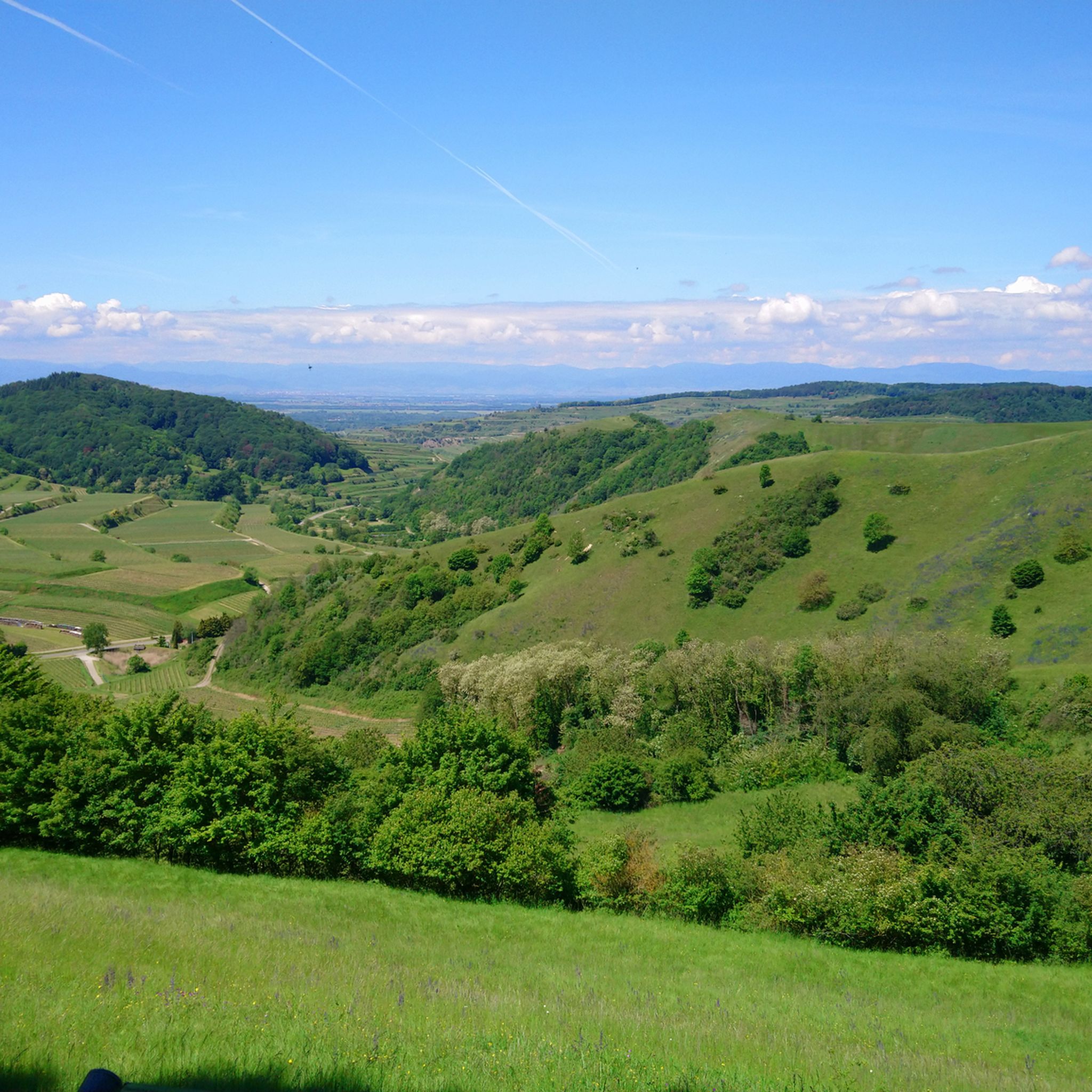
The region around March is characterized by its proximity to the Black Forest, offering lush forest landscapes. From viewpoints like Rosskopf Tower and Schlossberg Tower, you can enjoy expansive views of the Rhine Valley, the distant Vosges mountains, and the rolling hills of the Kaiserstuhl region, known for its vineyards.
Most popular routes around March
Most popular attractions around March

Get inspired with the komoot mobile app


Explore more
Still not found the Highlight you’re looking for? See guides of the top attractions in other regions:
