The best walks and hikes in Fort Pulaski National Monument
5.0
(13)
340
hikers
17
hikes
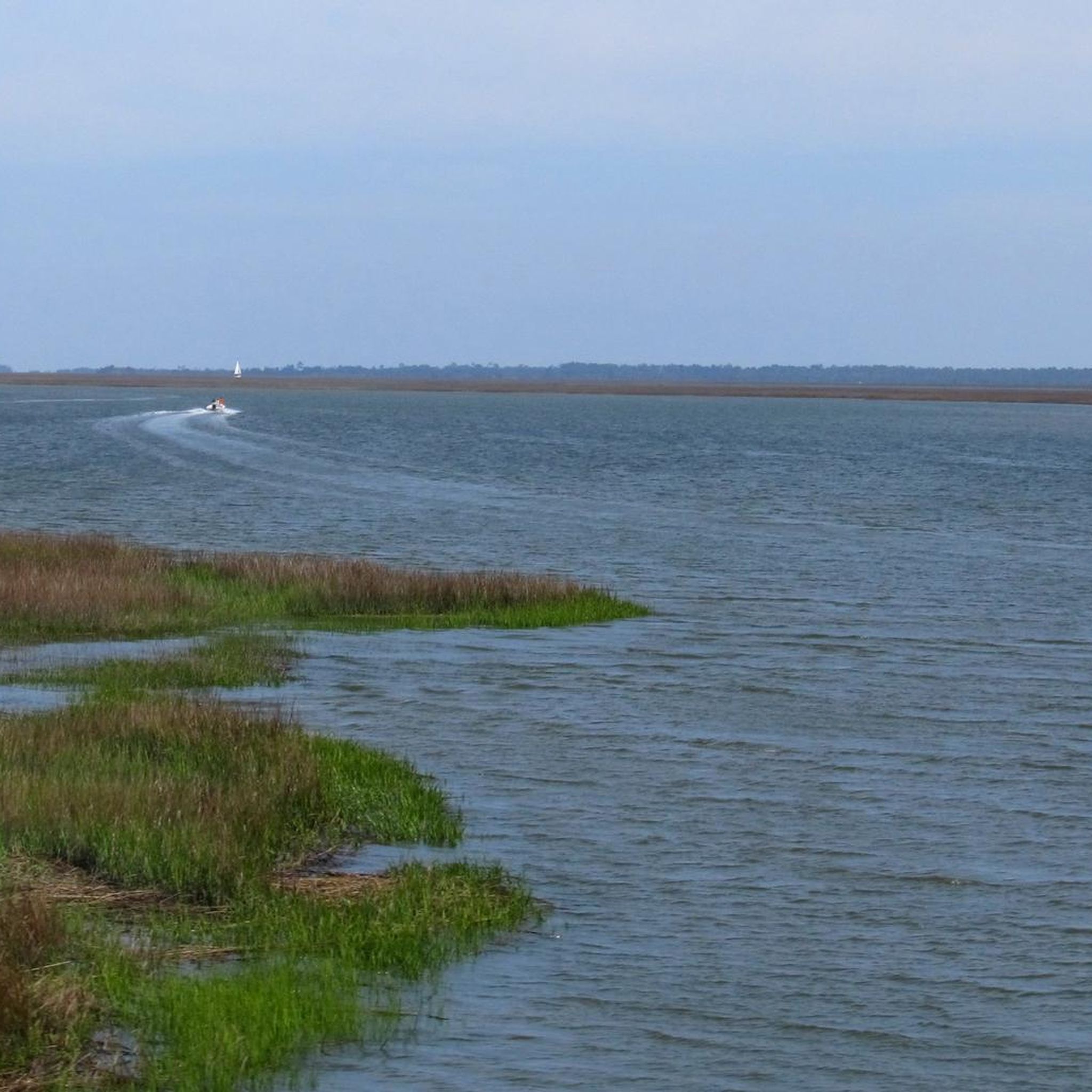
Hiking in Fort Pulaski National Monument offers exploration across a landscape dominated by expansive wetlands and salt marsh, comprising over 4,800 acres of its total area. The monument is situated on Cockspur Island, bordered by the Savannah River and the Atlantic Ocean, creating a rich estuarine environment. A maritime forest covers the central part of Cockspur Island, providing habitat for diverse wildlife. The terrain is generally flat, with minimal elevation changes, making it accessible for various activity levels.
Best hiking trails in Fort Pulaski National Monument
- The most popular hiking route is McQueen's Island Trail — Savannah, Georgia, an 11.6 miles (18.7 km) trail that takes about 4 hours 40 minutes to complete. This moderate path follows an old rail line, offering views of the surrounding natural areas.
- Another top favourite among local hikers is Fort Pulaski & Cockspur Lighthouse Loop — Savannah, Georgia, an easy 3.9 miles (6.2 km) path. This route provides views of the Savannah River and the historic Cockspur Island Lighthouse.
- Local hikers also love the Battery Hambright loop from Fort Pulaski National Monument, a 2.1 miles (3.4 km) trail leading through wooded environments and past historical remnants, often completed in about 50 minutes.
- Hiking in Fort Pulaski National Monument is defined by coastal paths, salt marsh ecosystems, and maritime forests. The network offers options for different ability levels, from easy walks to moderate excursions.
- The routes in Fort Pulaski National Monument are highly rated by the komoot community with an average score of 5.0 stars from over 13 reviews. More than 315 hikers have used komoot to explore Fort Pulaski National Monument's varied terrain.
Last updated: July 7, 2026
1.11km
00:17
0m
0m
Easy hike. Great for any fitness level. Easily-accessible paths. Suitable for all skill levels.
1
hikers
18.7km
04:40
0m
0m
Moderate hike. Good fitness required. Easily-accessible paths. Suitable for all skill levels.

Sign up for free
6.21km
01:33
0m
0m
Easy hike. Great for any fitness level. Easily-accessible paths. Suitable for all skill levels.
5.0
(1)
7
hikers
Easy hike. Great for any fitness level. Easily-accessible paths. Suitable for all skill levels.
1.58km
00:24
0m
0m
Easy hike. Great for any fitness level. Easily-accessible paths. Suitable for all skill levels.
Get access to more routes and recommendations from other explorers.
Sign up for free
Already have an account?
Our route recommendations are based on thousands of hikes, rides, and runs completed by other people on komoot.
Start today with a free account
Your next adventure awaits.
Login or Signup
Popular around Fort Pulaski National Monument
Tips from the Community

interesting preserved fortification
1
0

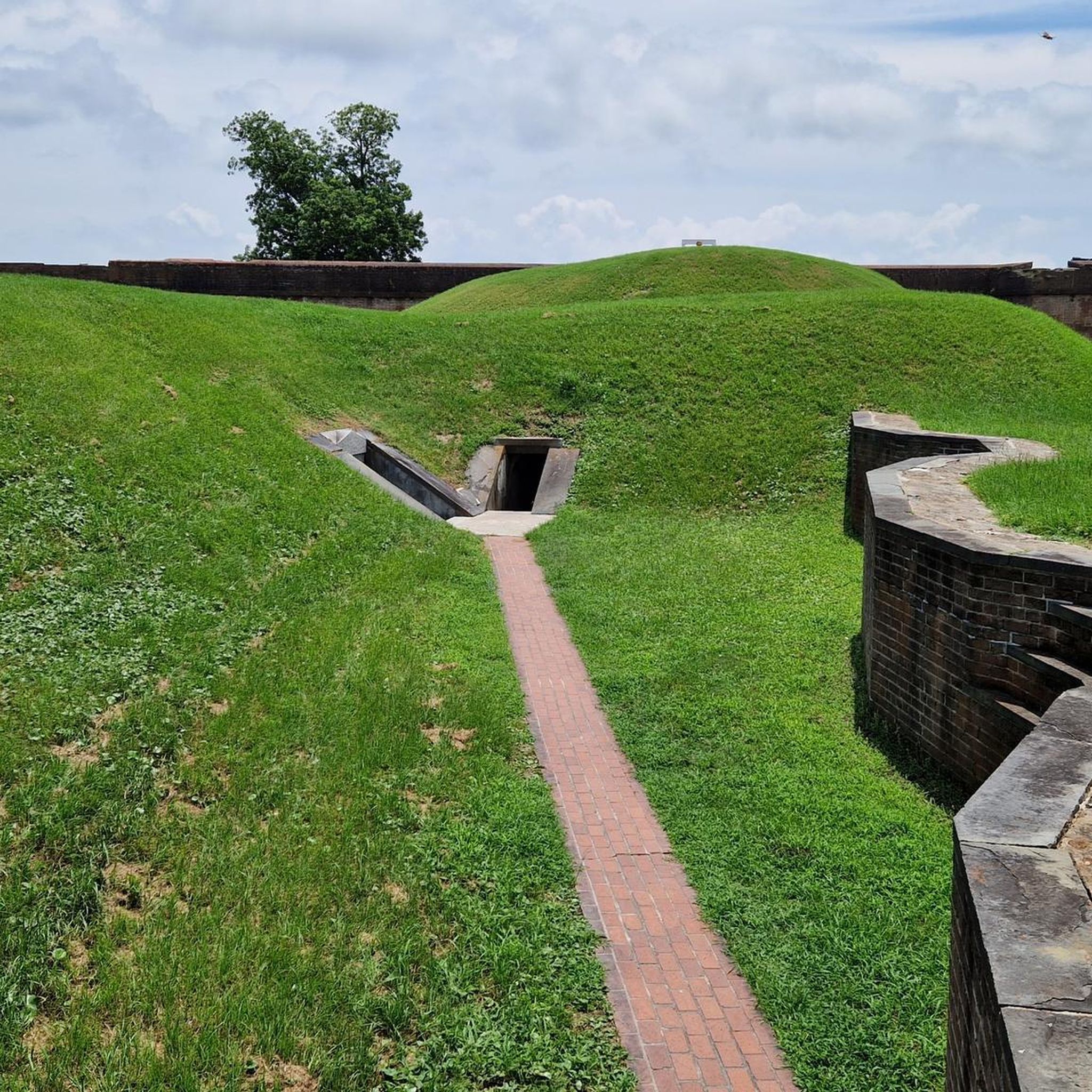
Fort Pulaski is a National Monument and a significant part of American history. It was built in the 1800s to defend Savannah from attack, and it played a key role in the Civil War. Visitors can learn about the fort's history through guided tours, exhibits, and ranger programs. The Fort is a beautiful example of 19th-century architecture. The fort's walls are made of brick and are over 10 feet thick. Visitors can explore the fort's interior and learn about its construction and design. Fort Pulaski is located on Cockspur Island, which is a beautiful natural area. Visitors can enjoy the island's beaches, marshes, and forests. There are also hiking trails and a campground on the island.
0
0
The McQueen’s Island Trail is a scenic trail that traces the historic railway that linked Savannah to Tybee Island. The trail offers stunning views of the coastal marshes, where you can spot a variety of wildlife, from turtles and alligators to hawks and pelicans. You can also see the Savannah River, where ships and boats cruise by. And if you’re interested in history, you can visit Fort Pulaski, where a pivotal Civil War battle took place. The Union soldiers used a new type of cannon to breach the fort’s wall and capture it. Most of this trail is currently closed due to erosion and hurricane damage, but it is slowly reopening again.
2
1
Battery Hambright is a historic military installation that was built in the late 19th century to defend the entrance to the Savannah River. It played a role in the Spanish-American War and is a reminder of the importance of coastal defense during that era. Battery Hambright is a well-preserved example of concrete gun battery architecture. It is one of the few remaining examples of its type in the United States.
2
0
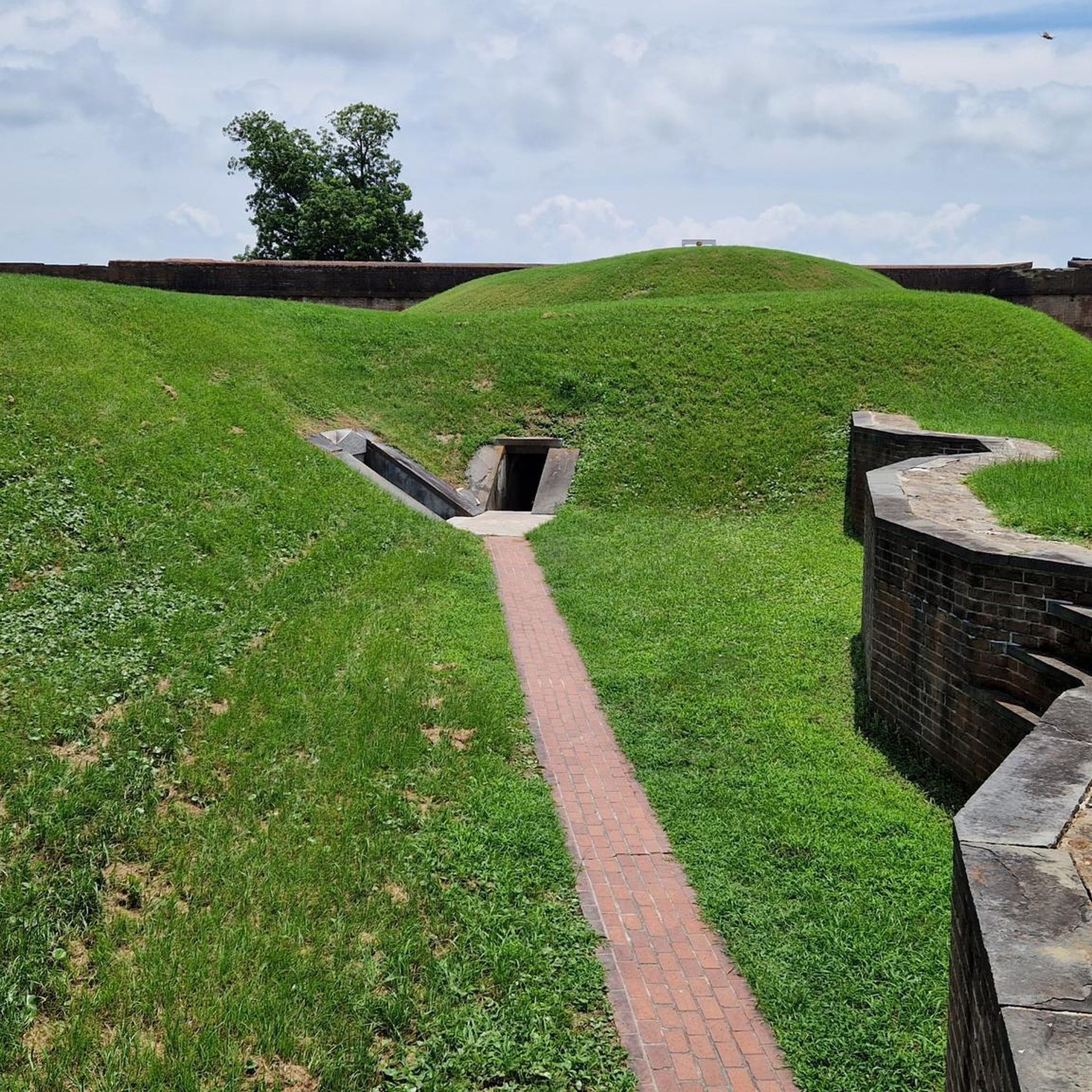
Fort Pulaski is a National Monument and a significant part of American history. It was built in the 1800s to defend Savannah from attack, and it played a key role in the Civil War. Visitors can learn about the fort's history through guided tours, exhibits, and ranger programs. The Fort is a beautiful example of 19th-century architecture. The fort's walls are made of brick and are over 10 feet thick. Visitors can explore the fort's interior and learn about its construction and design. Fort Pulaski is located on Cockspur Island, which is a beautiful natural area. Visitors can enjoy the island's beaches, marshes, and forests. There are also hiking trails and a campground on the island.
2
0
The Lighthouse Trail is your best option to see the Cocksure Island Lighthouse without having to traverse water. The historic lighthouse is located on Cockspur Island in the Savannah River. The lighthouse is 46 feet tall and is built on an oyster bed foundation. It was first lit in 1839 and ceased operation as an active beacon in 1909. It has been relit since 2007 for historical rather than navigational purposes. The lighthouse is part of Fort Pulaski National Monument and is not currently open to the public.
2
0

The story of Fort Pulaski is told relatively quickly, but it is impressive nonetheless, or perhaps because of it. The fort was built after the English-American War of 1812-15 to secure the city of Savannah from Cockspur Island off the coast. After its completion in 1847, it was not really used, but after the outbreak of the Civil War, Confederate troops quickly occupied it with a force of about 385 men and fortified it additionally. However, they "forgot" to secure Tybee Island, which was even farther out and which the Union troops gratefully used as a beachhead. From here, the siege of the fort took place in April 1862, although the term "siege" is not really an accurate description of this short military operation. The Union's used a new type of rifled guns, which had much greater range, accuracy, and penetrating power than the old smoothbore guns. Moreover, the commander of the siege, Quincy Gilmore, knew of the fort's weak points from his time as a civil engineer in the army. Thus, on April 11 and 12, 1862, more than 5,000 rounds were fired at the fort from a range of 1.5 to 3.5 kilometers, causing considerable damage to the brick walls. The Confederate commander rightly feared an explosion of his gunpowder stores and, after 30 hours of shelling, ordered the white flag to be waved. Brick fortifications had thus finally had their day, and Quincy Gilmore was promoted to brigadier general. In the further course of the Civil War, Fort Pulaski still served as a prison for the so-called "600 Immortals". There were a little less than 600 Confederate officers who had to hold out here the winter of 1864/65 as prisoners of war. Due to malnutrition and poor prison conditions, 13 of them died. After the Civil War, the fort was militarily abandoned and eventually became a National Monument for memorial purposes in the 1920s. Today's visitors are treated to an up-close look at the fort's history. Similar to Fort Sumter near Charleston, numerous details are provided. One gets a glimpse of the officers' and enlisted men's quarters, the infirmary, the chapel, the guardroom, the ammunition dumps, the prison and, of course, the casemates and gun emplacements. The park rangers are extremely friendly, helpful and forthcoming. A walk around the outer walls is particularly impressive, because here you can see "first hand" the damage done by the Union cannons. Information at https://www.nps.gov/fopu/index.htm
6
0
Frequently Asked Questions
What kind of terrain can I expect when hiking in Fort Pulaski National Monument?
The terrain in Fort Pulaski National Monument is predominantly flat, characterized by expansive wetlands and over 4,800 acres of salt marsh. You'll find paths through maritime forests and along coastal areas, offering a rich estuarine environment. The trails generally have minimal elevation changes, making them accessible for various activity levels.
Are there any easy hiking trails suitable for families or beginners?
Yes, Fort Pulaski National Monument offers several easy trails. For instance, the Fort Pulaski & Cockspur Lighthouse Loop is an easy 3.9-mile path providing views of the Savannah River and the historic Cockspur Island Lighthouse. Another easy option is the Battery Hambright loop from Fort Pulaski National Monument, a 2.1-mile trail through wooded areas and past historical remnants.
What historical landmarks or points of interest can I see while hiking?
Fort Pulaski National Monument is rich in history. While hiking, you can explore the fort's exterior, including visible battle scars and shells from the 1862 bombardment. Trails like the North Pier Trail pass remnants of the original construction village and Battery Hambright, a late 19th-century structure. The Fort Pulaski & Cockspur Lighthouse Loop also offers views of the historic Cockspur Island Lighthouse.
Are there any trails that offer views of the water or coastline?
Many trails provide excellent water views. The Historic Dike Trail, a 2.1-mile loop, encircles Fort Pulaski and offers unparalleled views of Cockspur Island and the Savannah River. The Lighthouse Overlook Trail (1.7 miles out-and-back) also provides scenic views of the Savannah River and Tybee Island, with some of the best vantage points for the Cockspur Island Lighthouse.
What is the best time of year to go hiking in Fort Pulaski National Monument?
While specific seasonal recommendations aren't provided, the monument's coastal location suggests that spring and fall generally offer pleasant temperatures for hiking. Summers can be hot and humid, while winters are typically mild. It's always advisable to check local weather conditions before your visit.
Are dogs allowed on the hiking trails in Fort Pulaski National Monument?
The National Park Service generally allows leashed pets on trails and in outdoor areas, but it's always best to check the official Fort Pulaski National Monument website for their specific and most current pet policies to ensure compliance and safety for all visitors and wildlife.
What are the parking options for hikers at Fort Pulaski National Monument?
Parking is available at Fort Pulaski National Monument. For trails like the McQueens Island Rails to Trails, which is located at the entrance to the monument, there are designated parking areas. It's recommended to check the official park website for detailed information on parking locations and any potential fees.
What kind of wildlife might I encounter on the trails?
The monument's diverse ecosystems, including salt marshes and maritime forests, support a variety of wildlife. You might spot marine life like shrimp, oysters, and mussels in the estuarine areas, as well as resident and migratory birds. The area is known for bird-watching opportunities.
Are there any longer or more challenging trails for experienced hikers?
For a longer excursion, consider the McQueen's Island Trail — Savannah, Georgia. This moderate 11.6-mile (18.7 km) packed-gravel trail follows an old rail line, offering a longer journey into the surrounding natural areas. It takes approximately 4 hours and 40 minutes to complete.
What do other hikers enjoy most about hiking in Fort Pulaski National Monument?
The area is highly rated by the komoot community, with an average score of 5.0 stars from over 13 reviews. Hikers often praise the unique blend of historical significance and natural beauty, the well-maintained flat trails, and the scenic views of the river and marshlands.
Are there any circular hiking routes available?
Yes, there are several circular routes. The Historic Dike Trail is a 2.1-mile loop that encircles Fort Pulaski, offering continuous scenic views. Another option is the Battery Hambright loop from Fort Pulaski National Monument, which is a 2.1-mile trail that brings you back to your starting point.
What should I bring with me when hiking in Fort Pulaski National Monument?
It is recommended to bring water, especially during warmer months, as the coastal environment can be humid. Sun protection, insect repellent, and comfortable walking shoes are also advisable. Staying on designated trails is important for safety and resource protection.
Most popular routes in Fort Pulaski National Monument
Most popular attractions in Fort Pulaski National Monument

Get inspired with the komoot mobile app


Explore more
Browse the best Hikes in other regions.
